

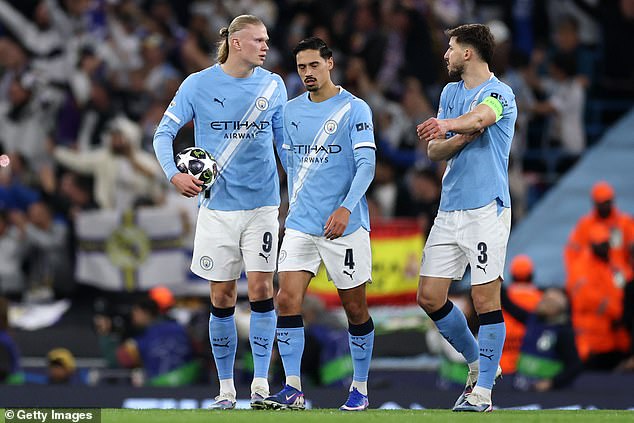
As Pep Guardiolaleft the field at the Etihad Stadium this week, it was hard not to contemplate the approaching sporting transition of one of thePremier LeagueOne of the most legendary and impactful coaches, as well as about recent setbacks the sport has faced in this nation.
Every positive thing eventually reaches its conclusion, and perhaps the golden era of Premier League football has come to a close without many people noticing.
Guardiola may leave Manchester Citythis summer. He has one year remaining on what he has stated will be his last contract, and he constantly contradicts himself regarding whether he will complete it. However, following Tuesday’s tough encounterChampions League exit to Real Madrid, he appeared very much like a coach journeying to the end of an extremely long route.
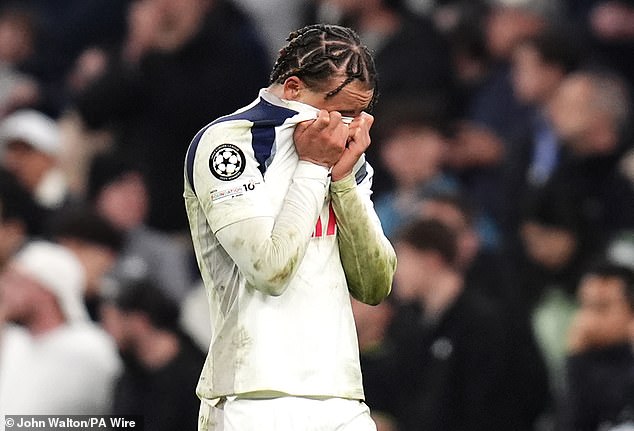
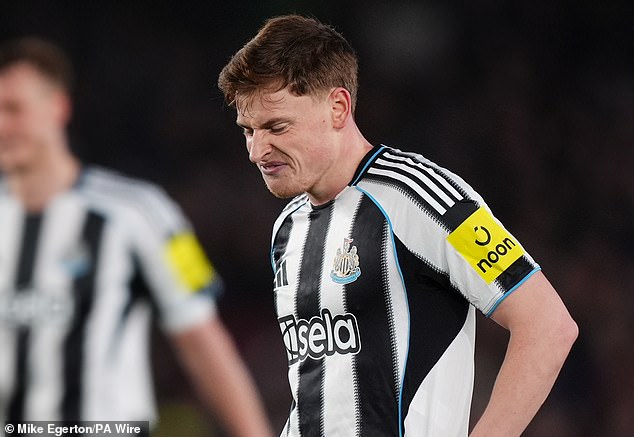
More generally, the round of 16 in Europe’s top competition has been a wake-up call for English clubs. AsArsenal and Liverpooladvanced to the quarterfinals, Newcastle,Chelsea, Tottenhamand City ended their streak with an overall score of 28-11.
Newcastle and Chelsea, especially, were humiliated byBarcelona and Paris Saint-Germain.
Therefore, the noise we are currently hearing is intense and spontaneous. We are witnessing discussions about Premier League players feeling exhausted due to the demanding schedule and the absence of a winter break. More concerningly, there are links drawn between our country’s limited success in Europe and the simpler style of football that is currently prevalent in our local matches.

A small amount of truth exists in parts of that, but not significantly. More important is the reality that English football is currently experiencing a phase of a cycle it is quite accustomed to.
The English Premier League – whether it acknowledged it or not – has recently experienced a golden era driven by the high standards established by two outstanding teams, with only Arsenal having managed to fill the gap that remained.
Liverpool and Manchester City. Jurgen Klopp and Pep Guardiola. Perhaps only now do we realize what we had. Pep Guardiola’s treble-winning team from 2023 has disintegrated rapidly, while Klopp is now seen on the padel courts in Marbella.
Their competition was impressive, and it raised the level of play both domestically and across European football.
For instance, there was a period from March 2021 to May 2022 where Liverpool participated in 75 matches across all tournaments, lost just five, yet failed to secure the Premier League title with 93 points. Three years prior, 97 points also proved insufficient. In both cases, City edged them out by a single point.
At first, it seemed usual as it lasted. However, it was never truly so, and thus it has not been.
In 2019, England had four clubs in the Champions League quarterfinals, and three in 2021 and 2022. However, a balance was always expected, and it has now arrived.
Both Liverpool and City appear to be teams that might take different paths in the coming years, similar to how Manchester United and Chelsea evolved through periods of change after their own era of mutual success in domestic competitions between 2005 and 2012.
In the past, English clubs were at the forefront of the Champions League. For instance, between 2007 and 2011, the Premier League secured 3, 4, 4, 2, and 3 of the available quarter-final spots in Europe. It seemed like it would continue indefinitely, but it didn’t.
Sir Alex Ferguson departed from Manchester United as Chelsea’s ongoing changes in management began to take a toll. Meanwhile, City were experiencing growth but had yet to establish themselves in European competitions, while Liverpool were stepping into their difficult and chaotic period under Roy Hodgson and Kenny Dalglish.
It’s no accident that from 2012 to 2017, England’s representation at the latter stages of major European competitions declined. In 2013 and 2015, there were no teams in the quarterfinals. In 2012, 2016, and 2017, only one team made it. The only time we had two was in 2014, when David Moyes’ Manchester United were eliminated by Bayern Munich and Chelsea advanced past PSG on away goals.
As time passed, the Premier League fostered new levels of excellence, which was evident through increased recognition in Europe. Manchester City, Liverpool, and later, Arsenal, emerged as key players. This transformation was partly due to intelligent coaching decisions – Klopp, Guardiola, and Mikel Arteta – but also due to significant financial resources. Most likely, it is the latter factor that will lead us back to that level once more.
The quality at the upper end of the Premier League this season has not been satisfactory. The rather disappointing competition for positions four and five serves as evidence of that.
If this reflects the challenges faced by English football in consistently using its funds effectively, it still possesses a significant amount of money, which continues to be the main factor influencing the current game.
In January, when Deloitte published a ranking of the wealthiest football clubs, Liverpool, City, United, Arsenal, Tottenham, and Chelsea all featured in the top ten. They also appear on the Forbes list, though arranged in a slightly different sequence.
Teams like Liverpool, Manchester City, and Tottenham – propelled by larger and more effective stadiums – are generating unprecedented revenue, which signifies the most favorable form of long-term security for a club.
Surely, the past two weeks have been difficult to witness for Newcastle, Chelsea, and Tottenham, each with their own explanations.
The lack of depth in the squad is causing problems at St James’ Park, and Newcastle’s recent demanding schedule has started to affect them. Chelsea continues to fail to recognize the importance of consistency and stability in the manager’s position, with long-term strategy being something they have yet to embrace.
Tottenham? They ended up in 17th place in the previous Premier League season and have since dismissed two managers following their Europa League victory, which secured their entry into the competition that truly matters. So, why are we taken aback?
Regarding how they made it to the last sixteen, just consider the teams they defeated in UEFA’s new league stage of the tournament (Villarreal, Copenhagen, Slavia Prague, Borussia Dortmund, Frankfurt) and where those clubs ultimately placed in the standings (35th, 31st, 34th, 17th, and 33rd).
Thomas Frank’s group – as it was back then – simply received a fortunate matchup against what essentially amounted to the expendable forces of Europe’s premier competition.
Arsenal and Liverpool will drive us forward now, and we should remain hopeful about the Premier League leaders’ prospects against Sporting Lisbon specifically.
Liverpool is not expected to be the favorites against PSG – likely the top team in Europe – but they will host the champions in the second leg, which presents a significant advantage.
This has not been a remarkable season in the Premier League, and this is clearly evident from what has happened this week. However, reports of its prolonged decline are likely overstated.
How many English teams have made it to the last eight of the Champions League in the past twenty years? There have been 41 across twenty seasons. You can calculate the average yourself.



 jasdooit
Leave a comment