
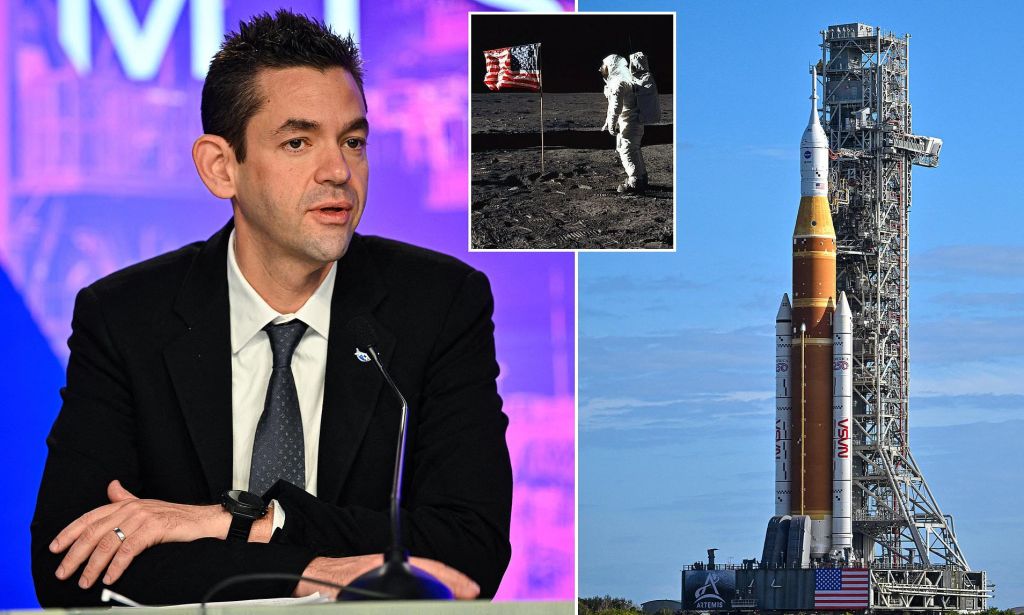
President Donald Trump’s NASAThe leader is eager to go back to the moon, partly to highlight that the United States is capable of achieving it.
“We are indebted to each of the pioneers from the 1960s and every astronaut, as what they accomplished was merely the beginning, not the conclusion, of a remarkable journey,” said NASA administrator Jared Isaacman in an exclusive interview with the Daily Mail at NASA’s JFK center.Florida.
Isaacman has a deep personal interest in space exploration and aviation, both as an entrepreneur and a pilot. He has traveled to space on two different occasions.SpaceXassignments, including the initial civilian-only mission in 2021.
He admitted that an increasing number of Americans thought the Apollo moon landing was a sophisticated deception, but stressed that he knew the real facts, as the head of NASA.
“I truly have access to all the materials and the boots that were used on the moon, and I’ve seen, you know, the Apollo 11 command module, and even spoken to the astronauts, the heroes who actually accomplished it. There’s no doubt about it,” he said.
Numerous conspiracy theories about the moon landing have continuously frustrated those associated with the Apollo space missions. In 2002, astronaut Buzz Aldrin physically confronted conspiracy theorist Bart Sibrel outside a Beverly Hills hotel, following the filmmaker’s taunts questioning whether Aldrin had actually landed on the moon.
Isaacman suggested that America’s hesitation to continue with lunar missions might be the reason why more people doubt the legitimacy of the mission.
I don’t hold people responsible. Hey, it’s been a long time, over half a century, like, why is it so difficult to return?” he questioned. “Well, we owe them that result.
What NASA achieved in the 1960s with the moon landing, he stated, was ‘nearly impossible’ but remembered that it united the whole country in the space competition against Russia.
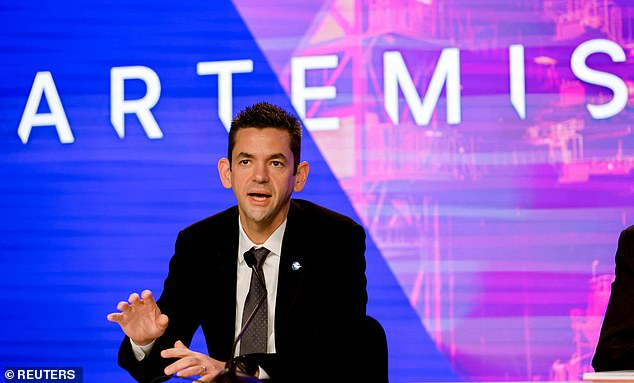
“This is what America does, and we perform at our best when facing a strong opponent,” he said.
Issacman mentioned that Trump strongly advocated for moving beyond the Apollo missions through the initiation of the Artemis program, which aims to send humans back to the moon by 2028.
“Don’t simply return to the moon to plant a flag and collect rocks,” he stated, outlining the mission to establish a lunar base and pursue “ambitious, courageous projects” in space.
NASA’s Artemis II mission, set to debut in April, will send four astronauts farther into space than any previous mission on a ten-day journey around the moon and back to Earth.
“It will be the most challenging and significant human space mission in fifty years,” he stated.
Isaacman stated there was ‘no doubt’ that the United States is engaged in a new space competition with China.
He stated that China possesses a ‘strong’ space program that should not be overlooked.
They don’t possess what I would even call, you know, much of the burden at the moment,” he said. “They are beginning their program from the ground up, and they’re providing it with resources. They have the knowledge and the determination, and they are working towards those objectives.
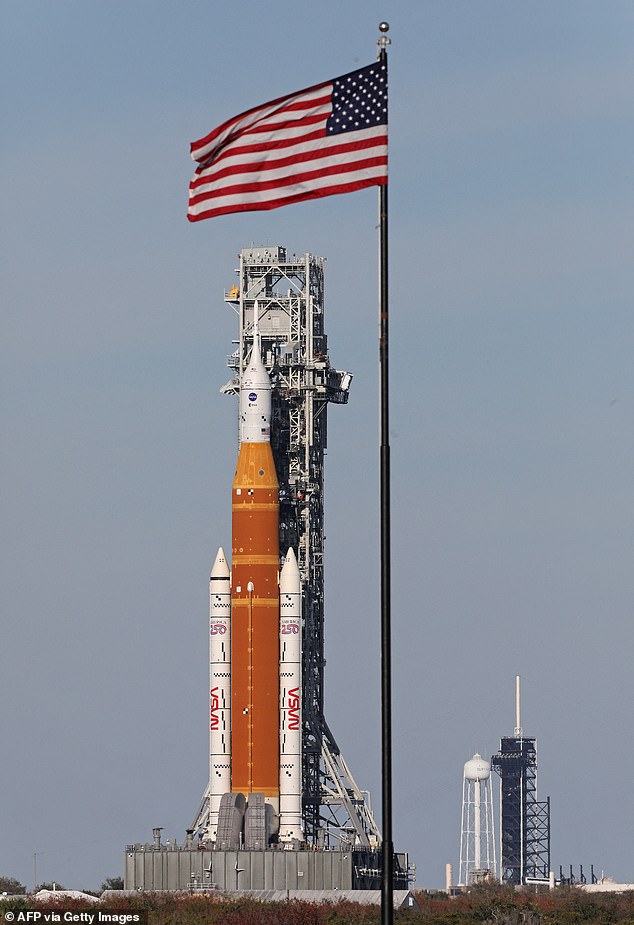
He admitted there had been challenges with the Space Launch System (SLS) rocket supporting the Artemis mission, as it relied on a significant amount of outdated technology.
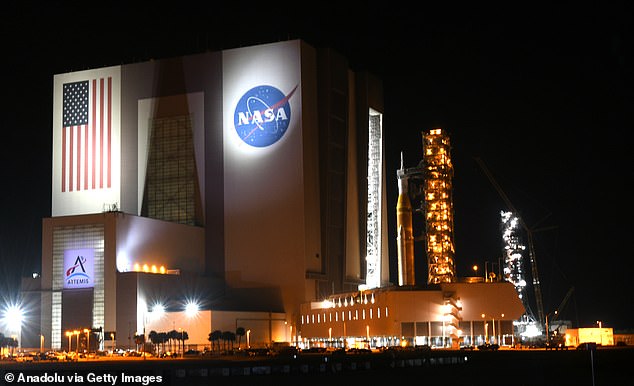
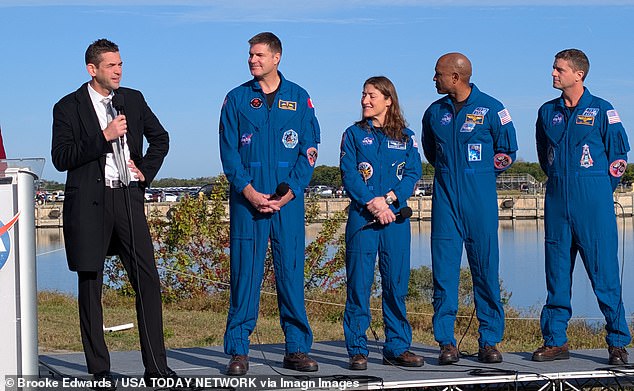
The Artemis II mission has already faced delays due to issues with helium flow and hydrogen leaks, but Isaacman mentioned that it wasn’t unexpected for the equipment to require updates since it hadn’t been used since 2022.
In February, Isaacman revealed a significant transformation of the Artemis program, featuring a rise in the frequency of SLS launches. He pledged that this would lead to two crewed missions to the moon by 2028.
The difficulties we have faced so far were definitely predictable. When looking at the program’s history, the key point is that we will approach things in a new way,” he stated. “The current situation is not acceptable.
The objective of the space program, he stated, had been NASA’s return to the moon for more than three decades, with the program’s expenses exceeding $100 billion.
“You fall short. That conveys a message to the world,” he said.
Isaacman gave credit to President Trump for energizing NASA’s mission, byreceiving substantial financial support for the initiative and securingEveryone in the House of Representatives concentrated on the matter before them.
“This is a president who has a great appreciation for space. He has provided us with the authority. He has given us the financial support… when you add that to the funding from Congress, we have all the necessary elements to make a significant impact in the areas of air and space,” he stated.



 jasdooit
Leave a comment