
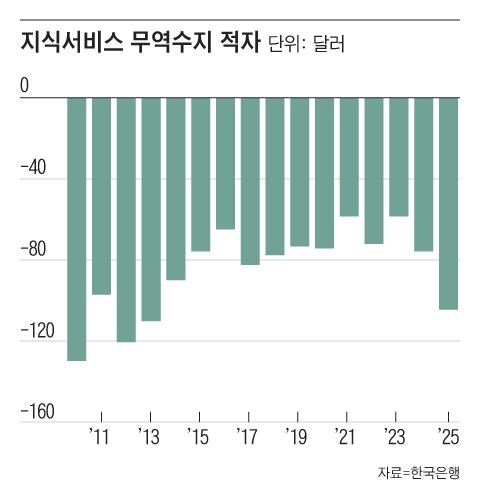
Last year, South Korea experienced its biggest deficit in knowledge service trade in 12 years. The Bank of Korea reported on the 19th that the deficit in knowledge services rose by 2.88 billion dollars, reaching 10.25 billion dollars compared to the previous year. This was the first time since 2013 that the deficit in knowledge services surpassed 10 billion dollars. Knowledge services refer to an indicator that combines services created through knowledge and information. These include fees for patent rights from research and development (R&D), mobile app usage charges, video service subscription costs, fees for cultural and entertainment content, and copyrights.
South Korea, which incurs significant costs for overseas patent licensing fees, has maintained a deficit in its knowledge service balance since 2010, when such data started being recorded. Nevertheless, this deficit gradually decreased and stayed under 10 billion dollars until the previous year, when it spiked once more. Park Sung-gon, head of the Bank of Korea’s balance of payments department, stated, “The deficit expanded due to increased payments by Korean companies for R&D-related patent licensing fees to foreign firms,” and noted, “South Korea’s primary exports consist of high-tech manufacturing industries such as electronics, automobiles, and home appliances, which depend on foreign technologies. Moreover, as exports increase, expenses for domestic professional services like legal, accounting, and advertising have also risen.”
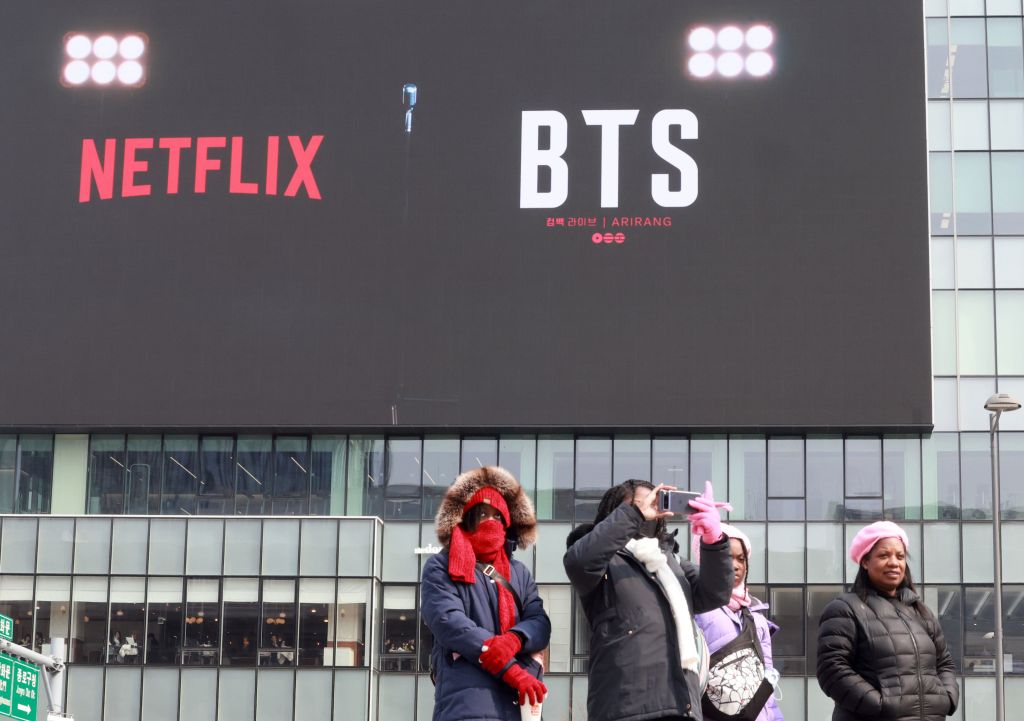
Services associated with the so-called ‘K-culture,’ which has become widely popular around the world, were in surplus. The ‘cultural and leisure services’ sector, which encompasses dramas, albums, performances, and exhibitions created directly by South Korea with owned copyrights, achieved a surplus of 2.115 billion dollars, marking a new record for exports. However, in the case of OTT platforms and smartphone apps where this content is mainly consumed, the deficit in ‘computer and mobile software,’ which includes OTT subscription fees, grew from 2.9 billion dollars in 2024 to 4.2 billion dollars last year as foreign services like Netflix and YouTube expanded their market share.
As per the market research company Wiseapp·Retail, by the end of last December, the most popular OTT application in South Korea was the American platform ‘Netflix,’ boasting 15.16 million monthly active users. Regarding the share of viewing time, Netflix also topped the list with a significant 61%.
In the meantime, as reports indicate that Google has paid a significant amount to Samsung Electronics in exchange for integrating Google’s artificial intelligence (AI) Gemini into its Galaxy smartphones, the surplus in ‘information provision and platform services,’ which covers this area, rose from 1.68 billion dollars in 2024 to 3.83 billion dollars last year. Park Sung-gon stated, “The surplus in this category has expanded due to an increase in instances where foreign companies pay to have their services pre-installed on smartphones and TVs produced by Korean firms.” ‘Information provision and platform services’ encompass database or real-time information delivery, information exchange between companies, and information brokering through online and offline intermediaries.



 jasdooit
Leave a comment