
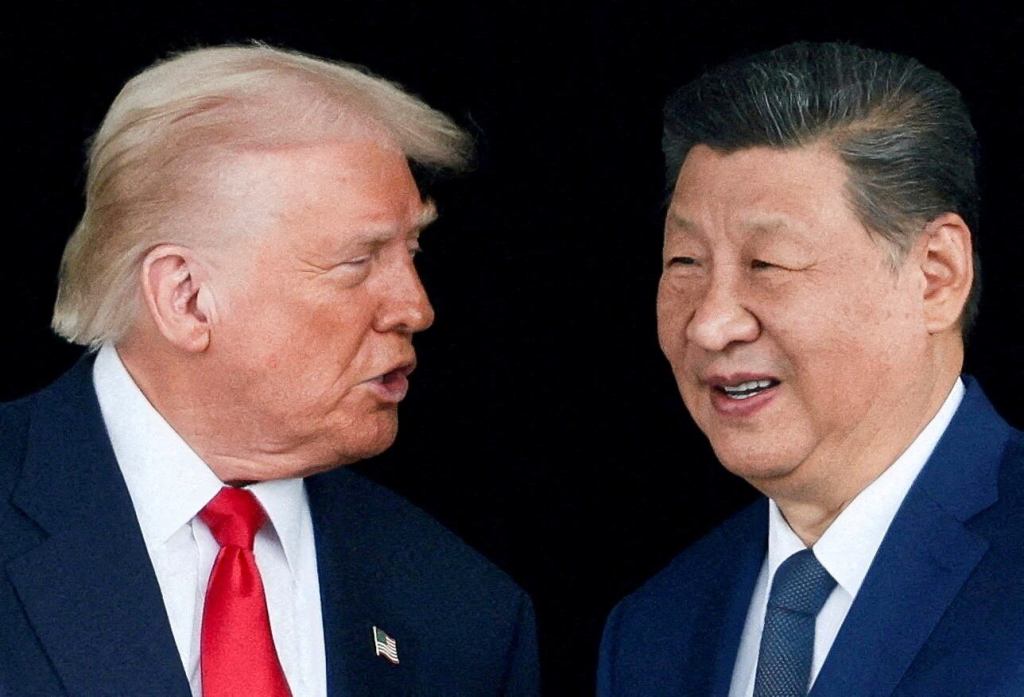
The Trump administration in the United States is said to have chosen to delay talks about setting a date for a U.S.-China summit until the conflict in Iran ends, as reported by the American political website Politico on the 21st.
A diplomat based in Washington, who is aware of the summit planning procedures, informed Politico on the same day that the Trump administration stated, “The next schedule for the summit will only be suggested once the escalation stage of the Iran conflict concludes.” A separate source from Washington also verified that the Trump administration conveyed this timeline.
Nevertheless, the White House has not given a definitive response about when the U.S.-China summit will take place. Anna Kelly, a spokesperson for the White House, mentioned, “The two nations are having constructive talks about President Trump’s trip to China,” and noted, “An official statement will be issued shortly.” The Chinese Embassy in the United States indicated that it had “no details to share” concerning the potential postponement of the summit schedule.
Previously, President Trump had planned to visit China from April 31st to April 2nd for a summit with Chairman Xi. However, as the conflict in Iran, which started on the 28th of last month, entered a longer phase, President Trump mentioned on the 16th, “I asked to delay the China trip by approximately a month.” On the 19th, Karoline Leavitt, a White House spokesperson, stated, “The visit has been delayed by about a month and a half,” sparking speculation that the trip might be rescheduled for around mid-May.
Politico stated, “Connecting the summit planning to the end of the Iran conflict suggests that further postponements might happen for this gathering intended to preserve the fragile U.S.-China trade agreement.” A person connected to the government remarked, “There are practical limitations in conducting a war against an adversarial nation like China,” and mentioned, “It would be quite difficult for Trump and Xi Jinping to reach an agreement under these conditions.”
In late October of last year, President Trump met with Chairman Xi in South Korea, reaching an agreement to halt restrictions on rare earth exports, restart buying American soybeans, and lower U.S. tariffs on Chinese products, which temporarily eased growing trade conflicts.
Experts have varied responses to the delay of the upcoming U.S.-China summit. Wendy Cutler, vice president of the Asia Society Policy Institute (ASPI), stated, “Even if the summit doesn’t occur, the stabilizing elements of trade discussions are not necessarily at risk,” pointing out that bilateral talks can still proceed without direct leadership involvement. On the other hand, Rush Doshi, director of the China Strategy Initiative at the Council on Foreign Relations (CFR), cautioned, “Without communication between the leaders, bilateral relations could become significantly more unstable than expected,” highlighting the significance of summits in maintaining the relationship.



 jasdooit
Leave a comment