
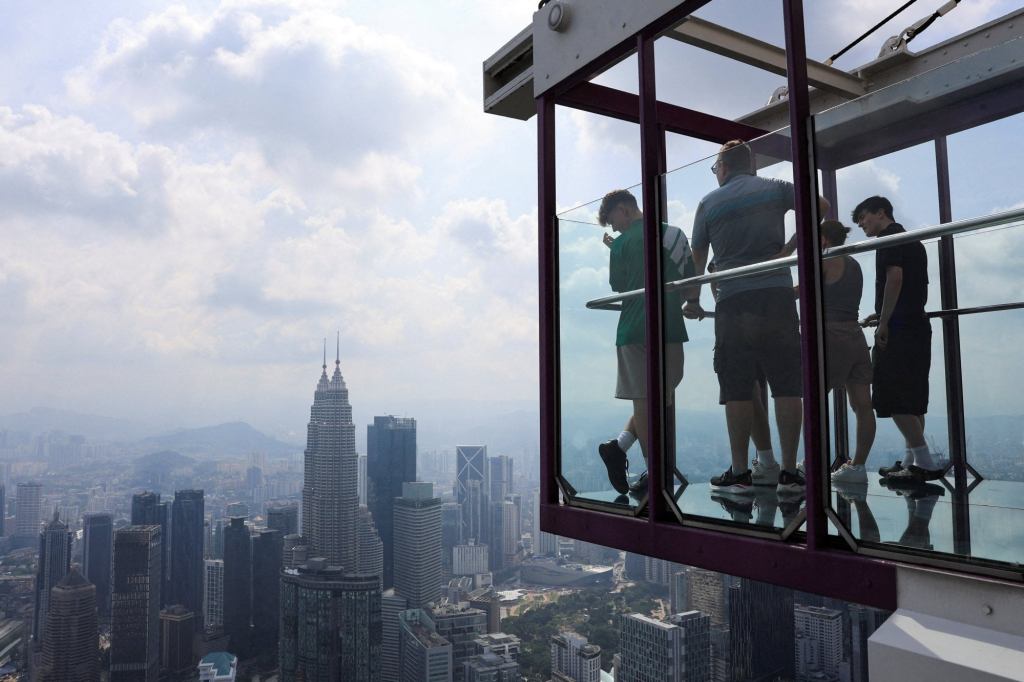
Malaysia’s dependence on Gulf airports is revealed as long-distance flight prices increase, yet 21 million yearly visitors from Singapore provide some relief
Julia had a plan: a spring break, the skyline of Kuala Lumpur, and a long-awaited meeting in the jungles of Sarawak. What she ended up with was a travel booking page displaying Euro3,000 (US$3,440) flights and a series of cancellation notifications.
“I simply can’t manage the cost,” said the 22-year-old Romanian to This Week in Asia.
Her initial Emirates travel plan involved a stopover in Dubai or Abu Dhabi, but theUS-Israel war on Iranshe had to abandon her plans after the airline warned about delays and two-week extensions due to regional airspace closures, causing flight prices to surge.
Alternative booking options with Turkish Airlines through Istanbul or KLM through Amsterdam were equally costly. Julia, who wished to be referred to only by her first name, watched a reunion in Malaysia that she had spent months organizing become unattainable.
Her background is the sort of personal upheaval that is now casting a shadow overMalaysiaHis most daring tourism initiative in years.
Following the arrival of over 42 million international tourists in 2025—a rise of 11.2 percent compared to the previous year—Visit Malaysia 2026 launched with optimistic official statements and a promotional effort aimed at presenting the nation as one of Asia’s more budget-friendly and accessible travel spots.
The Malaysian Tourism Board, the nation’s official tourism promotion organization, is aiming for 43 million foreign tourists this year.
The industry produced 291.9 billion ringgit (US$74.5 billion) in 2024, accounting for 15.1 percent of the gross domestic product, as reported by the Department of Statistics Malaysia, with spending by international tourists increasing by 41.1 percent during that year.
Currently, the industry is facing a challenge that is not related to beaches or tourism, but rather to aircraft fuel, disrupted flight paths, and the global layout of air travel.
The global average price of jet fuel increased by 11.2 percent from the previous week, reaching $175 per barrel, as stated by the International Air Transport Association. Meanwhile, Reuters reported on Tuesday that jet fuel prices in Asia have risen nearly 80 percent since the conflict with Iran started at the end of February.
Airlines have reacted by raising prices, adding fuel fees, and reducing seat availability, transforming an initially local dispute into a worldwide travel challenge.
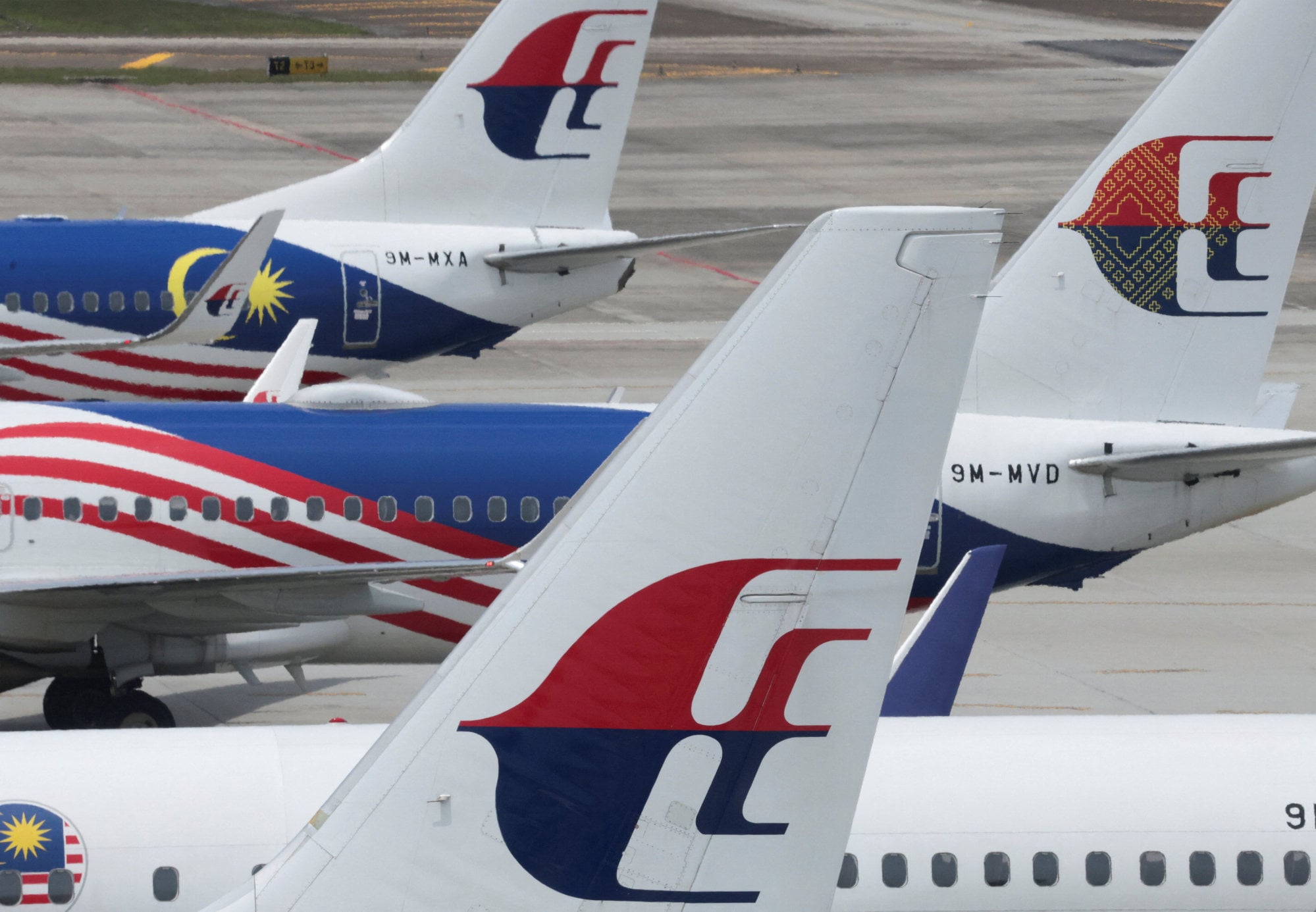
The issue in Malaysia, according to experts, goes beyond increased flight costs, but also involves the degree of its vulnerability to disturbances in the Middle East.
“Malaysia relies significantly on Gulf airports, as Kuala Lumpur offers fewer long-distance flights than other centers like Bangkok and Singapore,” said Brendan Sobie, aSingapore-based independent aviation analyst.
Prior to the crisis, Kuala Lumpur operated approximately eight daily flights to Europe, while it had around 17 to the Middle East, including 10 to key centers in the United Arab Emirates or Qatar. In comparison, Singapore had roughly 28 daily flights to Europe and 11 to the Middle East, according to Sobie.
It’s completely impossible for other hubs to step in and fill the gap,” he stated. “Currently, the need for long-distance flights is clearly greater than the available supply. This is why we’re witnessing such high prices for long-haul journeys and why some travelers are opting to stay closer to home.
The scarcity of supply is already evident in the market. Reuters reported at the beginning of this month that flights between Asia and Europe were fully booked for several days following the closure of major Gulf hubs, leading some travelers to opt for longer, more expensive routes via alternative transit points like Singapore, China, and the United States.

Regional cushion
Nevertheless, Malaysia’s tourism approach is distinct from that of regional competitors such as Thailand or Singapore, and this could serve as its primary defense.
Information on arrivals from the Ministry of Tourism, Arts and Culture highlights the extent to which the nation depends on regional visitors.
Singapore alone had 21.08 million visitors in 2025, making up almost half of the country’s total. China came in second with 4.66 million, followed by Indonesia with 4.27 million and Thailand with 2.5 million. The European and Gulf markets were much smaller: the United Kingdom contributed 429,974 tourists, France 228,173, Germany 188,928, Saudi Arabia 59,080, Iran 21,345, the UAE 7,682 and Qatar only 2,804.
That pattern provides industry insider Uzaidi Udanis with grounds for cautious optimism.
Approximately 75 percent of Malaysia’s tourists come from Southeast Asia, with half of them originating from Singapore alone, which made the country less affected by European and Gulf-related disruptions, he noted, although rising ticket prices and scheduling issues still had an impact.
The high cost of air tickets is unavoidable,” stated Uzaidi, the founder of the Malaysian travel website Your Inbound Matters and head of the Inbound Tourism Alliance. “However, by concentrating on this region, particularly Singapore, we can offset the losses we expect.
He mentioned that his own survey of industry members had so far revealed “not much significant effect,” partly due to the continued strength of domestic tourism, with school holiday travel boosting local attractions like the resort island of Langkawi.
The comparison with Thailandis informative. According to Thai government data, the nation welcomed 7.49 million international visitors from January 1 to March 11, marking a 4.4 percent decline compared to the same timeframe in the previous year.
More revealingly, the number of arrivals from Europe and the Middle East dropped by 16 percent during the time of increased tension, with European tourists decreasing by 14 percent and visitors from the Middle East falling by 55 percent.
In contrast, Singapore is still expecting between 17 million and 18 million international visitors in 2026, although its tourism authority has admitted these projections represent a “cautious strategy” considering global economic challenges and political unrest.
‘Little to no advantage’
Malaysia Airports, in a statement provided to This Week in Asia, maintained a delicate equilibrium between caution and comfort.
January and February provided a “consistent beginning,” according to the statement, supported by robust regional demand and increased connectivity — however, it was “too soon to make definitive judgments” about second-quarter itineraries and Europe-Asia summer reservations.
It noted that the varied network and robust regional connections of Kuala Lumpur International Airport (KLIA), the nation’s primary airport, might enable it to be more resistant to challenges compared to smaller locations if airlines started reducing their capacity.
However, not everyone is persuaded. Shukor Yusof, the founder of boutique aviation consultancy Endau Analytics, stated that Malaysia had “minimal or no advantage” since its airlines were not significant global operators and KLIA was not a leading transit center.
He cautioned that an extended shutdown of the Strait of Hormuz—a vital passageway for worldwide oil and fuel transport—might affect not just jet fuel availability but also gasoline, petrochemicals, and food costs, thereby reducing interest in non-essential travel.
“Prepare to witness an increase in the prices of food, gasoline, and nearly all other items,” he stated.
More Articles from SCMP
In her own words: Hilary Tsui discusses two decades of fashion in Hong Kong
China, India, and why Jeffrey Sachs argues the US should restore the UN’s prominence
This piece was first published in the South China Morning Post (www.scmp.com), a top news outlet covering China and Asia.
Copyright (c) 2026. South China Morning Post Publishers Ltd. All rights reserved.




 jasdooit
Leave a comment