
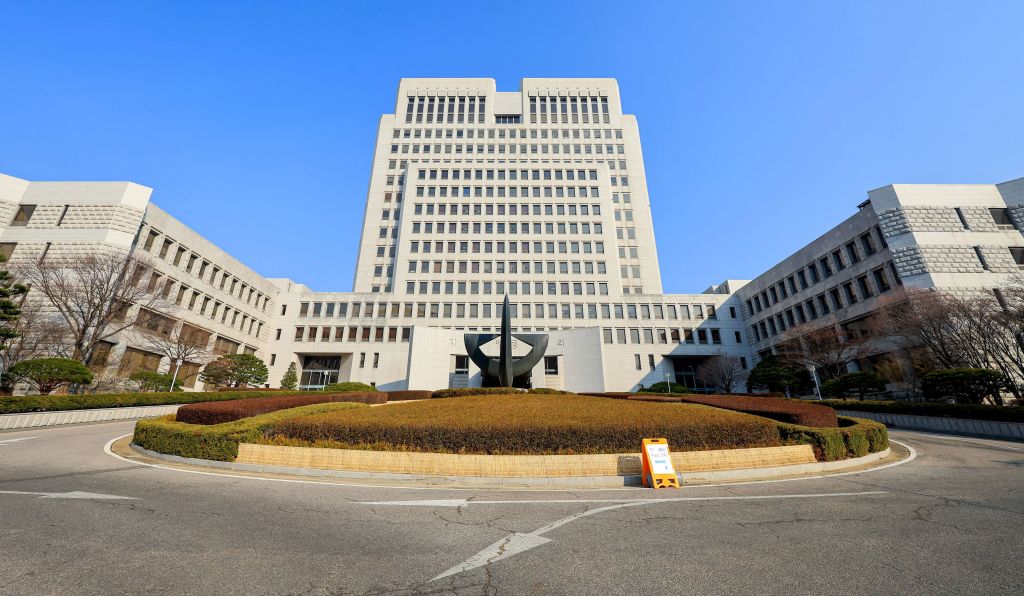
Only bonuses given to employees who work during a particular period are classified as part of their wages, while payments based on performance and tied to a company’s financial outcomes are not considered wages, according to the Supreme Court’s latest decision.
As per legal sources on the 22nd, the Supreme Court’s First Division, led by Justice Shin Suk-hee, reversed a lower court’s decision that classified performance bonuses as wages in an appeal brought by Mr. Kang and 36 other LX Glass employees. The case has been sent back to the Seoul High Court.
In the 2020 legal action, Mr. Kang and the employees claimed that the company did not include standard bonuses and health insurance costs when determining overtime and night shift pay, and also omitted “management performance bonuses” linked to net profit while calculating retirement pension contributions.
The main legal issue was whether routine bonuses dependent on ongoing employment, health insurance costs covered by the employer, and performance-based bonuses tied to company results should be considered “wages.” The first and second trial courts supported the employees, classifying all three as wages. They specifically decided that tiered performance bonuses should be counted as wages when the company’s post-tax net profit surpassed 3 billion South Korean won, noting, “The payment conditions were well-defined and the bonuses were distributed annually.”
Nevertheless, the Supreme Court’s decision was different. On the matter of management performance bonuses, it stated, “As net profit is not strongly connected to labor supply and is more affected by elements outside employees’ control, it cannot be viewed as payment for the amount or standard of labor,” classifying them as non-wage.
The court stated that a company’s profits are more influenced by factors like capital amount, market environment, and management choices rather than the efforts of employees, which makes it challenging to categorize these bonuses as straightforward labor compensation. It considered the performance bonuses to be more similar to “incentive payments” or “profit-sharing” aimed at motivating staff during profitable periods. The case was returned to the Seoul High Court for additional examination.
The Supreme Court confirmed the decisions made by lower courts regarding routine bonuses and health insurance costs, rejecting the appeal. This ruling is consistent with previous cases. In December 2024, the full panel of the Supreme Court decided that regular bonuses dependent on ongoing employment should be considered part of regular pay. Recently, in legal disputes concerning retirement pensions involving SK Hynix and other large corporations, it also determined that management performance bonuses linked to company results are not classified as labor compensation and therefore not included in wages.


 jasdooit
Leave a comment