

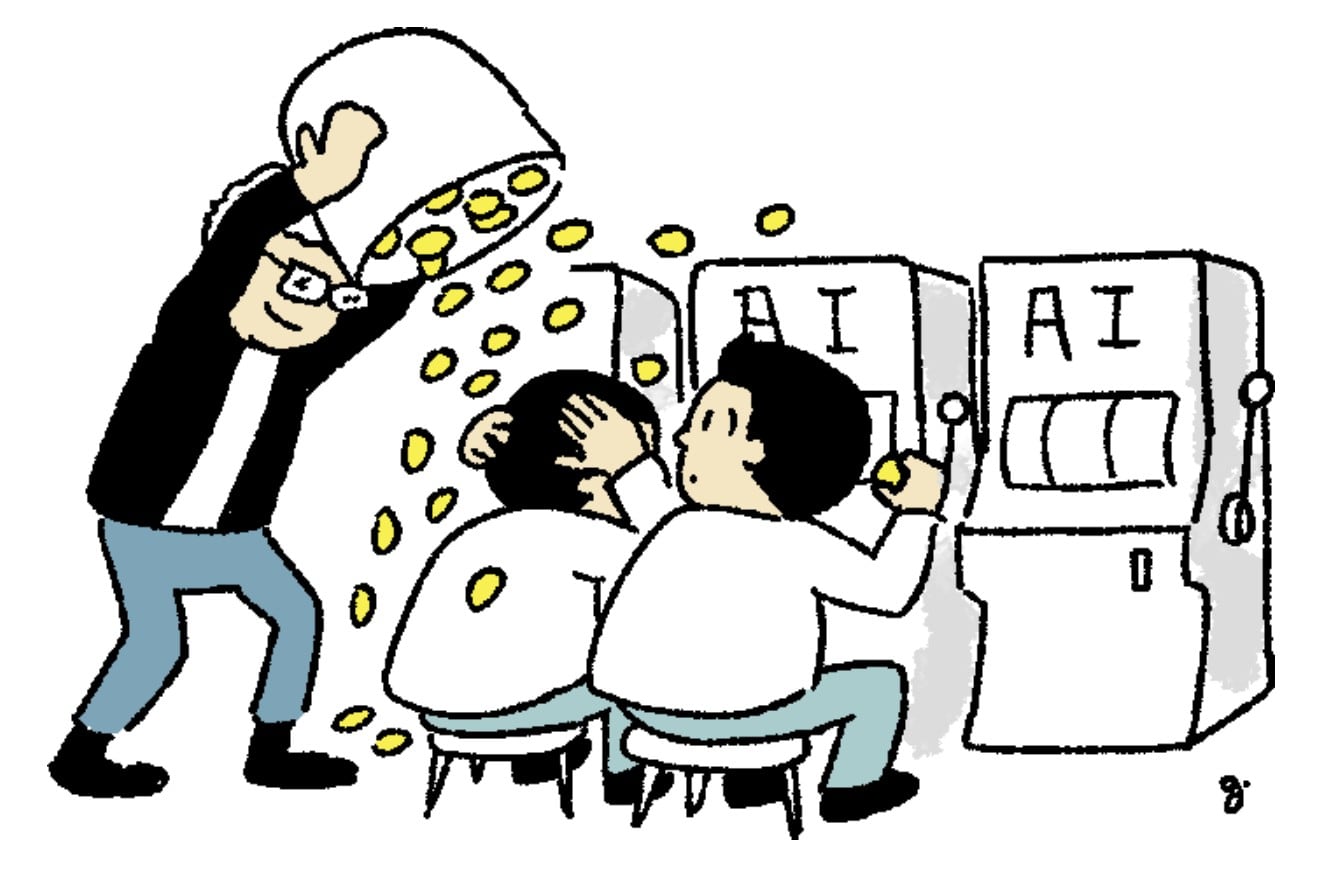
In addition to yearly salaries and incentives, there is now another factor to monitor: tokens. Tokens represent data segments similar to pieces of language. Although an AI may generate outcomes with a “click,” it actually uses resources such as semiconductors and power to process these tokens internally. The expense of handling tokens is approximately a few thousand South Korean won per million tokens at current rates, and because this is comparable to an exchange rate, tokens have started to be considered like money.
NVIDIA’s Jensen Huang has announced that he will offer engineers tokens equivalent to half their yearly salary as a perk. The company is set to generously distribute these tokens, encouraging employees to utilize AI extensively to enhance efficiency. He also noted that if any employee does not use the allocated tokens, it would come as a significant letdown.
More precisely, he suggested a future corporate framework that establishes a 1:100 ratio between human and digital workers. The idea was to link approximately 100 AI agents per person and expect outcomes. Although the number of roles may decline, this signals an upcoming period where, rather than relying on ambiguous measures such as how diligently someone works, we can measure the amount of output produced based on the number of tokens consumed.
This is not a future far away. Businesses are appearing that cut their staff and instead enroll the remaining employees in expensive AI programs. It’s not straightforward. This is because AI operates on probabilities, resembling a slot machine rather than a vending machine. Frequently, users run out of tokens without obtaining the expected outcomes. Nevertheless, there are individuals who understand the system and achieve success more often, similar to experienced gamblers. That’s why, despite companies cutting their teams, they are still looking for these skilled individuals.




 jasdooit
Leave a comment