
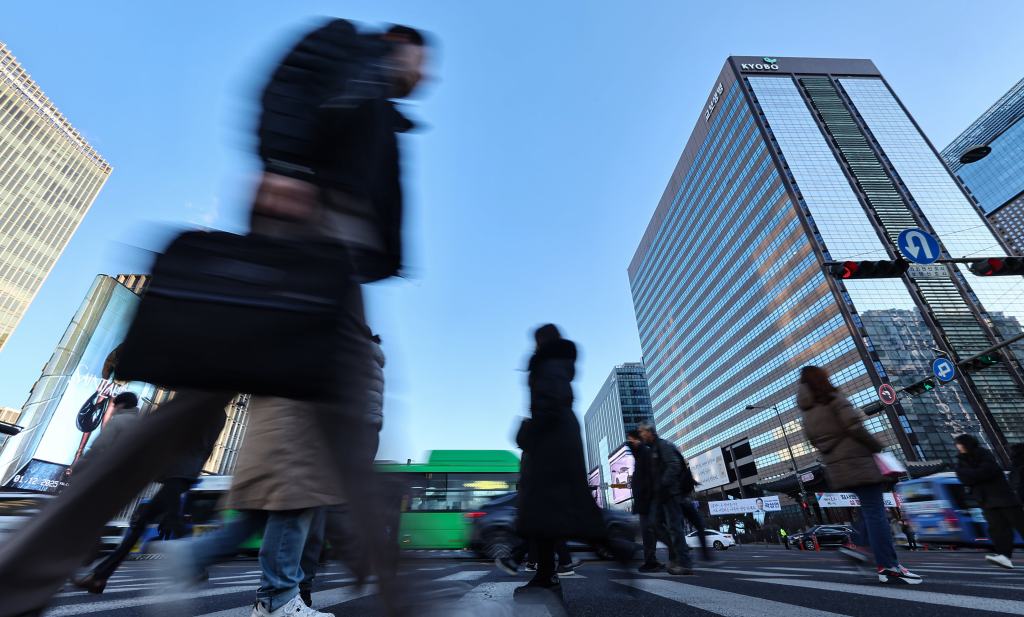
For the first time, the average yearly wage of workers in large local companies has gone beyond 100 million South Korean won. Nevertheless, the difference compared to high-level managers has grown larger.
As per a study conducted by the corporate analysis organization Leaders Index on 211 companies ranked in the top 500 by sales as of the 25th, the actual average annual salary for employees last year amounted to 102.8 million South Korean won, representing a 5.2% rise compared to the prior year (97.7 million South Korean won). In contrast, the average pay for high-earning individuals increased by 7.6% to 2.18 billion South Korean won, expanding the disparity from 20.7 times the previous year to 21.2 times.
In terms of sectors, the distribution industry had the largest disparity in wages. The average pay for high earners rose by 20.1% to 2.53646 billion South Korean won over the year, whereas the average worker’s salary stayed at 64.47 million South Korean won, creating a 39.3 times difference. Other sectors with notable gaps were food and beverage (34.2 times), holding companies (29.3 times), and IT/electronics (28.5 times).
On the other hand, the financial industry experienced relatively smaller disparities. In particular, within banking, the average employee salary rose by 5.9% to 118.28 million South Korean won, while the compensation growth rate for top earners stayed at 1.7% (986.86 million South Korean won), narrowing the gap from 8.7 times to 8.3 times. Insurance (11.1 times) and credit finance (11.2 times) also saw lower disparity levels compared to other sectors.
At the company level, Cho Hyun-sang, Vice Chairman of HS Hyosung, was given 7.35 billion South Korean won, whereas the typical employee earned 61 million South Korean won, creating a disparity of 120.5 times. Cho Hyun-joon, who serves as Chairman of Hyosung, received 10.199 billion South Korean won, which is 118.2 times more than the average employee salary of 86.3 million South Korean won. The total pay received by Chairman Cho from three subsidiaries, including Hyosung TNC, totaled 15.735 billion South Korean won.
At E-Mart, the difference between Chung Yong-jin, the Chairman of Shinsegae Group (5.85 billion Korean won), and the average employee salary (51.03 million Korean won) amounted to 114.6 times. Regarding individual pay, Kim Seung-youn, the Chairman of Hanwha Group, had the highest compensation at 24.841 billion Korean won, followed by Lee Jay-hyun, Chairman of CJ Group (17.743 billion Korean won), and Chung Eui-sun, Chairman of Hyundai Motor Group (17.461 billion Korean won).
The sectors offering the highest average wages for employees were finance and securities. Korea Investment & Securities topped the list with 181.74 million South Korean won, followed by SK Hynix in second position with 180.76 million South Korean won. Next came NH Investment & Securities with 178.51 million South Korean won, KB Financial at 173.98 million South Korean won, and Samsung Securities with 164.52 million South Korean won.
Leaders Index clarified, “Although employee pay rose because of better performance by major companies, the pay disparity has grown as the rate of increase for top executives’ salaries exceeded that of regular workers.”


 jasdooit
Leave a comment