
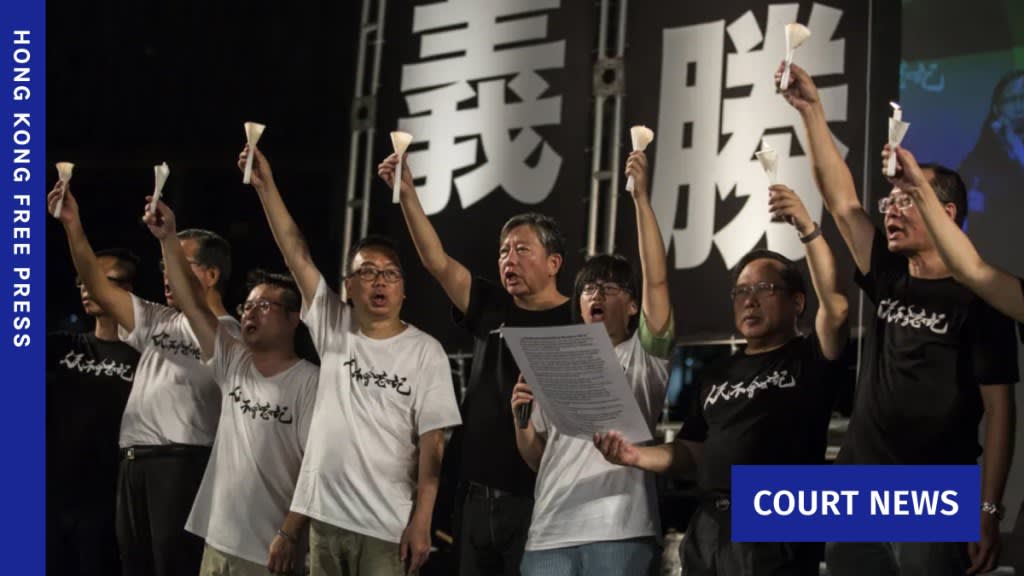
A leader of a now-defunct Hong Kong group that held annual vigils to commemorate the Tiananmen crackdown has said it had concerns that the national security law could be used for “political suppression.”
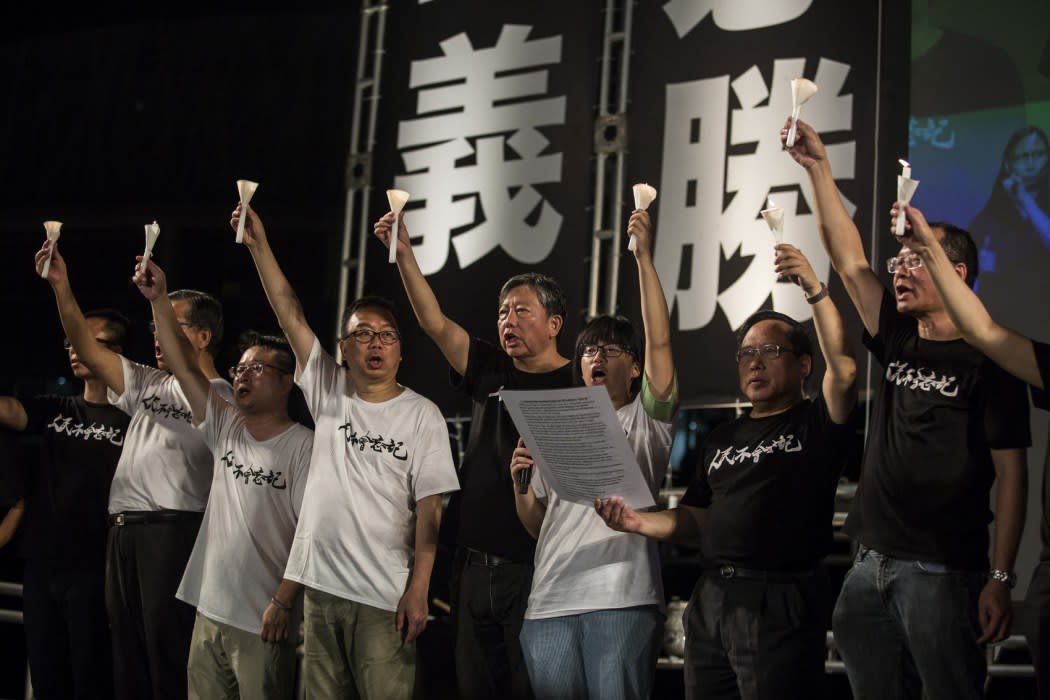
Chow Hang-tung, a former head of the Hong Kong Alliance in Support of Patriotic Democratic Movements of China, informed the prosecution on Thursday that the organization had internal debates regarding the law several weeks prior to its enforcement in late June 2020.
The conversations, which took place prior to the June 4 memorial event that year, focused on “concerns that the national security law could be utilized as a means of political oppression,” Chow informed prosecutor Ivan Cheung.
“It might be employed to silence opposing opinions, which was clearly our situation,” she stated.
Chow, fellow leader Lee Cheuk-yan, and the Allianceare standing trialfor “inciting subversion,” a crime under the national security law imposed by Beijing, which can result in a maximum sentence of 10 years in prison. Another leader, Albert Ho, who has admitted guilt to the charges, was exempted from attending the trial.
The Alliance ceased to exist in 2021 following a two-year ban imposed by officials on the vigil, citing measures related to the Covid-19 pandemic, and the arrest of its leaders on charges of national security.
Prosecutors claim that the group aimed to encourage others to challenge the CCP’s leadership with its demands for “ending single-party rule,” a fundamental principle of the group since it was established in 1989.
In reply to Cheung’s inquiry, Chow also affirmed that the Alliance backed Charter 08, a statement endorsed by Chinese dissidents and human rights advocates in 2008, which advocated for political reform, including the termination of one-party governance.
She mentioned that although the Alliance backed the overall goals of the movement, differences might emerge regarding execution, such as the approach to reforming China.
‘Resistance’
Chow was also questioned about what the Alliance meant by “resist” in its 2020 rally slogan: “Truth, Freedom, Life — Resist.”
Was it the political system governed by the Chinese Communist Party?” Cheung inquired. Chow responded that the Alliance was opposing “all unjust oppression, not only within the political system, but in every type of injustice.
The identical message was used for the 2021 slogan: “Resist, for Freedom and our Shared Destiny.”
The court was presented with a video from the 2019 memorial event, during which Chow gave a tribute for those who lost their lives during the crackdown. “We reject this violent government and promise to pursue justice,” she stated on the stage at Victoria Park that year.
“The resistance you initiated has turned into a source of inspiration for numerous other resistance movements, both within and beyond the country,” she also mentioned that day, referring to the demonstrators at Tiananmen Square.
Various speakers took the stage, including Tiananmen survivor Liane Lee, who was a university student when she travelled to Beijing in 1989 in solidarity with the democracy movement.
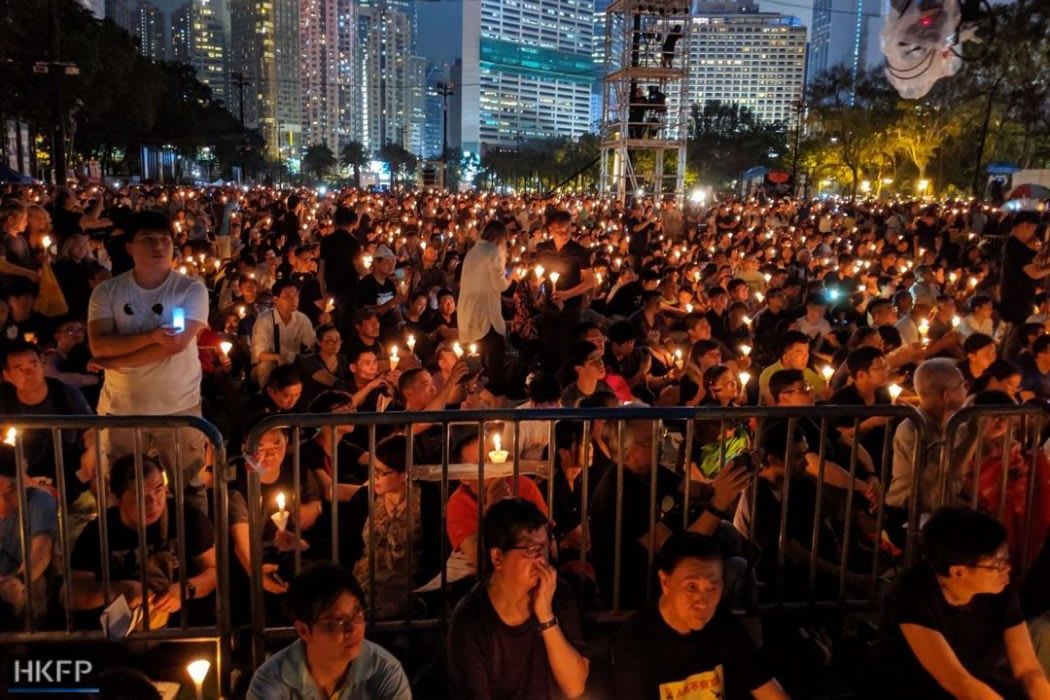
The candlelight gathering concluded with an appeal for attendees to join a demonstration on June 9, opposing the planned extradition bill that would spark extended demonstrations and turmoil.
Lee, a leader of the Alliance and co-defendant of Chow in the case, raised slogans encouraging the public to “fill Victoria Park” five days later and demanded the “draconian law” be put on hold.
Chow stated on Thursday that the purpose of the vigil was to honor memories. “We needed to act properly for every soldier who arrives, full of fear, to tell their story… The Alliance’s position can only be considered too cautious, not too extreme,” she mentioned.
In response to questions from the Alliance’s attorney Priscilia Lam and Judge Alex Lee, Chow stated that she felt advocating for an end to one-party governance was not against the law.
She also verified, in reply to Lam’s inquiries, that the Alliance had eliminated provisions from its original charter that referenced the “overthrow” of former Chinese leader Deng Xiaoping in 1994, and that the organization had never advocated for “overthrowing or undermining the leadership of the Chinese Communist Party.”
Lam provided papers from 2002 concerning the implementation of Hong Kong’s locally created national security law, Article 23, which stated that the offense of subversion required the use of “serious illegal methods.”
Chow mentioned she was familiar with these ideas, but the judges stated that the two-decade-old papers had no bearing on the present case.

 jasdooit
Leave a comment