
Unusual HK$150 billion transfer from the Exchange Fund has ignited intense discussion
In the summer of 1998, the normally calm atmosphere at theHong Kong Monetary AuthorityThe company’s headquarters at Citibank Tower vanished abruptly as regional currencies tumbled in a chain reaction.
Greedy speculators had bet against currencies like the Thai baht, the Indonesian rupiah, and the South Korean won, reaping significant gains. The crisis seemed poised to also collapse the Hong Kong dollar. As narrators from that time have remembered, during that hot month of August, the “wolves” were at the gates.
International hedge funds initiated a dangerous “double strategy” – simultaneously betting against the Hang Seng Index and selling off the Hong Kong dollar. They were wagering that the de facto central bank’s strict regulations would keep interest rates elevated, causing the stock market to crash and providing them with a multi-billion dollar profit.
Are you curious about the most significant issues and developments happening globally? Find the solutions withSCMP Knowledge, our latest platform offering handpicked content including explainers, FAQs, analyses, and infographics, presented by our acclaimed team.
For a period of two weeks, the city’s financial leaders remained isolated in a high-pressure command center. The choice before them was a radical departure from tradition: should a “laissez-faire” government take direct action in the stock market?
Under strict confidentiality and utilizing the “power” of the Exchange Fund, they carried out a defensive strategy. Three major stockbrokers were invited to breakfast at the China Club in Central and promised to keep it secret as they were instructed to purchase on the authority’s behalf.
The HKMA exercised its financial influence over a span of 10 days. Eventually, on one particular Friday, it took in a massive wave of sell orders, injecting HK$79 billion within five hours to weaken the speculators.
The “August war” resulted in a total cost of HK$118 billion, yet it provided something even more significant—a reputation for the Exchange Fund as the city’s final, unshakeable “reserve fund.”
Now, the chest is being opened once more. This time, it’s not to ward off an attack but to construct a city – according to the financial secretary.
Landmark transfer
It was unavoidable that the ghost of 1998 came up last month when the finance chiefPaul Chan Mo-po announced a landmark HK$150 billion transferfrom the Exchange Fund to the Capital Works Reserve Fund in hisbudgetspeech. The amount – to be withdrawn within two years – is intended to fund theNorthern Metropolisand additional essential infrastructure initiatives.
This marks the first time in 42 years that such a transfer has occurred. The uncommon nature of a transaction involving the Exchange Fund and the magnitude of the withdrawal led to intense discussion, with references to the events of 1998 being brought up, despite the motivations being significantly different.
The Exchange Fund – the city’s unofficial sovereign wealth fund and financial reserve used to support the Hong Kong dollar’s link to the US dollar – has been the foundation of the city’s open and globalized economy. Therefore, the intense debates of the past month.
At the core of the discussion were two closely linked matters: the condition of the city’s financial stability and its commitment to future fiscal responsibility.
Although the government officially stated a small HK$2.9 billion surplus for the previous fiscal year, this number was influenced by bond revenues and debt positions that are newly introduced to the administration.
Without their involvement, Hong Kong would face an underlying deficit of HK$100.4 billion. To those critical of the city, drawing from the reserve fund now appeared less like a strategic investment and more like a short-term solution to fill a gap.
The removal of funds from the Exchange Fund also led to demands for a spending limit to maintain control and increased supervision, even as some cautioned that accessing it must be approached with utmost care.
They claimed that existing global political uncertainties and the danger of being cut off from Swift—a secure financial communication system used for international transactions—have made safeguarding the “war chest” more critical than ever.
The system’s designer, on the other hand, holds a contrasting perspective.
John Greenwood, the economist involved in creating the dollar peg, officially referred to as the Linked Exchange Rate System, considered the present public reaction an exaggerated response during an interview with the South China Morning Post.
I believe it is incorrect to employ the expression of ‘opening Pandora’s box,’ ” he stated. “There is little merit in simply having a pot of money that remains unused for the advantage of Hong Kong residents.
He argued that the existing system was still strong, warning that strict limits might damage the unique simplicity and worldwide convertibility of the US dollar’s connection.
The fund and the dollar linkage
In the past, withdrawals from the Exchange Fund have been uncommon and much more limited in scale.
The initial transfer, in 1964, allocated HK$150 million to the Development Loan Fund. This came after a 1963 review revealed that the fund’s assets were 142 percent higher than its liabilities, leading to an update of the Exchange Fund Ordinance to permit the movement of excess capital.
The second and most recent transfer occurred in 1984, with HK$250 million transferred to general revenue to compensate for the removal of interest tax on Hong Kong dollar deposits. During that period, the fund’s assets amounted to HK$55.5 billion.
Nevertheless, the most recent transfer, according to analysts, was driven by different motivations. Initially, it moves away from the prior “reactive” approach of accounting modifications.
More notably, the HK$150 billion plan presents the city’s monetary foundation in a different perspective – as a strategic tool to support Hong Kong’s sustained economic growth, they mentioned.
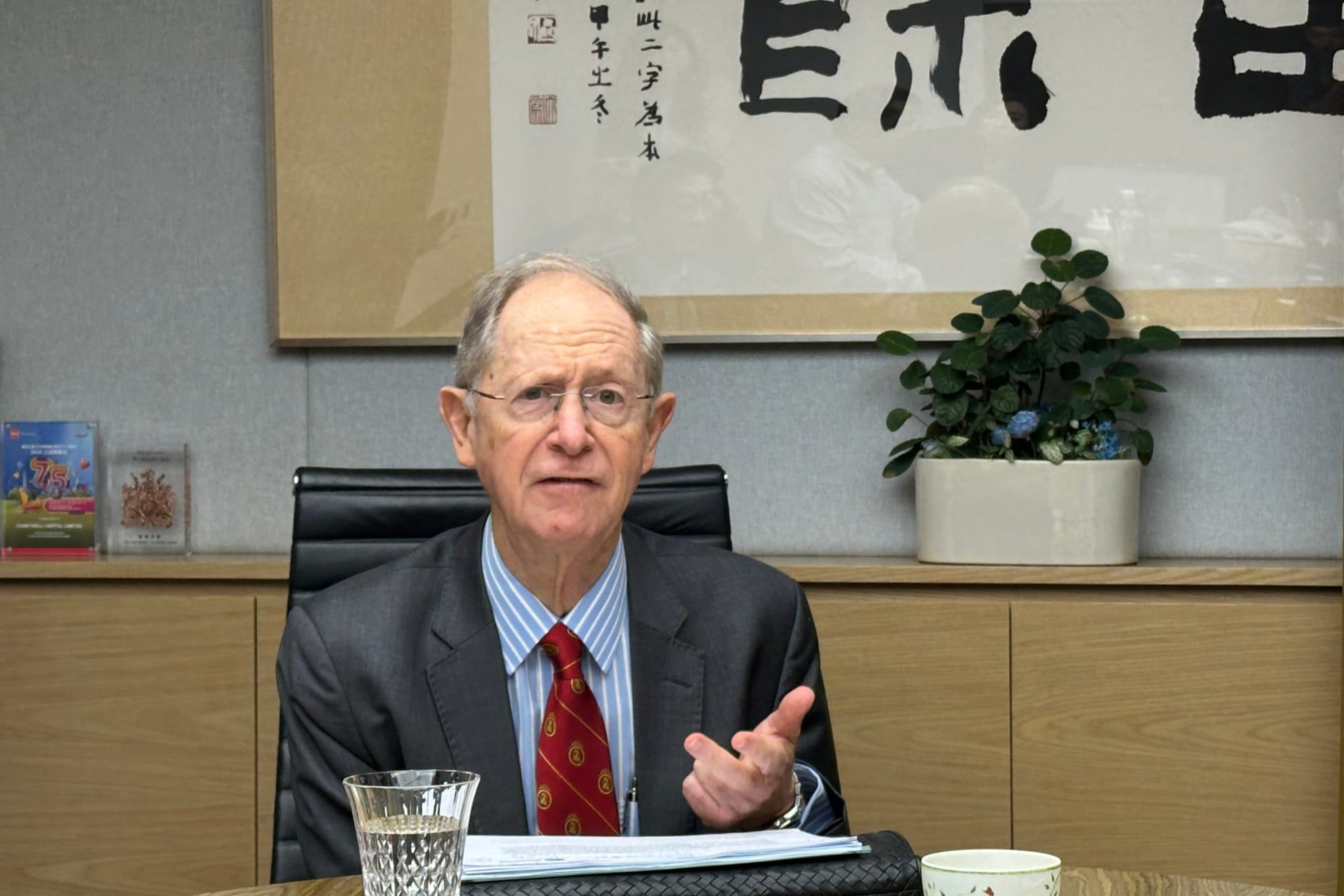
Greenwood stated that expanding revenue sources was wise considering the instability of conventional income flows.
“If land sales fail to improve… then perhaps the government will have to depend on this type of reduction,” he stated.
I believe they are not keen on the debt continuing to increase at the pace it has over the past two or three years.
Although Greenwood and other business leaders have shown approval for the reduction, public concern about the Exchange Fund is still significant, due to its main responsibility of protecting the Hong Kong dollar.
Founded in 1935 to transition the city from a silver system to a sterling exchange rate, the fund’s holdings have now increased to over HK$4.2 trillion as of January 2026.
Stability was achieved with difficulty. During the 1970s, the currency temporarily shifted from being tied to sterling to a US dollar link, then entered a phase of floating exchange rates after the collapse of the gold-backed Bretton Woods system.
Nevertheless, the absence of a defined monetary reference point, along with political instability from the 1980s, led to a currency collapse in 1983, causing the exchange rate to drop to 9.60 compared to the US dollar.
To regain trust, the government implemented the Linked Exchange Rate System in October of that year, fixing the local dollar to the US dollar at 7.80. From 1993 onward, the authority has maintained this link, adjusting it in 2005 to establish the present trading range of 7.75 to 7.85.
In addition to that well-known confrontation in 1998, the fund has consistently functioned as the city’s final financial safety net. At the peak of the Asian financial crisis, it offered a HK$28 billion bank guarantee to stabilize the local credit market, and it subsequently played a crucial role in providing full deposit guarantees during the 2008 global economic downturn.
More unusually, HK$3.7 billion was redirected in 2001 to establish the HKMA’s permanent headquarters at Two IFC, solidifying the city’s financial regulator in the core of Central.
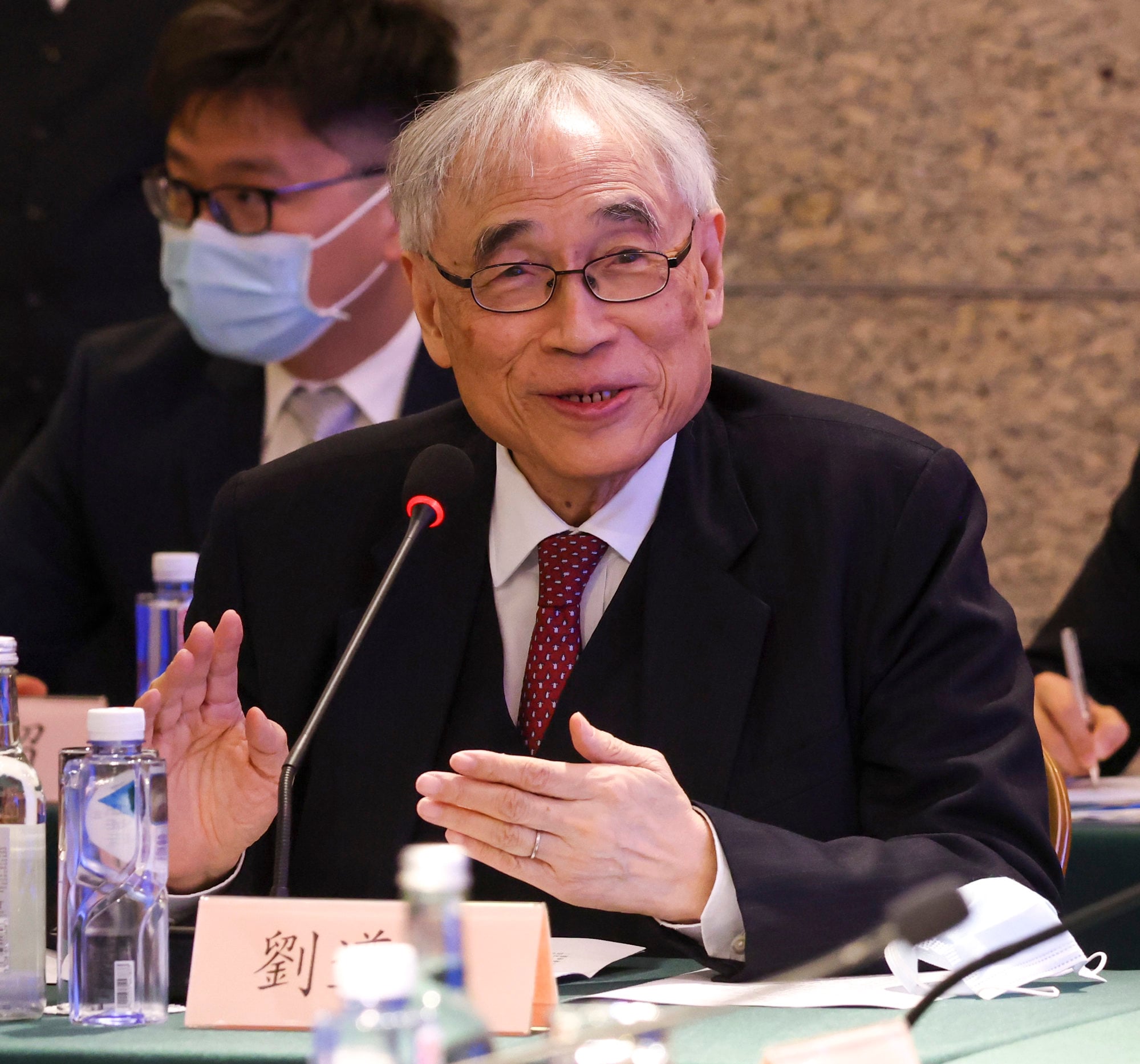
Professor Lawrence Lau Juen-yee, a well-known economist and former vice-chancellor of the Chinese University of Hong Kong (CUHK), stated that the public’s concern about using the fund was due to the lingering effects of the Asian financial crisis.
“There is always the concern that if the fund were ever seen as insufficient for possible withdrawals, speculative attacks could follow,” Lau stated.
Nevertheless, he considered these concerns unfounded, pointing out that in an actual emergency, the mainland China’s sovereign reserves “can and will be utilized.”
Lau also differentiated the Exchange Fund from sovereign wealth funds like Singapore’s Temasek or Norway’s Norges Bank Investment Management, pointing out that Hong Kong’s reserves needed to focus on immediate US dollar liquidity.
Reiterating the view, Greenwood linked public concern to a misinterpretation of the fund’s two-part structure. He highlighted that out of the HK$4.2 trillion portfolio, approximately half provides monetary support, while the remaining half represents fiscal support.
“Hong Kong’s system is distinctive, with its financial and monetary aspects managed together,” Greenwood stated.
The notion that all funds are required to maintain the peg is an exaggeration. In reality, only half of the assets are necessary to ensure complete convertibility.
He indicated the reserve portfolio, which holds a ratio of 105 to 112.5 percent in liquid US dollar assets to uphold the fixed exchange rate. This system enables the authority to pursue higher returns on surplus funds while maintaining the currency’s stability.
The financial support is so significant, stemming from the government’s cautious approach and the HKMA’s successful investment history,” Greenwood added. “You have an institution with large monetary reserves that consistently remain above 105 per cent of the monetary base, while also having this robust fiscal element.
Cap the reserves?
Nevertheless, certain specialists are advocating for a significant change in the way the fund’s excess is handled.
Terence Chong Tai-leung, an economics professor at the Chinese University of Hong Kong, advocated for limiting the fund’s scale and redirecting surplus interest earnings to the government.
“There exists a suitable reserve level to maintain the peg. After that point, it incurs a societal cost since the funds could be more effectively allocated towards infrastructure development,” Chong stated.
It is definitely not ‘the more the better.’ If all the funds generated are simply used to maintain the peg, it is a waste. We don’t require that much. Otherwise, there is no limit.
Lau emphasized the importance of establishing an “ideal” scale, proposing that Hong Kong could isolate its liquid reserves from a specific wealth fund.
Lau stated, ‘Hong Kong could concurrently preserve a high-liquidity Exchange Fund aimed at supporting the peg, while also having a distinct wealth fund focused on generating maximum returns for the treasury.’
A model like this would reflect the strategy of the China Investment Corporation and Singapore’s Temasek and GIC, he mentioned, pointing out that they function separately from their respective central banks to generate significant income.
Lau referenced the Hong Kong Investment Corporation (HKIC), which was founded in 2022, as a comparable example within the region, even though he acknowledged it is still in its early stages.
HKIC is actually the nearest to that type of fund, but it’s quite small and only beginning. It will take years before it becomes a major income source.
Greenwood, nevertheless, warned that enforcing a strict “limit” on the fund might turn out to be an error.
“Introducing such rigidity could create more discomfort during a future emergency,” he cautioned, emphasizing that the system already includes a fair “dividend” structure.
Since 2007, the government has consistently received payments from the fund, calculated using a six-year average of investment returns, which enables accurate financial forecasting even amid market fluctuations.
This perseverance was notably challenged in 2022, when the fund suffered a historic loss of HK$202.4 billion in investments. Even though the investment portfolio experienced a negative return of 8.6 per cent that year, the fund’s distribution system held strong, providing over HK$50 billion to the government at a set rate of 5.6 per cent.
Greenwood also noted that technical changes since 1998 have greatly enhanced the fund’s strength.
He mentioned that during the 1997-98 financial turmoil, banks frequently experienced ambiguity about their closing Hong Kong dollar balances. Currently, the Real-Time Gross Settlement (RTGS) system and the utilization of Exchange Fund Bills and Notes (EFBNs) offer a vital liquidity cushion.
Banks can now utilize their holdings of EFBNs issued by the HKMA to increase their settlement balances,” Greenwood stated. “Transactions have transitioned to a real-time system, meaning that shorting the Hong Kong dollar will instantly reflect in the balances at the HKMA.
He mentioned that the framework helped avoid “settlement surprises” which had previously caused instability. By reducing EFBN holdings, banks keep positive balances during the day, ensuring that if the currency faced pressure, “it is highly improbable that interest rates would rise sharply”.
‘Plan B’ needed?
Lau cautioned against dismissing the possibility that changing global geopolitics might ultimately lead to a “severance” from the US dollar.
He warned that should US-China relations worsen to the extent that Washington turned the financial system into a weapon, Hong Kong might be excluded from the Swift network.
“The United States could take any action to maintain its dominance. That is one possibility in which Hong Kong would be removed from the peg,” Lau stated, adding that the city remained largely ‘passive’ in response to these external pressures.
Instead of a new single-currency connection, he suggested a strategic move towards the yuan.
Hong Kong should consider using the yuan alongside Hong Kong dollars within the Greater Bay Area,” Lau stated. “In the event that mainland China and Hong Kong can no longer use Swift, the People’s Bank of China could propose exchanging yuan for Hong Kong dollars at the average exchange rate from the preceding, for example, 10 business days.
Businessman Allan Zeman also advocated for a comparable assessment, highlighting the worldwide movement toward diversification from the US dollar.
“Several nations are currently removing the US dollar from their treasury reserves. This is the reason gold prices have surged,” stated Zeman, head of the Lan Kwai Fong Group.
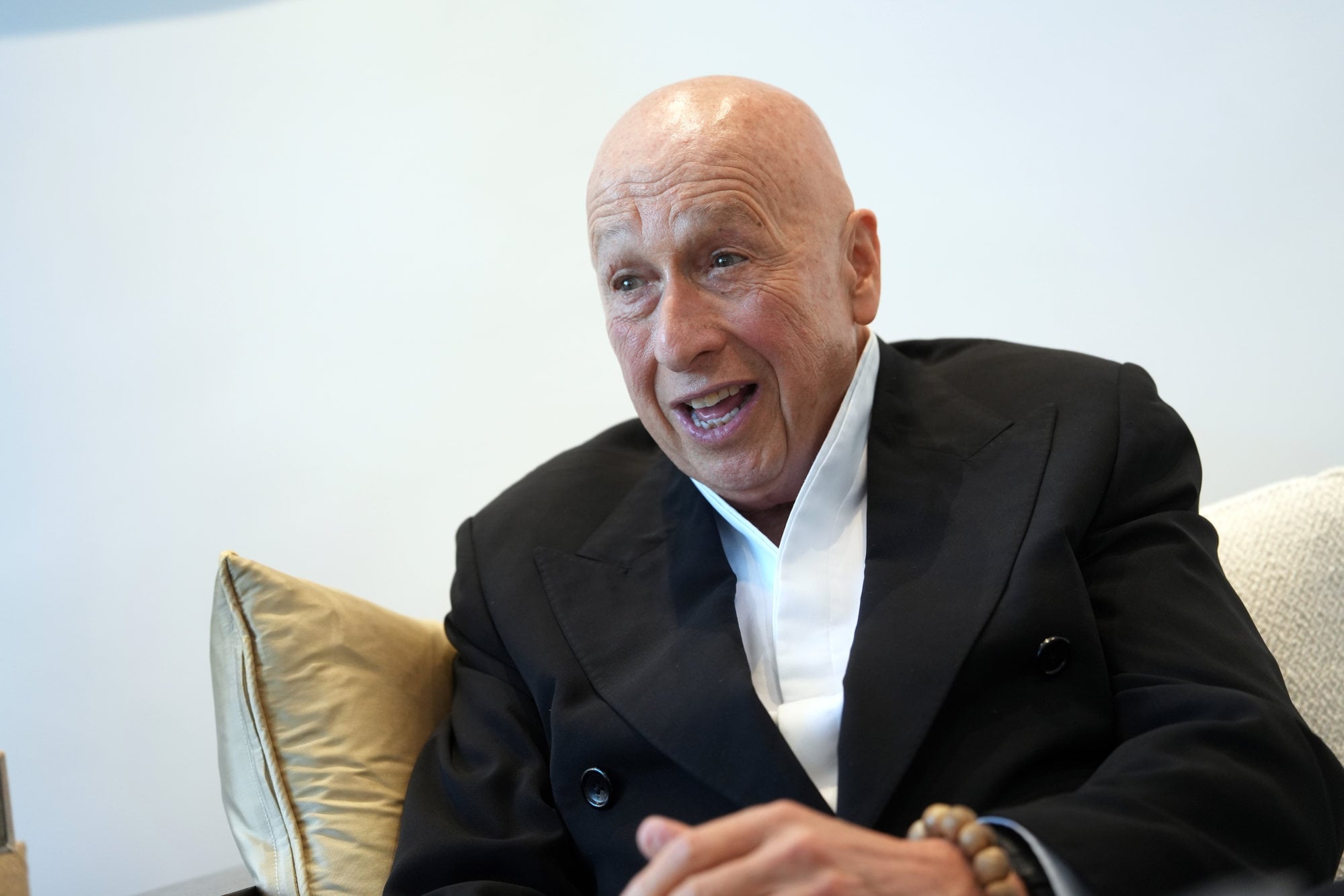
He proposed moving to a currency basket if the dollar’s worth kept declining, although he cautioned that any change needed to be managed carefully.
The HKMA must exercise caution. If individuals believe we are diminishing the significance of the peg, there will be adversaries from around the globe.
Others, including Greenwood, rejected the necessity of a “Plan B,” contending that the US dollar continued to be the most practical reference point because of its ease of use and complete convertibility across Asia.
If a different currency, such as the yuan, were introduced… the interest rate would not be so straightforward,” Greenwood stated. “Additionally, the yuan is not convertible and is not extensively traded.
Even with continued skepticism regarding the dollar’s position, he showed belief in its strength.
I don’t believe its position will be significantly altered in the future. That could still change—and you can’t rule anything out—but for now, the US dollar remains the most suitable currency for Hong Kong’s currency to be tied to.
The discussion regarding the Exchange Fund would persist once the actual withdrawal took place, according to analysts. The controversy surrounding the HK$150 billion transfer essentially represents a conflict between two perspectives on security—conventional “cash vault” protections versus a more dynamic strategy focused on optimising the use of reserves.
Regarding concerns that the fund could weaken over time and encounter difficult challenges similar to those in 1998, Lau stated that a private hedge fund attack is now very unlikely, as Hong Kong’s defenses have been strengthened by the mainland’s reserves.
He pointed out that the mainland’s reserves had climbed to US$3.816 trillion, including gold, as of last month — the highest amount globally. This encompasses approximately US$700 billion in U.S. Treasury securities, forming a liquidity cushion that he felt was far greater than any possible speculative risk to the Hong Kong dollar.
“I believe it’s impossible for a private hedge fund to challenge the combined foreign exchange reserves of China and Hong Kong,” Lau stated.
More Articles from SCMP
In Taiwan, Trump reinterprets strategic ambiguity to serve his own purposes.
This piece was first published in the South China Morning Post (www.scmp.com), a top news outlet covering China and Asia.
Copyright (c) 2026. South China Morning Post Publishers Ltd. All rights reserved.

 jasdooit
Leave a comment