
According to several recent reports, there is a variation in how Iran, which is engaged in conflict, handles relations with South Korea and Japan. On the 21st, Iranian Foreign Minister Abbas Araghchi mentioned during an interview with Japan’s Kyodo News that “Iran plans to permit the movement of Japan-related ships following discussions and has already started talks with Japan to temporarily ease the blockade.” Meanwhile, on the 26th, Iranian Ambassador to South Korea Saeed Koozechi issued a warning, stating that South Korean ships involved in trade with the U.S. would face restrictions when passing through the Strait of Hormuz.
Significantly, the statements made by Iranian Foreign Minister Araghchi during the Kyodo News interview deserve attention: “The attacks by the U.S. and Israel are unlawful and unwarranted acts of aggression,” and “We hope Japan will take part in stopping these aggressive actions.” This openly indicates Iran’s hope that Japan will act as a mediator to stop the conflict.
Japanese Upper House Asks Prime Minister Takaichi, “Will You Act as a Mediator for a Ceasefire?”
The potential for Japan to act as a mediator in this conflict was initially brought up in Nagatacho, the political heart of Japan, which houses the National Diet Building and the Prime Minister’s Official Residence. On the 18th, Mainichi Shimbun reported that Prime Minister Sanae Takaichi, during her participation in the Japanese House of Councillors, was questioned about whether Japan would intervene to mediate a ceasefire between the U.S. and Iran. In reply, Prime Minister Takaichi mentioned, “We have repeatedly asked Foreign Minister Toshimitsu Motegi to engage in discussions with Iranian Foreign Minister Araghchi.” This indicates that the Japanese government has kept the option of mediation open, contingent upon future events.
The Japan Times stated that in response to demands from Japanese political figures for mediation to reduce U.S.-Iran tensions, Foreign Minister Motegi has created an “International Peace Mediation Unit” inside the Ministry of Foreign Affairs. This shows Japan’s institutional efforts to enhance its mediation skills. Nevertheless, the newspaper noted that although Japan has previously tried to mediate in the Middle East, its real accomplishments have been restricted by constitutional limits on Self-Defense Force operations, structural reliance on the U.S.-Japan alliance, and constraints in diplomatic resources.
Rising Hostilities Between the United States and Iran in 2019
This movement indicates that in Japan, the function of acting as an intermediary between the U.S. and Iran is not just a theoretical idea but is being considered as a real policy choice. This is feasible because of Japan’s longstanding friendly ties with Iran and its previous experience in mediation efforts.
Japan acted as a mediator in 2019 when tensions between the U.S. and Iran rose significantly. As a Tokyo-based reporter at that time, I reported on Japan’s mediation activities and observed that Japan’s relationship with Iran was more robust than many in South Korean society realized. Moreover, Japan’s covert diplomatic initiatives were considerable. Former Ambassador to Iran Yoon Kang-hyun recently mentioned in an interview with Chosun Ilbo about Japan’s diplomatic skills: “Japan has effectively preserved its autonomy while achieving agreement with the U.S. when handling countries facing heavy U.S. sanctions, like Myanmar and Iran. Considering Japan’s strong connections with Iran, it is probable that Japan maintains good communication channels with Tehran.”
In 2019, relations between the United States and Iran quickly became more hostile. The situation worsened when U.S. President Donald Trump decided to leave the Iran nuclear agreement (Joint Comprehensive Plan of Action, JCPOA), which had been negotiated under former President Barack Obama. The JCPOA was a deal involving the P5+1 (the U.S., China, Russia, France, the U.K., and Germany) along with the European Union, where sanctions were lifted in return for Iran restricting its nuclear activities. Nevertheless, Trump argued that the agreement was inadequate and chose to withdraw from it. In reaction, Iran expressed strong disapproval and even threatened to block the Strait of Hormuz. The U.S. sent an aircraft carrier battle group to the Middle East and added 1,500 more troops, increasing military tensions. Fears arose that the risk of conflict could become a reality.
For State Visit Guest Trump in Japan, “We Aim to Meet Our Obligations”
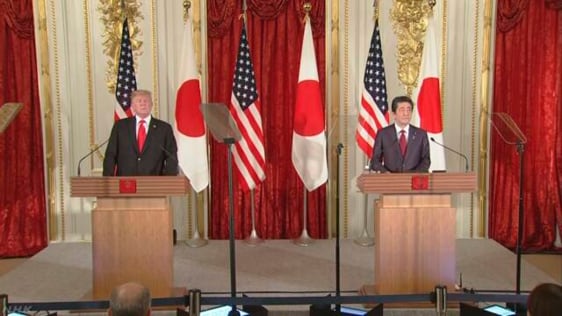
As the crisis hit its highest point, Prime Minister Abe took on the role of a mediator. In May 2019, during President Trump’s state visit to Tokyo, Abe indicated his desire to act as a mediator in the Iran matter. In reply, President Trump “approved,” saying, “Considering Prime Minister Abe’s good relationship with Iran, I will observe.”
Prime Minister Abe expressed his firm determination, stating, “We aim to carry out our duties as the Japanese government,” and in June, he made the first official trip by a Japanese prime minister to Iran in 41 years. Before this, Foreign Minister Taro Kono extended an invitation to Iran’s foreign minister to visit Tokyo, setting the stage for diplomatic mediation efforts.
Nevertheless, this diplomatic mediation encountered inherent constraints. Neither the United States nor Iran showed a desire to make concessions. In Japan, worries were expressed, especially by Asahi Shimbun, that “if the expectations of the U.S. and Iran conflict, Japan might end up caught in a difficult position.”
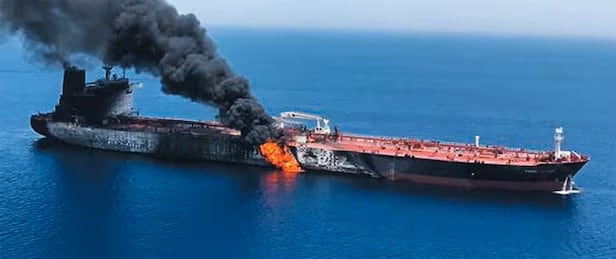
Additionally, on June 13, 2019, during Prime Minister Abe’s trip to Iran, a Japanese-linked oil tanker was targeted near the Strait of Hormuz in the Gulf of Oman. As reported by international media outlets such as AP and Reuters, a Japanese-operated ship and a Norwegian vessel were attacked, with the U.S. Navy’s 5th Fleet confirming the emergency signals. This event, taking place in a crucial global oil transportation corridor, led to a sharp rise in international oil prices and escalated tensions in the Middle East.
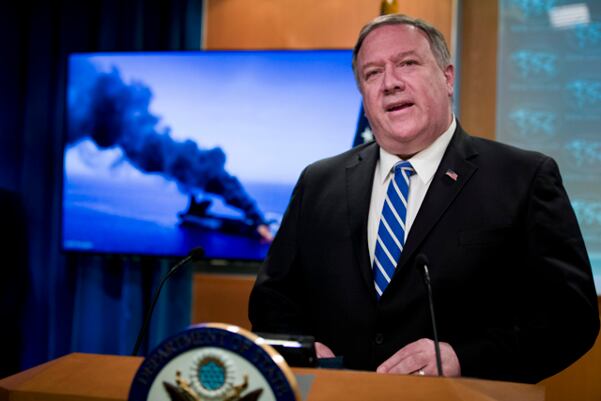
The United States and Iran had a direct confrontation regarding this event. The U.S. claimed Iran was involved in the attack and provided video evidence. Secretary of State Mike Pompeo said, “Iran is to blame.” On the other hand, Iran strongly rejected these claims and blamed the U.S. and Israel instead.
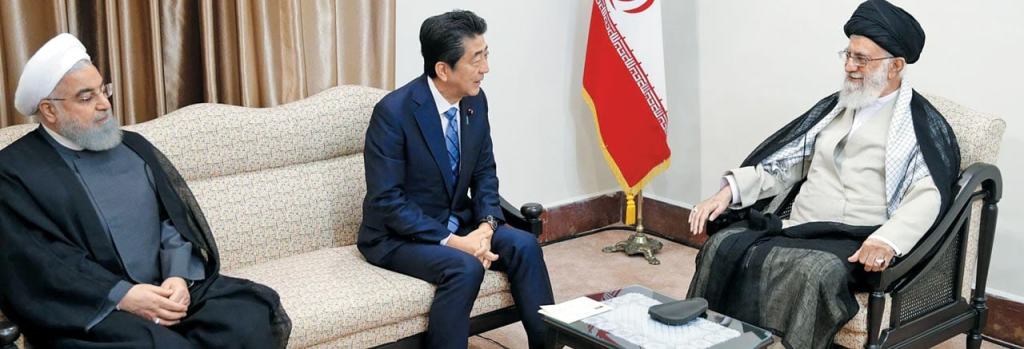
In this scenario, Iran’s Supreme Leader Ayatollah Ali Khamenei, who was met by Prime Minister Abe, declined to engage in talks, asserting, “Trump is not someone worth speaking with.” In the end, Prime Minister Abe went back to Japan without notable accomplishments, leading to criticism in Japan about “diplomacy with nothing to show.” Some people even suggested that Japan had been taken advantage of by Iran.
Japan’s 2019 mediation efforts failed and highlighted distinct constraints. Nevertheless, it is commendable that Japan made an effort to establish communication lines and reduce hostilities between the U.S. and Iran. This instance showcased Japan’s strategic intent to take on a specific role in resolving global conflicts, rather than just serving as a passive ally.
Although it faced failure, Japan appears to see itself as a nation capable of acting as a mediator when there is an opportunity for diplomacy. The fact that members of the Japanese Diet are raising relevant questions indicates that the diplomatic status Japan’s political circles aim for is different from ours.
It’s possible that during Prime Minister Takaichi’s recent trip to Washington, D.C., talks took place with President Trump about Japan’s potential involvement in concluding this conflict. At present, Pakistan is serving as a bridge between the U.S. and Iran; it will be intriguing to observe what part Japan could take if discussions start.
The consequences of these developments for South Korea are evident. Although diplomatic mediation does not ensure success, being seen as a nation that can attempt mediation can serve as a valuable diplomatic tool. In this context, the focus is on former Ambassador to Iran Yoon Kang-hyun’s assertion that South Korea should also take part in mediating between the U.S. and Iran. In an interview with this newspaper, he participated in the following Q&A:
– You stated that South Korea can act as a mediator between Iran and the U.S. Does South Korea have the ability to do so?
Up until the early 2020s, around $7 billion in Iranian funds remained blocked in South Korea. Owing to U.S. restrictions on Iran, these funds had been stuck for many years. The South Korean government, in coordination with the U.S. Treasury, established a framework to allow this fund transfer as an exception to the sanctions and carried out the transaction through third-party nations such as Qatar. Certain conditions were imposed to limit the use of the money to humanitarian needs, among other things. This process represented a complex challenge that involved finance, diplomacy, and sanctions policies at the same time. South Korea showcased its effective mediation role by developing a solution that both the U.S. and Iran could agree upon.
– It is reported that South Korea was also involved in the UN evaluation matter.

Iran was at risk of facing limitations on its voting rights at the 2021 UN General Assembly because of outstanding UN assessment payments. In response, South Korea secured special approval from the U.S. Treasury to utilize frozen funds located in South Korea, creating a method to settle these assessments. This was not a straightforward transaction but rather a complicated matter that required adherence to both sanction frameworks and UN rules. South Korea’s achievement in this area highlights its capability to use discussions with the U.S. and build trust with Iran, indicating that it can act as an effective intermediary between the two nations in the future.
Previous Ambassador Yoon contends that South Korea should shift from a diplomatic approach that only observes the dynamics between the U.S. and Iran. He proposes making use of diplomatic expertise, such as the repatriation of the $7 billion held in South Korea and discussions regarding Iran’s outstanding UN fees, if talks commence. The way the government aligns itself in delicate international conflicts can enhance the country’s standing. In this context, it is desired that our diplomacy transforms challenges into chances by pursuing a more active diplomatic role.

 jasdooit
Leave a comment