
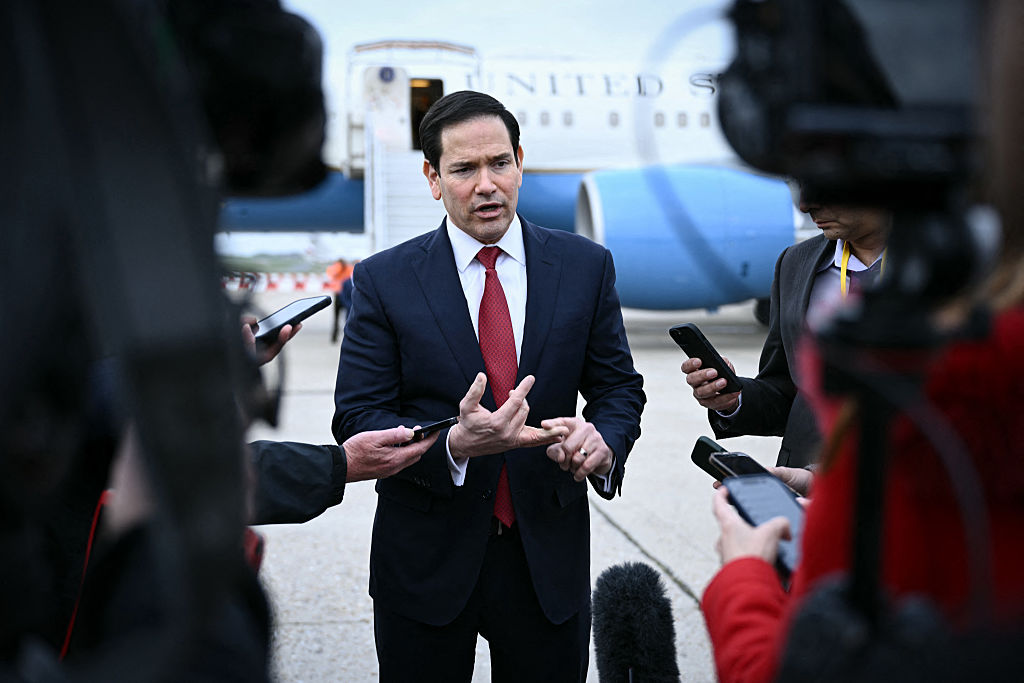
On March 27, Marco Rubio traveled to France for the first in-person meeting of G7 foreign ministers since President Donald Trump openly urged allies to adopt a tougher position on Iran. This gathering took place as Trump’s actions alongside Israel’s conflict with Iran pose a threat to global energy supply chains, while Russia’s war in Ukraine continues to affect international trade routes. The meeting highlighted the G7’s increasing concerns about Donald Trump’s authoritarian approach to foreign policy. Rubio utilized the occasion to restate that the United States has no involvement with Ukraine.
Not America’s war
Rubio made his position clear during his speech to the G7 and the public following the meeting. Rubio reiterated the United States’ increasing dissatisfaction with its aid obligations to Ukraine. The US feels that it should not be required to bear the responsibility of Vladimir Putin’s conflict. Rubio mentioned that Russia’s war against Ukraine is not America’s war, yet the US has provided substantial assistance to Ukraine in its fight against Putin. European leaders were ready to challenge Rubio regarding allegations of Russian support for Iran during the conflict.
The European Union’s foreign policy head, Kaja Kallas, stated that, regardless of Rubio’s assertions, the conflict in Ukraine and the situation in Iran are strongly connected. Kallas attempted to persuade Rubio that Russia is aiding Iran in ‘killing Americans,’ suggesting that if the US aims to take more action against Iran, it should redirect its efforts toward Moscow. French Foreign Minister Jean-Noel Barrot also noted that the relationship between Russia and Iran has been ongoing for years and will persist without external influence.
G7 casting doubt on the United States’ conflict with Iran
The schedule of this G7 gathering was shaped by ongoing international issues. Just under 24 hours earlier, Donald Trump unleashed another round of harsh remarks towards NATO. Global oil prices have surged following Trump’s attacks on Iran, and the global community is experiencing the consequences of the conflict he has chosen. Many of America’s allies have openly criticized Trump’s actions in Iran, and these views were evident during the meeting, with Marco Rubio clearly being looked down upon by other ministers. France’s Minister of Defense, Catherine Vautrin, made it very clear that this conflict is “not ours,” and that France will adopt a purely defensive stance. The UK also confirmed it would not support U.S. military operations, highlighting its differences with the United States.
War on Iran
On February 28, 2026, the United States government and Israel conducted a collaborative operation in Iran, leading the US to announce its state of war with the nation. The assaults prompted Iran to respond with counterattacks, focusing on US and Israeli military installations throughout the Middle East. As per Donald Trump, there is no set schedule for this conflict, and the US will persist with its actions within the country until it achieves a major shift in the regime, along with the termination of Iran’s alleged nuclear program.
US and Israeli attacks resulted in the death of Iran’s Supreme Leader, Ali Khamenei, on the first day of the conflict, fulfilling what was supposedly Trump’s objective. Khamenei had been responsible for violent actions against civilian demonstrators in Tehran, and his death is considered the sole positive outcome of Donald Trump’s unlawful involvement. After Khamenei’s death, Trump altered his justification for attacking Iran, asserting that he had received intelligence indicating Iran planned to attack Israel and the United States. Israel refers to this approach as ‘forward defence’.
Cost of war
As of March 27th, initial data reveals alarming numbers of victims in the Middle East. In Iran, over 1,900 individuals have lost their lives due to US and Israeli attacks. US forces have conducted more than 7,000 strikes in Iran, and in addition to the 1,937 fatalities, approximately 24,800 Iranians have been wounded, and over 3 million people have been forced to leave their homes. A US attack on an all-girls primary school resulted in the deaths of 168 children. In Lebanon, more than 1,000 people have died from Israeli strikes, with another 3,100 injured and over 1 million civilians displaced. Thirteen US military personnel have been killed, and 19 individuals have died in Israel. Since February 28, 168 people have been killed by Iranian attacks in Gulf nations.
Russia’s war on Ukraine
Since Russia’s invasion of Ukraine in February 2022, at least 2 million individuals have lost their lives — primarily soldiers — with an additional million people displaced from both sides, marking it as the deadliest conflict of the 21st century. The U.S. administration has urged Ukraine to relinquish control over the Donbas region in eastern Ukraine — a territory largely under Russian occupation. Ukraine, along with its European partners, has strongly opposed the notion of ceding any land. According to Trump, giving up territory is the ethical choice for Ukraine. Volodymyr Zelenskyy has clearly stated that Ukraine will never agree to surrender its sovereign territory.
Made by people, with the help of artificial intelligence.

 jasdooit
Leave a comment