
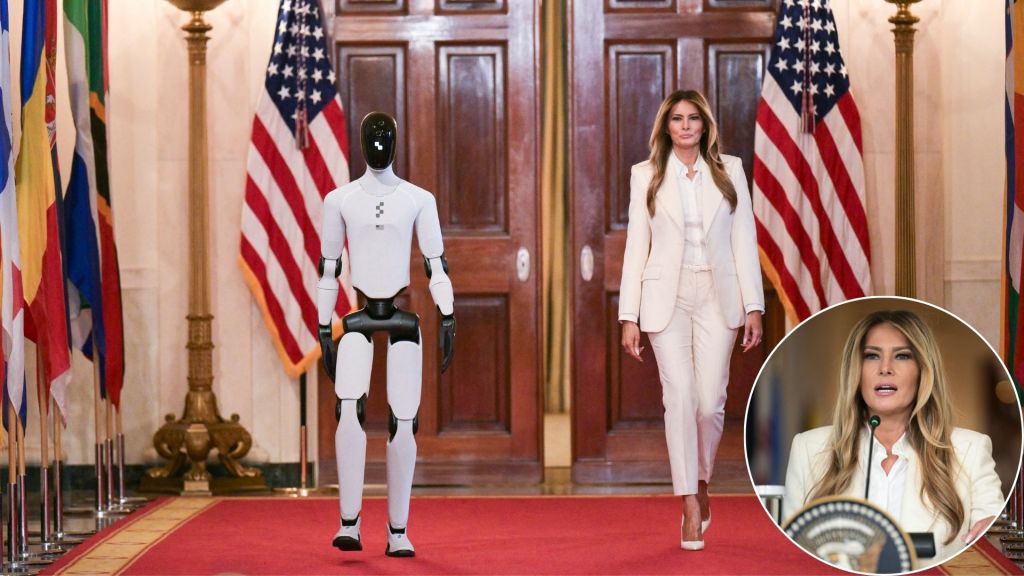
Melania Trump’s most recent public appearance has rapidly turned into a viral sensation, not just because of its distinctive setup but also due to the bold vision it presented. At an international gathering that included the spouses of various world leaders, such as France’s First Lady Brigitte Macron, the First Lady introduced an idea that could transform how children are educated in the United States. The mix of a robotic figure on stage and a proposal focused on AI-powered learning has generated significant online discussion. While some view this as a step forward, others are expressing worries about the consequences, making the event a focal point for a larger conversation about the future of education.
A unusual entrance
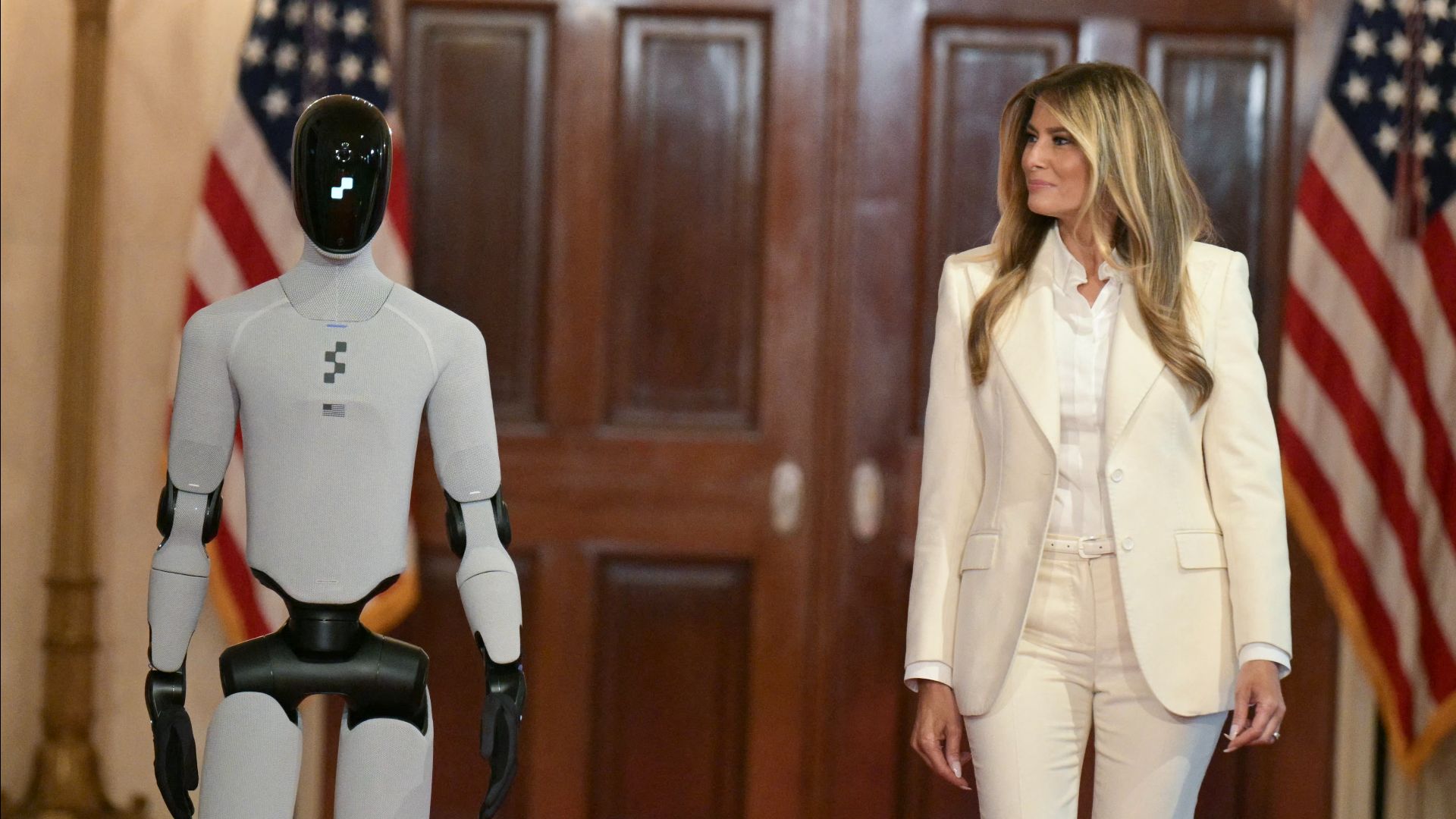
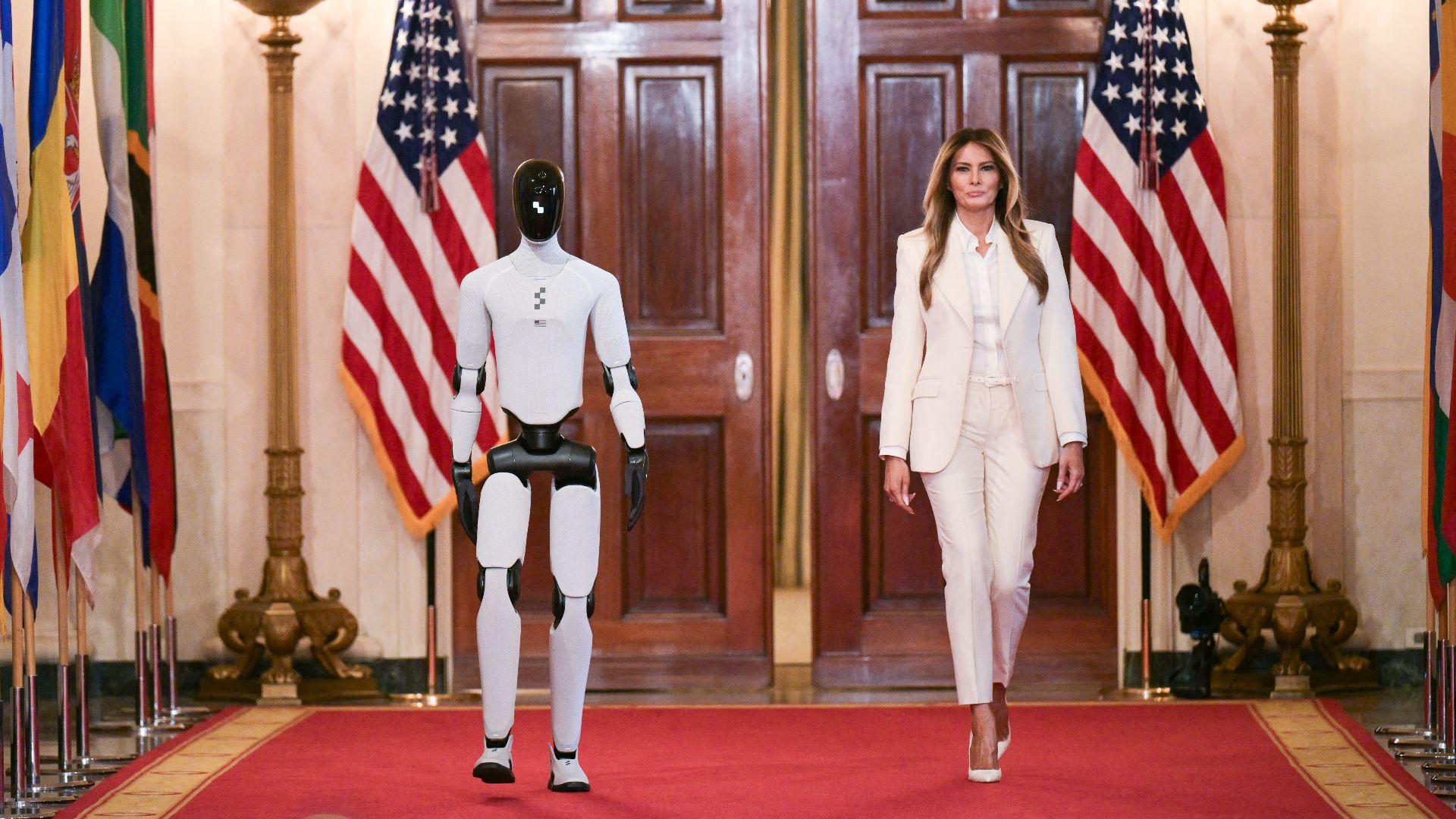
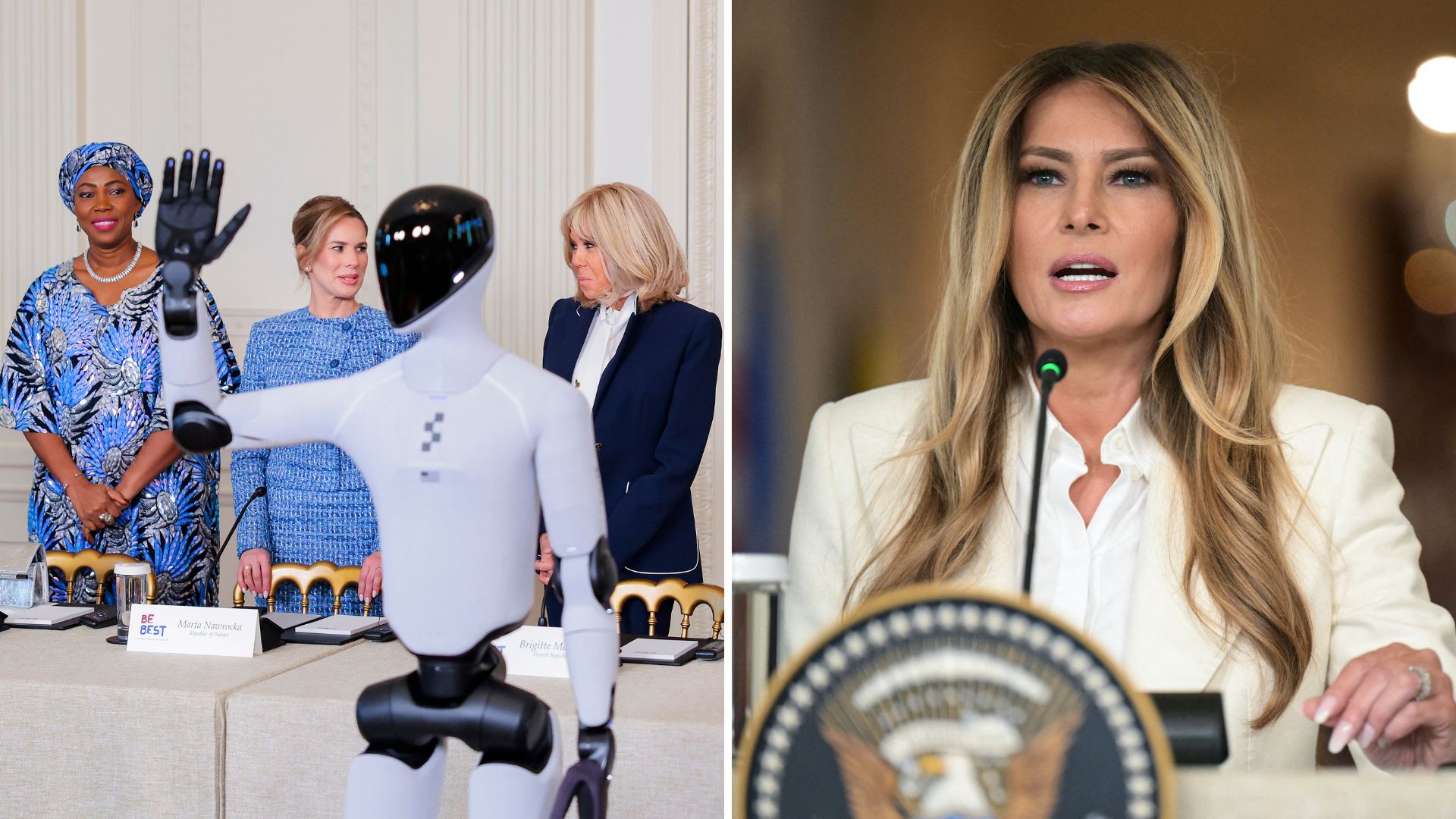
Melania Trump made a bold and unconventional appearance at a prominent artificial intelligence conference she co-hosted with the partners of multiple world leaders, including France’s First Lady Brigitte Macron, immediately capturing both in-person and online attention. She arrived alongside a human-like robot, causing her presence to become widely shared on social media platforms. The event, which focused on the future of education and new technologies, transformed from a diplomatic meeting into a viral sensation within a short time. Although the gathering brought together influential individuals from around the globe, it was the surprising setup and symbolic visuals that initially drew public interest.
A humanoid educator
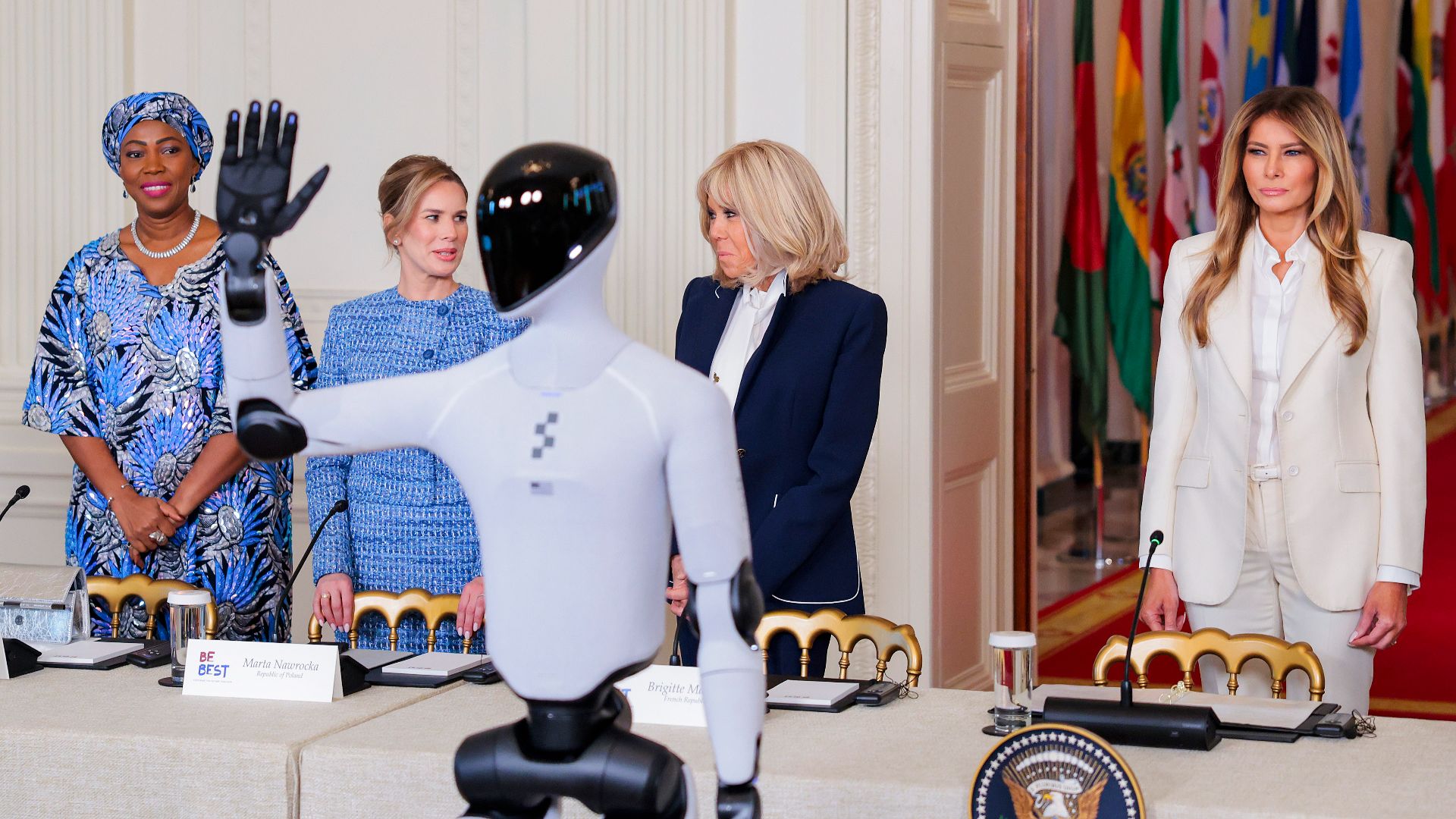
As the event continued, Melania Trump presented her ideas about incorporating artificial intelligence into American schools, presenting a notion she described as revolutionary for education. In one of the most commonly shared parts of her speech, she said:
Envision a human-like teacher called Plato.
The suggestion, introduced as both creative and unavoidable, quickly generated debate among analysts, who largely concentrated on the consequences of substituting or enhancing conventional teaching roles with artificial intelligence-based systems. The mention of a specific robotic teacher highlighted the administration’s desire to establish technology as a key element in upcoming educational settings.
A personalized experience
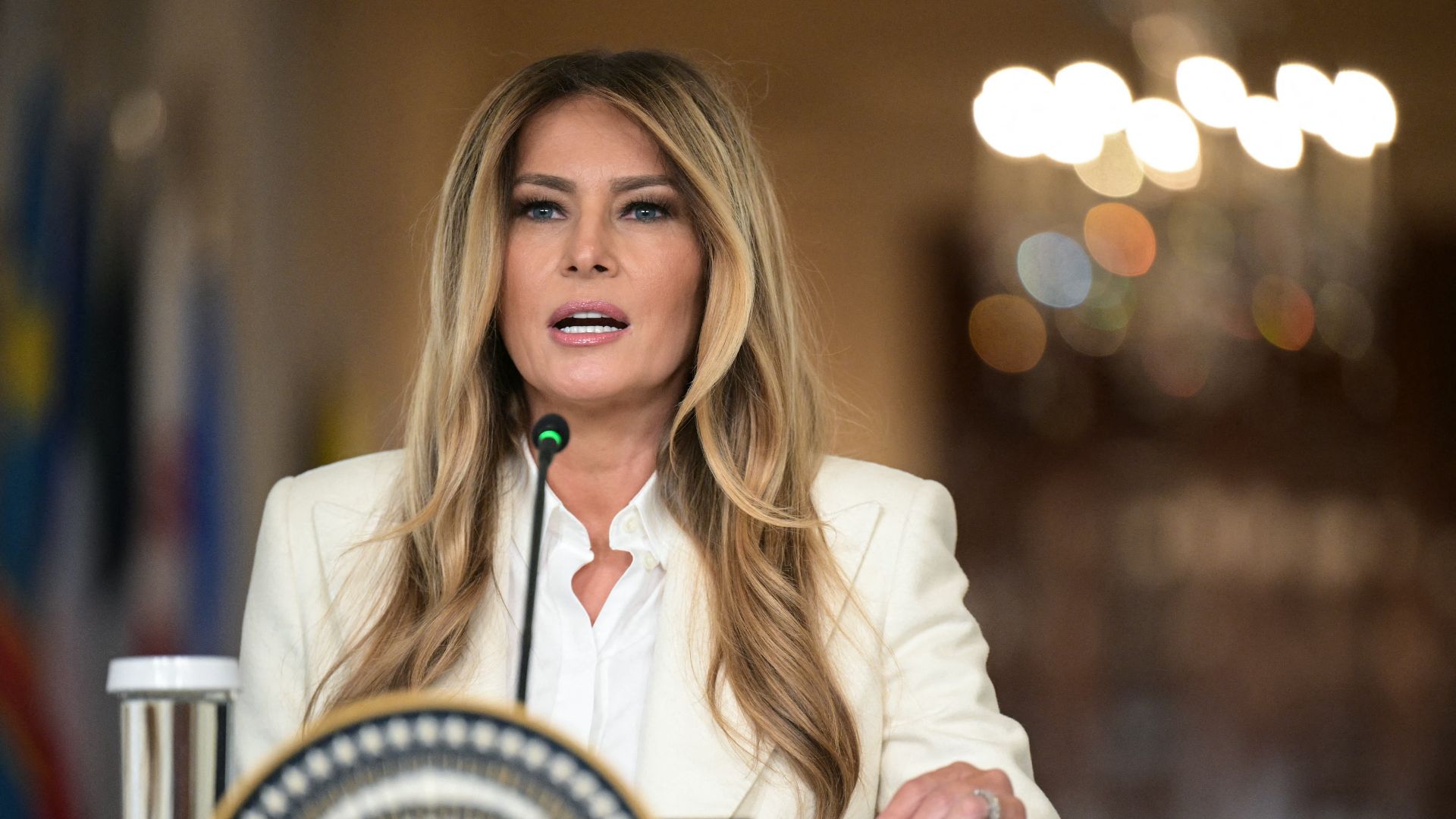
Building upon the idea, Melania Trump outlined the potential of such a system for students, highlighting customization and flexibility. She stated, «Plato will offer a tailored experience, adjusting to each student’s requirements. Plato is consistently patient and always accessible. Naturally, our children will cultivate strong critical thinking and independent reasoning skills. The AI-driven Plato will enhance analytical abilities and problem-solving, adapting instantly to a student’s speed, previous knowledge, and even emotional condition. The result — a more balanced life for our children, allowing time for socializing with friends, participating in sports, and pursuing interests outside of school. A more fully developed individual.»
The statements presented a concept in which technology has a key, ongoing role in the cognitive growth of children.
A broader national objective
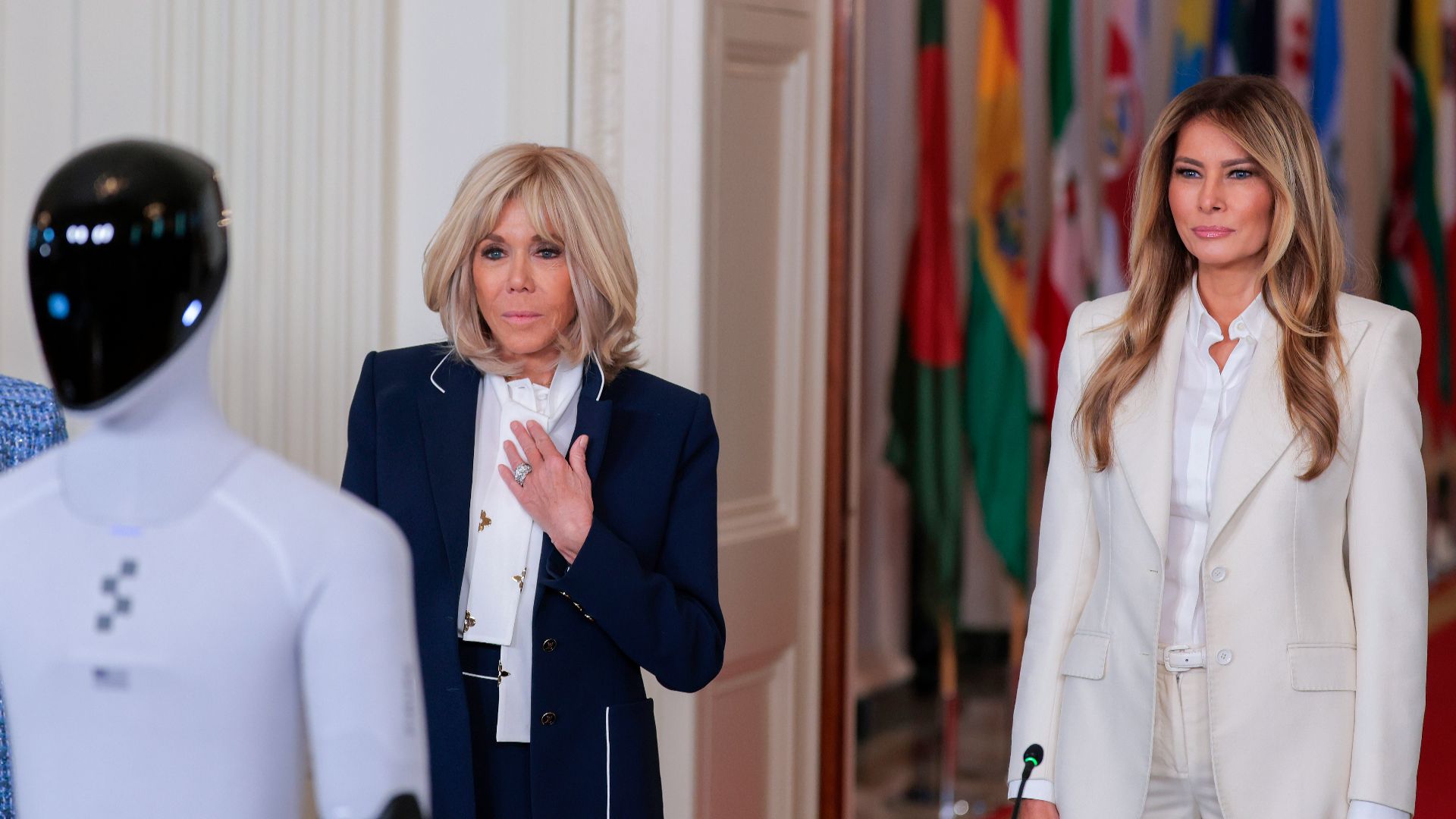
Melania Trump placed the initiative within a larger national goal, connecting the use of AI technologies in education with international competitiveness.
She stated:
America, we must take responsibility for making sure our children are the most technologically skilled and well-educated generation globally.
The statement highlighted a focus on technological supremacy, viewing educational reform as a central part of this goal. Many participants, including those from abroad, recognized the value of innovation in education, although their responses to the details of the proposal differed in both tone and priority.
Human interaction
Nevertheless, the event has sparked various questions among teachers, scholars, and policy analysts concerning the ethical and societal effects of this change. Opponents have highlighted worries about the lack of human engagement in learning settings that are becoming more influenced by artificial intelligence. Specialists in child growth have consistently stressed the significance of emotional bonds, guidance, and social interaction in education, aspects that might be challenging to duplicate even with the most sophisticated technologies. The concept of an “always accessible” and “always tolerant” AI teacher has been characterized as both attractive and possibly problematic, depending on its execution.
The future of schooling
As responses keep emerging, the event underscores the increasing overlap between technology, politics, and educational policy. Although Melania Trump’s presentation portrayed AI as a means to improve and update learning, it has also sparked renewed discussion about the role of human teachers and the limits of automation in developing settings. The widespread attention the event received, along with the boldness of the proposal, guarantees that the conversation will go beyond the initial meeting. The implementation of AI-based education models now seems set to become a major subject in ongoing discussions about the future of education in the United States.
Made by people, with the help of artificial intelligence.



 jasdooit
Leave a comment