
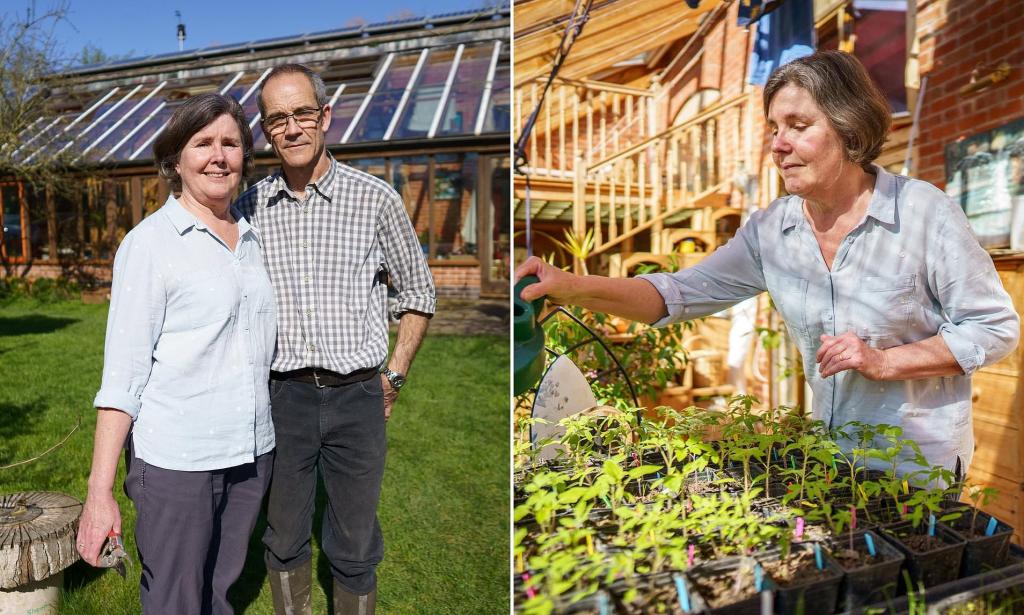
A pair claims to have saved £2,000 annually by residing in an off-grid community – yet acknowledged they need to complete 600 additional hours of work to remain there.
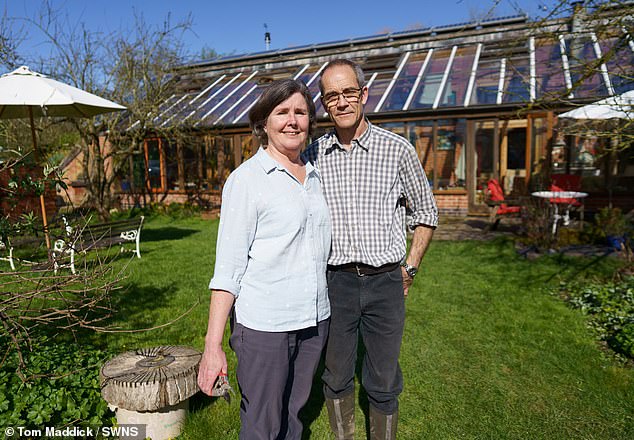
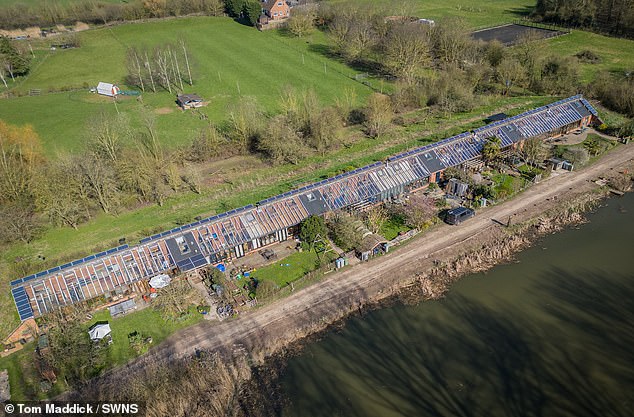
Helena Tilley and her spouse Simon, both aged 61, reside at the Hockerton Housing Project (HHP), a sustainable communal living complex, located on the edge of Southwell in Nottinghamshire.
They have argued that the UK should construct more homes similar to theirs, aiming for their way of living to serve as a “source of education and inspiration” for everyone.
It turns out their four-bedroom home doesn’t need any heating and its 11-acre surroundings have their ownwind turbine, solar energy and water system.
Earnings from excess renewable energy sold back to the grid result in the couple’s yearly profit of £144, leaving them with a monthly utility bill of only £288.
In comparison to a similar household in the UK, they predict yearly savings of £1,884.
Nevertheless, the savings have a drawback – as the couple have disclosed the amount of work they must put in to maintain the land and the project’s non-profit enterprise.
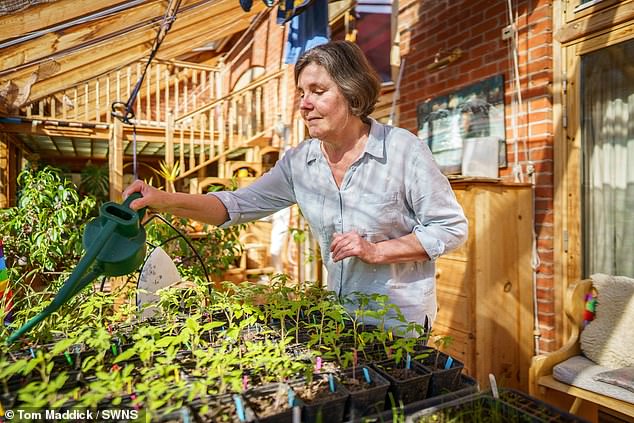
Their group of 16 cultivates its own produce to lower its environmental impact, collecting 90 percent of its fruits and vegetables in the summer, and roughly 30 percent during the winter.
HHP states its goal is to adopt a plant-based diet – however, currently, residents continue to keep a small group of sheep for meat and take advantage of honey produced by beehives.
The couple confessed to visits to Waitrose for personal necessities, such as gluten-free items.
In the meantime, another HHP family stated they managed to spend almost nothing at the supermarket during the summer, and as little as £50 on weekly shopping trips in the winter.
Ms. Tilley, a child specialist, stated: ‘We are advocating for a low carbon, healthy way of life, and it is a unique location.’
It’s a chance to be very near to nature, and it has proven to be an incredibly wonderful and secure environment for raising kids.
These homes are exceptionally crafted. For us, they meet all our requirements.
The pair have resided at HHP since the beginning, thirty years ago.
Their 33-year-old son, Luke, has recently come back to the community to reside with his own family in one of the newer, yet similarly constructed, homes on the property.
Two-bedroom eco-friendly homes at HHP cost £325,000, while five-bedroom properties are available for £600,000. Locals have mentioned that this pricing matches the rest of the region.
Eco-homes are constructed using materials such as concrete blockwork, concrete beams, and clay tiles, which enable the structures to absorb and release thermal energy over extended periods.
The primary sources of energy for heating homes are sunlight, human body heat, and household devices.
The residences maintain an internal temperature ranging from 18 to 24 degrees throughout the year.
The majority of the community’s power is generated by the on-site turbine, along with solar and water-based systems, which Mr Tilley mentioned he assists in maintaining.
Ms. Tilley is partially retired but remains active as a pediatrician and serves as the main contact for climate change issues within the Royal College of Paediatrics and Child Health.

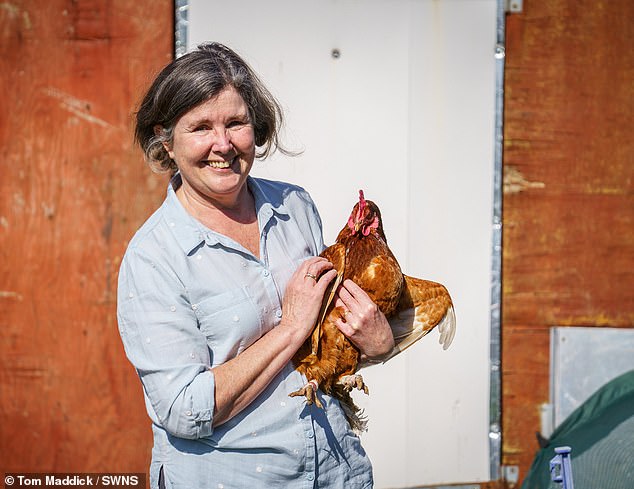

She mentioned that her focus is on integrating the study of the environment, air pollution, and nutrition into preventive approaches within healthcare.
Ms. Tilley said, “This location serves as my mental well-being sanctuary. Being able to access trees and fresh air is crucial for everyone.”
The place we reside, the way we move around, and the food we consume are deeply connected.
A passionate environmentalist uses her free time to cultivate cabbages and produce juice from apples grown in the orchard. She is also skilled in food preservation for the winter season.
Several positions on the HHP schedule align with regular working hours, like dedicating 15 minutes to gather eggs from the chickens.
Major projects that involve teamwork are typically carried out on Sundays, although the timetable can be adjusted.
A married couple stated that they think the UK ought to construct additional houses similar to theirs.
Mr. Tilley stated, “It’s a great pity that the UK has spent decades constructing low-quality homes without any regard for climate resistance or local neighborhoods.”
It’s very annoying that major construction firms focus solely on generating profit rather than creating quality living spaces.
The couple’s aspiration is that their way of living can serve as ‘a means of learning and motivation’ for everyone.
Ms. Tilley stated, “If we generate a need for energy-efficient homes—people expressing that this is what they desire—then perhaps home developers will begin to focus on it.”
I wouldn’t have wanted any other place to spend the last thirty years.




 jasdooit
Leave a comment