
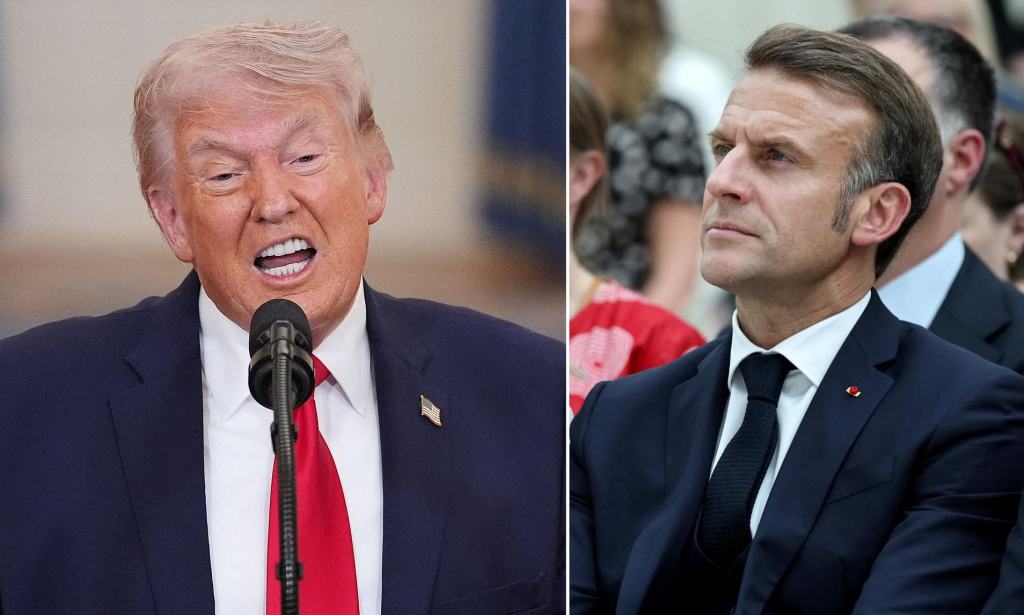
Emmanuel Macron told Donald Trumpon Thursday to get ‘serious’ about itIranas he rejected the calls to forcibly reopen the Strait of Hormuz as ‘unrealistic’.
The French leader also criticized the US President’s recent highly contradictory remarks regarding the conflict, stating to him: ‘Maybe you shouldn’t speak every day.’
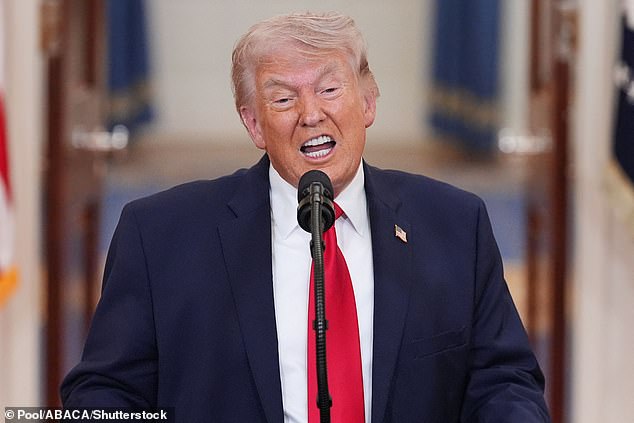
President Macron stated that only discussions with Tehran could ensure the security of the crucial shipping lane, through which one-fifth of global oil flows. This followed Mr. Trump’s first live speech to the country since the war began, in which he again urged Europe to ‘take and value’ the Strait.
Mr. Trump is attempting to persuadeNatoallies to direct a military mission aimed at reopening the shipping route, asserting that they ‘greatly rely’ on it more than the United States.
UK Foreign SecretaryOn Thursday, Yvette Cooper organized an international conference involving over 40 countries addressing the matter – with the United States notably not in attendance.
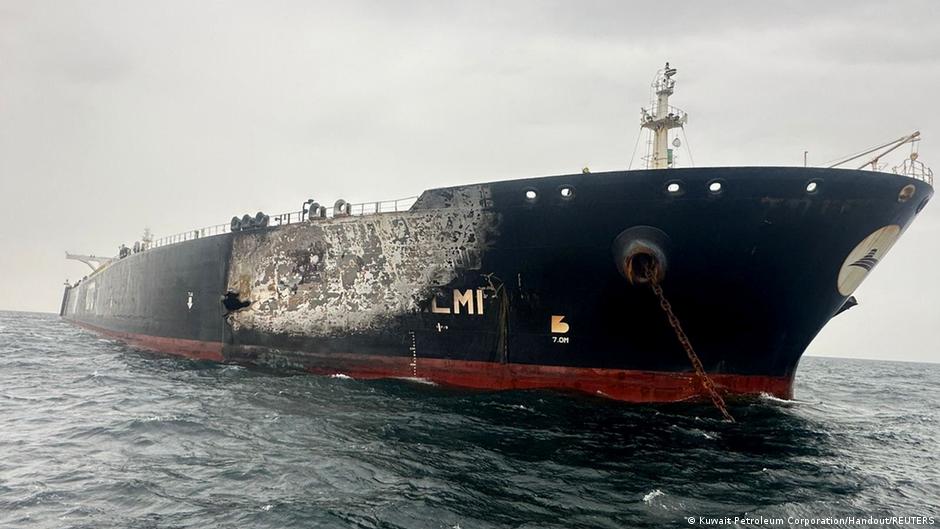
She criticized Tehran for its attacks on 25 vessels, which have left 20,000 crew members stranded on over 2,000 ships. Ms. Cooper stated that Iran’s ‘recklessness towards countries not involved in this conflict’ has affected ‘mortgage rates and’petrolprices in the UK and threatened ‘our global economic security’.
She urged the attendees to utilize the “entire spectrum of diplomatic and economic instruments” and to explore methods of calming the shipping insurance sector.
She later mentioned that actions might involve “collaborating with the International Maritime Organisation to facilitate the movement of the first stranded vessels.”
Following the online meeting, Ms. Cooper mentioned that they had discussed ‘coordinated economic and political actions, including penalties, to pressure Iran if the Strait stays shut’.
In reply to Mr. Trump, she stated, “Our responsibility is to make choices that serve the UK’s national interest.”
She stated, “From the beginning, we have held a different perspective compared to the US, and we avoided becoming involved in offensive operations in the Middle East because we believed there were genuine worries regarding the risks of escalation, its effects—such as on the economy—and the necessity of a well-considered strategy.”
The summit came after intense remarks from Mr. Trump, who has alternated between claiming the US will open the Strait independently and insisting Europe clear it without assistance.
In his speech on Wednesday, he stated: “Nations around the globe that obtain oil via the Hormuz Strait should ensure the security of this route.”
They should value it. They should seize it and value it, they can do so effortlessly. We will offer assistance, but they need to take the initiative in safeguarding the oil they rely on so desperately.
He mentioned that they needed to “develop some postponed bravery.”
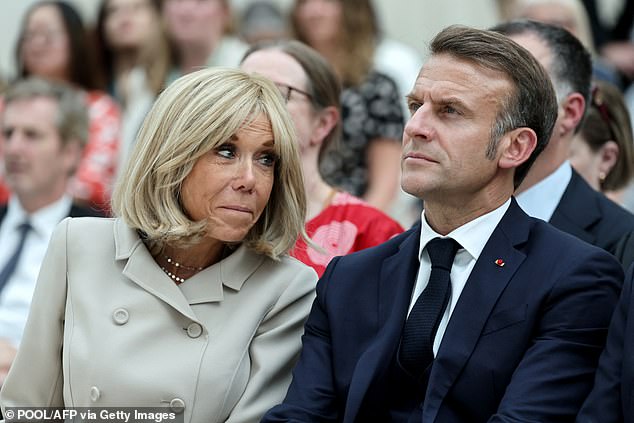
Nevertheless, Mr. Macron, during his trip to South Korea on Thursday, rejected the President’s most recent appeal for support from Western allies.
He stated: “There are individuals who support the liberation of the Strait of Hormuz through military action, a stance occasionally voiced by the United States. I say ‘occasionally’ because it has fluctuated, and it has never been the approach we have taken, which we view as impractical.”
President Macron stated that such an operation would face ‘coastal dangers’ from Iran’s Islamic Revolutionary Guard Corps (IRGC), which has ‘considerable resources along with ballistic missiles.’ Urging a ceasefire and a return to talks, the French leader noted: ‘This can only happen in collaboration with Iran.’
Focusing on Mr. Trump’s contradictory communication, he said to the U.S. leader: “You need to be serious.”
When you aim to be sincere, you don’t express the opposite of what you said the previous day. And maybe you shouldn’t speak every single day.
It follows Mr. Trump’s warning to withdraw from NATO over what he perceives as the alliance’s betrayal concerning Iran. Mr. Macron cautioned him that by fostering “daily doubt about his commitment,” he will “hollow it out.” Iran is taking advantage of the economic consequences resulting from its closure of the Strait by establishing a de-facto toll system that is accessible to allied ships upon payment of £1.5 million.
A spokesperson from its foreign ministry stated that it is permitting vessels to transit provided they “are not owned by the aggressor and have no connection to them.”
Experts will now examine ways to ensure the Strait is ‘open and secure’ once hostilities cease. However, this is not anticipated to include Royal Navy vessels to monitor the passage.
Bridget Diakun, a senior risk and compliance analyst, mentioned that a limited number of oil and gas tankers are currently transiting after receiving permission through ‘diplomatic channels’.
She said to the BBC: “Based on our understanding, the ship owners and operators are using middlemen to reach out to Iranian officials and the IRGC to secure permission to pass through the Strait.”
The fee was described as “a small portion of the money you’re making” – approximately one dollar per barrel.
With the global economy remaining in distress, Italy proposed a ‘humanitarian corridor’ on Thursday to facilitate the passage of fertilizers and other vital supplies, aiming to prevent a food crisis in Africa.
 jasdooit
Leave a comment