
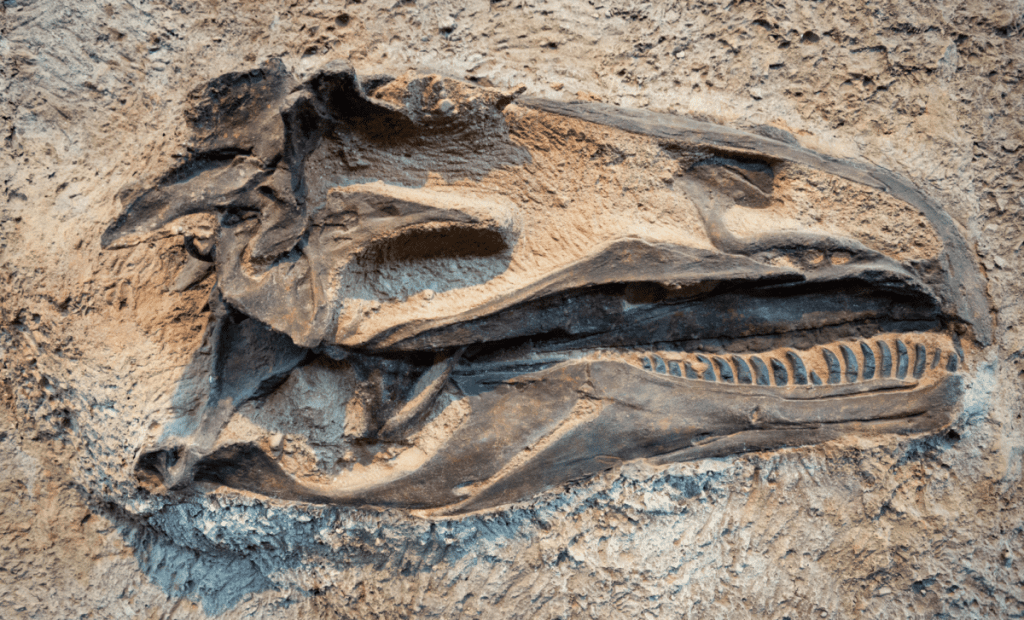
A recently discovered species of ancient predator is prompting researchers to reconsider the development of early land-based carnivores. In a study published inThe Anatomical Record, researchers describe Jirahgorgon cetoa big-bodied gorgonopsian that existed approximately 260 million years ago, much earlier than anticipated for animals of its size and advanced predatory traits.
A Hunter That Emerged Too Soon in Evolution
The discovery of Jirahgorgon cetochallenges a well-established belief regarding the evolution of early predators. For many years, researchers thought that gorgonopsians, primitive relatives of mammals, began modestly and only grew to large body sizes and developed specialized skulls much later during the Permian period. This fossil challenges that timeline.
“Gorgonopsians were prehistoric meat-eating creatures, early ancestors of mammals, and among the first dominant predators on land, known for their sharp teeth,” explainedDr. Zanildo Macungo, lead author of the research. “They existed approximately 260 million years ago, prior to the Permian–Triassic extinction, in a warm and largely arid environment on the vast supercontinent known as Pangea, which featured expansive plains, rivers, and unusual early flora and fauna.”
Published in The Anatomical Record, the research shows that intricate predator characteristics, like big body size and sophisticated skull structures, were developing much sooner than previously thought. The fossil was discovered in South Africa’sKaroo Basin, a region famous for its abundant history of early land-based life. What distinguishes this specimen is not just its age but also its sophisticated physical characteristics, which are similar to those of later and bigger hunters.
This discovery indicates that evolutionary routes were not as straightforward as once believed. Rather than a steady rise in size and complexity, gorgonopsians might have explored various body structures earlier on, leading to a more varied and less predictable evolutionary development.
A Skull Designed for Strength and Accuracy
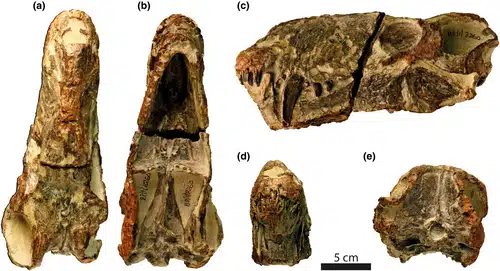
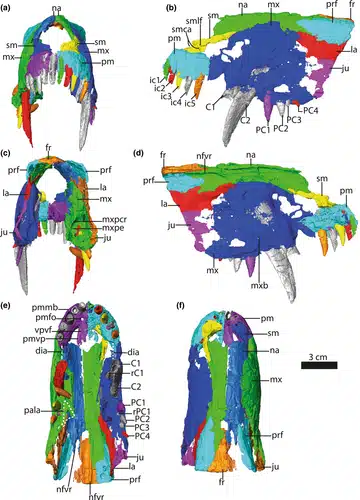
The fossil of Jirahgorgon cetoincludes a remarkably well-preserved skull and lower jaw, enabling scientists to examine its anatomy with extraordinary precision. Utilizing cutting-edgesynchrotron X-ray micro-computed tomography in Grenoble, FranceScientists created a 3D model of the skull without harming the specimen, exposing internal details that would have remained concealed.
One of the most notable features of the skull is itsvertical occiput and proportions similar to rubidgeines, a group of large, late-Permian gorgonopsians recognized for their strong biting capabilities. Discovering these characteristics in an older species implies that such adaptations emerged sooner and may have occurred on multiple occasions.
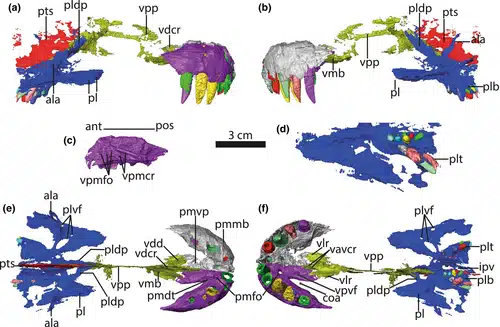
The arrangement of the pterygoid bones indicates that Jirahgorgonpossessed a powerful, gripping jaw, which probably allowed it to hunt larger prey compared to its smaller relatives. This degree of adaptation suggests a predator that had already established itself in a top ecological position, rather than developing into one over time.
Dr. Macungo highlighted the immediate importance of the discovery:
The identification of this specimen in an area that was previously associated only with tiny gorgonopsians, along with its unique structure, quickly emphasized its importance and indicated an unknown variety within the group.
This implies that ecosystems in the middle Permian were more intricate than previously thought, with major predators influencing food chains much earlier than anticipated.
Evolution Did Not Follow a Direct Path
Perhaps the most significant consequence of this finding is what it uncovers regarding evolution. The existence of a big, specialized predator in theWordian–Capitanian boundarysuggests that size and hunting traits did not develop in a straightforward, gradual manner.
Alternatively, the research indicates that the growth in body size within gorgonopsians took placeindependently and multiple timesThis trend indicates evolutionary trial and error, as various lineages investigated comparable characteristics in response to different environmental conditions.
The discovery of a new family,Phorcyidae, which includes both Jirahgorgon ceto and Phorcys dubei, further reinforces the notion that the initial development of predators was more varied than previously thought. These creatures were not merely forerunners of later top predators; they were already complex hunters in their own capacity.
This changes how researchers perceive the accumulation leading up to thePermian–Triassic extinction event, the most severe extinction in Earth’s history. If advanced predators had already emerged, then the ecosystems preceding this event were probably more complex and competitive than previously thought.
A Fossil That Raises New Queries
The discovery of Jirahgorgon cetois not only about introducing a new species to the fossil record, but it also creates a completely new area of study regarding early land ecosystems. Scientists intend to keep conducting fieldwork in theKaroo Basin, hoping to find additional examples that might reveal if this species was common or an isolated evolutionary development.
“We will proceed with our investigation at the site to check if more samples of Jirahgorgon can be found,” said Dr. Macungo.
Every new fossil has the possibility to enhance or even challenge existing theories, and this find highlights one key point: the history of early top predators is still not fully understood. With additional evidence coming to light, the evolutionary timeline could keep changing, uncovering a prehistoric era that is much more intricate and unexpected than once thought.
Enjoyed this article? Sign up for our free Newsletterfor captivating narratives, unique material, and up-to-the-minute updates.




 jasdooit
Leave a comment