
Goli Innocent
Lagos — The worldwide move toward renewable energy is no longer just a future possibility; it is currently changing how much oil is needed, starting to question traditional ideas about the future of fossil fuels.
At the core of this change is the idea of peak oil demand, the moment when worldwide usage hits its maximum before starting a prolonged decrease. Unlike previous theories linked to limited supply, this shift is influenced by technology, regulations, and evolving consumer habits, especially the increasing use of environmentally friendly energy sources.
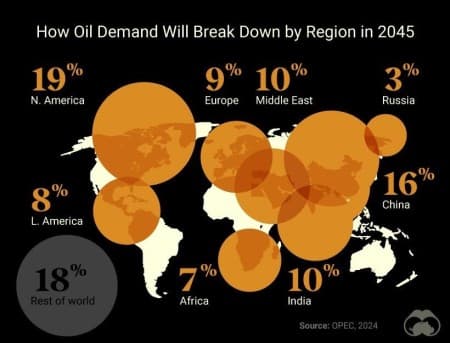
Nevertheless, predictions are still uncertain. The International Energy Agency (IEA) estimates that consumption might reach approximately 100 million barrels per day before 2030 within its net-zero framework. On the other hand, OPEC anticipates that demand will continue to increase, possibly attaining 111.5 million barrels per day by 2045, indicating a more gradual shift in developing nations.
A key factor contributing to the decrease in oil demand is the swift shift towards electric transportation. In 2023, electric vehicles (EVs) made up approximately 14 percent of worldwide vehicle sales, with this percentage steadily increasing. As more people adopt these vehicles, especially in developed countries, the demand for oil within the transportation sector—by far the biggest consumer of oil—is projected to decline considerably in the future.
Nevertheless, not every sector is evolving at the same speed. Sectors like aviation, maritime transport, and petrochemicals continue to rely significantly on oil because of technological and financial constraints. This leads to a slower, inconsistent decrease instead of a sudden reduction in worldwide demand.
At the regional level, the situation is even more intricate. Although Europe and certain areas of North America are decreasing oil consumption due to strong climate initiatives, demand in Asia—especially in China and India—is still rising along with economic growth. This difference is expected to postpone the global peak and result in a longer transition period.
Further investment trends emphasize the ongoing transformation. Global energy investment has reached approximately $1.8 trillion, with around 60 percent directed towards renewable energy, grid systems, and storage solutions. This consistent reallocation of funds reflects increasing trust in clean energy, despite continued investments in oil and gas to meet present needs.
In the end, the shift is not just a straightforward decline but rather a fundamental realignment. Oil will continue to be a component of the global energy supply for many years, although its leading position is gradually diminishing. The speed of this transformation will rely on how fast technology advances, regulations become stricter, and emerging economies manage their growth while pursuing carbon reduction objectives.
Provided by SyndiGate Media Inc.Syndigate.info).




 jasdooit
Leave a comment