
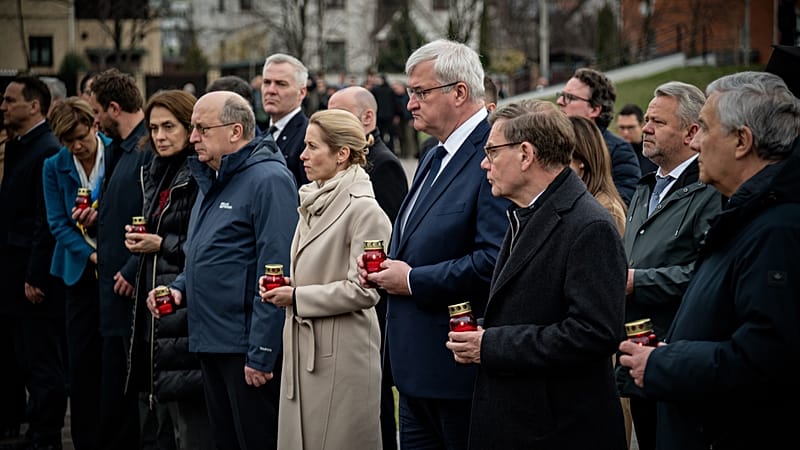
The nations within the European Union, excluding Hungary, committed on Tuesday to guarantee “complete responsibility” for the war crimes attributed to Russia during its extensive invasion of Ukraine.
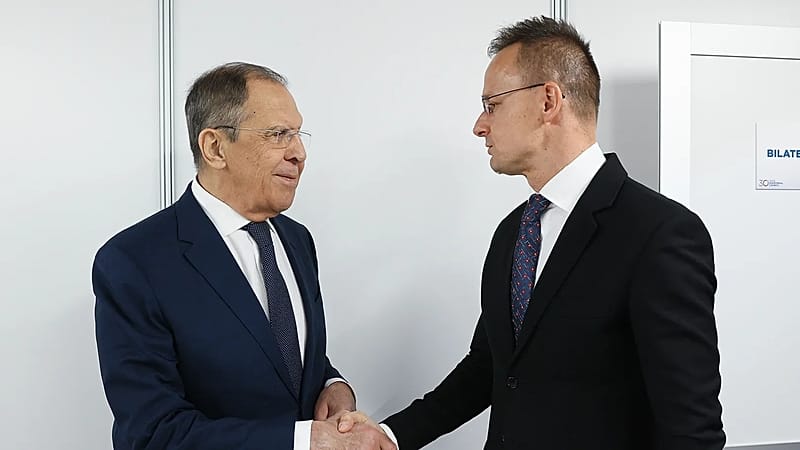
The exclusion of Hungary occurs during a heated conflict between Budapest and Ukraine regarding theDruzhba oil pipelinewhich has halted a crucial €90 billion loan to Kyiv. Prior to the conflict, Budapest had expressed significant concerns regarding the union’s general approach.
“Accountability is a crucial component of a broad, fair, and enduring peace, as well as maintaining international law,” stated the 26 member states in ajoint statement jointly signed by Ukraine and High Representative Kaja Kallas.
Kallas brought together several members of the bloc’s foreign ministers in Kyiv to mark four years since the Bucha massacre, where 400 Ukrainians were killed by Russian forces near Kyiv. Photos of deceased individuals arranged on the streets, with their hands tied, horrified the global community and revealed the extent of the crimes committed against civilians.
It is impossible to deny what occurred here,” Kallas stated during her visit to the memorial site. “Russia needs to be responsible for its actions against Ukraine.
Following the Bucha massacre, Ukraine and its allies have been advancing various efforts to record and bring to justice war crimes associated with Russia.
In May of the previous year, a wide-ranging alliance of democratic countriesendorsedthe establishment of a specialized court to try the crime of aggression, focusing on political leaders who are ultimately accountable for initiating the large-scale invasion. This may open the door to prosecuting Vladimir Putinin absentia, but only once he has left his position.
The court was established with the support of the Council of Europe, a human rights group located in Strasbourg.
Approximately ten nations have indicated their desire to become part of the agreement supporting the initiative, with Ukraine, Estonia, Lithuania, and Luxembourg having finished the necessary parliamentary processes. (Not all countries are obligated to follow this procedure.)
“Clear requirements are now necessary: political will and a shared commitment,” said Alain Berset, Secretary General of the Council of Europe, in a statement.
Ukraine’s Foreign Minister, Andrii Sybiha, stated that the establishment of the special tribunal later this year would aid in rekindling “the spirit of Nuremberg,” referring to the groundbreaking trial of war crimes committed against Nazi Germany at the conclusion of World War II.
“The magnitude of Russian atrocities during its invasion has not been witnessed on European soil since World War II. The crime of aggression is the underlying cause of all these acts,” he stated.
There needs to be responsibility, and there will be no forgiveness for Russian offenders, including the top political and military leaders of the Russian Federation.
In November, Europeans were surprised to learn about a 28-point proposal created by American and Russian officials that proposed a general pardon for war criminals. The document, which included several contentious aspects, has since been revised into a more acceptable 20-point version. Nevertheless, discussions are still stalled due to issues related to territory.
Europeans have frequently criticized the Kremlin for taking an extreme stance in the discussions, a position that U.S. officials have occasionally supported. Last week, Kallas called on Washington to refrain from succumbing to “the trap” of “the Russian playbook.”
 jasdooit
Leave a comment