
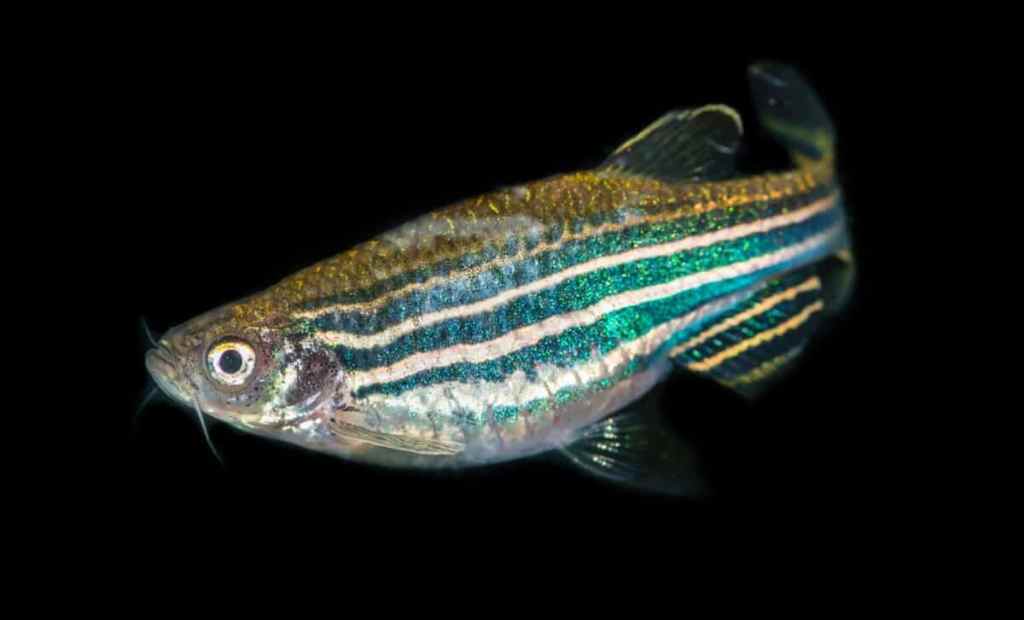
Researchers have discovered a neural pathway in zebrafish that integrates light information from the eyes and the pineal organ, a brain structure often referred to as the “third eye,” to control vertical motion within the water. The study, published in theProceedings of the National Academy of Sciences, provide fresh insight into a sensory systemwhich has been well known in vertebrates but remains unclear in functional aspects.
For many years, biologists were aware that fish and other non-mammalian vertebrates had light-sensitive pineal glands, yet there was no direct proof connecting these structures to particular behavioral choices. The recent study, headed by ProfessorAkihisa Terakitaat Osaka Metropolitan University (OMU), presents evidence by following the neural pathway from the pineal gland to a particular area of the midbrain, and showing its function in a specific, observable behavior.
A Photosensitive Protein at the Core of the Breakthrough
The OMU group concentrated on a protein known asparapinopsin 1(PP1), located in the photoreceptor cells of the zebrafish pineal gland. Unlike typical light-sensitive proteins, PP1 is present in two stable states, one responsive to ultraviolet light and the other to visible light, and switches between them based on the spectral makeup of the surrounding environment. This allows PP1 to detect the ratio of ultraviolet to visible light rather than just reacting to total brightness, a difference that provides useful information underwater, where depth, shadows, and water clarity all affect howdifferent wavelengths penetrate.
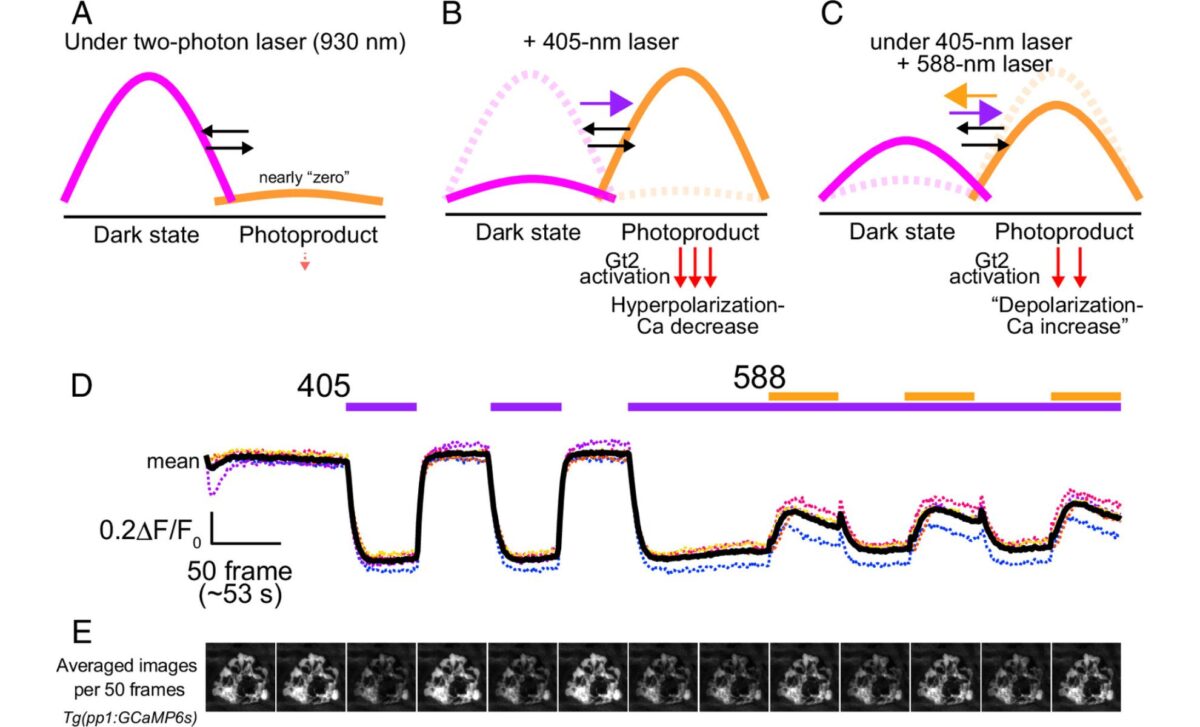
Utilizing transparent zebrafish larvae, scientists used calcium imaging, a method that makes active neurons glow when calcium levels increase, to monitor PP1-generated signals as they moved across the brain. As per thestudy, those signals traveled from pineal photoreceptor cells via relay cells and ultimately focused on a midbrain area known as thetegmentum, an area linked to movement regulation. Inputs from the eyes reached the same region, and the two pathways were combined there prior to the fish adjusting its depth.
Fish that were missing the PP1 gene displayed significantly diminished reactions to variations in light wavelength. When short-wavelength light was presented on a blue background, typical fish moved downwards in a regular and predictable manner; however, fish lacking PP1 did not show the same structured response. The overall distance covered by both groups was similar, suggesting that PP1 was affecting thedirection of motion instead of total activity levels.
How the Brain Combines Two Types of Light Information
One of the more surprising aspects of the research was the finding that the pineal gland and the eyes do not act as duplicate systems, but instead each provides unique data that is integrated in the tegmentum. Following the surgical removal of the eyes from certain subjects, the scientists observed that color-related responses in the tegmentum remained, indicating that the pineal gland was the source.primary sourceregarding color-opponent signals. Nevertheless, the timing of these responses altered without retinal input, suggesting that visual signals from the eyes were influencing the pineal signal prior to its conversion into movement.
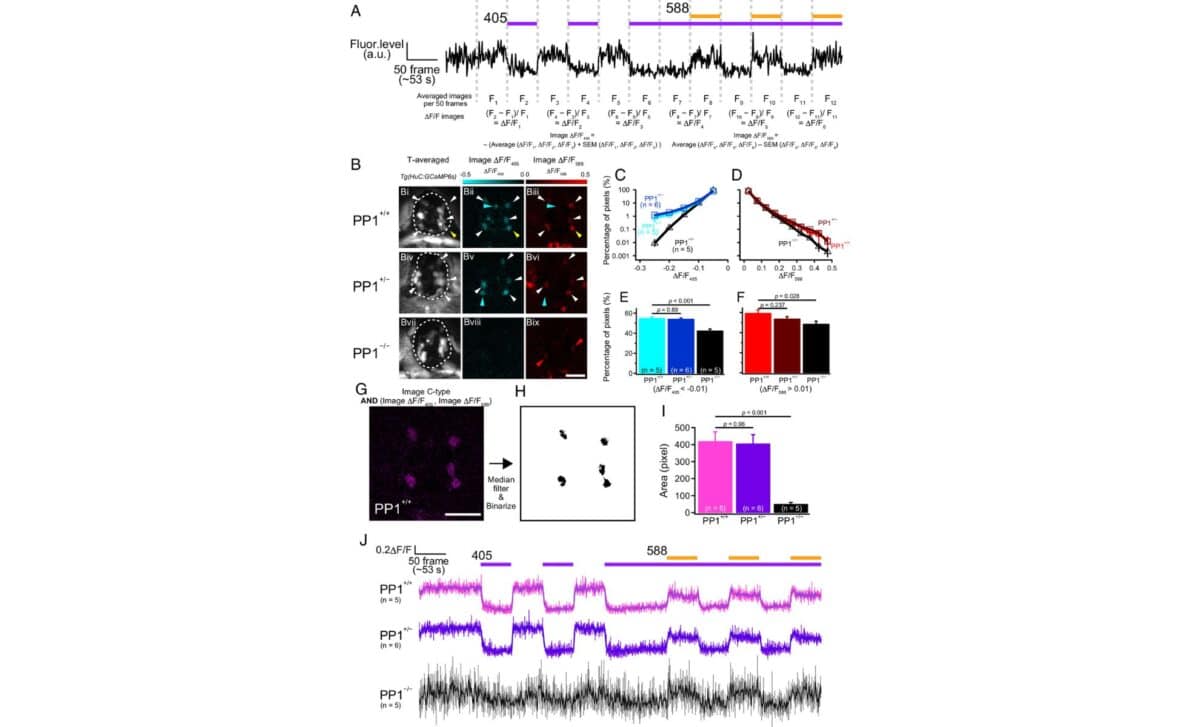
As per the scientists, the circuit seemed to handle light data within a time frame of roughlyten seconds, with fish monitoring slow variations in wavelength with greater accuracy than sudden alterations. This extended integration corresponds to natural underwater environments, where modifications in light quality due to cloud cover, depth, or shadows typically happen progressively rather than all at once.
When scientists employed a two-photon laser to specifically eliminate the chromatic neurons in the tegmentum, the synchronized vertical movements triggered by varying light levels were notably diminished. Fish that had a sham operation maintained the behavior, indicating the effect was confined to that particular neural pathway.
Professor Terakita mentioned that the results may be applicable to areas outside of fish biology. “These results may aid in developments within neuroscience and medical disciplines, for example, mapping neural circuits through PP1-related optogenetic techniques.,” he said. Since PP1 switches between two states when exposed to different light wavelengths, it may provide scientists with an accurate instrument for specifically activating or tracking overlapping neural circuits, a feature that is significant across various biological systems.
Enjoyed this article? Sign up for our free Newsletterfor compelling narratives, unique material, and up-to-date information.




 jasdooit
Leave a comment