
Uzbekistan is getting ready to manufacture humanoid robots for the first time, through a new collaboration with South Korea’s ROBOTIS robotics firm – an action that highlights the nation’s aspirations to join the global high-tech production industry.
The contract, concluded between the UzElTechSanoat Association and ROBOTIS, details intentions to commence the production of humanoid robots within Uzbekistan, build manufacturing facilities, and educate professionals for the growing robotics sector.
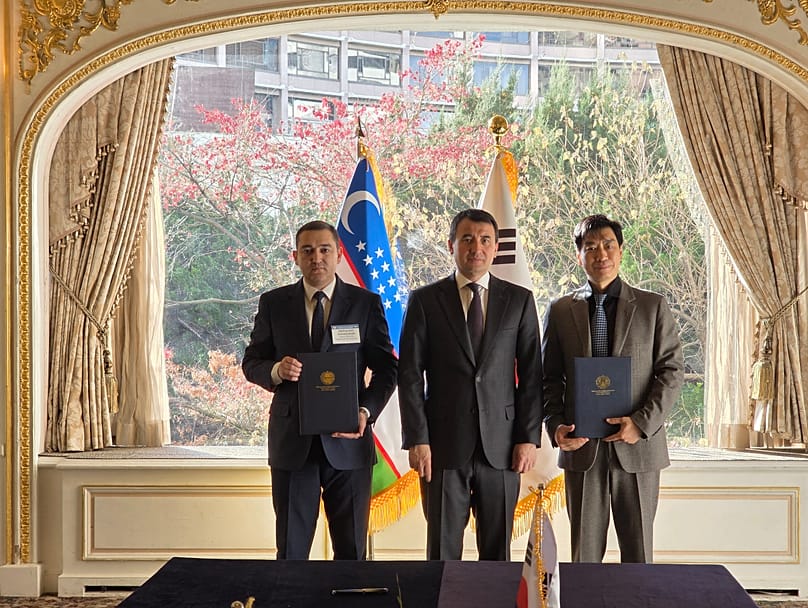
ROBOTIS, recognized for its human-like robots and intelligent robotic actuators, will assist in developing technological infrastructure and aid in training a workforce skilled in designing and managing sophisticated robotic systems.
The effort demonstrates Uzbekistan’s larger goal of developing a local innovation environment, which relies not only on industrial collaboration but also on young people acquiring robotics skills from an early stage.
The starting point of Uzbekistan’s robotic future
That long-term approach begins well away from manufacturing plants, within schoolrooms.
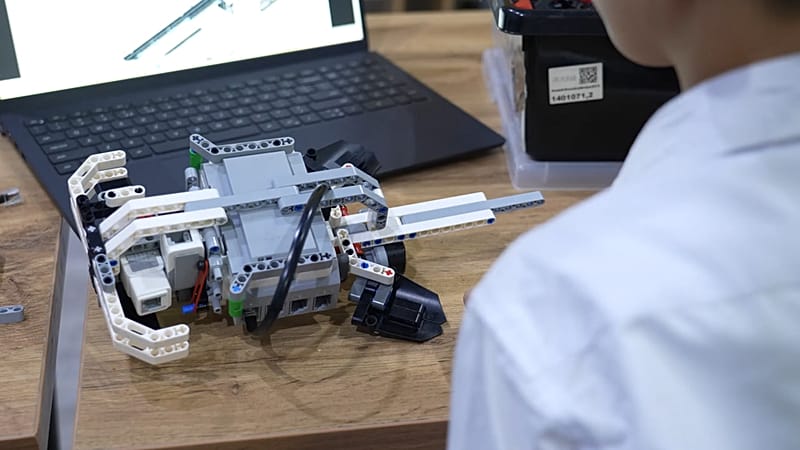
In a robotics classroom, 12-year-old Mirkomil Shodiev links his robot to a laptop. After a few lines of code, the machine comes to life – its motor starts, and the wheels move according to the commands he has programmed.
Constructed using an EVO-3 educational robotics kit, which enables students to build and code their own machines, the robot can carry out mechanical tasks according to programmed commands. After connecting to a computer, Mirkomil develops algorithms that manage its motor functions, enabling it to move, react to inputs, and execute pre-set sequences on its own.
This was made by me,” he states. “You link it to a computer, input code, and it carries out functions through the motor.
Mirkomil started taking IT classes only four months back, fueled by interest in robotics, websites, and design. From there, he has acquired the skill to create games on Scratch and is currently learning Python, a programming language commonly applied in web development, automation, and robotics.
“After mastering Python, I aim to develop websites and generate income as I mature,” he states.
His aspirations highlight a larger shift occurring in Uzbekistan, where digital competencies are growing more vital for job opportunities and economic development.
As per the Digital Uzbekistan-2030 strategy, the government is increasing nationwide training in coding and digital competencies, with IT education centers and specialized academies expanding quickly to address the growing need for tech-related jobs.
Classrooms transforming concepts into functional systems
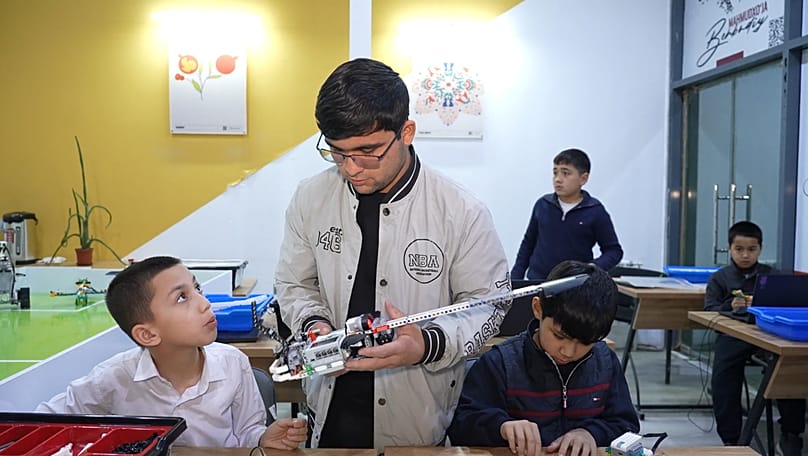
At the Robot Academy, where Mirkomil is a student, kids between the ages of eight and fifteen acquire skills in programming, robotics, and engineering by engaging in practical projects.
Our students design scientific projects, create games, and construct Telegram bots,” mentions teacher Navruz Shaydullayev. “Coding enhances their ability to think critically, reason logically, and sharpen their intellectual skills.
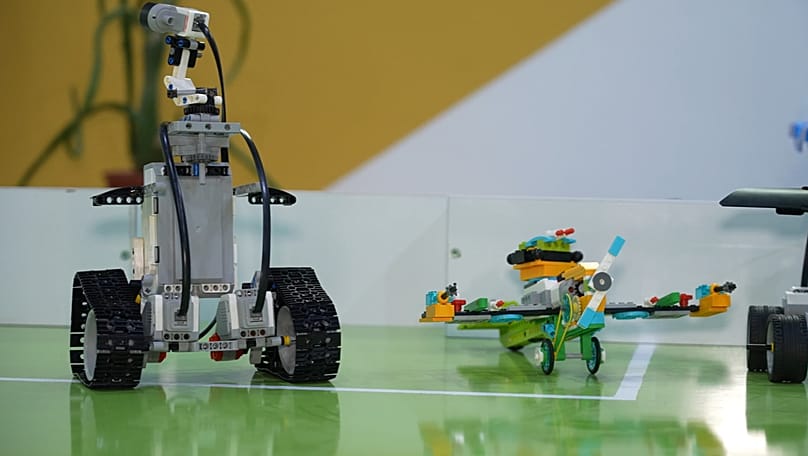
Classes concentrate on tools like Scratch and EVO-3 educational robot kits, flexible systems that enable students to construct and code their own robots, giving them the ability to design, put together, and operate machines on their own.
Since robotics involves both software and hardware, students discover how digital instructions result in physical motion – a fundamental concept in industrial automation, robotics, and contemporary manufacturing.
They show interest and pose numerous questions,” Shaydullayev mentions. “We assist them in transforming their concepts into tangible initiatives and gradually enhance their abilities.
From classroom trials to national manufacturing
The collaboration between Uzbekistan and ROBOTIS may one day open up new professional opportunities for students such as Mirkomil, linking academic learning with the development of industrial robotics.
The contract features educational initiatives for professionals, guaranteeing that the nation cultivates its own robotics engineers, coders, and technicians.
In the long run, the project may enhance Uzbekistan’s technological strength and generate well-trained employment opportunities in one of the globe’s most rapidly expanding industries.
For Mirkomil, the future he envisions seems to be just around the corner.
In the future, I plan to stay in this area,” he states. “Once I complete the courses, I intend to pursue further studies in Tashkent as well.
As Uzbekistan gets ready to produce humanoid robots, classes such as his are subtly preparing the individuals who could eventually construct them.




 jasdooit
Leave a comment