
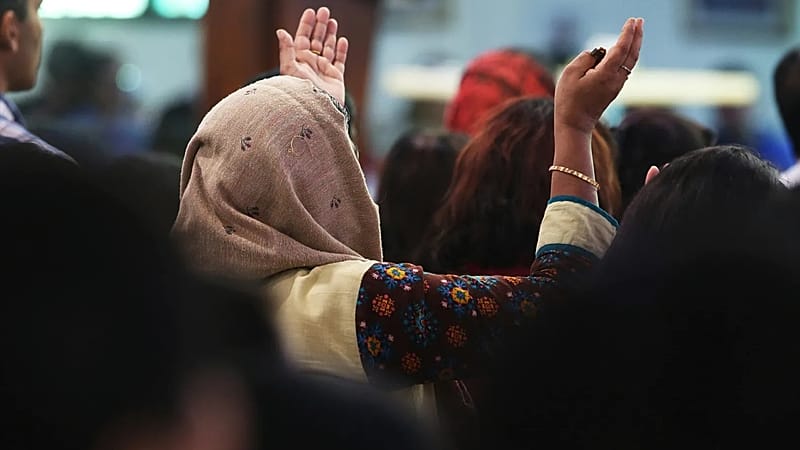
As a somber indication of the effects of the Iran conflict, Christians in the United Arab Emirates were urged not to assemble for the customary Easter services at the two primary Catholic churches in Dubai because of the risk posed by continuous Iranian missile and drone strikes.
Security warnings were issued throughout the Gulf on Easter Sunday, as officials worked quickly to stop missiles being directed at different areas in the region.
However, Easter festivities occurred with increased significance as local and international Christians united to welcome Easter’s spiritual message of hope.
Easter church services at Saint Mary’s Catholic Church and Saint Francis of Assisi Church in Dubai were halted, as stated on their individual websites on Friday, directing congregants to participate in Easter masses via the internet. These notifications align with official safety guidelines from the government concerning mass gatherings.
“All Masses at our Church have been cancelled until further notice” and “parishioners are asked to avoid visiting the Church grounds, for the sake of safety and the well-being of the community,” stated the announcement from St. Francis of Assisi Church. The coastal region near the church in Jebel Ali has been targeted multiple times in Iranian attacks.
Jebel Ali represents tolerance in Dubai, featuring various churches and temples from different faiths. Safety guidelines issued by the authorities also affect other religious events, resulting in the temporary closure of the Anglican Holy Trinity Church, the Saint Thomas Orthodox Cathedral, the Saint Mina Coptic Orthodox Church, the Mar Thoma Parish, as well as Sikh and Hindu temples. Worship has now shifted to online platforms.
A comparable statement was shared by Saint Mary’s Catholic Church, located in Oud Metha, Dubai, which is among the biggest Catholic parishes globally.
“Please be advised that starting 3 April, our church will remain closed to all visitors until further notification,” stated the announcement.
Easter is typically a meaningful spiritual time and a major event for Christians in Dubai, where both local residents and expatriates usually attend Catholic churches in large numbers, with extensive arrangements made well in advance.
However, as Iranian missile and drone attacks persist and Dubai remains on high alert with ongoing raids, Easter arrives with heightened significance and symbolism, along with a sense of resistance. Christians in the UAE and throughout the Gulf are now celebrating Easter as a renewed expression of hope and gathering together during these difficult times.
Call for unity among Christians in the Gulf
The apostolic vicar of Southern Arabia, Bishop Paolo Martinelli, who is responsible for the Catholic Church in the UAE, called for unity among Christians in the Gulf during this Easter. He recognized the frustration that church services would have to be attended online instead of in person, while also urging all parishioners to comply with the directives from the authorities.
I wish to convey my closeness to you during these sacred days as we commemorate the beginning of our faith, Christ Jesus, who died and rose again,” said Bishop Martinelli in his Easter message, urging Christians to “pray constantly for an end to the conflict and for peace and healing.
“We genuinely hope to reunite with all of you in our churches soon. It is undoubtedly difficult not being able to participate in person in the wonderful and meaningful celebrations of Holy Week,” the bishop added.
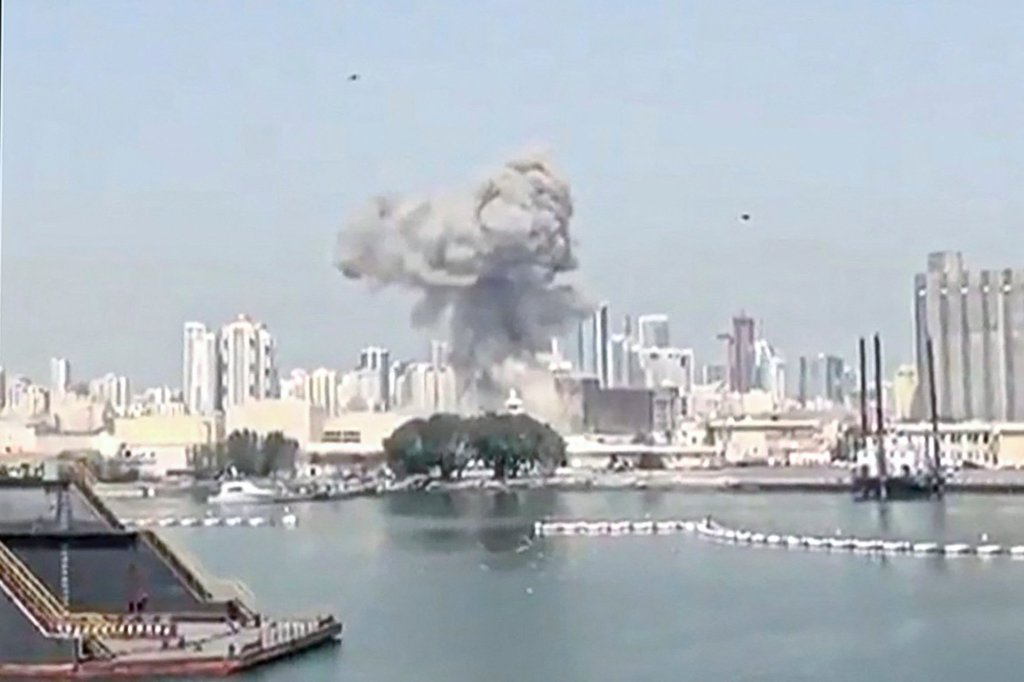
Most of the Iranian missile and drone attacks since the conflict started have hit Dubai, which has faced more strikes than Israel. Journalists from Euronews in Dubai keep reporting on Iranian air raids, which have not stopped during Holy Week.
 jasdooit
Leave a comment