
WE HAVE HIM!” shouted President Donald Trump on his social media site Truth Social on Sunday morning. Within 48 hours of a U.S. fighter jet being downed by hostile fire near southern Iran, the two pilots were securely back in American custody, following what Trump described as “one of the most courageous Search and Rescue Missions in U.S. History.
The United States won a competition against the Iranian government, which initiated a large-scale search for the aircraft’s weapons systems officer following the F-15 Strike Eagle incident, offering a £50,000 reward and urging residents to look in the vicinity.
Thousands of special forces personnel, fighter jets, and helicopters collaborated with the CIA and the Department of Defense to find the American military individual who had been shot down. He was ultimately rescued on Saturday evening from a mountain crack where he had concealed himself following a climb up a 7,000-foot slope.
What was the progression of the operation?
Two American military aircraft were struck by Iranian fire on Friday, shortly after Trump claimed that Iran lacked air defense capabilities.
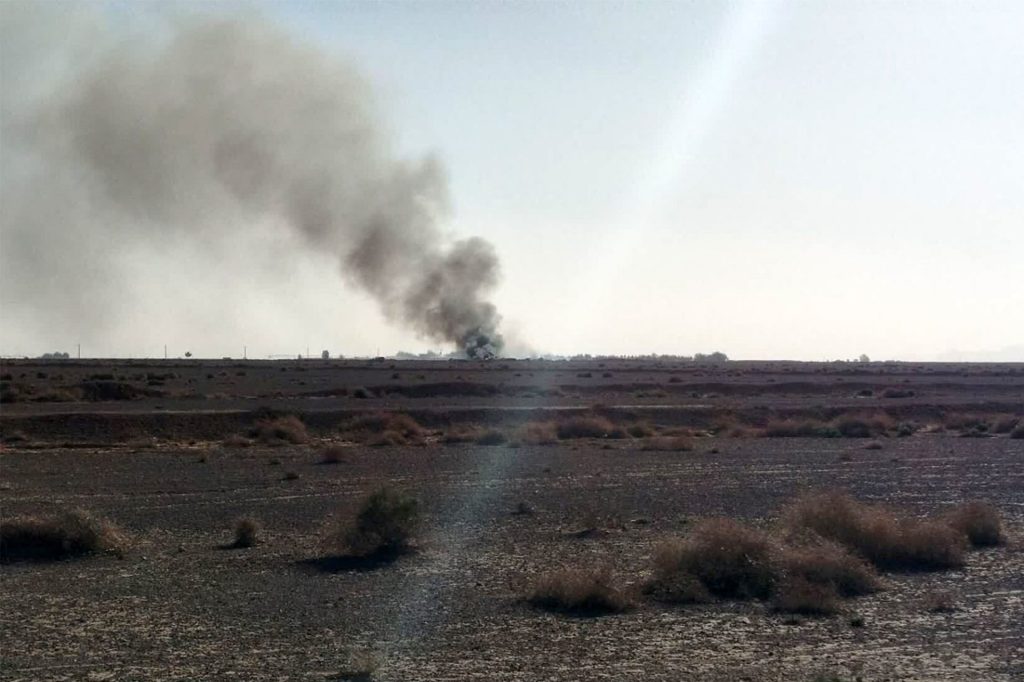
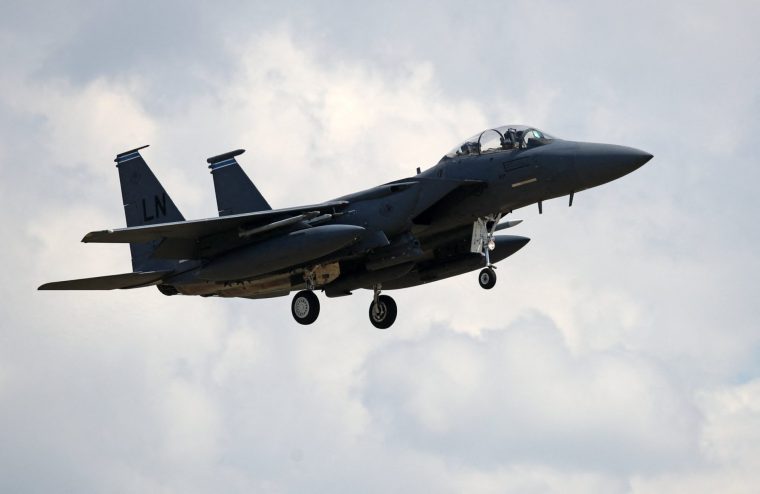
Although the other aircraft, an A-10 attack plane, managed to leave Iranian airspace without sustaining significant damage, an F-15 fighter jet was brought down over a mountainous area in Iran. Pictures of the crash circulating online seem to support the claim that it occurred near Shareza in the Isfahan province, as stated by Iranian state media, although the precise location remains unclear.
Both crew members safely ejected, and the pilot was rescued shortly afterward, but the weapons officer could not be found by either party at first.
The rugged landscape and towering peaks render this region a highly challenging area for searching or combat, where familiarity with the local environment and lighter, more agile gear provide an edge.
A large-scale US search and rescue operation was initiated, with the CIA participating from the beginning. The agency conducted a “deception strategy” to mislead the Iranians by claiming that the officer, whom Trump referred to as a “highly decorated colonel,” had been located and was being transported out of Iran via a ground convoy. Helicopters were sent to the area, flying at low altitude to attempt to locate the airman.
The CIA was able to find the colonel in a “mountain crevice” where he had been concealed, following a hike up a 7,000ft ridge.evade his pursuers, according to the New York Times. Upon arrival, armed only with a handgun for protection, he managed to contact US forces through a secure communication device.
The Pentagon assumed control of the rescue operation after his position was verified, deploying fighter jets and drones to prevent Iranian forces from getting near as they retrieved the wounded officer.
Unmanned MQ-9 Reaper drones conducted strikes against Iranian individuals of military age who came within three kilometers of the Airman, according to a source involved in the operation who spoke to Air & Space Forces Magazine. At least five people were reported killed in the operation, as stated by Iranian media.
The last operation was carried out by a US Navy SEAL unit, finishing the trio of military branches engaged.
However, the rescue operation encountered a sudden problem that might have ruined the mission, as reported by US media. The plane originally dispatched to retrieve the officer was unable to depart following a malfunction at a temporary airstrip.
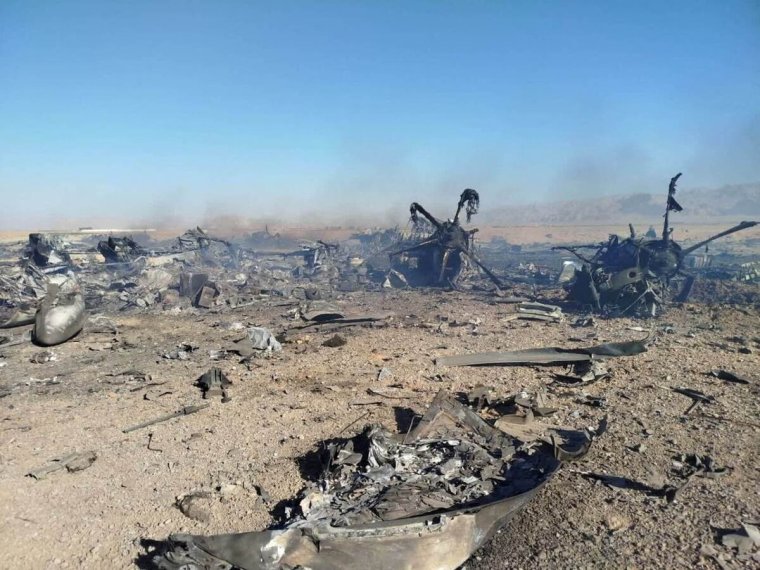
The Americans subsequently made the choice to destroy their own planes to avoid them being captured by the enemy, according to reports, before three additional aircraft were dispatched to finish the evacuation.
The aircraft that were destroyed are believed to have consisted of two HC-130J Combat King II rescue planes and two helicopters, although the U.S. has not verified the loss of the helicopters.
The Islamic Revolutionary Guard Corps of Iran stated that it brought down the aircraft during the operation. Iran also asserted that it struck two Black Hawk helicopters participating in the search and rescue mission, although these were not destroyed.
No American losses were reported, as stated by Trump.
Things might have turned out terribly
The mission was described as “highly dangerous” by Fawaz Gerges, a professor at LSE and a specialist in conflicts within the Middle East.
“Although President Trump wants us to think everything was flawless, circumstances could have turned extremely problematic,” Gerges stated.
He claimed that Trump’s depiction of the operation in his subsequent statement undermined his assertion of America’s “overwhelming Air Superiority,” calling it an “exaggeration.”
This region was among the most mountainous areas in Iran, but it wasn’t located in the central part,” Gerges stated. “There were no significant Iranian military forces present in the area; instead, the Iranian government depended on volunteers and local tribes to search for the crew member and the aircraft.
Professor Scott Lucas, a specialist in American foreign policy in the Middle East, stated: “At the very least, the Americans have incurred a substantial expense for this operation.”
The Iranians will also be celebrating the fact that they delivered a blow to the Americans.
He mentioned that since it was a “highly specialized mission in a very isolated mountainous region,” the US “established a temporary runway” to facilitate the landing of special forces tasked with recovering the pilot.
The US was utilizing C130 transport aircraft, which typically require approximately 1,000 meters of runway for takeoff, but can manage with as little as 300 meters under “maximum effort” and “light load” scenarios. It is likely that the aircraft became stuck while attempting to use a shorter runway than usual.
They were either trapped on the airstrip or attacked there, or both, which is why they had to destroy the two C130s,” he added. “What the Americans have not confirmed is whether they also lost helicopters.
For individuals with a long memory, this might bring back the 1980 effort to save the American hostages, when U.S. personnel were killed after two helicopters collided.
The Iranian government has likened the operation to Operation Eagle Claw, in which eight U.S. military personnel lost their lives during a unsuccessful effort to free American hostages held during the April 1980 Iranian hostage crisis.
What made the search and rescue operation so important?
It could have greatly benefited Iran to capture the downed pilot, who would probably have been showcased on state TV and utilized as a propaganda device to boost national spirit and demonstrate to the world that Iran was unable to retaliate against the United States.
The United States mobilized its entire military and intelligence apparatus to track down the missing officer.
Lucas mentioned there would be a “significant sense of relief” that the colonel was not captured by the enemy.
On Saturday, Trump issued Iran a 48-hour ultimatum to either “reach an agreement or re-open the Strait of Hormuz,” a crucial global shipping route that Iranian actions have made too perilous for Western vessels to traverse, leading to increased energy costs worldwide, with Trump warning that “all Hell” would be unleashed on Iran if this didn’t happen.
Gerges cautioned that if the United States initiates attacks on vital infrastructure like uranium enrichment facilities or attempts to take control of Kharg Island, where Iran primarily exports its oil, Iranian forces will be significantly more prepared to protect their land.
“It might turn into a massacre,” he stated.
Lucas stated that this marks a “critical moment” in the conflict: should Trump choose to intensify, by targeting additional civilian facilities, Iran will retaliate by increasing assaults on the Gulf, as they have previously done.on Sunday morning.
He mentioned, ‘There will be an effort by Trump to secure some relief from the challenges by highlighting this.’ ‘There is no break here; we remain in a state of uncertainty and uncontrolled conflict.’
 jasdooit
Leave a comment