
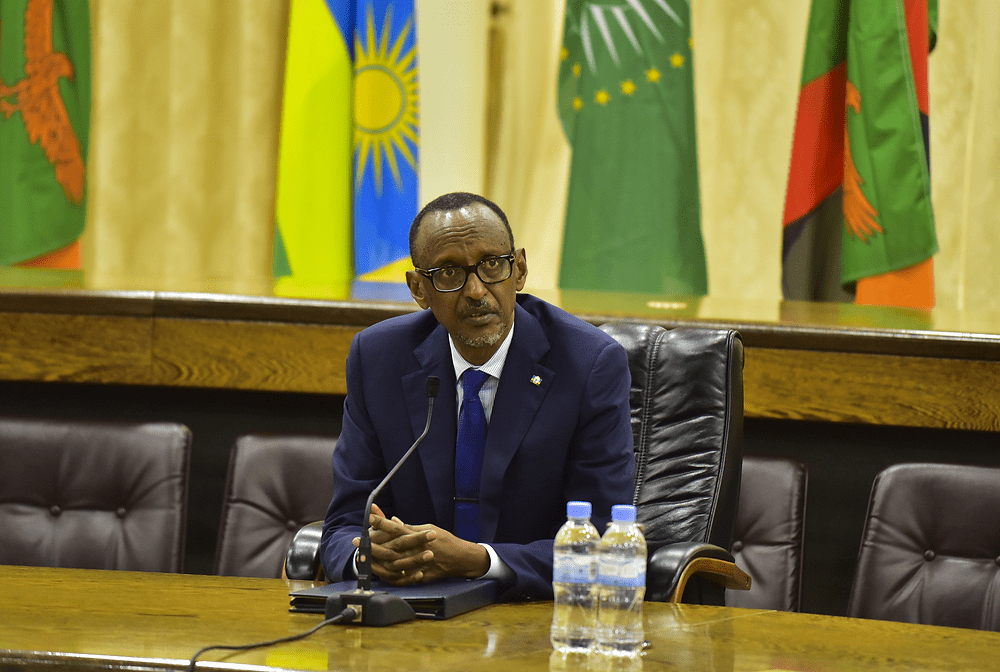
Thirty-two years following the 1994 Genocide against the Tutsi, Rwanda has managed to rebuild itself in ways that many previously considered unattainable. Institutions have been re-established, communities are starting to recover, peace and security are tangible realities, and a new generation has emerged in a nation shaped by resilience rather than tragedy. ALSO READ: Rwanda’s commemorations in the shadow of indifference However, reconciliation is not a single event; it is an ongoing process. One of the most significant obstacles to this process remains the persistent existence of genocide ideology, especially in eastern DR Congo, where groups such as the FDLR, backed by Kinshasa, and the Mai-Mai Nyatura continue their activities. ALSO READ: We have to secure our border: Kagame on Kinshasa-FDLR threat Today, genocide ideology rarely manifests in the same way as before 1994. Rather, it appears through denial, revisionism, or distorted narratives that attempt to minimize the crimes committed. In certain cases, these ideas are actively promoted by armed groups, exiled networks, or individuals aiming to disrupt reconciliation. ALSO READ: Eastern DR Congo: When vulnerable citizens are left between armies If left unchecked, these narratives, often spread by writers like Judi Rever, Michaela Wrong, and Charles Onana, gradually erode the foundations of social cohesion and national recovery. ALSO READ: Kagame: Rwanda faces impossible choice to tolerate or defend against FDLR The FDLR represents this dual threat: it maintains a military presence in eastern DR Congo while also promoting an ideological agenda rooted in the hatred that once devastated Rwanda. Simply telling Rwanda to remain within its borders ignores the fact that regional instability and extremist ideologies are closely connected. Security issues in eastern DR Congo are not limited to one area; they directly affect Rwanda’s safety and have broader implications for peace and development in the Great Lakes region. Combating genocide ideology is not solely the responsibility of governments. It is the duty of all Rwandans, both within the country and in the diaspora, to stay alert. Education, civic participation, community discussions, and historical remembrance are essential tools in ensuring that the ideas that fueled the genocide do not find space to thrive. Rwanda takes this very seriously. ALSO READ: Govt backs RDF defensive posture amidst ‘one-sided’ sanctions by US The international community also has a role, particularly in supporting initiatives that prevent denial, distortion, and the spread of extremist views. However, the most effective defense continues to be the consistent, principled, and brave actions of Rwandans themselves, both at home and abroad. When citizens and leaders alike refuse to accept divisive narratives, society becomes stronger against the repetition of past tragedies. Rwanda’s recovery shows that even the deepest wounds can begin to heal when truth, accountability, and unity are prioritized. Yet, the continued existence of genocide ideology, wherever it may be, serves as a clear reminder that reconciliation is a painstaking and ongoing process, not a final destination. For Rwanda and the wider region, vigilance is not optional. The lessons of history demand it, and the safety of future generations depends on it. The writer is a political and diplomatic analyst specializing in Africa and the countries of the Great Lakes Region.
Provided by SyndiGate Media Inc.Syndigate.info).
 jasdooit
Leave a comment