
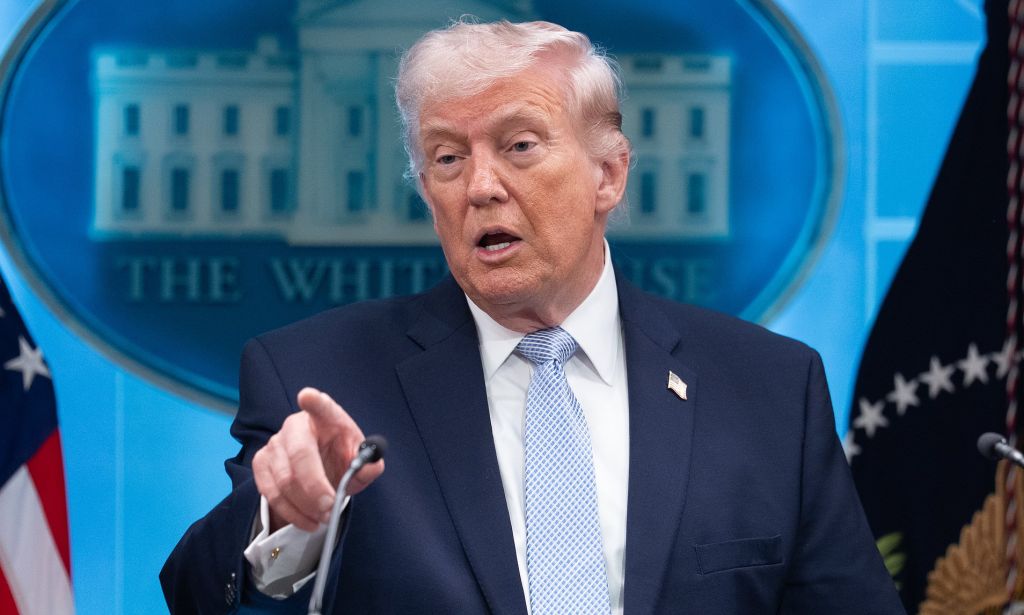
Crude oil prices fell universally on Tuesday following Donald Trumpdeclared a two-week truce with Iran, which would lead to the reopening of the Strait of Hormuz.
Following Trump’s post regarding the halt on Truth Social, US crude oil dropped 18 percent to below $93 per barrel, after having risen above $117 earlier that day.
The declines represent the biggest single-day drop in oil prices since the Gulf War in 1991.
Natural gas and heating oil prices also fell significantly after the ceasefire announcement.
Brent crude oil futures dropped approximately six percent to $103.40. Both prices are still significantly higher than their levels at the beginning of the conflict.
Dow futures increased by 1,000 points, Nasdaq 100 futures nearly gained three percent, and S&P 500 futures climbed more than 2.5 percent,NBC News reported.
In the bond market, Treasury yields declined following reports of a possible truce. The yield for the 10-year Treasury dropped to 4.24 percent from 4.30 percent earlier on Tuesday.
That remains significantly higher than the 3.97 percent figure prior to the conflict, and the increase has led to higher rates for mortgages and other loans extended to American households and companies, which is hindering economic growth.
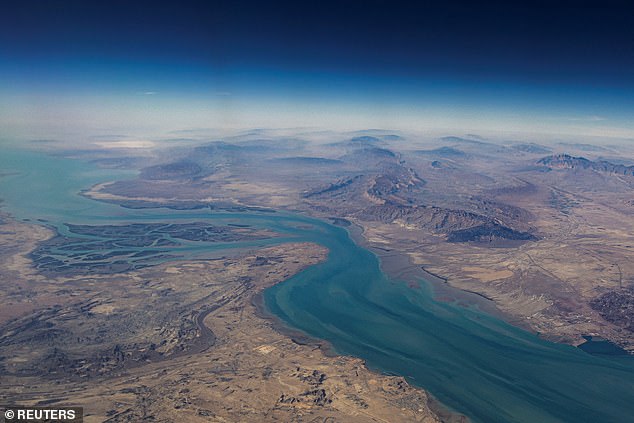
Trade through the Strait of Hormuz, a critical passage in the Persian Gulf where 20 percent of global oil typically passes, had nearly come to a standstill, causing oil prices to rise sharply and creating instability.stock market.
Trump stated that Iran has introduced a ‘feasible’ 10-point peace proposal that might assist in concluding the conflict initiated by the US and Israel on February 28.
The Iranian Supreme National Security Council stated that it has approved a two-week truce, with the country’s foreign minister announcing that access through the strait will be permitted for the following two weeks under Iranian military control.
Previously, US stocks experienced significant fluctuations during normal trading hours as uncertainty surrounding the conflict with Iran grew following Trump’s warning that ‘a whole civilization will die tonight, never to be brought back again’ if Iran failed to meet his 8pm Eastern time deadline to open the Strait of Hormuz.
Crude oil prices have risen sharply due to the conflict disrupting the production and movement of oil in the Persian Gulf.
A significant portion of that oil leaves the gulf via the Strait of Hormuz to reach global consumers, although Iran has restricted its flow to adversaries.
The concern in financial markets is that an extended disruption could maintain high oil prices for a prolonged period, triggering a severe surge of inflation across the global economy.
Trump kept traders anxious by issuing a series of threats to destroy Iranian power plants, but postponed them multiple times.
A year prior, Trump eventually withdrew from several strict tariffs he had initially planned to impose on imports from other nations, although they ended up being higher than the levels seen before his second term.
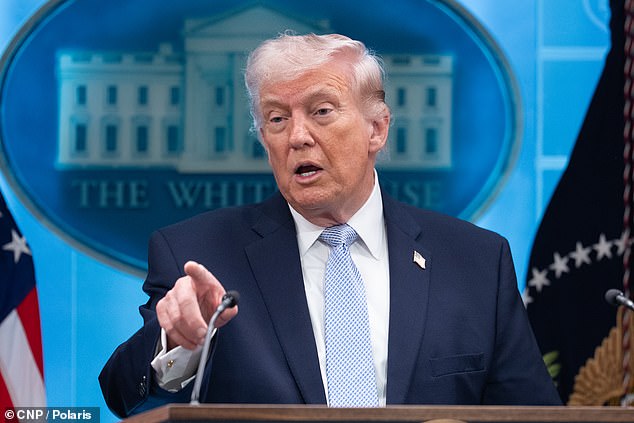
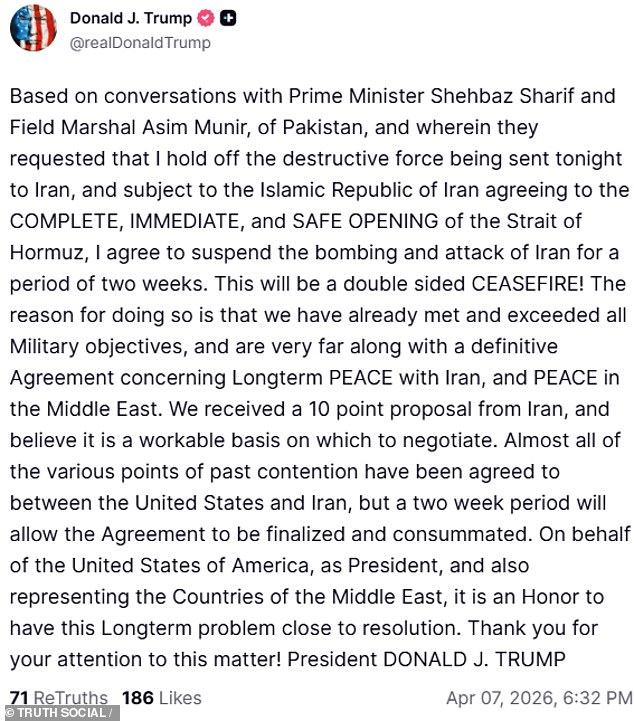
Trump tweeted on Truth Social, “I agree to suspend the bombing and attack on Iran for a two-week period,” following earlier concerns that he had raised apocalyptic fears by warning he would destroy its “entire civilization” if they did not reopen the Strait.
The leader stated that following discussions with Pakistani Prime Minister Shehbaz Sharif, he had received assurances that Iran would agree to the full, immediate, and secure reopening of the Strait of Hormuz.
This will constitute a two-sided truce,” Trump wrote. “The rationale for this is that we have already achieved and surpassed all military goals, and are significantly advanced in a final agreement regarding long-term peace with Iran.
Israelalso agreed to cease hostilities against Iran for two weeks, a seniorWhite HouseAn official stated to Axios, with the ceasefire commencing once the Strait of Hormuz is reopened.
Iran agreed to the Pakistan-mediated deal following a last-minute Chinese intervention that encouraged Tehran to be more adaptable regarding the economic impact of the war, according to three Iranian officials.New York Times.
Tehran’s 10-point strategy, released by the state-owned Tasnim news outlet, calls for the United States to acknowledge Iran’s ongoing authority in the Strait, accept its entitlement to enrich uranium, remove all economic restrictions, provide financial reparation, and pull out all military forces from the area.




 jasdooit
Leave a comment