
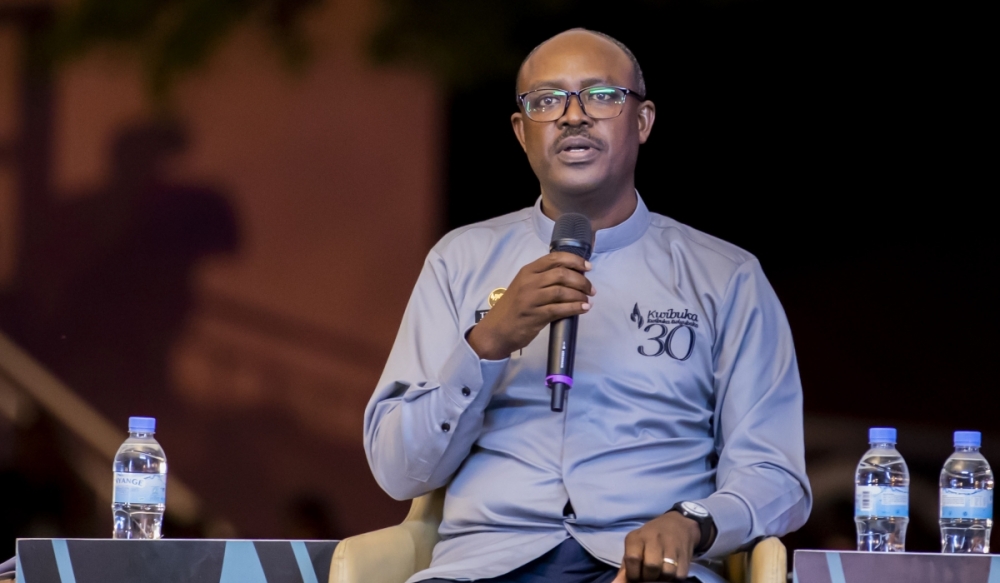
When it comes to Rwanda’s history, the turmoil, recovery, and defining moments that have shaped the nation, few speak with the clarity and insight of Antoine Mugesera who has written about the events that marked the end of the colonial period and the turbulent aftermath of the country’s independence. ALSO READ: Ibuka at 30: Decades of resilience, rebuilding His perspective is not only academic but deeply personal. It is shaped by lived experience, loss, and a lifelong commitment to understanding and rebuilding a nation. At 83, Mugesera carries the weight of both tragedy and renewal. Born in 1942 in what was then Runyinya Commune (now Huye District, Southern Province), he grew up in a country that appeared peaceful on the surface but was already being reshaped by deepening political divisions. The 1994 Genocide against the Tutsi tore his family apart. His mother had died before the genocide, while his father and four siblings were killed during the violence. Only Mugesera and one brother survived; the latter passed away in 2012. Today, he lives in Kimironko, Kigali, with his wife. A father of four and a grandfather, he speaks with calm conviction about Rwanda’s journey from devastation to unity, truth, and resilience. Emerging from devastation Reflecting on the aftermath of the genocide, Mugesera describes a society stripped not only of lives but of its very sense of belonging. “The Genocide did not just take lives; it destroyed the feeling of safety, continuity, and identity,” he says. When the Rwanda Patriotic Front (RPF-Inkotanyi) halted the genocide in July 1994, survivors were left scattered, traumatised, and struggling to rebuild their lives in a country where institutions had collapsed. ALSO READ: Liberation Day: The capture of Mont Kigali and fall of the capital In response, multiple survivor-led associations emerged to fill the void. These included groups such as the Association for the Support of Genocide Survivors (ASRG Mpore), student survivor organisations, and associations of widows like AVEGA Agahozo. While each played a role in offering support, the absence of coordination limited their impact. “People were forming associations everywhere. Each tried to speak for survivors, but we lacked a unified voice,” Mugesera recalls. The birth of Ibuka Out of this fragmentation came the idea for a unified organisation. In December 1995, about 150 survivors convened with a shared understanding: only a collective voice could effectively represent survivors’ interests and engage with government. “We realised that eight or nine separate associations could not adequately articulate survivors’ needs. We needed one voice,” Mugesera says. Ibuka was born from that vision. From the outset, it was designed as an inclusive umbrella organisation—bringing together survivors from all walks of life, as well as friends and international partners committed to Rwanda’s reconstruction. ALSO READ: IBUKA, AERG, GAERG merge into one body More than an advocacy platform, Ibuka became a space for solidarity. It brought together people with different experiences of loss—orphans, widows, and others—under a shared mission. “Our goal was to protect the rights and dignity of survivors and ensure their voices were heard,” Mugesera explains. The early years were not without challenges. Survivors faced poverty, illness, displacement, and deep psychological trauma. Trust was fragile, and some were hesitant to engage, fearing retaliation or doubting that justice would ever be achieved. ALSO READ: Survivors wary of Gacaca court reforms Yet through dialogue, outreach, and persistence, Ibuka gradually unified survivors around a common purpose. Gacaca and the pursuit of justice One of the most difficult moments in Ibuka’s journey came with the introduction of Gacaca courts, the community-based justice system established to address genocide crimes. “Imagine asking people to face those who killed their families,” Mugesera says. Initial resistance was strong. Survivors feared retaliation, while others questioned whether justice could truly be achieved through community processes. Ibuka played a critical role in preparing communities, explaining the purpose of Gacaca, addressing fears, and encouraging participation. “For justice to be meaningful, it could not be imposed from above. It had to come from the people,” he notes. The process required patience. Ibuka leaders and volunteers spent days in communities listening, explaining, and building trust. Gradually, attitudes began to shift. “By the third day of discussions, people started to understand,” Mugesera recalls. Over time, Gacaca became not only a mechanism for accountability but also a platform for truth-telling and reconciliation. “People began to see that living side by side with those who harmed them was part of moving forward,” he adds. ALSO READ: Gacaca triggered greater openness to reconciliation – research Building a generational legacy As survivors worked to rebuild their lives, fatigue inevitably set in. Many were focused on raising families, finding livelihoods, and reconstructing homes. Ibuka’s continuity depended on a new generation. Young survivors—students and graduates—stepped forward, bringing fresh energy, education, and vision. They became the backbone of the organisation. “They were not just participants; they became leaders,” Mugesera says. “They understood the importance of remembrance and the responsibility it carries.” This generational transition ensured that Ibuka evolved beyond its origins in the immediate aftermath of tragedy. It became a dynamic institution, capable of adapting to Rwanda’s changing realities. ALSO READ: Ibuka Europe reaffirms commitment to memory and legacy Many young leaders later took up roles in government, civil society, and academia, spreading the values of remembrance, justice, and resilience across the country. Growth and international recognition Over three decades, Ibuka has grown from a small survivor network into a nationally and internationally recognised organisation. Its impact, Mugesera says, is rooted in consistency, transparency, and a steadfast commitment to survivors’ needs. “Trust is built over time,” he explains. “We worked closely with government institutions, international partners, and civil society to address issues such as housing, education, and trauma support.” ALSO READ: Genocide memorial space a symbol of Rwanda’s resilience – First Lady Government support played a significant role, particularly through initiatives such as the Genocide Survivors’ Fund (FARG), which enabled access to education, healthcare, and housing. At one point, Mugesera notes, up to five percent of the national budget was allocated to support survivors. “Despite limited resources, the government prioritised survivors,” he says. Today, Ibuka stands as a symbol of unity and resilience—a guardian of memory and a voice for survivors both within Rwanda and globally. ALSO READ: Teachers must lead from the front in fighting genocide ideology Memory, writing, and the responsibility of truth For Mugesera, remembrance is both a public duty and a deeply personal commitment. Although he initially studied economics and development, the genocide reshaped his intellectual focus. “I realised that economic progress is meaningless if humanity fails,” he says. He turned to history and documentation, writing extensively about the roots of the genocide, including the role of education, ideology, and political manipulation. ALSO READ: Rwandan History: Monarchy and Political Manipulation “I began documenting different periods—from 1959 through the early 1990s, and the post-genocide years,” he explains. His work underscores a critical point: the Genocide against the Tutsi was not spontaneous. It was planned, taught, and sustained over time. “It was a product of political manipulation, not natural divisions,” he emphasises. Mugesera challenges narratives that frame ethnic divisions as inherent to Rwandan society. “For centuries, Rwandans identified with clans rather than rigid ethnic labels. Those identities were later distorted to divide people,” he says. ALSO READ: Study shows strong post-genocide resilience among Rwandans Through his writing, he aims to equip future generations with the tools to understand history critically and resist manipulation. “Education is our strongest defence,” he adds. “If we teach the truth, we prevent repetition.” Education as a safeguard Mugesera believes that education remains the most reliable safeguard against future atrocities. He critiques the pre-genocide education system, which he says encouraged conformity and discouraged critical thinking. “Children were taught to accept what they were told, without question. That silence allowed harmful ideologies to take root,” he recalls. In contrast, post-genocide Rwanda has prioritised a curriculum grounded in critical thinking, inclusivity, and historical accuracy. ALSO READ: Patriotism Day: What Rwandan elders want the youth to remember “We must raise children who value humanity over labels,” he says. Ibuka has played a role in this effort, supporting educational programmes that promote remembrance as a responsibility rather than a burden. International solidarity Ibuka’s work extends far beyond Rwanda’s borders. International partnerships have been crucial in addressing survivors’ needs—from trauma healing to economic empowerment. “These relationships were built on trust and shared values,” Mugesera says. “They reflect a global commitment to preventing genocide.” Through these collaborations, Rwanda’s story has reached global audiences, contributing to broader efforts to combat denial, hate speech, and discrimination. Resilience and responsibility More than three decades after the genocide, a new generation—children of survivors—has come of age. Many are now leaders, educators, and professionals. “Ibuka connects generations,” Mugesera says. “It ensures that memory continues beyond those who experienced it.” For him, Rwanda’s progress is a testament to resilience. “We carry scars, but also wisdom. Our victory lies in our ability to rebuild with dignity,” he reflects. Memory as a path to healing At 30 years, Ibuka represents both remembrance and transformation. What began as a fragile network in the ruins of 1994 has grown into a pillar of national identity and moral conscience. For Mugesera, remembrance is not passive. “Commemoration is not just a ceremony. It is how we live, teach, and build,” he says. As Rwanda marks Ibuka’s milestone, he reflects with gratitude. “Three decades are worth celebrating—not only with joy, but with reflection on how far we have come and where we are going.” ALSO READ: Linda Melvern on most obvious forms of genocide denial Ibuka’s greatest achievement, he adds, is its ability to transform memory into a force for renewal. “It shows that even in the darkest moments, the human spirit can rise, remember, and rebuild.” A life of service Beyond Ibuka, Mugesera has played multiple roles in public life. He served as a Senator, contributing to national policymaking, and continues to offer guidance as a member of the Rwanda Elders Advisory Forum (REAF), where he advises on governance, social cohesion, and memory. As a scholar, he is widely recognised for his writings on the historical roots of the genocide. His work, The Persecution of Rwandan Tutsi Before the 1990–1994 Genocide, documents decades of discrimination and violence. In 2025, he published Rwanda 2009–2012: Du Génocide et des Rescapés, a collection of writings and survivor testimonies examining post-genocide challenges, including issues of denial and the management of survivor support systems. Through his research, public service, and advocacy, Mugesera remains committed to ensuring that Rwanda’s history is accurately understood and that its lessons endure. Three decades on, his message is clear: remembrance is not only about honouring the past, but about shaping the future. “Memory must guide us,” he says. “It is how we protect what we have built and ensure it is never destroyed again.”
Provided by SyndiGate Media Inc.Syndigate.info).

 jasdooit
Leave a comment