
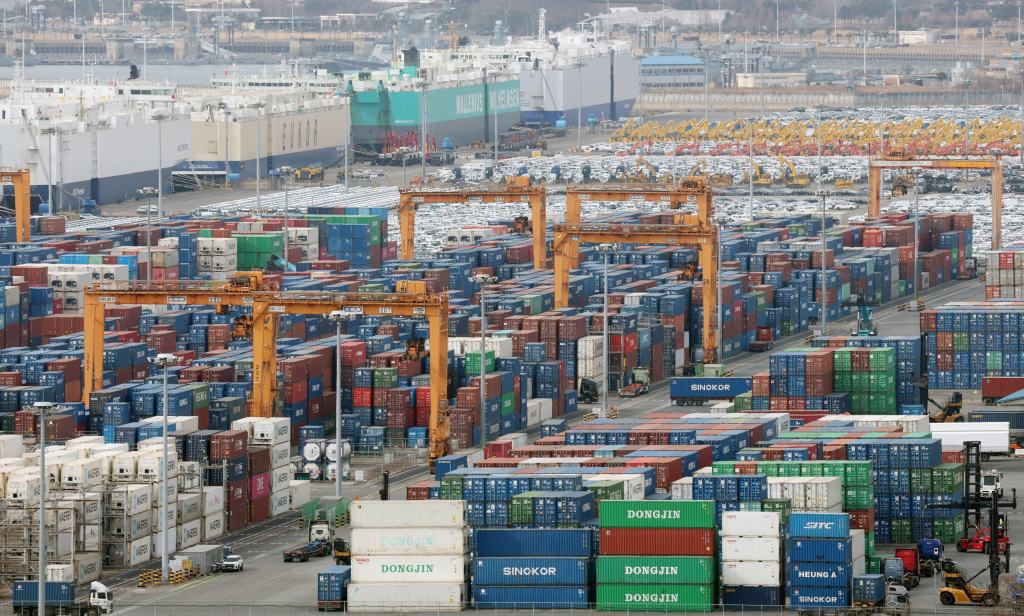
South Korea’s trade surplus hit a new peak of $23.19 billion in February, according to the Bank of Korea, which reported this on the 8th. This exceeded the previous record established in December of the previous year by two months. The surplus has been maintained for 34 straight months, making it the second longest period since the 2000s.
A major surplus was fueled by higher exports of semiconductors and various products, supported by the U.S. artificial intelligence (AI) surge. The central bank noted, “Although there were fewer operating days because of the Lunar New Year holiday, strong export growth continued, especially in semiconductors and information and communication equipment.”
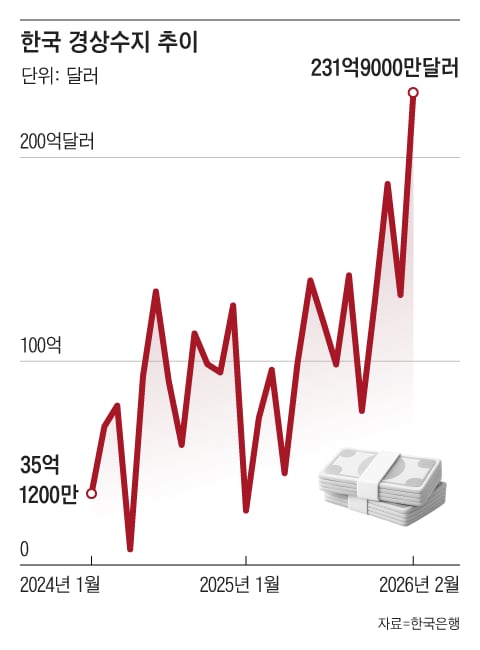
Semiconductor exports increased by 157.9% compared to the previous year, while exports of computer peripherals rose by 183.6%, resulting in a total export growth of 29.9% to reach 70.37 billion dollars. Imports climbed 4.0% year-over-year to 47.0 billion dollars, fueled by higher acquisitions of capital and consumer goods, even as energy prices declined. The trade balance reached a new high of 233.6 billion dollars as exports expanded much more rapidly than imports.
The services account, which covers travel, showed a shortfall of 1.86 billion dollars. Nevertheless, this represented an enhancement compared to January’s 3.8 billion dollar deficit, which was affected by increased demand for winter holiday travel.
In the meantime, foreign investors’ net selling of South Korean stocks hit a record high of 13.27 billion dollars in February, as they took profits while stock prices were increasing. The central bank stated, “Net selling rose because of profit-taking from the rising South Korean stock prices and concerns about AI.” Foreign investment in South Korean stocks had temporarily shifted to a small net purchase in the previous month before returning to net selling. Domestic investors’ net purchases of overseas stocks amounted to 10.39 billion dollars, continuing for the fifth straight month above 10 billion dollars. However, this was a reduction compared to the previous month’s 13.2 billion dollars. The central bank mentioned, “The growth slowed due to reduced investment confidence amid worries about U.S. stock market adjustments.”




 jasdooit
Leave a comment