
By Kazeem Ugbodaga
President Donald Trump has declared a conditional two-week truce with Iran, contingent upon Tehran promptly and fully restoring access to the Strait of Hormuz for global shipping.
In a message shared on Truth Social late Tuesday, Trump mentioned that he made the decision after talking with Pakistani officials, who had requested additional time to continue diplomatic initiatives.
“Following discussions with Prime Minister Shehbaz Sharif and Field Marshal Asim Munir of Pakistan, in which they asked me to delay the destructive force heading to Iran tonight, and provided that the Islamic Republic of Iran agrees to the FULL, INSTANT, and SECURE opening of the Strait of Hormuz, I have decided to pause the bombing and attack on Iran for a period of two weeks,” Trump wrote.
He stated: “This will be a two-sided truce!”
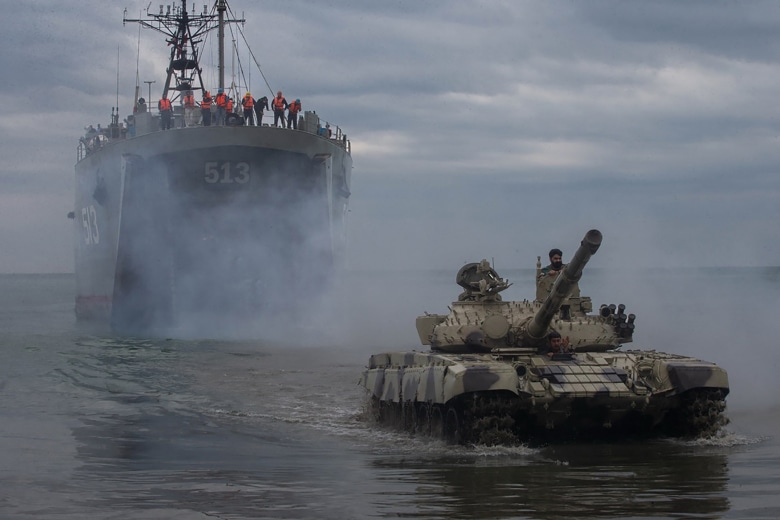
The statement signals an unexpected reduction in a conflict that was quickly becoming more severe, where Iran has effectively blocked the vital waterway, through which about one-fifth of the world’s oil and liquefied natural gas passes, since the initial phases of the U.S.-Israel military operations against Iranian targets that started in late February 2026.
Just earlier on Tuesday, Trump delivered one of his most severe warnings, asserting that “a whole civilization will die tonight, never to be revived again” if Iran did not meet his 8:00 p.m. EDT (00:00 GMT Wednesday) deadline to reopen the strait.
He had frequently warned of attacking Iranian power stations, bridges, and other essential infrastructure, justifying it as essential to put an end to what he called 47 years of Iranian “extortion, corruption, and violence.”
The turning point seems to have originated from vigorous last-minute negotiations conducted by Pakistan, a nation that has maintained long-term relationships with both Washington and Tehran.
Pakistani authorities had openly requested Trump to prolong his deadline by an additional two weeks, while also appealing to Iran to open the strait as a gesture of goodwill to keep diplomatic efforts moving forward.
Trump described the temporary halt as practical, stating that U.S. military goals had already been “met and surpassed,” and that talks for a more permanent peace deal in the Middle East were advancing.
The suggested truce is still entirely dependent on certain conditions. It demands that Iran not only remove its restriction on the Strait of Hormuz but also do so in a way that guarantees secure and unimpeded movement for all ships. At the time of Trump’s declaration, there had been no official public response from Iranian representatives regarding their willingness to agree to the conditions.
Iran had previously turned down temporary ceasefire suggestions, emphasizing the need for a lasting cessation of fighting, the removal of sanctions, and assurances concerning rebuilding efforts. Tehran has also maintained its warnings of increased retaliation against American and Israeli interests.
The Strait of Hormuz has emerged as a key area of tension in the six-week-long conflict. Iran’s closure of this critical passage has led to significant increases in global energy prices and disrupted supply chains, fueling concerns about wider economic consequences.
Provided by SyndiGate Media Inc.Syndigate.info).



 jasdooit
Leave a comment