
Donald Trump has assigned his vice president, JD Vance, the responsibility of strengthening a fragile ceasefire during high-level negotiations with Iran in Islamabad. Iran has warned it may end the truce due to Israel’s attacks on Lebanon. More details follow.
Israel and Hezbollah keep exchanging attacks, even though the US and Iran have reached a ceasefire agreement. Iran claims that Lebanon should be included in the ceasefire, but Israel and the US do not agree. US Vice President JD Vance is traveling to Pakistan for high-level discussions with Iran. Kuwait accuses Iran of using drones against it, a claim that Tehran denies. It is reported that Washington will be facilitating talks between Israel and Lebanon next week.
Welcome to ‘s report on theUS-Israel war with Iranand the broader disputes in the Middle East on Friday, April 10:
Vance seeking ‘positive’ discussions, cautions Iran against ‘playing’ the US
U.S. Vice President JD Vance traveled to Pakistan on Friday for discussions with Iranian officials, stating to reporters that he hoped for a “positive” result while cautioning Tehran against attempting to “manipulate” the U.S. team.
“We intend to pursue a constructive discussion,” he stated before departing from Joint Base Andrews in Maryland.
If the Iranians are open to discussing in a sincere manner, we are definitely ready to offer a friendly approach. However, if they attempt to deceive us, they will discover that the negotiation team is not easily influenced.
Vance, who has consistently been doubtful about foreign military actions and against the idea of deploying American forces into indefinite conflicts, has moved away from the US-Israeli campaign against Iran in the last month. However, he has come back to head the US delegation in Islamabad this weekend.
He did not answer any questions from journalists but mentioned that US President Donald Trump “provided us with some very clear instructions” on how the discussions should proceed, without providing further details.
Israel: Hezbollah reports an assault on Ashdod
Hezbollah has admitted to carrying out a missile strike on an Israeli naval facility located in the southern city of Ashdod earlier on Friday.
“In reaction to the enemy’s breach of the ceasefire and its ongoing assaults on Beirut, and following the Resistance’s compliance with the ceasefire while the enemy did not, the fighters of the Islamic Resistance launched missiles at the naval base in Ashdod’s port,” stated the Iran-aligned group in a declaration.
In the meantime, on the ground in southern Lebanon, Hezbollah reported that its fighters were employing small arms, RPGs, and rocket attacks against Israeli forces in the town of Bint Jbeil.
The Times of Israelreported that the head of staff of the Israel Defense Forces (IDF), Lieutenant General Eyal Zamir, met with Israeli soldiers near the town on Thursday, saying:
The goal set for you is the elimination of the immediate danger to the people in the northern area, which you are addressing with resolve.
Friday prayers for the late Supreme Leader Khamenei
Tens of thousands of Iranians assembled in Tehran on Friday to offer prayers for Iran’s late supreme leader, Ayatollah Ali Khamenei, who died during the initial wave of US-Israeli air strikes on February 28.
Footage aired on state television depicted significant gatherings participating in Friday prayers at the shrine of revolutionary figure Ruhollah Khomeini (1902–1989), with the ceremony conducted by the ultra-conservative cleric Mohammad-Javad Haj Ali Akbari.
The funeral rituals for Khamenei started on Wednesday and aligned with the conclusion of the customary 40-day mourning period in Shia Islam.
Starmer of the UK talks about the Strait of Hormuz with Trump
British Prime Minister Keir Starmer mentioned on Friday that he talked about the operational details of re-establishing sea traffic via the Strait of Hormuz with former US President Donald Trump during a call on Thursday night.
“We have been uniting a group of nations and focusing on a political and diplomatic strategy, while also examining military resources and the logistics of moving ships through the Strait,” Starmer stated in Qatar, marking the last leg of his regional tour after the two-week ceasefire was announced.
Following discussions with regional leaders, Starmer stated that they emphasized “there should be no tolls or restrictions” on commercial vessels passing through Hormuz, noting that resolving the conflict “must include” Iran’s Gulf neighbors who “hold firm opinions” about the strait’s future.
London: “The US is completely committed to NATO”
Starmer was also questioned about whether he discussed US threats to leave NATO with Trump after a Reutersreport on Thursday that mentioned the president had talked about withdrawing some U.S. forces from Europe. He did not respond directly but emphasized that the alliance served the interests of both the U.S. and Europe.
“NATO is a defensive alliance that, over many years, has made us significantly safer than we would have been otherwise,” he stated.
Back in London, UK Defense Minister John Healey stated that the United States remains dedicated to the alliance.
America is completely committed to, with both advantages and significant contributions, NATO,” he stated at the London Defense Conference. “We need to do more. We are, and we will, on the European side.
Ukrainian troops downed Iranian drones in the Gulf – Zelenskyy
Ukrainian President Volodomyr Zelenskyy stated on Friday that Ukrainian forces have downed Iranian “Shahed” drones in several Middle Eastern nations.
Zelenskyy did not specify the countries concerned but mentioned that Ukrainian staff have been assisting in enhancing air defense capabilities in multiple nations. He has previously stated that more than 200 Ukrainian specialists have been sent to the area.
We showed certain countries how to operate interceptors,” Zelenskyy said in remarks shared with journalists on Friday. “Did we destroy [drones]? Yes, we did. Did we do it in only one country? No, in multiple.
Having endured nearly daily Russian drone attacks on its cities and along the eastern front for more than four years, Ukraine has emerged as a global leader in contemporary anti-drone defense. Several of the drones used by Russia are derived from the Iranian “Shahed,” a model that Tehran has recently employed against targets in the Gulf region.
Yes, they were downing Shaheds,” confirmed Zelenskyy. “This was not related to a training exercise or drills, but rather about assistance in developing a functional modern air defense system.
Zelenskyy conducted quick trips to Saudi Arabia, Qatar, the United Arab Emirates, and Jordan last week, with Kyiv aiming to strengthen diplomatic backing in the Middle East, exchanging its valuable drone knowledge for military, financial, and political assistance in its ongoing struggle against the Russian invasion.
We are assisting in enhancing their security in return for support that benefits our nation’s durability,” stated Zelenskyy. “This goes beyond merely receiving financial aid.
VIDEO: What is Israel’s objective regarding Hezbollah and Lebanon?
Ongoing clashes between the Israeli armed forces and the Lebanese Hezbollah group persist even as scheduled direct negotiations between Israel and Lebanon are planned.
contacts Middle East security analyst Shukriya Bradost to discuss an ongoing conflict and the connection between the US-Israel war with Iran.
Saudi Arabia: key refinery shut down following an attack
The French energy company TotalEnergies announced on Friday that it had closed a significant oil refinery located on the eastern coast of Saudi Arabia following damage caused by an Iranian attack earlier in the week.
The SATORP refinery, located in the eastern city of Jubail, sustained damage from “incidents that took place during the night of April 7 to 8,” according to Total, which mentioned that one of the refinery’s two processing units was affected.
No injuries were mentioned, although a Saudi energy ministry representative stated to the Kingdom’s SPA news agency that the attacks “interfered with multiple production activities at critical sites.”
The SATORP site is a collaboration between Saudi state-owned oil company Aramco, which owns 62.5%, and France’s TotalEnergies, holding 37.5%. It refines 465,000 barrels of crude oil daily, positioning it among the largest refining facilities globally.
Saudi Arabia’s ability to produce oil has reportedly dropped by approximately 600,000 barrels daily as a result of attacks on energy infrastructure by Iran.
Growing anxiety in Islamabad as critical US-Iran discussions approach
New paint on the pavements. Each intersection is surrounded by increased security and a noticeable, almost tangible sense of tension. Islamabad is not merely getting ready for another diplomatic gathering; it is gearing up for an event that the entire world is observing.
Located against the peaceful setting of the Margalla Hills, Pakistan’s capital has unexpectedly become a focal point for global interest. Unusual discussions between American and Iranian representatives are occurring here, bringing international attention to a city that is typically associated with consistent diplomacy rather than sensational news.
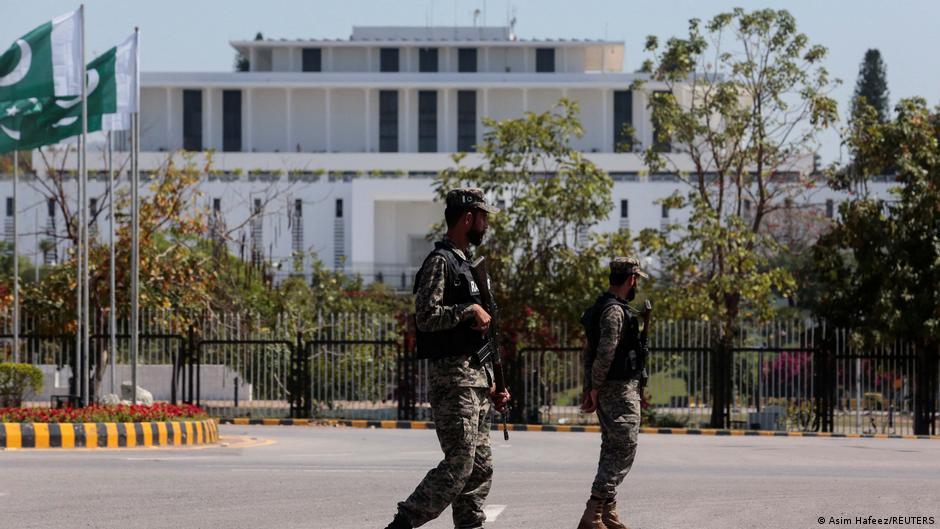
The shift in the environment is unmistakable. A long procession of black SUVs speeds along streets that are otherwise quiet. Law enforcement and military checkpoints regulate entry to main roads. Paramilitary Rangers are stationed outside important government structures, their presence highlighting the significance of these talks.
Within the highly protected Red Zone, the safety of Islamabad’s diplomatic and administrative core has been significantly enhanced. Major roads have been restricted. Local schools have transitioned to virtual learning. Certain government departments have temporarily suspended operations to reduce traffic and strengthen security. Shipping containers are used to seal off parts of the city, limiting access for regular citizens. Additionally, the capital’s well-known hiking paths have also been closed.
Many sections of Islamabad have been largely closed off, as Iranian officials and the U.S. team headed by Vice President JD Vance are set to arrive in the city on Friday, prior to scheduled discussions on Saturday.
Emotions among the city’s inhabitants are varied. Several feel proud that Pakistan is hosting these important discussions and may contribute to easing conflicts. However, there is also concern. Individuals question if the talks will result in substantial advancements or continue for longer than expected.
“Conditions are critical, and I wish the conflict would cease, but it won’t be straightforward,” stated Fatima Ali, a physician based in Islamabad.
For the time being, Islamabad remains on edge, vigilant, and mindful that events taking place here might have repercussions extending well beyond its calm neighborhoods.
Why has Pakistan become a mediator between the US and Iran?
Pakistan’s function as a diplomatic negotiator in a more globally interconnected conflict might have caught some off guard, yet there are multiple solid explanations for Islamabad’s participation. Moreover, this is not the first instance where Pakistan has taken on such a role.
This is how Pakistan became a significant intermediary in the Middle East conflict:
Pakistan maintains strong relations with Iran.Iran was the first nation to acknowledge Pakistan after its independence in 1947, and has continued to be a close neighbor—especially due to their shared 900-kilometer (565-mile) border in the southern region. Culturally, both Pakistan and Iran are Muslim countries, though Pakistan is mainly Sunni, while Iran is predominantly Shia. Despite this, the late Iranian Supreme Leader, Ayatollah Ali Khamenei, held significant religious and political influence among Shiites globally, including in Pakistan, where at least 22 individuals were killed and more than 120 were injured in clashes in Karachi following his death amid the initial wave of US-Israeli strikes.Pakistan maintains long-standing diplomatic relations with the United States.Although there have been previous disagreements regarding Pakistan’s suspected support for terrorists, including the former Al-Qaeda leader Osama bin Laden, the United States views Pakistan as a key non-NATO ally (MNNA). Islamabad joined US President Donald Trump’s so-called Council of Peace, and Trump has also referred to influential Pakistani Field Marshal Asim Munir as “my favorite field marshal.”Pakistan has its own priorities.Pakistan primarily sources its oil from Gulf countries, which have faced criticism from Iran, leading to significant impacts on the nation due to damage to oil and gas facilities and the interruption of supply routes caused by the closure of the Strait of Hormuz. Fuel prices in Pakistan have risen by approximately 20% since the conflict began, increasing the strain on Prime Minister Shehbaz Sharif’s administration.Pakistan has previously acted as a mediator in global disputes.Previous Pakistani mediation efforts include: – 1972: US President Richard Nixon’s landmark visit to China during the Cold War, which set the stage for the formation of diplomatic relations between Washington and Beijing in 1979. – 1988: The Geneva Accords, which resulted in the Soviet Union’s departure from Afghanistan. – 2020: Facilitating communication between the Taliban and the United States, leading to discussions in Qatar that ultimately resulted in the exit of US and NATO forces from Afghanistan.
Spain urges Iran to engage in negotiations with ‘good faith,’ and criticizes Israel regarding Lebanon
Spain has urged Iran to participate in discussions with the United States “in a sincere manner” during meetings held in Pakistan over the weekend.
Spanish Foreign Minister Jose Manuel Albares informed reporters in Madrid on Friday that he had contacted his Iranian counterpart, Abbas Araghchi, “the day before yesterday” to deliver that message and also requested him to stop “all missile and drone attacks.”
Madrid criticizes Israel regarding Lebanon
Spain, which is part of both the European Union and NATO, has become one of the strongest Western voices opposing the US-Israeli conflict against Iran, as well as Israel’s actions in the region, such as in Gaza, Lebanon, and the occupied West Bank.
Albares described Israel’s latest strikes against Lebanon, which resulted in more than 300 deaths and over 1,000 injuries on Wednesday, as “a stain on humanity’s conscience.”
He stated: “The extent of violence, the breach of international law and international humanitarian law by Israel is intolerable.”
How Pakistan is getting ready to facilitate US-Iran discussions
A noticeable rise in security was observed in Islamabad’s diplomatic area on Friday, as Pakistan gets ready to facilitate high-level talks between American and Iranian representatives.
A regional holiday has been announced to limit the movement of locals, as over 10,000 security forces, comprising police, military, and paramilitary groups, have been sent to the area.
The high-security “red zone,” which houses important government structures and foreign embassies, is under lockdown, with guests from the five-star Serena Hotel reportedly moved to accommodate the delegates — though the exact site of the discussions remains unverified.
“Pakistan extends a warm welcome to all delegates, including journalists from countries taking part, who are coming for the Islamabad Talks 2026,” wrote Foreign Minister Ishaq Dar on social media, confirming that visa rules for attendees have been eased.
For this purpose, all airlines are asked to allow boarding for all such individuals without visas,” he added. “Immigration officials in Pakistan will provide visas upon arrival.
As reported by the German news agency dpa, referencing Pakistani security officials, discussions between the diplomatic representatives of both delegations are set for Friday, followed by meetings between the main negotiators on Saturday. Should it be required, the talks might extend into Sunday.
The discussions are anticipated to be indirect, with both delegations located in separate rooms, as Pakistani officials move suggestions between them, following the same structure utilized in previous rounds of negotiations facilitated by Oman.
US Vice President JD Vance is leading the Washington team, alongside President Donald Trump’s special envoy for the Middle East, real estate developer Steve Witkoff, and son-in-law Jared Kushner.
The Iranian delegation is anticipated to be headed by the parliament speaker, Mohammad Bagher Ghalibaf, and Foreign Minister Abbas Araghchi, although there remain conflicting signals from Tehran about Iran’s involvement.
“The continuation of peace talks to conclude the conflict relies on the US upholding its ceasefire agreements across all areas, particularly in Lebanon,” stated a foreign ministry spokesperson, referring to the continuous Israeli strikes against alleged Hezbollah targets in Lebanon. “Once the travel plan is confirmed, the details of the delegation will also be disclosed,” he added.
It remained uncertain whether any active members of Iran’s influential Islamic Revolutionary Guard Corps (IRGC) would be involved, but the group stated it was dedicated to the ceasefire.
“We wish to let you know that the military forces of the Islamic Republic of Iran have not attacked any country during the ceasefire periods up to this point,” stated an IRGC announcement.
Vance travels to Pakistan for discussions regarding Iran as the ceasefire faces pressure
U.S. Vice President JD Vance is traveling to Pakistan to oversee top-level discussions with Iran, as a delicate truce faces the possibility of breaking down.
President Donald Trump assigned Vance, who has long been doubtful about foreign involvement, the responsibility of finding a solution to the six-week conflict.
Vance is scheduled to reach Islamabad together with envoy Steve Witkoff and advisor Jared Kushner, who have previously participated in backchannel discussions with Iranian officials regarding nuclear and regional security issues.
The White House has provided minimal information regarding whether the discussions in Pakistan will involve direct or indirect communication. This meeting represents one of the most senior-level US interactions with Iran in recent decades, as direct contact has been limited since Barack Obama spoke via phone with Hassan Rouhani in 2013.
Negotiators encounter significant challenges, as disputes arise almost right after the ceasefire was announced. Iran has stated that the truce must involve an end to Israeli activities in Lebanon, but Benjamin Netanyahu and Trump have dismissed this perspective.
Washington to be the venue for discussions between Israel and Lebanon next week — reports
Israel and Lebanon are set to engage in discussions in Washington next week, according to a report by the French AFP news agency, which cited an unidentified US State Department representative.
“We can verify that the Department will organize a meeting next week to address the continuing ceasefire talks with Israel and Lebanon,” said the US official.
Earlier Thursday, Israeli Prime Minister Benjamin Netanyahu stated that he had directed his Cabinet to pursue direct negotiations with Lebanon, aiming for the disarming of the Iran-supported Hezbollah militant organization.
An unnamed Lebanese government official, quoted by AFP, stated that Beirut needed a ceasefire before engaging in talks with Israel.
Kuwait alleges Iran attacked it during a ceasefire
Kuwait stated on Thursday night that it had been attacked by drones, even though a ceasefire is currently in effect between Iran, the United States, and Israel, with blame directed at Tehran.
A statement from Kuwait’s Ministry of Foreign Affairs, published by the state-owned KUNA news agency, stated that the attacks “targeted several key Kuwaiti facilities.” It is reported to have resulted in substantial material damage without any injuries.
The Iranian Revolutionary Guard refuted claims of conducting attacks against Gulf nations during the truce. In a declaration published on state-run media, the Guard mentioned that if it were to execute any strike, it would officially disclose it through an official announcement.
Kuwait was one of the Gulf nations frequently attacked by Iran during the conflict as a response to U.S. and Israeli strikes against the Islamic Republic.
Israel claims to have attacked Hezbollah locations in Lebanon
Israel carried out further attacks on Lebanon, stating early Friday that it targeted locations belonging to the Iran-supported Hezbollah militant organization.
The Israeli defense forces stated that they targeted approximately 10 launch locations which they claimed were utilized to fire missiles toward northern Israel.
In Israel, air raid alarms were sounded as media outlets reported rocket attacks from Lebanon during the night. Hezbollah claimed it launched rockets towards Israel in reaction to what it described as a breach of the ceasefire.
Israel increased its strikes on Lebanon as the ceasefire came into effect on Wednesday, resulting in more than 300 deaths within a single day. Israel and the US claim that Lebanon is not part of the ceasefire, a statement that Iran and mediator Pakistan have strongly disputed.
Numerous American allies criticized the Israeli attacks in Lebanon, concerned that they could jeopardize the currently delicate truce.




 jasdooit
Leave a comment