
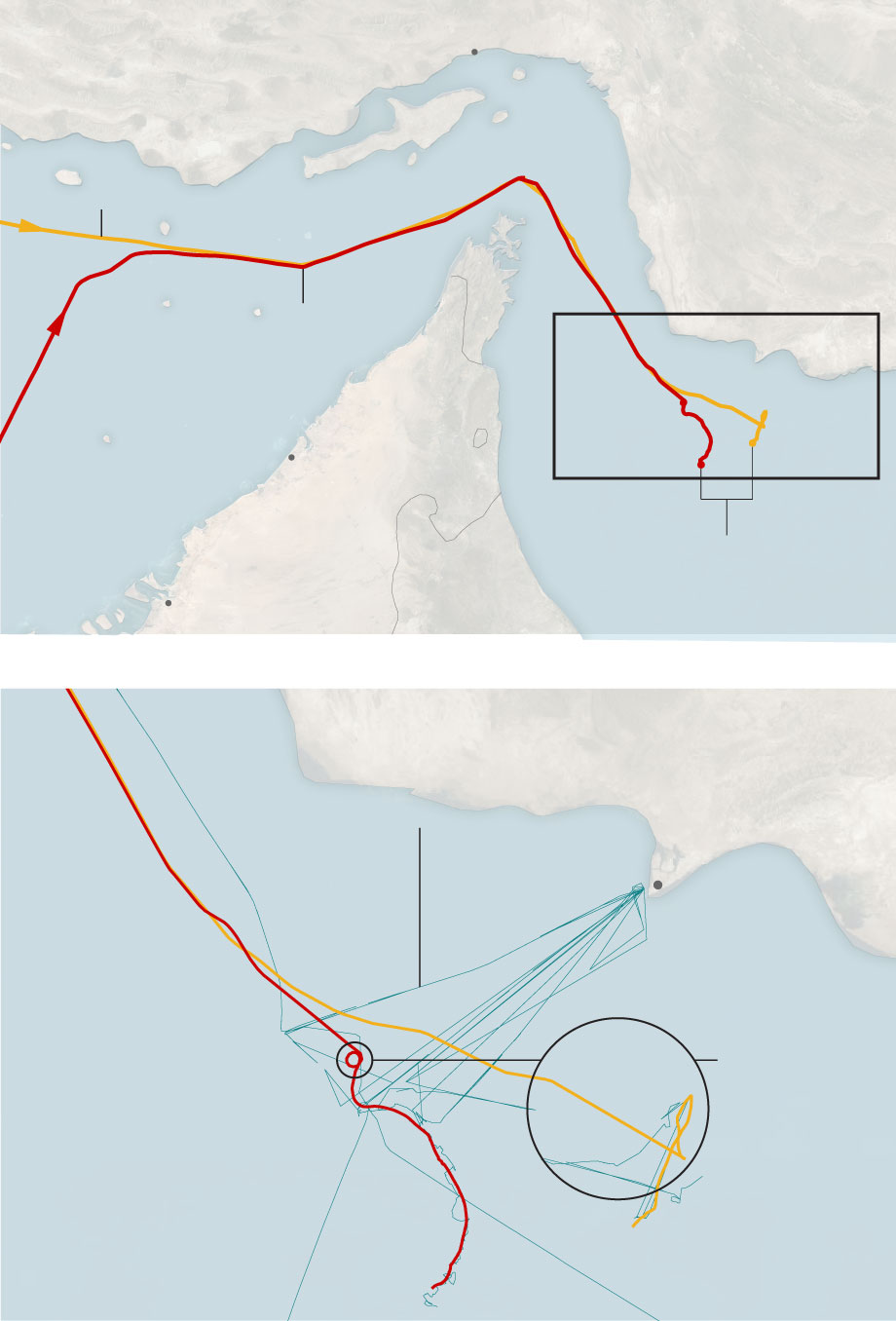
Iran has expressed its plan to jointly collect tolls for passage through the Strait of Hormuz alongside Oman, but the Omani government has firmly turned down the idea, claiming it is “not in line with international law and maritime law.” This follows Iran’s unilateral efforts to impose tolls, while U.S. President Donald Trump mentioned a “joint venture,” yet Oman, as a directly affected party, continues to emphasize the principle of “freedom of navigation.”
As reported by Omani state media on the 9th, Said Al-Mawali, Oman’s Minister of Transport, addressed the Shura Council, the legislative body, the day before and said, “Oman’s stance regarding the Strait of Hormuz is well-defined. Oman has ratified all international maritime transport agreements, and according to these treaties, no fees can be charged for transit through the strait.” He further mentioned, “The Strait of Hormuz is a natural passage, not a man-made canal.”
The United Nations Convention on the Law of the Sea (UNCLOS) states, “All vessels and aircraft have the right to transit through international straits and should not be obstructed” (Article 38) and “Coastal nations cannot interfere with passage” (Article 44). Oman’s stance is that, unlike the Suez Canal, the Strait of Hormuz is considered an international strait, meaning no entity has a legal justification for charging fees.
Al-Mawali also highlighted that the present uncertainty regarding the Strait of Hormuz arises from a “legal gap” resulting from certain nations’ non-adherence to international accords.
Previously, Kazem Gharibabadi, Iran’s Deputy Foreign Minister for Legal and International Affairs, mentioned to international media during a recent conversation that Iran is collaborating with Oman to create protocols for charging fees for passage through the Strait of Hormuz. He said, “We should not anticipate that pre-war regulations will remain in place moving forward. Restrictions and bans on navigation are unavoidable for countries that initiate aggression and those who support them.” Nevertheless, Oman’s commitment to the global legal principle of free navigation is anticipated to limit Iran’s actions.
Since its establishment in 1970, Oman has kept its internal matters stable and adopted a neutral approach in international relations, which led to it being called “the Switzerland of the Middle East.” It was instrumental in facilitating the 2015 nuclear deal between the administration of Barack Obama and Iran. Oman has remained involved in mediating nuclear talks between the U.S. and Iran up until recently. Despite being an Islamic absolute monarchy, it adheres to the Ibadi branch, which is distinct from both Shia and Sunni traditions, resulting in a special religious identity.



 jasdooit
Leave a comment