
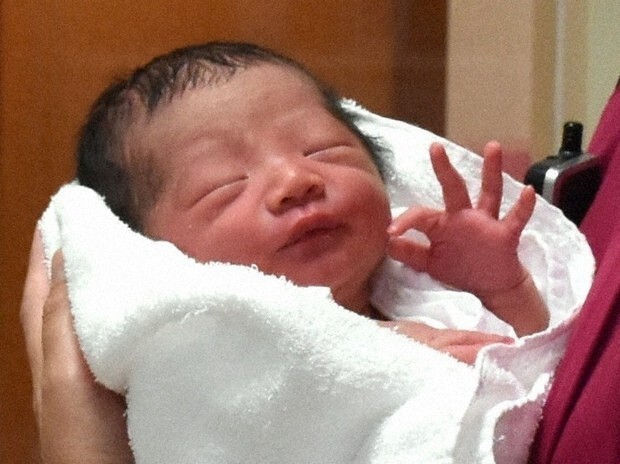
The number of infants born to Japanese citizens in 2025 reached a new record low of 671,236. The overall fertility rate, which represents the average number of children a woman is projected to have during her lifetime, decreased by 0.01 from the prior year to 1.14, marking another historic low.
The Ministry of Health, Labour and Welfare, which provided the data, stated, “the rate of decrease is slower compared to recent years.” Nevertheless, Japan’s declining birth rate is occurring 15 years sooner than the government had predicted.
It is up to individuals to decide whether to get married or have children. However, the government estimates the “desired fertility rate” — the level that would occur if young people could have the number of children they wish for — at 1.8. The truth is that societal influences are preventing people from achieving their desire to have children.
A survey conducted by The Nippon Foundation among individuals aged 15 to 45 found that the primary explanation for “not wanting children” or “being okay with not having children”—allowing for multiple responses—was “due to the significant financial pressure, including expenses related to raising and educating children,” mentioned by just over 40% of participants.
Some of the main reasons for not wanting to get married included “as I believe I am more suited to living alone” and “as I can’t see any benefits to marriage,” indicating the impact of evolving values. Men and those in non-regular jobs were more inclined to say, “due to financial worries.”
Postponing marriage and having children is also playing a role in the decrease in the number of children. This trend is driven by the reality that although more women are employed, the responsibilities of household chores and childcare still fall mainly on their shoulders, making it challenging to manage both career and family life.
The government has been implementing strategies to tackle the declining birth rate for nearly three decades. In more recent times, the Fumio Kishida administration introduced what it referred to as “measures of a new kind” to combat the falling birth rate, and support for families with children, such as increased child allowances, has seen some progress. Nevertheless, no significant impact has emerged that can halt the decline. It is important to assess whether these measures truly align with the expectations and requirements of young people.
Tracking the increase in weddings
At the same time, the data released by the ministry this time also included a point worth noting for the future: the number of marriages increased for the second consecutive year, reaching 489,119 couples. This may lead to a rise in birth rates several years down the line. Some of this increase is due to a recovery from the significant decline in marriages during the COVID-19 pandemic, but officials mention that it was also affected by the fact that the population in their early 30s—the age group with many marriages—has stopped decreasing.
The rise was especially evident in Tokyo. Takumi Fujinami, a senior researcher at Japan Research Institute Ltd., highlights factors such as continuous assistance during pregnancy and raising children, as well as reducing the shortage of daycare spots, and states that “young people perceive the Tokyo Metropolitan Government’s extensive childcare support policies positively.”
However, when it comes to support for childcare, worries are also increasing regarding social fragmentation. One instance is the growing tendency to mock coworkers who have children, labeling them as “privileged parents.” This stems from a feeling of injustice among those who have to handle the tasks of colleagues who take time off due to their children’s illness or other family-related issues.
The same applies to obtaining financial support. Beginning in April, a new contribution system for child and child care support was introduced, increasing public health insurance premiums by several hundred yen each month. Altogether, it is expected to generate 1 trillion yen (approximately $6.24 billion). Since it is collected from individuals without children, some have taken to social media to call it a “single tax.”
In the workplace, it’s not just raising children that can prevent someone from working as they desire. Everyone might encounter personal health issues or the responsibility of looking after an elderly parent. Ensuring alternative staff are available during parental leave and offering benefits to colleagues who share these responsibilities will be crucial.
It’s also important to note that individuals who are currently single or childless may eventually benefit from a social security system funded by future generations.
Prime Minister Sanae Takaichi has expressed interest in “daring policies that might divide public opinion,” but regarding actions to tackle the declining birth rate, we hope to witness practical measures that are implemented without disrupting societal unity.
(By Eriko Horii, Editorial Writer)





Leave a Reply