
Regardless of the oppressive heat, every night Sanong Suepthai withstands it — sleeping with two layers of blankets supported by a pillow on her chest, in a home without air conditioning.
“The pillow allows a small amount of air to enter, preventing me from suffocating. However, the odor is unbearable. I need to keep an inhaler in one nostril constantly,” she said.
The “smell” that Sanong, a local from Krok Somboon district in Prachin Buri, mentions is the scent of multiple chemicals drifting from a factory located approximately 1 kilometer away from her orchard. The 76-year-old states that during the day, being among the trees in the garden offers some comfort, but at night, the foul smell becomes unbearable. For two years, she was forced to move to Ubon Ratchathani to stay with her younger sister.
“Returning, I still face the same issues. In fact, the odor has grown stronger, particularly during the night,” said Sanong.
I wish to speak with someone in authority to address the harm done to the air we breathe and our land. We once experienced great abundance, but now most trees produce fewer fruits. Why is this happening?
Sumet Rienpongnam, the leader of the Khon Rak Krok Somboon Group, has been working to tackle pollution in Prachin Buri. He believes the situation worsened under the Prayut Chan-o-cha administration after a military coup.
The military government issued the National Council for Peace and Order (NCPO) Order 4/2016, which allowed specific business categories to bypass urban planning regulations in green areas. Consequently, Prachin Buri, a region previously known for its natural beauty, organic agriculture, traditional remedies, and sustainable tourism, has seen a rapid increase in industrial establishments. By 2025, the province had 1,067 factories.
Specifically, Sumet blamed factories involved in waste management and the handling of dangerous waste.
“These waste-processing plants are responsible for soil, water, and air pollution since actual sorting does not take place — they merely stack the materials. The waste comes not only from factories in Prachin Buri but also from Rayong or even from other countries. They just dispose of it. They might sort part of it, but what is left after sorting turns into a landfill,” Sumet explained.
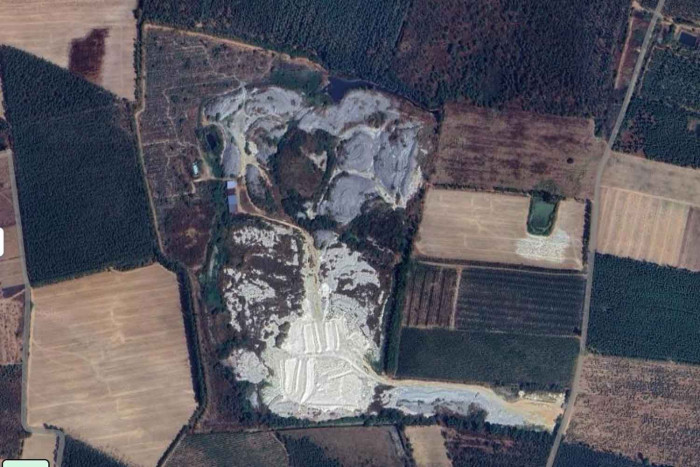
Sumet brought me to Ban Na Khlong Klang in Khao Mai Kaew, Kabin Buri — known locally as Pong Chang Thang — where piles of gypsum waste were spread over roughly 200 rai of open area, approximately 2.3 kilometers away from Na Khlong Klang School. Sumet estimates the total amount of gypsum to be several million tons.
Residents refer to the mysterious material as “fertiliser gypsum,” a name given because the factory once promoted it as a “gift” years back. (Natural gypsum can serve as fertilizer and is present in numerous Thai provinces.)
Initially, we were pleased when they announced they would provide us with fertilizer for free. When it first arrived, it had no odor,” said Thongkham (a pseudonym), who is 64 years old. She mentioned that the villagers enthusiastically combined their national ID cards for the “fertilizer” — one card per truckload. The pieces were very hard, and the villagers had to rent excavators to mix it into the soil before planting cassava cuttings.
Soon, the cassava sprouts they had planted started to turn yellow, decay, and perish — resulting in a loss of hundreds of rai overall.
“It took the villagers many years to restore the damaged soil — by utilizing animal dung, fallen leaves, and other organic materials — until they were able to cultivate limited quantities of food,” Thongkham stated.
They voiced their concerns to the factory accountable for the waste, requesting that they remove it for appropriate disposal, yet, if anything, an even greater amount of waste appeared to be discarded. Her residence is within a kilometer of the pile of the unknown substance.
Thongkham experiences headaches and heart palpitations and requires daily medication.
“I feel pity for the students at Na Khlong Klang School who are forced to deal with the foul smell,” she remarked.
We gathered fragments of ‘gypsum’ found along public roads, dissolved them in water, and checked the acidity with litmus paper — the reading was pH 4. Furthermore, we acquired reports from a private laboratory employed by the factory to analyze the ‘gypsum’, which indicated an even lower level of acidity. [A neutral pH is 7; acidity begins at zero.]
I called a worker at the factory in Ban Bu, located in Si Maha Phot district. The worker [who did not wish to reveal her name and was unreachable afterward] stated that the product from cassava fermentation was citric acid, which can be utilized in food and cosmetic items for export.
She referred to the leftover substance from the fermentation process as “gypsum” and stated that it was sent to a cement factory in Saraburi to be transformed into building materials. I reached out to the cement company, and its senior executive [who also asked for anonymity] mentioned that they had received material from the mentioned company but it would be burned for disposal, which conflicted with what the factory workers had previously reported.
Significantly, prior to 2023, the Department of Industrial Works (DIW) had classified gypsum as a “by-product” resulting from cassava fermentation. However, following continuous complaints from local residents to the DIW regarding the smell produced during the cassava fermentation process, the DIW carried out an investigation and issued a letter dated June 15, 2023, indicating that it was not a safe material but rather hazardous waste.
Activists also secured a purchase agreement for calcium sulfate (gypsum) written in Chinese with a Thai translation, featuring the seals of both companies and signed by their representatives — outlining the terms between the seller and buyer, dated May 30, 2023. Interestingly, the contract failed to include important details, such as the price per tonne.
Following years of complaints regarding pollution from industrial waste-sorting facilities, the National Assembly annulled the NCPO order on July 25, 2025, stating that it had caused harm to communities and the environment. Nevertheless, the law does not have retroactive application and is unable to rescind permits that have already been granted to active factories.
Furthermore, the government is advocating for Prachin Buri to be included in the Eastern Economic Corridor (EEC) initiative. Thammasat University has been tasked with conducting a study and preparing a report on how becoming part of the EEC could enhance Prachin Buri’s economy, stimulate business growth, and increase employment levels.
However, Sumet is concerned that if this EEC expansion plan achieves success, the pollution issue will only worsen for his hometown.
“What pollutants are present in the air, water, and soil?” he asked.
“Can those who have studied this inform us about what people in Si Maha Phot breathe daily—what substances are present, how hazardous it is, and which factories are responsible? How many polluted areas are causing distress to the villagers and where are they located? And how can these issues be addressed?” Sumet asked.
“What volume in millions of cubic meters does current industry consumption amount to, and what volume in millions of cubic meters of wastewater is released? How is this wastewater handled?” he added.
A problem highlighted by the locals is the water’s quality, which is frequently cloudy and unclear. Residents are unsure if, due to environmental pollution, rainwater could infiltrate the underground water supply.
“We don’t have a lot of money, so we can only afford to purchase drinking water. For preparing meals, cooking rice, cleaning dishes, and taking showers, we need to rely on groundwater,” said Thongkham.
Last August, the Sut Soi Team, in collaboration with DIW, conducted an inspection at the Waste to Energy Company in Lat Takian, which is located between Si Maha Phot and Kabin Buri districts. They carried a search warrant issued by the Kabin Buri Provincial Court. The facility was discovered to have violated several regulations, leading to an order for it to halt operations. However, in October, a new official permitted the factory to resume its activities.
Dawan Chanhatsadi, a senior figure from the Earth Recovery Foundation, who was part of the Sut Soi Team, stated that the factory possessed two kinds of licenses — number 105 for handling non-hazardous waste and number 106 for recycling industrial waste — but lacked any equipment for recycling.
“It has been receiving dangerous waste — so where has it all gone?” Dawan questioned.
Have all problems been fixed? What occurred to the water that was spilling out of the waste site? What has decreased? And is the factory equipped with the necessary equipment now?
Sumet posed the same question: “For years, conditions have continued to deteriorate. The amount of waste keeps increasing each year — tens of millions of tons — and the odor has become more intense than ever. Recently, the minister visited, commended the company for the progress they’ve made and their collaboration, and then simply departed.”
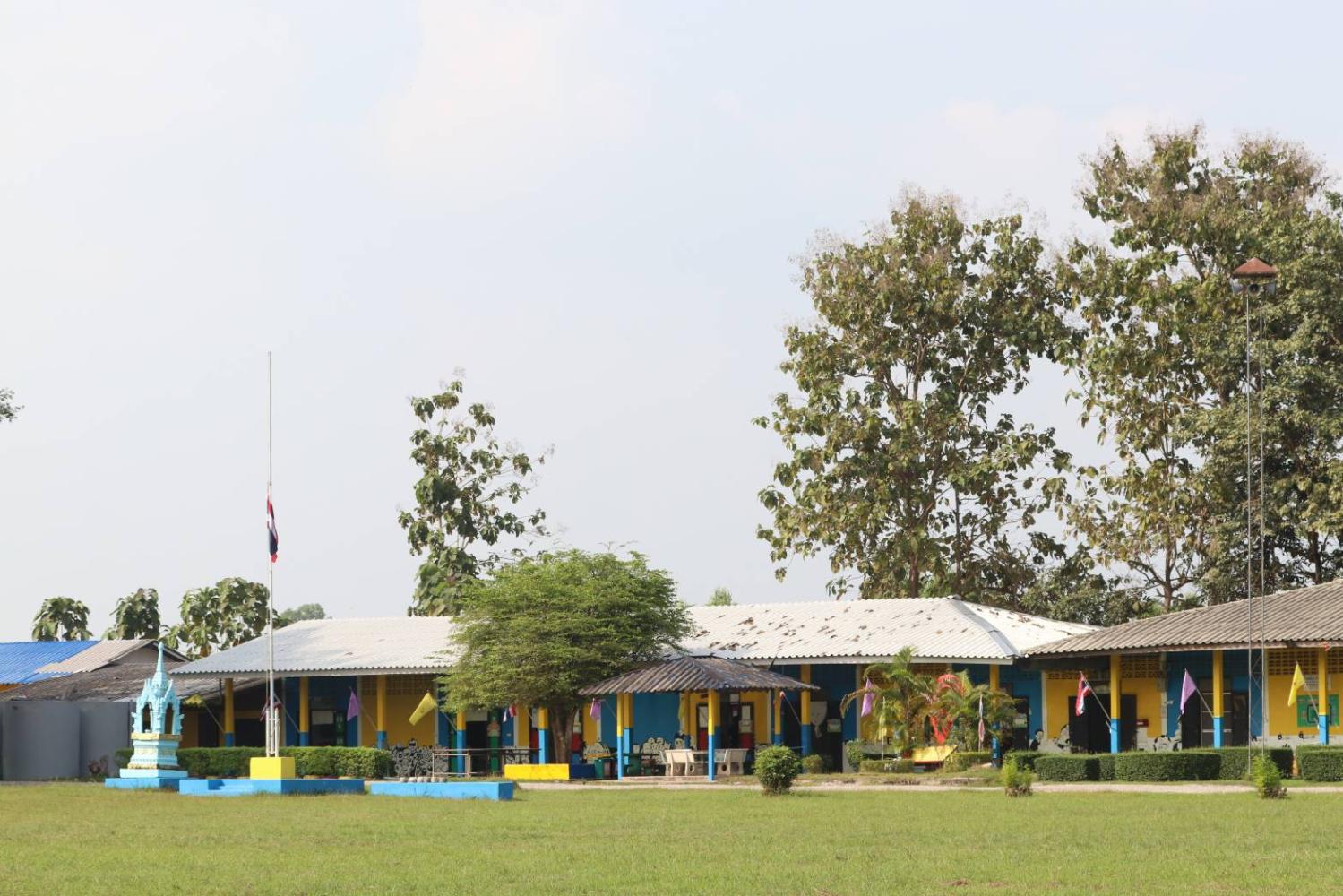
The Na Khlong Klang School is situated just a few kilometers from the gypsum waste site.
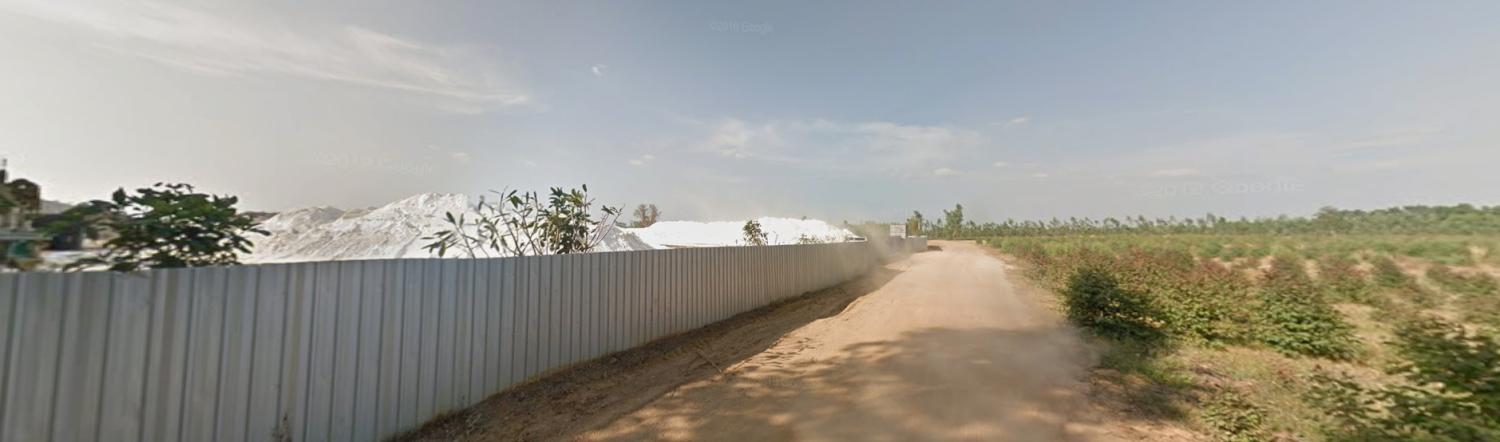
Gypsum residue spread over about 200 rai of vacant land in Kabin Buri district, Prachin Buri province.
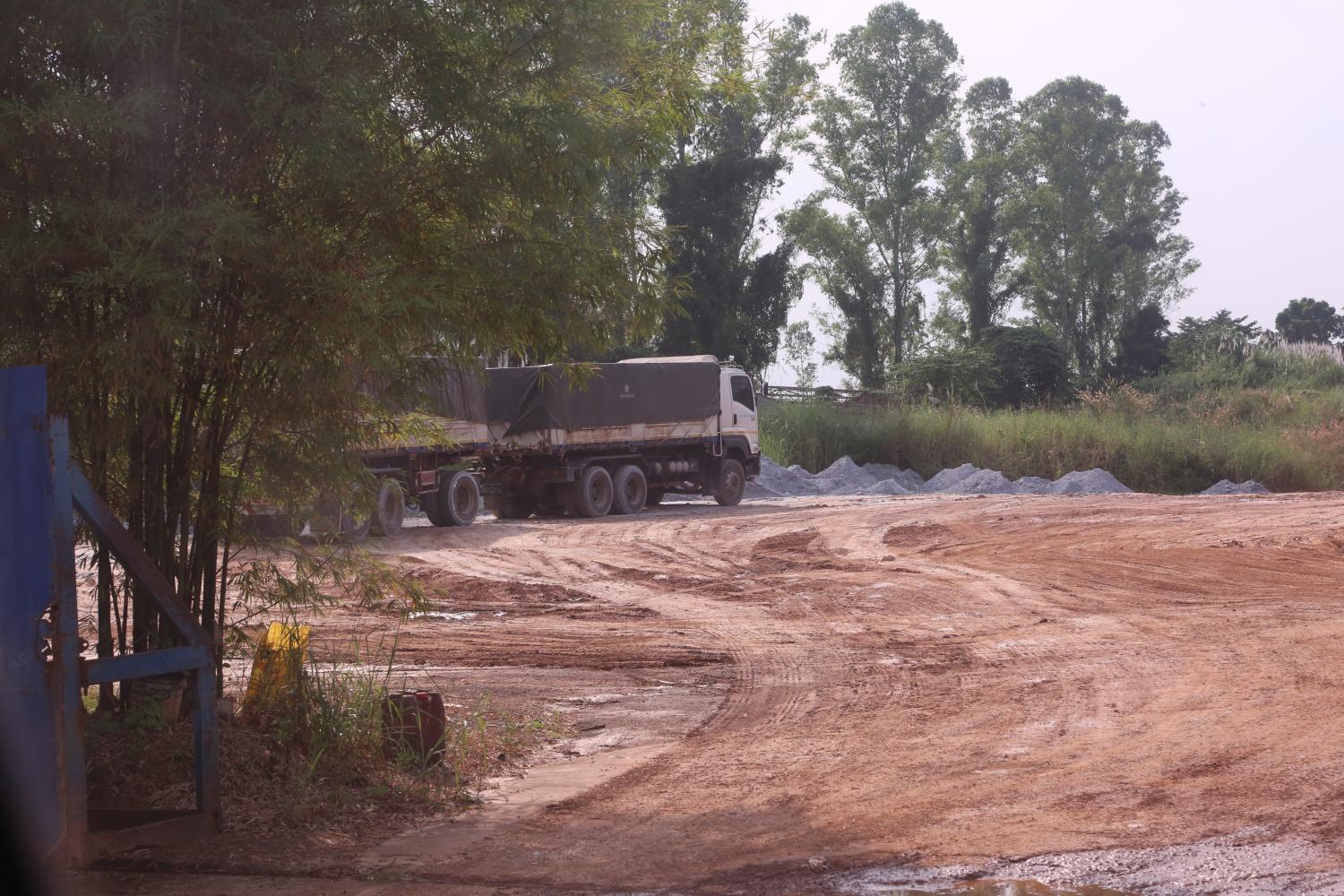
A truck and its cargo of gypsum scattered across the road.




Leave a Reply