
Serbia’s move to abolish contentious judicial reforms has sparked renewed discussion within the European Union about the challenge of maintaining strategic cooperation while upholding democratic principles, highlighting disagreements on whether Belgrade has adequately advanced its bid for membership.
The European Commission on Monday provided member states with a document explaining its view that Serbia’s recent reforms warrant the initiation of Cluster 3 in its accession talks, a step Belgrade has aimed to advance following prolonged stagnation.
The note, dated July 3 and reviewed by , states that the Commission believes Serbia has addressed the “regression” noted earlier this year and has made efforts to enhance the capabilities of the nation’s Prosecutor’s Office for Organized Crime.
It recognizes, nevertheless, that “additional efforts are still needed within the judicial and prosecution system.”
However, interviews with over a dozen diplomats, European Union officials, and specialists indicate that Serbia’s recent retreat has had minimal impact on reducing disagreements among member states, which must all agree for the accession process to proceed.
Some claim that Belgrade deserves credit for following recommendations from the Venice Commission, while others argue that reversing the reforms has minimal impact on undoing years of declining democracy and ongoing worries regarding judicial independence, corruption, and the rule of law. The Venice Commission serves as the Council of Europe’s expert group on constitutional issues.
For numerous people in Brussels, the discussion goes beyond one specific negotiation group.
Serbia is still the biggest economy in the Western Balkans and a key strategic ally, prompting some officials to believe that ongoing involvement provides the best opportunity for promoting additional reforms.
Others argue that providing incentives for small improvements prior to achieving more significant reforms could damage the legitimacy of the EU’s expansion efforts.
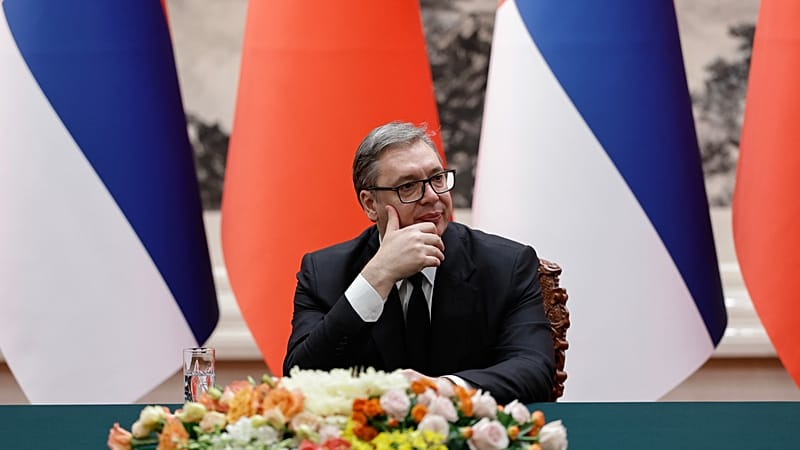
The discussion has gained new importance after President Aleksandar Vučić declared his plan to step down after eight years in power and schedule elections in the coming three to four months.
Although advocates have depicted the action as the beginning of a new political era, opponents claim it is a strategic move that might enable him to stay in power by pursuing the position of prime minister.
The Commission emphasized, nevertheless, that the final decision lies with EU governments. “The choice to proceed with Serbia’s accession process is still up to the Council,” the spokesperson stated.
It is anticipated that the issue will be discussed during a meeting of envoys in Brussels on Wednesday.
A strategic balancing act
The most recent discussion was sparked after Belgrade revoked a set of contentious judicial laws, passed in February and collectively known as the Mrdić laws. It came aftersharp criticism from the Venice Commission.
The decision was received positively by European Enlargement Commissioner Marta Kos, who called it an “important move in the correct direction” and mentioned that talks are ongoing regarding Serbia’s broader reform plan.
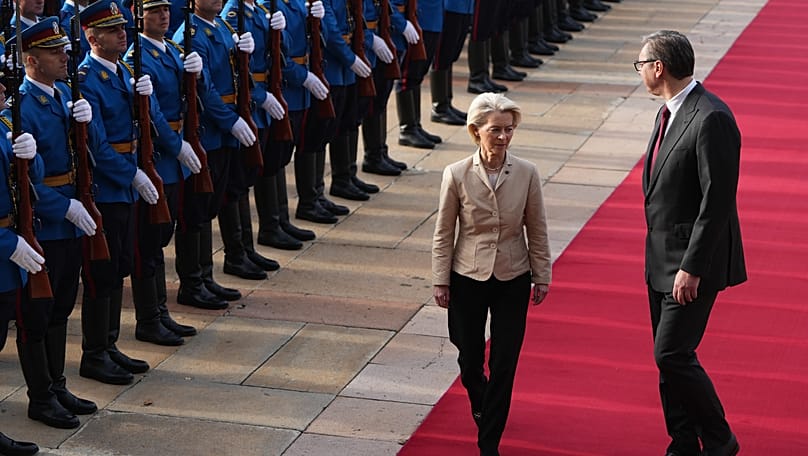
President of the European Commission, Ursula von der Leyen, has also mentioned that Serbia could make more progress in its accession talks if it implements the necessary reforms, while President of the European Council, António Costarecently suggestedconforming to the Venice Commission’s suggestions may assist in advancing the process.
Beneath the public declarations, there is a more complex discussion.
Some European Union representatives believe that keeping communication with Belgrade is crucial, even considering Serbia’s democratic issues and its decision not to support EU sanctions on Russia.
From the Commission’s viewpoint, disengagement could diminish the EU’s power in the Western Balkans and create distance from a nation seen as crucial to regional peace.
Nevertheless, this method is not widely adopted.
In reply to inquiries from , a Commission representative verified that the executive branch had provided an information document to member states, outlining the rationale for considering Serbia’s recent actions as grounds for initiating Cluster 3.

Some diplomats believe that acknowledging Serbia’s recent changes could support the idea that aspiring nations are rewarded for following suggestions from Brussels and the Venice Commission.
One European Union official stated that not recognizing concrete advancements could lead Serbia to become “the next”North Macedonia— a nation that obtained EU candidate status in 2005 but has consistently faced obstacles in its accession goals even after implementing reforms.
Others are unconvinced.
Several diplomats stated that although abolishing the judicial laws was positive, it fails to address wider issues related to the rule of law, democratic systems, and judicial autonomy.
A diplomat stated that the repeal simply returned Serbia “to square one,” while another claimed that the reforms within Cluster 1—focusing on the basics of the accession process, including the rule of law—are the true measure of whether Belgrade is prepared to achieve substantial progress.
The discussion highlights the key challenge currently confronting Brussels: whether gradual reforms should be recognized as a means to maintain Serbia’s connection with the European Union, or whether this approach could convey an incorrect message regarding the expectations for aspiring member states.
Rule of law
Several diplomats mentioned that talks regarding Cluster 3 are closely linked to worries about Cluster 1 — the section dealing with the basics of joining, such as the rule of law, judicial independence, and democratic structures.
Multiple diplomats referenced a secret Commission report shared with member states in early 2025, calling it one of the most significant reviews of Serbia’s development in recent times.
One official labeled it as the “worst” expansion evaluation they had encountered, while another referred to it merely as “harsh”.
Their stance is clear-cut: Serbia cannot genuinely progress on economic sections if it keeps facing challenges with the basic elements required for joining.
One diplomat stated, ‘The cancellation of the laws is positive. However, it does not indicate that Serbia is now prepared to proceed. It merely returns the country to its previous state.’
Some, however, interpret the recent events in a different way.
Two envoys claimed that Belgrade’s choice to undo the judicial reforms showed the government’s readiness to heed suggestions from Brussels and the Venice Commission — exactly the sort of conduct the expansion process aims to promote.
That conflict highlights a larger issue facing the EU: whether nations seeking membership should be recognized for gradual improvements despite ongoing fundamental issues.
A preliminary version of the Commission’s evaluation, viewed by , points to ongoing issues with judicial independence after the implementation of the January law.
It mentions that Serbia needs to adopt the Venice Commission’s suggestions by abolishing or significantly changing the laws “without any delay” — a move that Belgrade has already made.
However, the document also highlights a wider range of issues that go far beyond the judicial system.
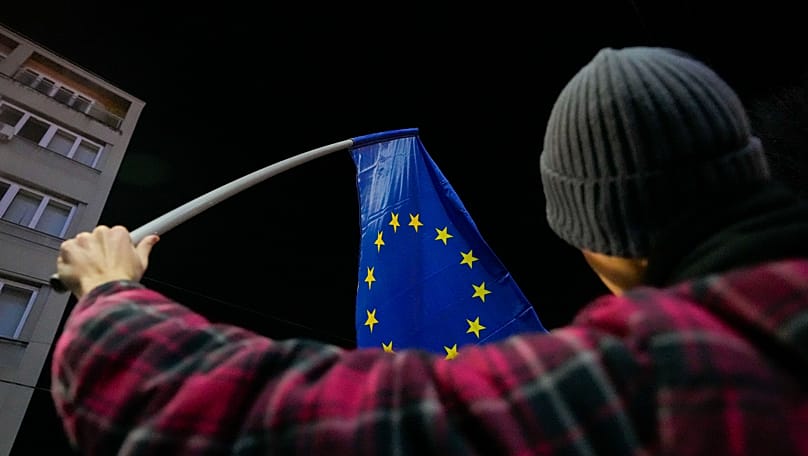
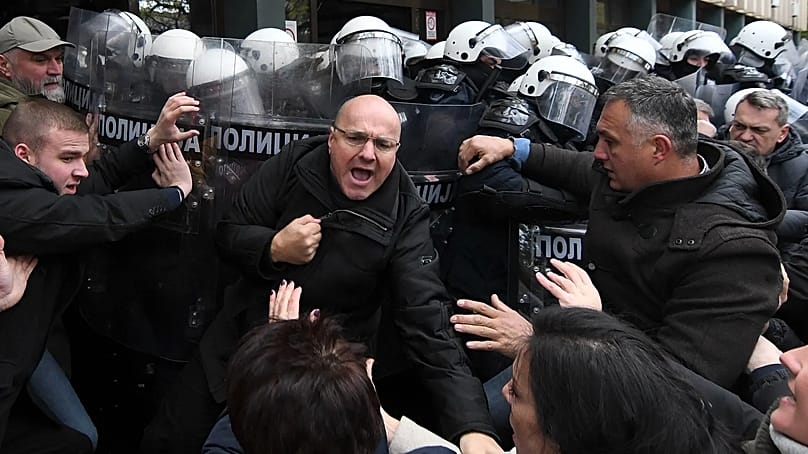
It highlights flaws in democratic governance and mentions the surge of anti-government demonstrations that arose after a railway station roof collapsed in Novi Sad in November 2024, resulting in 16 fatalities.
The document mentions that the safety ofdemonstratorswas not always assured and references multiple violent events that occurred during the demonstrations. It also expresses worries about the speed of the investigations into the incident, noting that corruption probes have been hindered due to insufficient police support.
“The breakdown and the absence of advancement in the inquiries keep reinforcing a sense of insufficient responsibility and openness within governmental infrastructure and building initiatives,” the report mentions.
The results generally reflect the Commission’s2025 enlargement report, which indicated that Serbia had achieved only “moderate advancement” in critical areas such as the rule of law, anti-corruption initiatives, and minimizing government involvement in the economy.
However, within the member states, there is no unified perspective on how these findings should influence the accession process.
A diplomat from a leading EU nation mentioned that they have noted “positive changes” in Serbia over the past few weeks, while another suggested they would view favorably any proposal from the Commission to proceed with Cluster 3.
Some are still much more cautious, contending that Serbia has not yet shown consistent advancement in the reforms that are central to the accession process.
Resignation raises fresh questions
Vucic’s declaration that he plans to resign has introduced an additional element of uncertainty into an already sensitive discussion in Brussels.
A 56-year-old individual, who has controlled Serbian politics for over ten years, stated he will step down after completing two presidential terms. He hasn’t decided yet if he will run for the position of prime minister, but has emphasized that any choice will be made openly.
For European Union officials, the declaration holds importance, yet it may not be revolutionary.
“The effective operation of democratic institutions is central to Serbia’s path toward joining the European Union,” said a representative from the Commission, who also mentioned that Brussels will closely watch any upcoming elections to make sure they are free and just.
Experts, nevertheless, warn against viewing Vučić’s statement as a sign of a larger democratic shift.
Antigona Imeri, a specialist on the Western Balkans at the Centre for European Policy Studies, stated that the resignation should be seen as a strategic political move.
“It should raise red flags,” she stated, contending that the action might ultimately strengthen rather than reduce Vučić’s power.
A European diplomat generally shared this view, noting that there was minimal anticipation in Brussels that Serbia’s political direction would significantly shift just because Vučić leaves the presidency.
Berta López Domènech, a policy analyst with the European Policy Centre, thinks the statement highlights both constitutional facts and political tactics.
After reaching the two-term presidential limit, Vučić might instead aim for the position of prime minister, enabling him to maintain political power while appearing to comply with public demands after months of demonstrations against the government.
He portrays himself as someone who hears the voices of the people,” she stated. “However, he is no longer eligible to run for president. Assuming the role of prime minister would enable him to maintain his control over power.
López Domènech contends that the apparent contradiction goes beyond Serbia’s internal politics.
When you examine the language he continues to employ within the country, it remains aggressive toward the EU and amicable toward Russia,” she remarked. “The general stance has remained the same.
For Slovenian Member of the European Parliament Vladimir Prebilič, who is part of the parliamentary group responsible for ties with Serbia, the statement itself provides limited assurance that democratic standards will be enhanced.
“There is no specific schedule, no ending of parliament, and, most importantly, no assurances for free and transparent elections,” he stated.
A superficial shift in the present political landscape will not alter anything regarding Serbia’s journey towards the EU, which has been effectively on hold since 2021.
Rather, he contended, Brussels ought to concentrate less on political statements and more on the circumstances governing upcoming elections.
What Serbia requires from Europe is a definitive and unambiguous message that free and fair elections are essential at this moment, and to fully support Serbian citizens and the democratic initiative.
A familiar dilemma
The path of democracy in Serbia is just a single aspect of the broader challenge faced by European Union capitals.
The nation’s decision not to support EU sanctions on Russia, its strong political connections with Moscow, and its growing relations with China keep hindering the accession process.
Croatian Member of the European Parliament Tonino Picula, the rapporteur for Serbia in the European Parliament, recently cautioned that while nations likeMontenegro and Albania have quickened their reform efforts., Serbia has faced a “continuous decline in political rights and civil freedoms” along with a deterioration of democratic structures.
He also highlighted Belgrade’s restricted cooperation with the EU’s foreign and security policy as a growing issue for member states.
Vucic has kept strong connections with Russian President Vladimir Putin during Russia’s large-scale invasion of Ukraine, including attending theVictory Day paradein Moscow earlier this year.
EU foreign affairs head Kaja Kallas haspublicly criticisedThis involvement raises questions about why European leaders would align themselves with Putin as Russia persists in its conflict with Ukraine.
Nevertheless, for Serbian officials, Brussels has not consistently applied the same criteria to all candidate nations.
Previous prime minister Ana Brnabić has recentlytold that Serbia encountered “double standards,” referencing the electoral reform suggestions issued by the Office for Democratic Institutions and Human Rights (ODIHR).
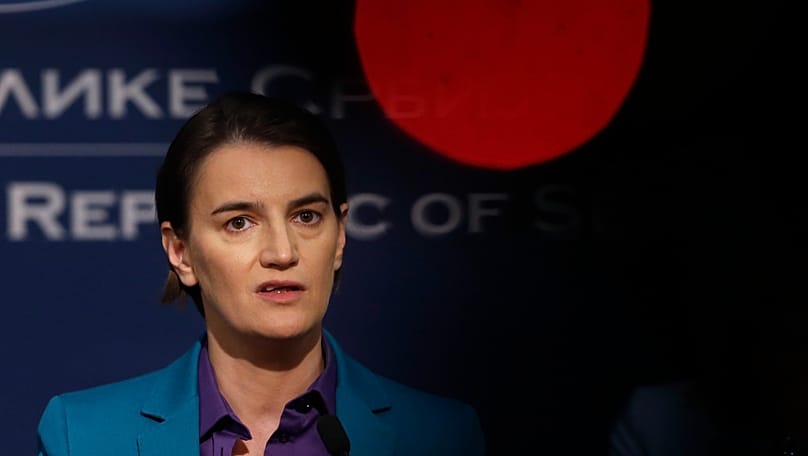
“If you examine other candidate nations that also received ODIHR suggestions for enhancing electoral circumstances, they are not obligated to enact any of them, and they have already established all their clusters,” she stated.
We are not surrendering. We will continue to fight, we will put in even more effort, but it is crucial that we showcase not just plans but also achievements.




Leave a Reply