
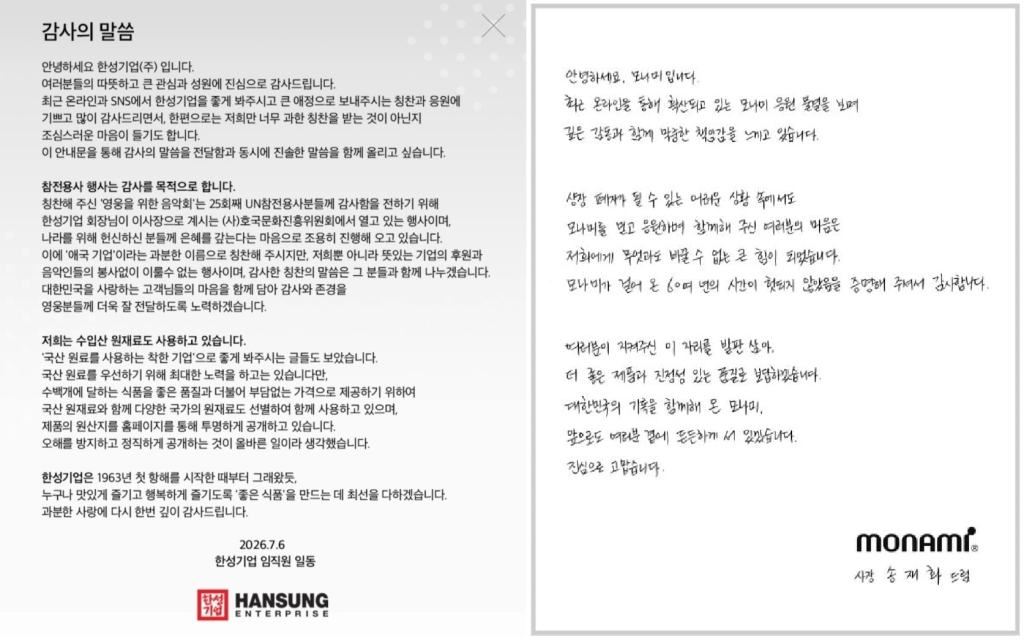
Recently, individual investors have been increasingly purchasing shares of well-established companies on the domestic stock market that are at risk of being delisted. This buying trend, which initially started with Hansung Enterprise and Monami, expanded to other stocks like Enex, Monariza, and Bibian, resulting in a significant rise in upper-limit price closures last week. Nevertheless, there are warnings that many stocks, whose prices have increased solely due to investor sentiment rather than improvements in performance or business competitiveness, may experience a sharp decline once the current trend fades.
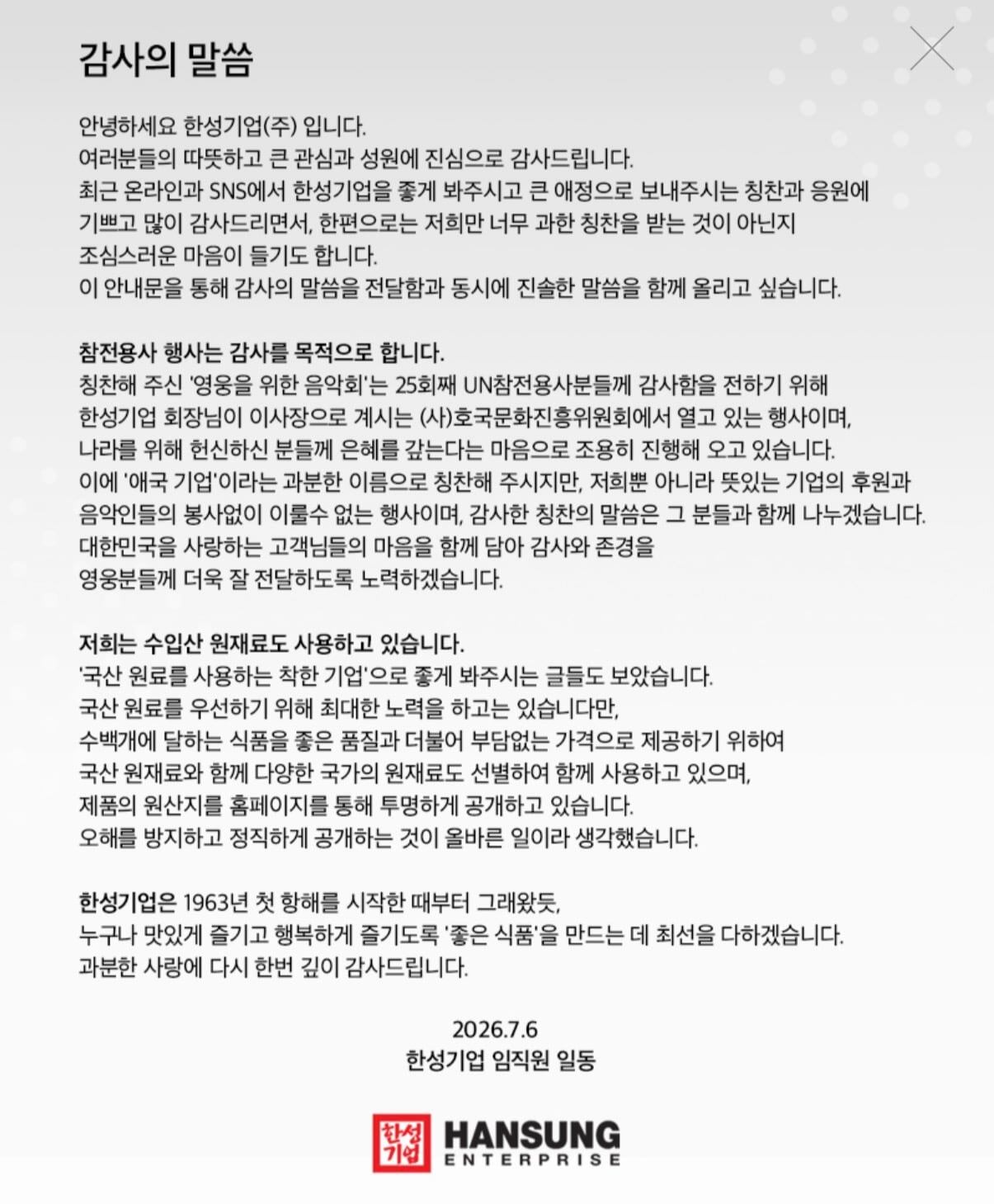
◇ Hansung Enterprise jumps 238%, Monami 196%, Enex 157%
As per the Korea Exchange, on the 16th, which was the final trading day of the previous week, six stocks—Monariza, Bibian, Enex, ANP, Jooyontech, and Hyungji Elite—ended at the maximum price in the stock market. In the KOSDAQ market, 11 stocks, such as PN Pungnyun, Sonokong, Good People, Hyungji I&C, and Hyungji Global, also reached the price ceiling. Several of these stocks experienced a surge in short-term demand following their mention as domestic brands or established companies in online forums.
The initial stock associated with the patriotic theme was Hansung Enterprise, a company involved in seafood processing. Investors began paying attention to Hansung Enterprise after it was disclosed via social media that the company had supported a music concert for UN forces participating in the Korean War (6·25 War) for 25 years. Alongside a consumer campaign to buy its main product, ‘Crami,’ there were continuous stock purchase certifications. The stock price of Hansung Enterprise increased by 237.7% from 4,300 Korean won on July 1 to 14,520 Korean won as of the 16th. During this time, its market capitalization grew from 26.7 billion Korean won to 90.2 billion Korean won. After consecutive upper-limit price closures on July 9 and 10, the stock once again reached the price limit on the 15th. Due to the rapid short-term price increase, it was classified as a warning stock, and even after being designated, it rose more than 40% over two days, resulting in a trading halt on the 16th. Trading will resume starting on the 20th.
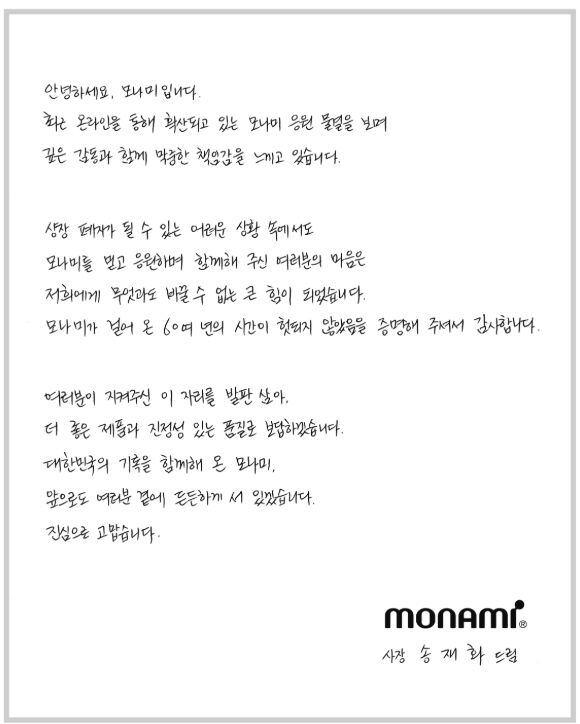
Monami, frequently seen as an emblem of domestic ballpoint pens, also became a focus for patriotic purchasing. The company’s reputation as a well-established business that introduced the local ballpoint pen ‘153’ in 1963, alongside its backing of independence activists, attracted interest. Its role in being promoted as a domestic alternative to Japanese stationery during the 2019 boycott of Japanese goods also played a part. Monami’s stock price increased by 196% from 1,260 Korean won on July 1 to 3,730 Korean won on the 16th. In the same timeframe, its market capitalization tripled from 23.8 billion Korean won to 70.5 billion Korean won. Because of the ongoing short-term surge, Monami was also classified as a warning stock.
Enex, a manufacturer of kitchen furniture, saw its stock rise by 157.5% from 1,070 South Korean won on July 1 to 2,755 South Korean won by the 16th. Its market value grew from 12.7 billion South Korean won to 32.7 billion South Korean won. Significantly, the company closed at the maximum allowable price for four straight trading days between July 13 and 16. The firm attracted public attention as a patriotic business following reports that it had provided student furniture and beds to social welfare organizations and child care centers.
The immediate cause of the surge in patriotic-themed stocks was the enhanced delisting rules that came into effect this month. With the market capitalization requirement for KOSPI-listed companies increasing to 30 billion Korean won, companies operating below or close to this level faced potential delisting. At the start of this month, the market values of Hansung Enterprise, Monami, and Enex were all under 30 billion Korean won. When this news spread, online stock forums and social media platforms were flooded with discussions stating, “Domestic companies that have contributed to society for a long time must be protected.” The so-called “donjjul” culture, which involves supporting companies by buying their products, has now extended into the stock market.
The initial buying activity centered around Hansung Enterprise and Monami, eventually expanding to Monariza, Bibian, PN Pungnyun, Sonokong, Good People, and more. Although the shared characteristic of being local consumer brands or having extended business histories was highlighted, certain stocks experienced significant gains without clear justification as patriotic companies. Using the rationale of patriotic purchasing, a rotational investment pattern has been emerging among low-priced and low-market-cap stocks.
◇ Unverified increases… investors need to be careful
The problem is that no performance improvements have been verified to justify the rise in stock prices. Enex’s sales in the first quarter of this year dropped by 22.6% compared to the same period last year, totaling 46.7 billion South Korean won, and the company reported an operating loss of around 2.9 billion South Korean won. Monami also experienced an operating loss of approximately 2.7 billion South Korean won during the same time frame. Although social contribution initiatives or brand history may be seen as positive aspects, they do not directly boost a company’s ability to generate cash or improve its competitiveness.
Even if a company briefly surpasses the market capitalization limit, issues remain unresolved. Should the market capitalization drop below the limit for 30 straight trading days, the stock will be classified as a controlled stock. If it does not rebound within the next 90 days and remains below the threshold for 45 consecutive days, it will be delisted. Should the stock price, which had a rapid increase, decline once more, the market capitalization might also fall under the limit.
Theme-based stocks often experience price hikes, drawing in more buyers as long as new investors continue to enter the market. However, once interest moves to different stocks or selling pressure starts, these stocks can rapidly decline even without any specific negative news. For example, Kumho Engineering & Construction, which saw a surge due to expectations of semiconductor investments in the Honam region, dropped nearly 40% within a week after reaching its peak on the 10th. Similarly, Chunil Express and Dongyang Express, which climbed on the theme of redevelopment at the Seoul Express Bus Terminal, also fell by more than 60% from their 52-week highs.



Leave a Reply