
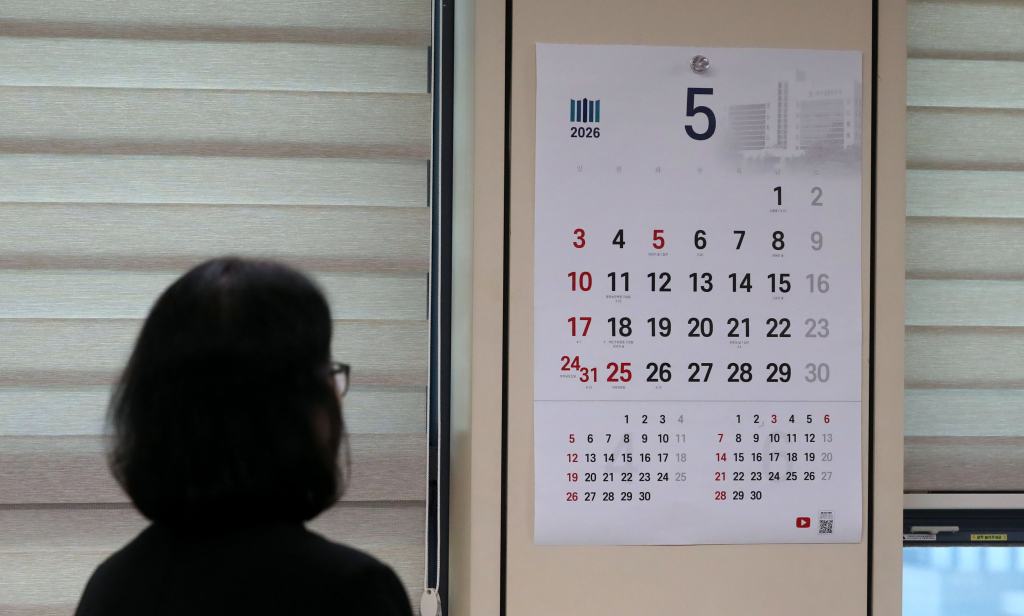
A May calendar is displayed in the office of Prosecutor Kim Jin-hee at the Gwangju District Prosecutors’ Office. The date when Lee Chae-won, a high school student who was killed by Jang Yoon-gi while returning from a study cafe, was May 5. “Until the complete truth about Chae-won’s case—how she was brutally murdered for no reason—is uncovered,” he stated, “I will not take down this calendar.”
Prosecutor Kim, the primary investigator, reclassified the ‘Jang Yoon-gi case,’ which was originally considered an accidental incident, as a serious offense involving sexual violence. He charged the case with ‘murder during rape,’ a crime that carries the death penalty, even though the police had referred it as a straightforward homicide. Under Kim’s leadership, the Criminal Division 3 of the Gwangju District Prosecutors’ Office carried out 11 rounds of additional investigations, revealing evidence of sexual offenses and indications that the police had tried to minimize and cover up the case. On July 13, during the second trial session, Jang Yoon-gi admitted for the first time that the crime was committed with the intention of sexual assault.
◇ The Myth of “I Wanted to End My Life”
– Jang Yoon-gi confessed to the sexual offense two months following the event.
He probably acknowledged it unwillingly once concerns about police involvement emerged. Nevertheless, it is uncertain whether he will tell the truth during the defendant’s questioning.
– Could there be a reversal of statement?
Jang Yoon-gi has continuously altered his statements to align with his benefit as situations evolved.
– What led you to believe it wasn’t just a straightforward killing?
The motive. The assertion that he ‘wanted to commit suicide and needed a companion’ was completely unconvincing. His parents, friends, and those who knew him stated they had never heard him talk about suicide. Obviously, he had never tried it before. The only element that aligned with his ‘suicide’ story was the charcoal briquettes found on the stairs in front of his home.
– An analysis suggested that his anger turned towards Chae-won following a rejection from a female colleague he had pursued alone at a restaurant.
It is accurate that following the woman’s report of Jang Yoon-gi’s stalking, confinement, and sexual assault to the police (on May 3) and her subsequent disappearance, he roamed for 30 hours with a knife, consumed by anger. However, it is unreasonable to suggest he selected a random high school girl as a substitute for his fury.
– Jang Yoon-gi stated that he did not kill her because she was a woman.
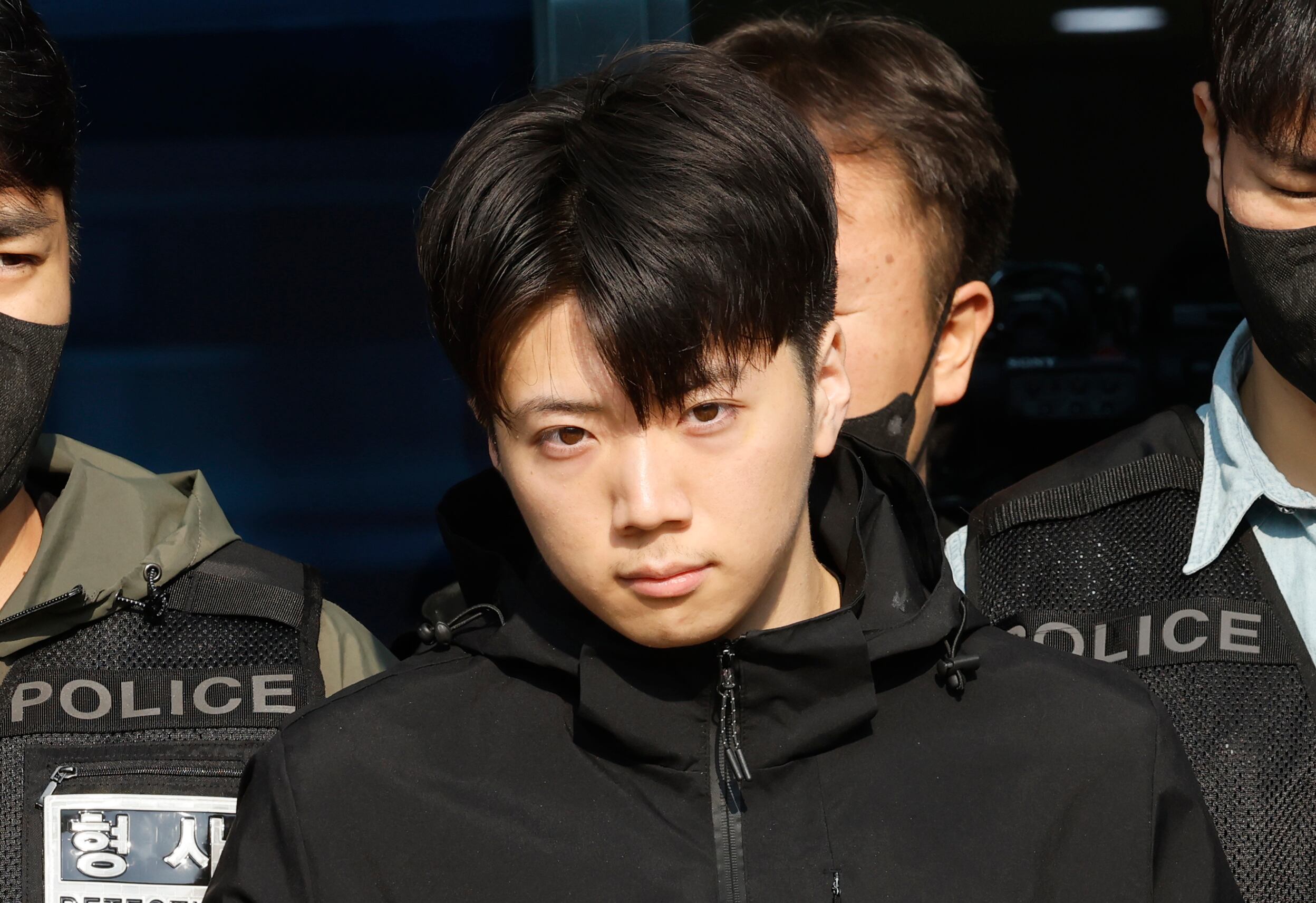
During the early police inquiry, he stated that he was smoking near his vehicle when Chae-won happened to walk by. Although he was not intoxicated, he claimed he ‘could not even determine if she was a man or a woman.’ This is false. When presented with surveillance video and questioned about why he followed Chae-won for 15 minutes, he eventually admitted: ‘I targeted her because she was a woman walking alone.’
– Did his constant lies make you think a sexual offense was involved?
In Jang Yoon-gi’s initial statement of reflection, there was a sentence: ‘I apologize for cutting the flower of a young life.’ When questioned about why he wrote that, he responded, ‘If I had known she was a minor, I wouldn’t have killed her.’ I then asked, ‘Would you have committed the same crime if she had been an elderly woman walking alone?’ He answered, ‘Yes.’ Even though he nervously picked at his fingers until they bled, Jang Yoon-gi kept making up stories while trying to figure out how much the investigation team was aware of. When confronted with his conflicting statements, he said, ‘I was worried the investigation would take a sexual turn.’ I considered that as his confession.
◇ The Nature of the White Object in the CCTV footage
– Nevertheless, prior to the day before the indictment, there was no ‘direct evidence’ available to substantiate the sexual assault.
A real doll (adult doll) that was heavily damaged with injuries to the chest and genital areas, illegal images of a middle school girl’s legs, a notepad showing sexual activities alongside women’s names, and accounts from people who knew Jang Yoon-gi, who often said, ‘If my life is destroyed, I will abduct and rape a high school girl in a van’—all indicated a sexual offense.
– Aren’t these primarily indirect and situational evidence?
After being charged, we discovered crucial evidence in the black box video from a cargo truck at the crime site. A faint white item was visible near Jang Yoon-gi’s car before the incident and vanished afterward. The police classified it as ‘unidentifiable,’ but we concentrated on it.
– What was the white item?
One night, after watching the video multiple times, I understood that it was the back door of the passenger seat in Jang Yoon-gi’s white car. He had opened it beforehand to kidnap Chae-won, but when the plan didn’t work out, he killed her and shut the blood-covered door using his hands.
– Isn’t this merely an assumption?
The video also captures Jang Yoon-gi’s foot movements. Following the crime, he did not immediately head to the driver’s seat but took a few steps toward the passenger side and quickly returned. Along with the bloodstains on the rear door of the passenger seat, this suggests that he closed the door he had previously opened. As he did not grab the handle while closing it, only the middle part of the door showed bloodstains.
– Was compressing the victim’s neck also regarded as proof of a sexual offense?
It’s the same approach Jang Yoon-gi took when sexually harassing his female coworker at the restaurant. If his main goal was to kill, he would have pulled out the knife from his pocket immediately.
– Following the incident, Jang Yoon-gi looked up phrases such as ‘choking causes loss of consciousness’ and ‘heavy object.’
He stated he looked up those terms because he ‘felt bad about using a knife’ and asked, ‘What if I had used a blunt item?’ Learning this was terrifying. It represented a type of introspection: if he had used a non-sharp object to subdue her without making her scream or fight back, he could have taken her elsewhere and sexually assaulted her.
– Do you think he had another crime in mind?
Following the crime, Jang Yoon-gi visited a laundromat, cleaned his blood-stained jacket, and put on gloves before departing. As the prior crime remained unfinished, there was a chance of another occurrence. Naturally, this is just my own perspective.
◇ “I Was Concerned the Inquiry Might Take a Sexual Angle”
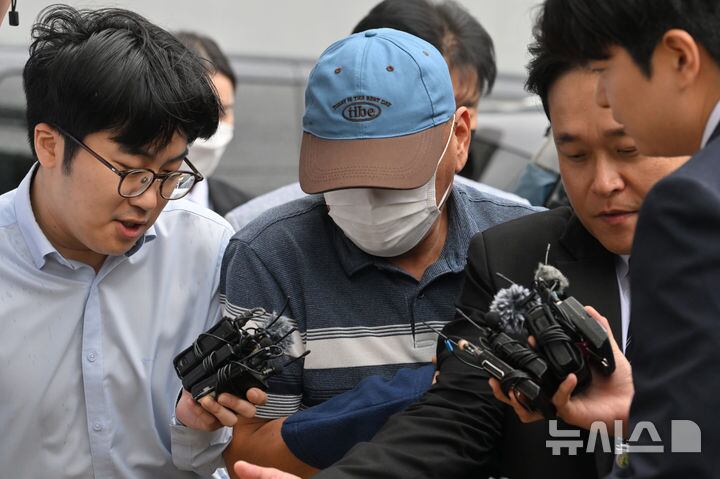
– When did you find out that Jang Yoon-gi’s father is a serving police officer?
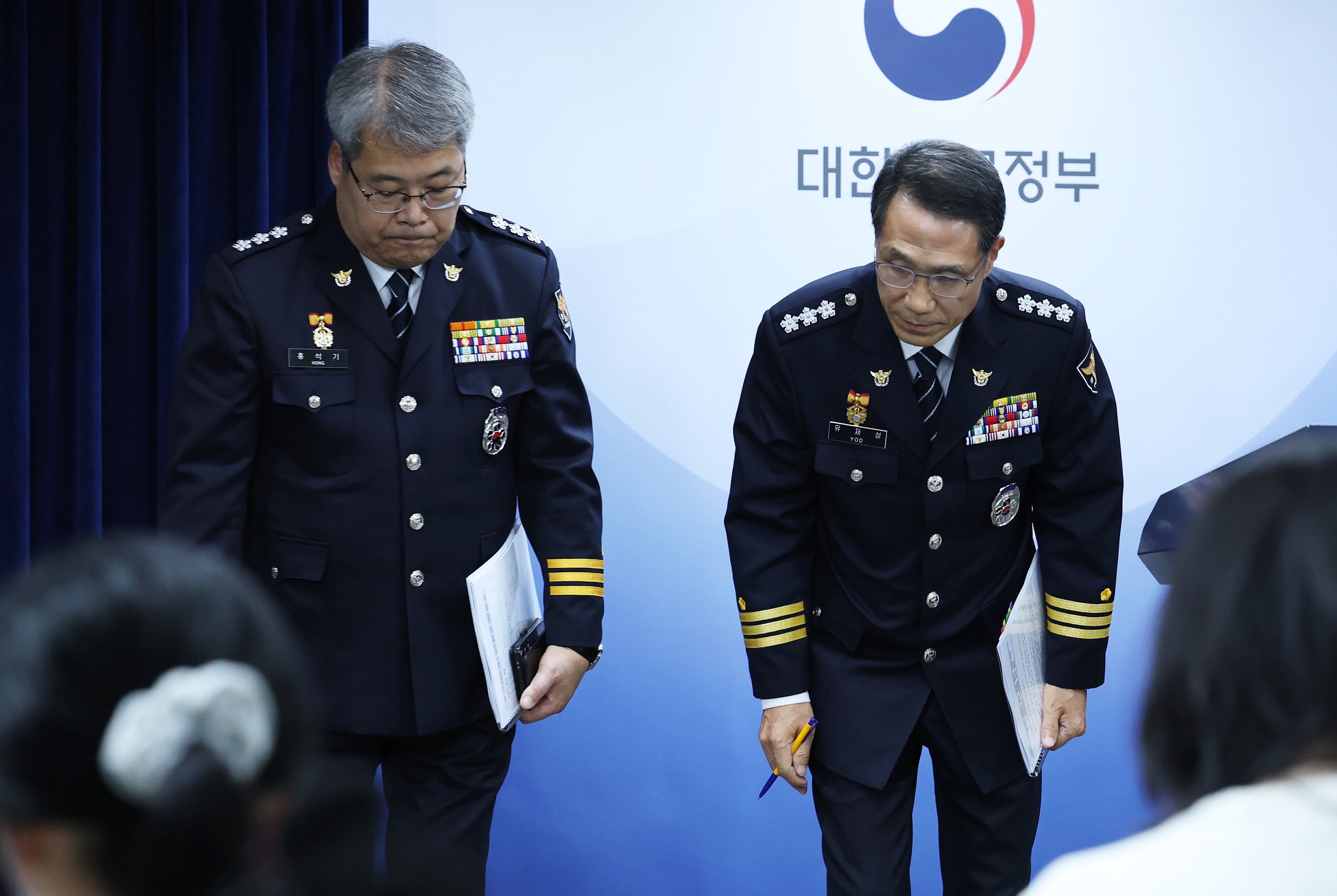
Jang Yoon-gi himself revealed his father’s job during the early police inquiry. At that moment, I only considered how difficult it would be for the father to have a son who is a murderer, not that I should look into the father.
– Why did you take the father’s phone?
When we went to examine Jang Yoon-gi’s room, the building manager stated, ‘The father came and took his possessions.’ The police also mentioned, ‘As the investigation has concluded, it’s acceptable to remove the items.’ Surveillance video captured the father carrying an actual doll in a big garbage bag. We inspected Jang Yoon-gi’s house and confiscated the family’s phones. When questioned about why he discarded the real doll, the father explained, ‘I didn’t want my son’s crime to be considered sexual.’ This aligned with Jang Yoon-gi’s account.
– The audio records of conversations between the police investigation team and the father were discovered on the father’s phone, which the prosecution examined through forensic analysis.
They were updating him on the progress of the investigation, stating, ‘We will go and inspect the navigation system and black box.’ However, the police investigation records showed no findings from examining the black box. The police returned Jang Yoon-gi’s blood-stained car to his father the day after the crime but did not document this in the investigation report.
– Was the prosecution unaware of the cable ties?
The police investigation documents did not reference cable ties. The authorities discovered cable ties, which could be used as a criminal instrument, in Jang Yoon-gi’s vehicle but did not confiscate them. Throughout seven interrogations of the suspect, they never questioned Jang Yoon-gi regarding the ties.
– To what extent do you think the police’s senior officials were involved?
Since the inquiry is still in progress, I am unable to provide any statements.
– Confidence in the police is declining.
I do not wish for the Jang Yoon-gi case to be perceived as a dispute between prosecutors and police. Although senior colleagues once cautioned me early in my career not to fully trust the police, I appreciated officers who took on challenging tasks during field investigations. While examining investigation records, I did not believe the police were concealing or altering facts, but instead worked together to identify overlooked elements and address shortcomings. Most police and prosecutors have operated in this manner within their respective roles.
◇ Chae-won Has to Be the Final Victim
– A passionate discussion exists regarding the termination of the prosecution’s ability to conduct additional investigations.
The phrase ‘supplementary investigation’ still sounds new. Prosecutors have consistently examined police investigation documents and, when needed, called upon individuals or obtained further evidence. Charging someone only based on police records without checking raises the chance of not guilty verdicts. Supplementary investigations are important for the accused. If this persists, courts might need to carry out inquiries during trials.
– The governing party states, “A framework needs to be established allowing victims to express their views and request interviews throughout the investigation process.”
That was the responsibility of the prosecutor. It involves transferring the public service that prosecutors offered to individuals, who are now required to hire lawyers independently.
– Women’s organizations are concerned that eliminating the prosecution’s ability to conduct additional investigations could result in another or a third Jang Yoon-gi case.
Victims are not limited to women; they can also include children, individuals with disabilities, and other vulnerable groups who require self-defense. If the Jang Yoon-gi case had been handled as the police initially classified it—’simple murder’—the presence of cable ties, the genuine doll evaluation, and the identity of the white object would have remained hidden.
– Some critics argue that the prosecution is leveraging media attention in the Jang Yoon-gi case.
We have examined every case in this manner, not solely the Jang Yoon-gi case.
– In situations such as the Busan kickback scandal, the Yeosu Haedeuni case, and the passing of Director Kim Chang-min, female prosecutors revealed the facts through additional inquiries.
I do not perceive gender, so I remain unaware of such specifics.
– You have primarily worked on cases involving women and children. Did this experience assist in the investigation?
I handled this case in the same way as any other. We did everything we could for Chae-won, who endured immense suffering for 140 seconds before passing away. When I looked at Jang Yoon-gi, who maintained a defiant gaze at the camera even after committing the murder, I urged the team to uncover every minor piece of evidence. This could be my final investigation as a prosecutor.
– Are you going to pursue the death penalty for Jang Yoon-gi?
For Chae-won to be the final victim, Jang Yoon-gi should face the most severe punishment allowed by law. I feel sad that this case is only becoming a topic of debate regarding the prosecution’s authority for additional investigations. There is a noticeable absence of empathy and support for the victim and her family. Their everyday lives and means of living have completely fallen apart. Due to suspicions of police cover-up, they no longer trust anyone. If Chae-won had chosen a different route that day and Jang Yoon-gi’s plan had failed, another person might have become the victim. I hope this case is examined from the victim’s point of view.
☞ Kim Jin-hee
Born in 1978 in Naju, South Jeolla Province, Kim attended Gwangju Science High School and earned her degree from the School of Law at Korea University. As part of the 38th cohort of the Judicial Research and Training Institute, she started her professional journey as a prosecutor in 2009, serving at the Gwangju, Jeju, Central, and Changwon District Prosecutors’ Offices. During her time at the Suncheon Branch Office, she revealed the facts behind the so-called ‘Yeosu Haedeuni case,’ a murder involving a four-month-old infant, through additional investigations. This case was recognized as an ‘Outstanding Criminal Investigation Case’ by the Supreme Prosecutors’ Office in 2025.

 jasdooit
Leave a comment