
- Chinese investors divest from Australian real estate
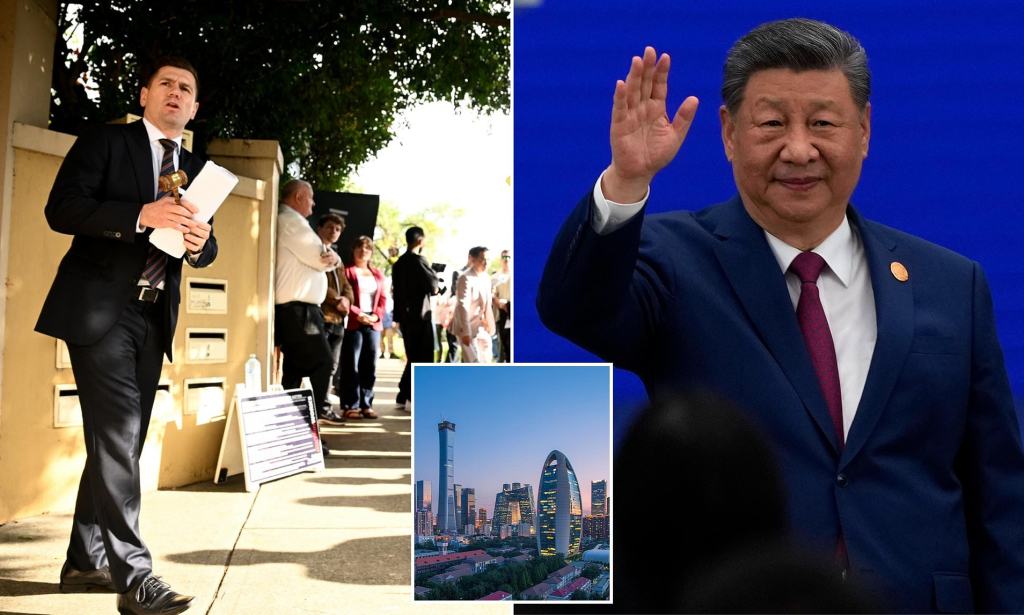
Chinese investors are pulling out of Australia and divesting their real estate as a financial downturn causes chaos in their native country.
Chinese buyers have been among the largest groups of foreign investors in Australia, although the number of properties they own has decreased in recent years.
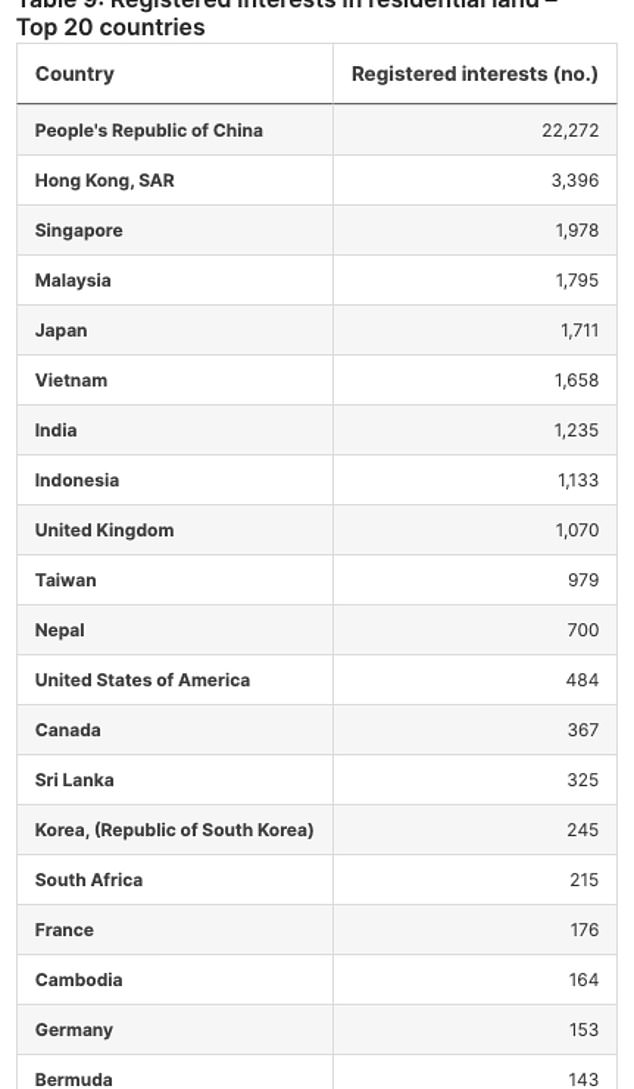
Data from the Australian Taxation Office indicated that there were 23,550 properties purchased by investors in 2024, which then decreased by over five percent to 22,272 in 2025.
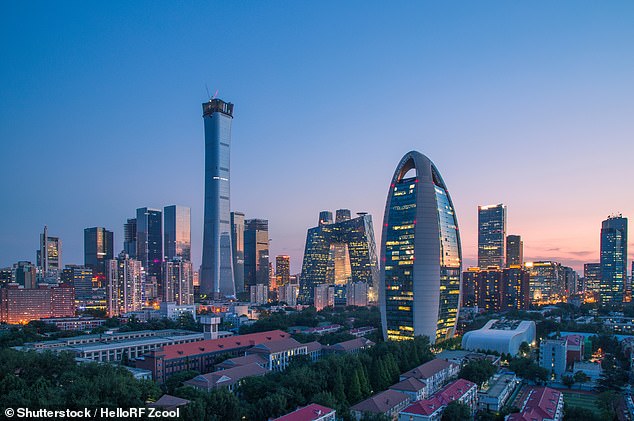
ChinaThe property market has experienced a sharp decline since 2021, with prices dropping by 25 percent from the third quarter of that year, erasing two decades of financial progress.
The sharp decline resulted from a combination of a decreasing population, an excess of available homes, and the failure of construction firms due to more rigorous government policies.
Fitch Ratings predicts that the Chinese market is expected to decline by an additional 11-13 percent during the 2026 fiscal year.
The head of the Real Estate Institute of Australia, Jacob Caine, cautioned that the Chinese selling off properties in Australia could negatively impact tenants.
“Whether you like it or not, Australia’s housing system heavily depends on foreign investment to sustain itself, and to guarantee that the more than 7 million renters in Australia can find suitable rental properties,” he stated.realestate.com.au.
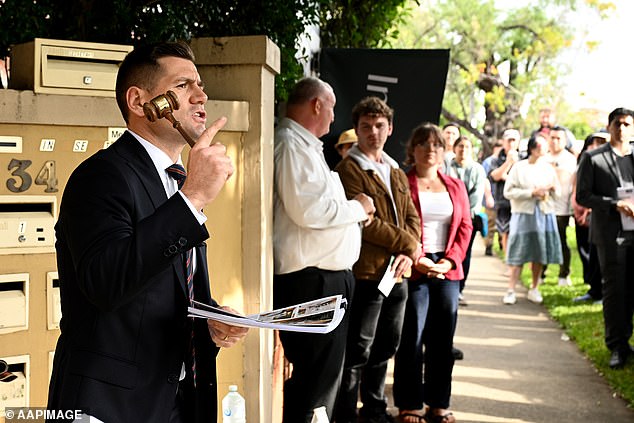
So, it’s worrying to notice a decline in the participation of this group, which has been highly involved in recent years and has played a significant role in maintaining the strength of the Australian real estate market.
Ray White Group’s chief economist, Nerida Conisbee, stated that Australia had ‘actively encouraged Chinese buyers to leave’ because of local tax regulations.
Hong Kongbuyers are also leaving, with sales decreasing from 3,486 to 3,396 between June 2024 and 2025.
Nevertheless, the 2025 fiscal year recorded a rise in properties owned by offshore entities.
As Chinese investors withdraw, others are entering the market, with Japanese buyers taking the lead.
A Japanese investor’s rose increased from 1,168 to 1,711 during the 2025 fiscal year.
Japan is currently the fifth-largest investor in Australian real estate, surpassing the United Kingdom and the United States.
‘Japanese institutional investors, along with life insurance companies and pension funds functioning in a near-zero domestic interest rate scenario, are aggressively pursuing Australian real estate returns in large quantities,’ said Navin De Silva, founder of Grit Real Estate.
That funding is also expanding into the construction industry.
In 2024, the construction company Metricon was acquired by Sumitomo Forestry, a major Japanese building corporation, making it one of the Australian companies now owned by Japanese business groups, alongside NextGroup and AV Jennings.
“There is an inherent connection between the fact that several prominent builders in Japan are now showing interest in Australian builders—this could be important for investor groups in Japan,” said Brad Duggan, CEO of Metricon.
The launch of the sale has enabled Metricon to form collaborations with companies that ‘can connect with demand from overseas investors’.
DeSilva mentioned that Australia could boost investor and construction demand by relaxing foreign-investor tax regulations, as well as lowering the expenses associated with applying to buy a property in Australia through the Foreign Investment Review Board (FIRB).
‘Australia is vying for foreign property investment against Dubai, which imposes no acquisition tax, no continuous land tax, no capital gains tax, and offers net returns ranging from 8 to 10 per cent … (which is) an option that investors are genuinely evaluating,’ he mentioned.
The fundamental case for Australian real estate is robust enough to succeed in that competition, but not if the policy frameworks continue to hinder participation.




 jasdooit
Leave a comment