
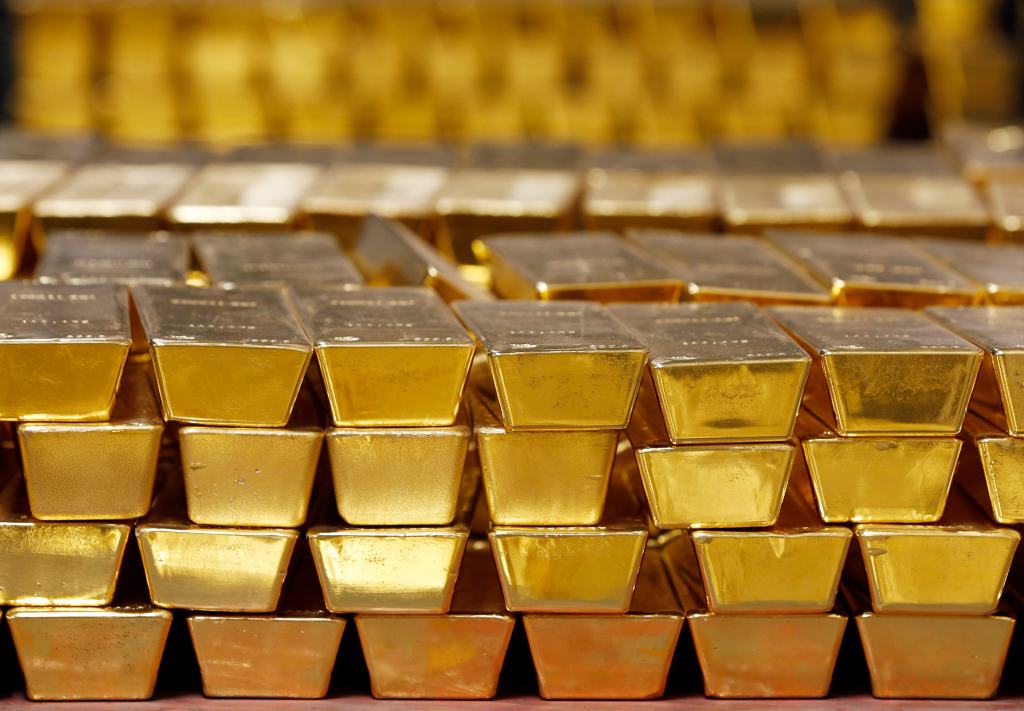
The Bank of Korea has restarted its gold acquisitions, which had been suspended in February 2013. The central bank mentioned, “Our goal is to increase the share of gold in our foreign exchange reserves over the medium to long term, including a new approach for purchasing gold from local gold producers.” The Bank of Korea also revealed that it has recently begun acquiring U.S. ETFs (exchange-traded funds) that are backed by gold as an underlying asset, apart from physical gold. Nevertheless, ETFs are categorized as securities, not gold, when determining foreign exchange reserves.
The Bank of Korea boosted its gold reserves to 104.4 metric tons by acquiring gold between 2011 and 2013 under the leadership of former Governor Kim Joong-soo. However, following a decline in gold prices, the central bank encountered significant criticism from political groups and ceased purchasing gold for more than 13 years. Meanwhile, central banks in other nations increased their gold reserves due to rising geopolitical concerns. Consequently, the Bank of Korea’s gold holdings are ranked 40th out of 100 countries surveyed by the World Gold Council, with gold making up just 3.5% of its foreign exchange reserves, placing it 98th—only ahead of Chile and Colombia. Considering that South Korea’s foreign exchange reserves are ranked 13th worldwide, this is an exceptionally low position.
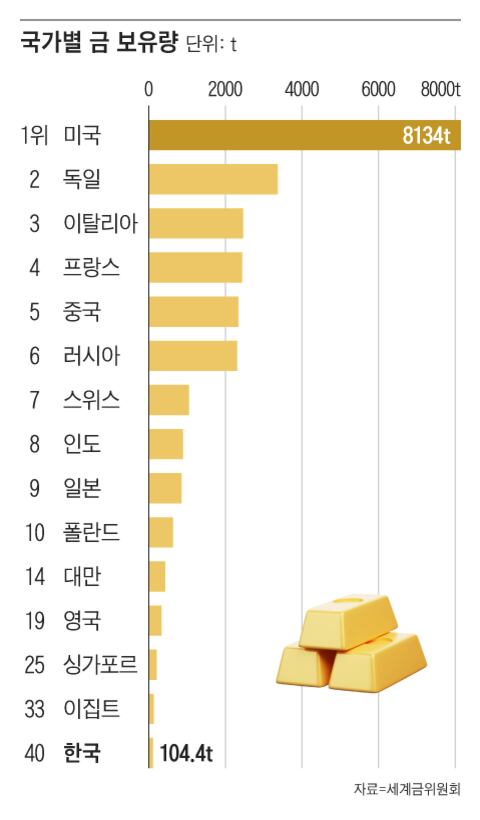
Jeong Hee-seop, who leads foreign currency operations at the Bank of Korea, stated on that day, “Due to the recent rise in geopolitical risks, interest in gold as a secure investment has increased. We determined that there was a need to increase our gold reserves, which are currently relatively low. Additionally, there is a factor where the financial burden has decreased as gold prices have dropped from their peak.” According to the World Gold Council, gold prices reached $5,020 per troy ounce in February but had declined to $4,050 by the third.
All of the Bank of Korea’s gold is currently kept at the Bank of England. In comparison, when asked about the rationale for buying gold that has been refined and processed in Korea and storing it within the country in the future, Governor Jeong stated, “The objective is to diversify the sources and storage locations of gold in order to spread out geopolitical risks. We also took into account the convenience of purchasing gold in Korean won and expanding the channels for gold procurement.” The Bank of Korea intends to acquire gold designated for export that was not sold domestically among the gold refined and processed by Korean companies such as LS MnM and Korea Zinc. This gold will be stored at the Korea Securities Depository. Due to security considerations, the exact location will remain undisclosed. It is uncommon for a country that does not produce gold, like the Philippines or Mongolia, to buy gold that has been processed domestically and store it in a local vault.

Former Bank of Korea Governor Kim Joong-soo acquired gold as a means to diversify the country’s foreign exchange reserves. However, as political backlash grew due to the drop in gold prices, the central bank ceased its purchases in February 2013, with 20 metric tons being the final acquisition. During a National Assembly review in November of that year, Kim Hyun-mi, then a member of the Democratic Party, criticized former Governor Kim, stating, “You did not accurately forecast gold prices, and the Bank of Korea caused significant losses for the nation,” along with other political accusations. A former senior official from the Bank of Korea remarked, “The political criticism was intense, prompting us to increase our holdings in U.S. stocks and similar assets instead of gold, which yielded decent returns. Nevertheless, considering recent global political tensions and actions taken by other central banks, there were many voices arguing that delaying gold purchases was unwise.”
Even though gold prices have dropped considerably this year, they have shown a consistent increase over the medium to long term. The gold price of $4,050 per ounce on the 3rd represents a 150% increase compared to the $1,627 in February 2013, when the Bank of Korea stopped buying gold. The central bank officially mentions that the value of gold in its foreign exchange reserves is $4.79 billion, calculated based on the average purchase price. However, if valued at the current market price, it would be approximately $12 billion. This translates to an annual compounded return of roughly 8%. As a secure asset, gold tends to offer better returns during times of uncertainty or when prices go up.
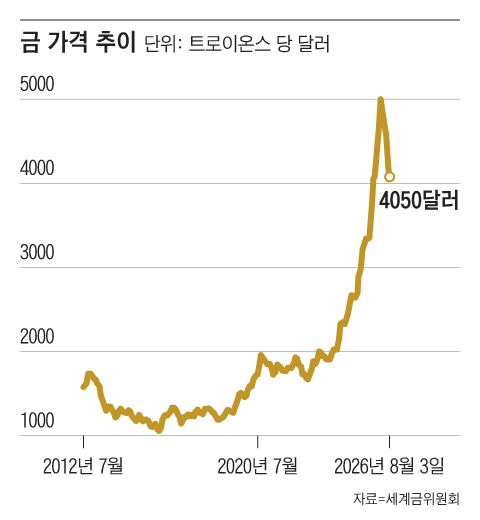
Recently, nations seeking to minimize their reliance on the U.S. dollar, concerned about heightened U.S. financial penalties, have been boosting their gold reserves rather than U.S. government bonds. Between 2024 and the end of last July, Poland’s central bank acquired the highest amount of gold, totaling 255.2 metric tons, followed by China (96.1 metric tons) and India (76.9 metric tons). The leading positions in gold reserves are held by the U.S. and European countries that still maintain substantial gold stocks from the era before the gold standard was discontinued. As of last month, the U.S. leads with 8,134 metric tons, followed by Germany (3,350 metric tons), Italy (2,452 metric tons), and France (2,437 metric tons) in second through fourth place. China and Russia, which are decreasing their holdings of U.S. government bonds while facing U.S. pressure, hold 2,332 metric tons and 2,292 metric tons respectively, placing them fifth and sixth.
As per the findings released last month by the World Gold Council, which conducted a survey among 74 central banks, 45%—equivalent to 33 nations—indicated they intend to boost their gold holdings in the coming year. Sixty countries anticipate an increase in their gold reserves over the next five years.






Leave a Reply