
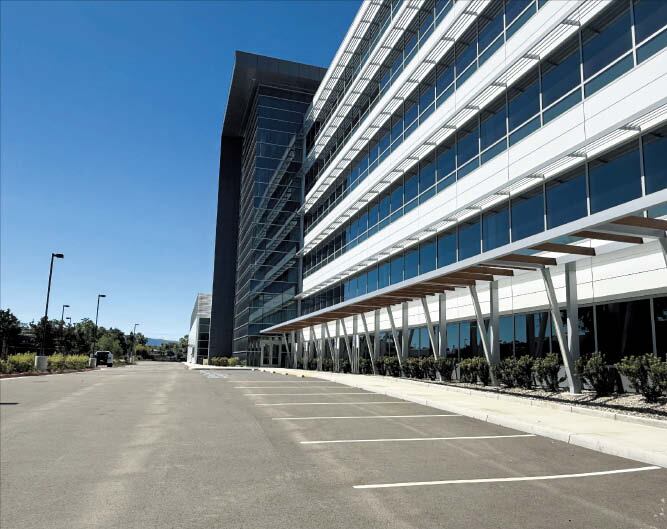
On July 28 (local time), the 48MW data center ‘Digital Realty SJC37’ in Santa Clara, California, was inspected. Completed in 2023, the 40,000㎡ building exhibited minimal signs of human presence. Its functioning has been postponed for several years because of inadequate power availability, as the local utility company Silicon Valley Power has been slow to extend its electrical network.
The adjacent 48MW ‘Stack Infrastructure SVY02A’ encounters comparable challenges. Although it has its own substation, the site has only been supplied with 18MW of electricity since January, which is less than half of its needed capacity. In the center of Silicon Valley, just 10 minutes away from NVIDIA’s office, ’empty shell’ data centers that cannot function because of insufficient power are now frequent.
Data centers serve as vital infrastructure in the age of artificial intelligence and are crucial for achieving ‘sovereign AI’ to minimize reliance on foreign entities. Nevertheless, as power networks and water systems face challenges in meeting rising demands, local communities are becoming more vocal in their opposition. Opponents argue that although advancements in AI benefit companies and countries, the associated burdens—such as noise pollution, electricity shortages, and water scarcity—are mainly felt by regions where data centers are located.
◇24-hour disturbances from noise, electricity, and water issues
In the early days of the AI surge, local governments around the globe quickly sought to draw in data centers, expecting increased tax income and employment opportunities. National governments also backed the building of these facilities under the slogan of AI self-sufficiency. Yet, as AI data centers became more common, unexpected ‘quality-of-life violations’ began to appear.
Residents in Dowagiac, Michigan, initiated a class-action lawsuit in May targeting a 30MW data center located nearby. They argued that the continuous operation of cooling fans and electrical equipment generated noise levels between 50 to 62 decibels, surpassing the World Health Organization’s nighttime guideline of 40dB, which has led to sleep disturbances.
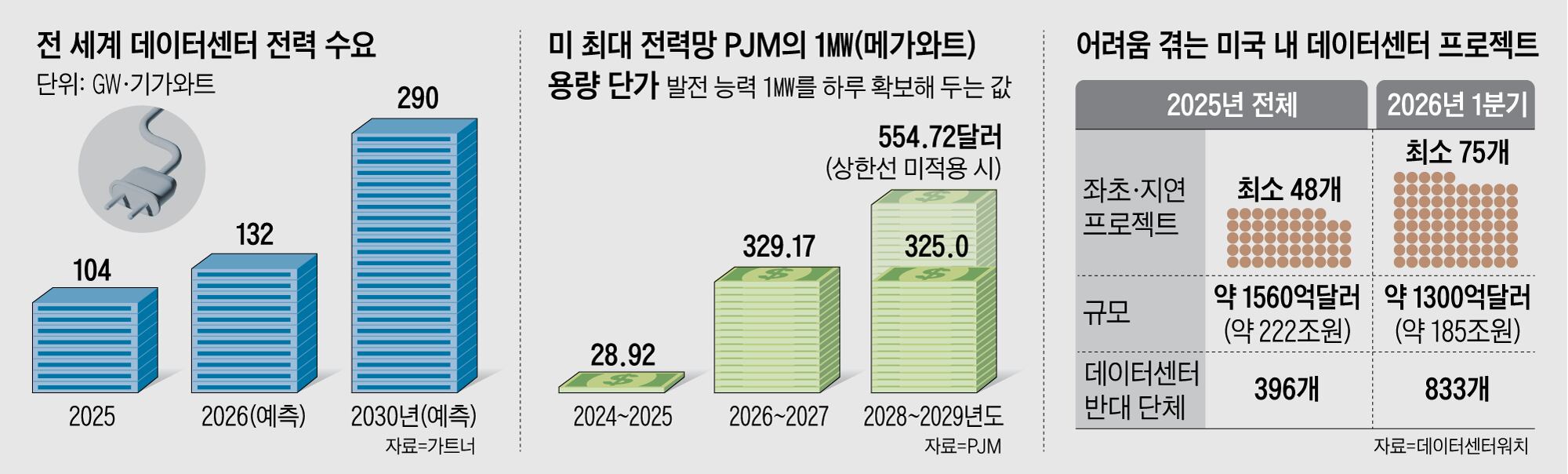
The energy shortage has become more critical. AI data centers, which operate tens of thousands of advanced GPUs, use 6–8 times more power than regular data centers. This has led to a tenfold rise in capacity prices for PJM, the biggest U.S. electricity grid, over two years. This affects household electricity costs—Goldman Sachs predicts annual increases of 6% for American families.
High levels of water usage for cooling purposes have resulted in shortages. Forty-seven data centers located in Johor, Malaysia, consume about 675 million liters of water each day—enough to fill 270 Olympic-sized swimming pools. This has led to lower water pressure and interruptions in nearby regions. In California’s Imperial Valley, data centers and farmers are involved in a legal dispute regarding the use of Colorado River water for farming.
◇Employment impacts are insufficient… increasing resistance
Some critics claim that data centers use a lot of resources but provide limited employment opportunities. A data center located in Cedar Rapids, Iowa, which was constructed with a funding of 1.9 trillion South Korean won from Google and the private equity company QTS, created just 61 permanent jobs. According to a recent Reuters-Ipsos poll, only 14% of Americans back data center developments in their areas.
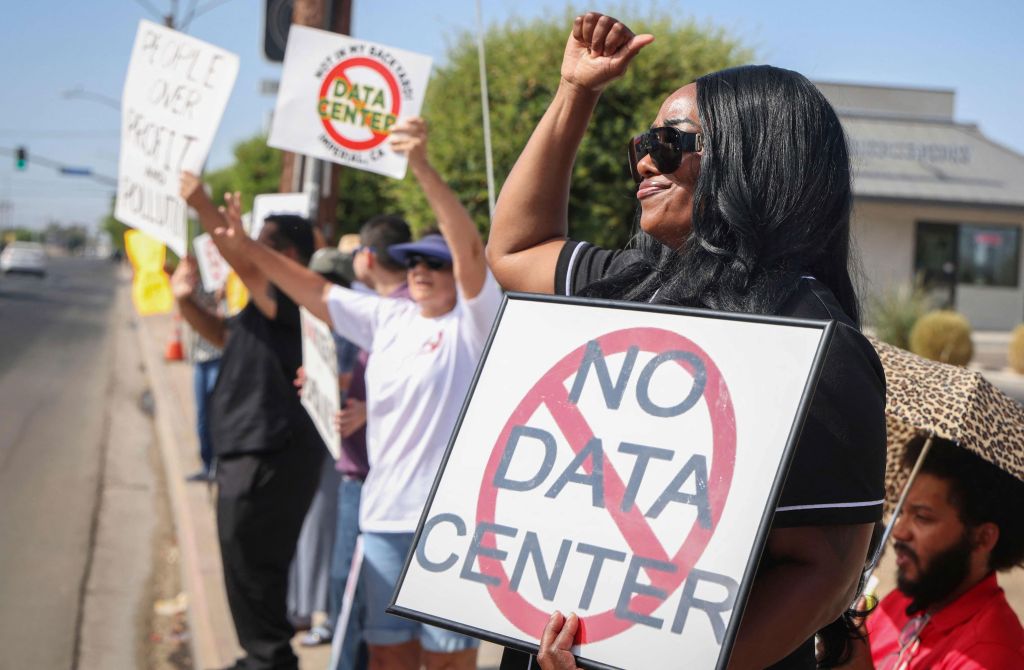
The opposition has evolved into protests and new rules. Last month, 142 locations in 42 U.S. states organized demonstrations against data centers, with banners stating ‘Don’t take our water.’ New York State and Seattle have put a hold on permits for new data centers exceeding 50MW and 20MW, respectively, for a year. Certain states are cutting back on tax benefits. In the first quarter of this year alone, 75 data center projects faced delays or were canceled across 49 U.S. states.
Similar disputes are arising within the country. In Geumcheon-gu, Seoul, locals are opposing a data center development, expressing worries about noise, shaking, and potential exposure to electromagnetic fields. Specialists caution that promoting data centers only as crucial AI facilities may lead to a loss of local backing. Professor Lee Gi-hyuk from Chung-Ang University mentioned, “It is necessary to have open information sharing via public meetings and ongoing dialogue to discover resolutions.”




Leave a Reply