
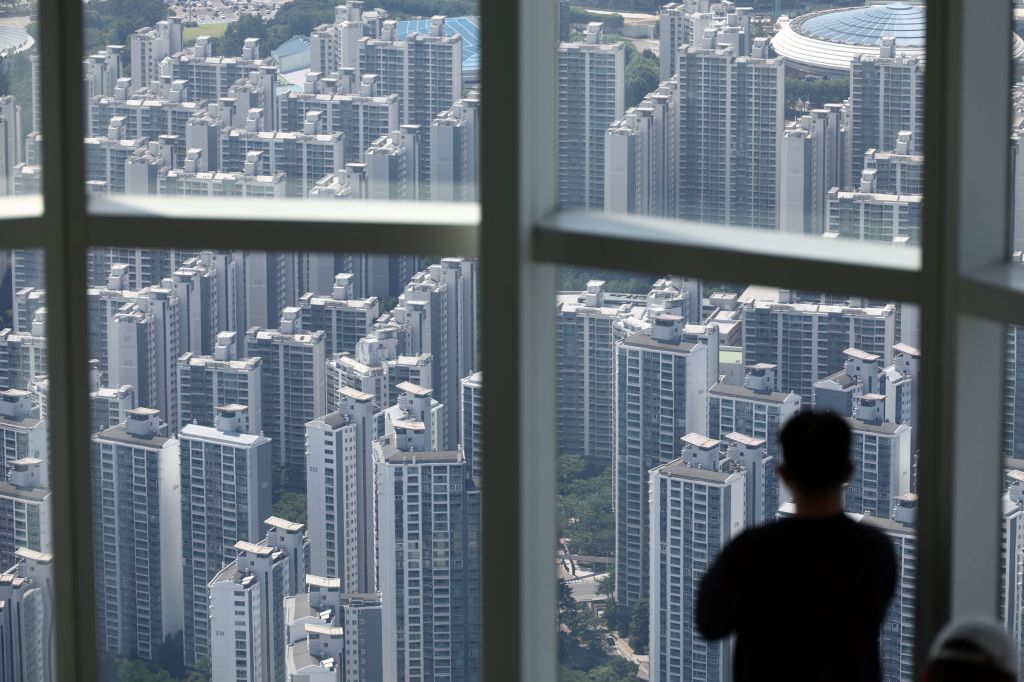
President Lee Jae Myung is set to lead a real estate policy review meeting on the 7th, aiming to discuss further measures for increasing housing supply. This follows just four days after he directed officials during a private meeting at Cheong Wa Dae on the 3rd to “secure as much available housing supply as possible.” Last month, the president also mentioned during a public housing discussion, “I will even use a helicopter to search for potential sites in the capital region.”
The president’s active approach demonstrates his recognition that the availability of housing, including apartments and villas, is crucial for maintaining stability in the real estate sector. Nevertheless, the truth is that the government’s attempts to increase supply have not matched his goals. The supply targets established last year have already fallen far below expectations.
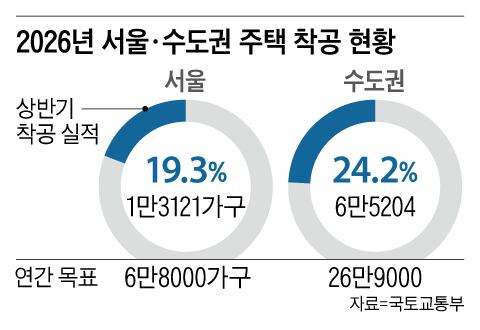
As reported by the Ministry of Land, Infrastructure and Transport on the 5th, housing construction starts in the capital region during the first half of this year totaled only 605,204 households, with 13,121 households in Seoul. This is just 24.2% and 19.3%, respectively, of the government’s target set in September last year (269,000 households in the capital region and 68,000 in Seoul). Nevertheless, the ministry remains hopeful, stating, “Public construction starts will be focused on by the end of the year.” Moreover, the number of completed apartments in Seoul during the first half of this year was 12,251 households, marking a 58.4% drop compared to the same period last year.
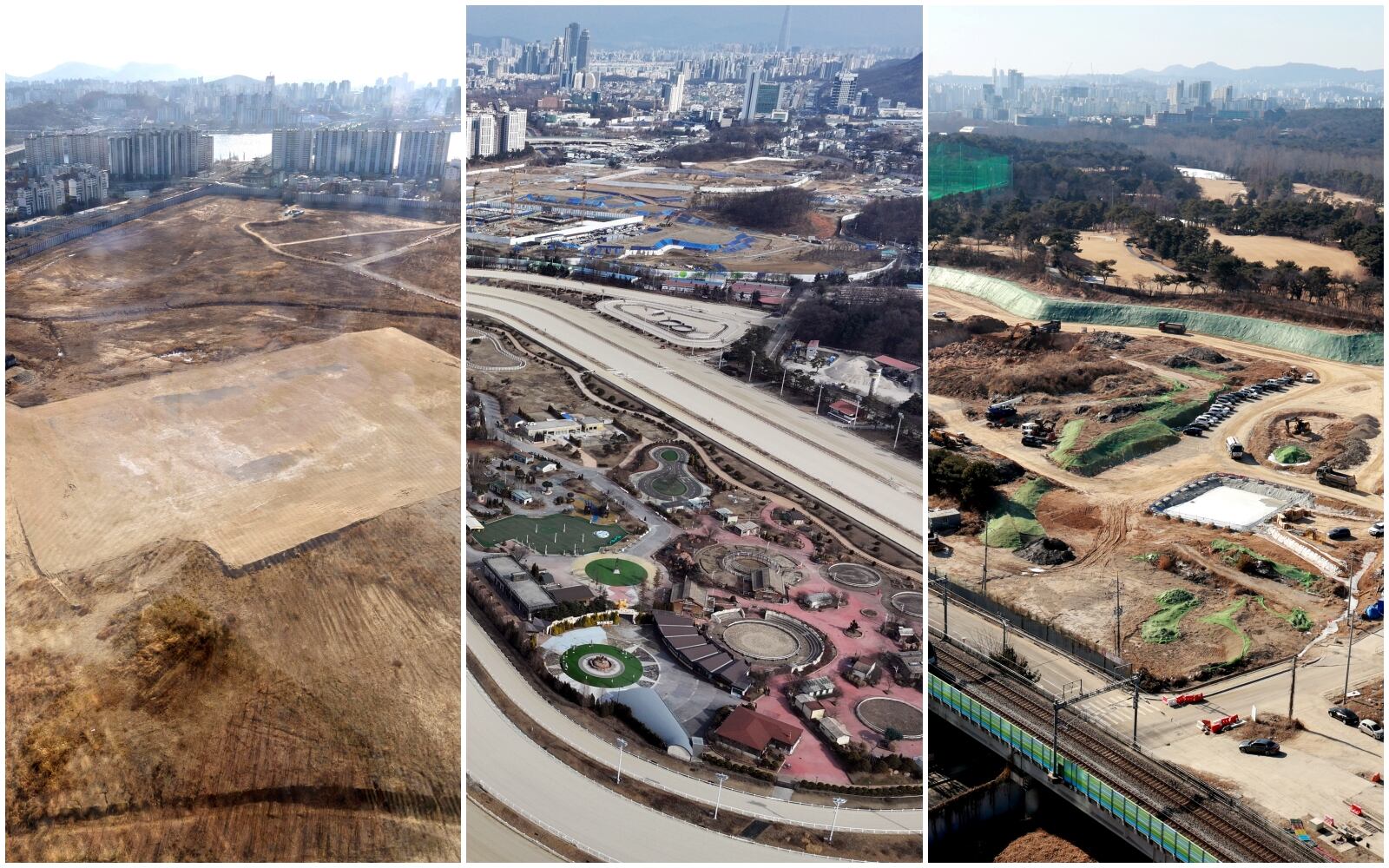
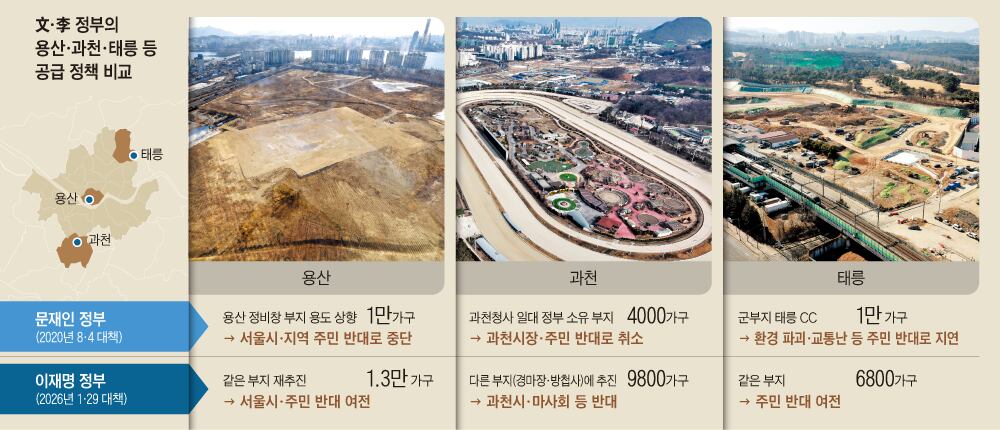
The government, facing pressure, is anticipated to reveal more supply initiatives as soon as next week, such as the opening of greenbelt areas in the Gangnam region. Nonetheless, the market remains doubtful about these “additional supply pledges.” Several of the current proposed sites currently under evaluation or development were previously suggested by the Moon Jae-in administration but were subsequently put on hold, delayed, or canceled. For instance, the Yongsan International Business District and Nowon-gu Taereung Country Club, referenced in the “January 29th measures” announced earlier this year, were key projects under the Moon administration’s “August 4th measures” from 2020, which ultimately did not come to fruition. The greenbelt area in Naegok-dong, Seoul, recently considered as an additional potential site, was also examined but abandoned during the Moon administration.
◇Lee Administration Urges Rapid Progress in Supplies… but Yongsan, Gwacheon, and Taereung Continue to Make Little Headway After Six Months
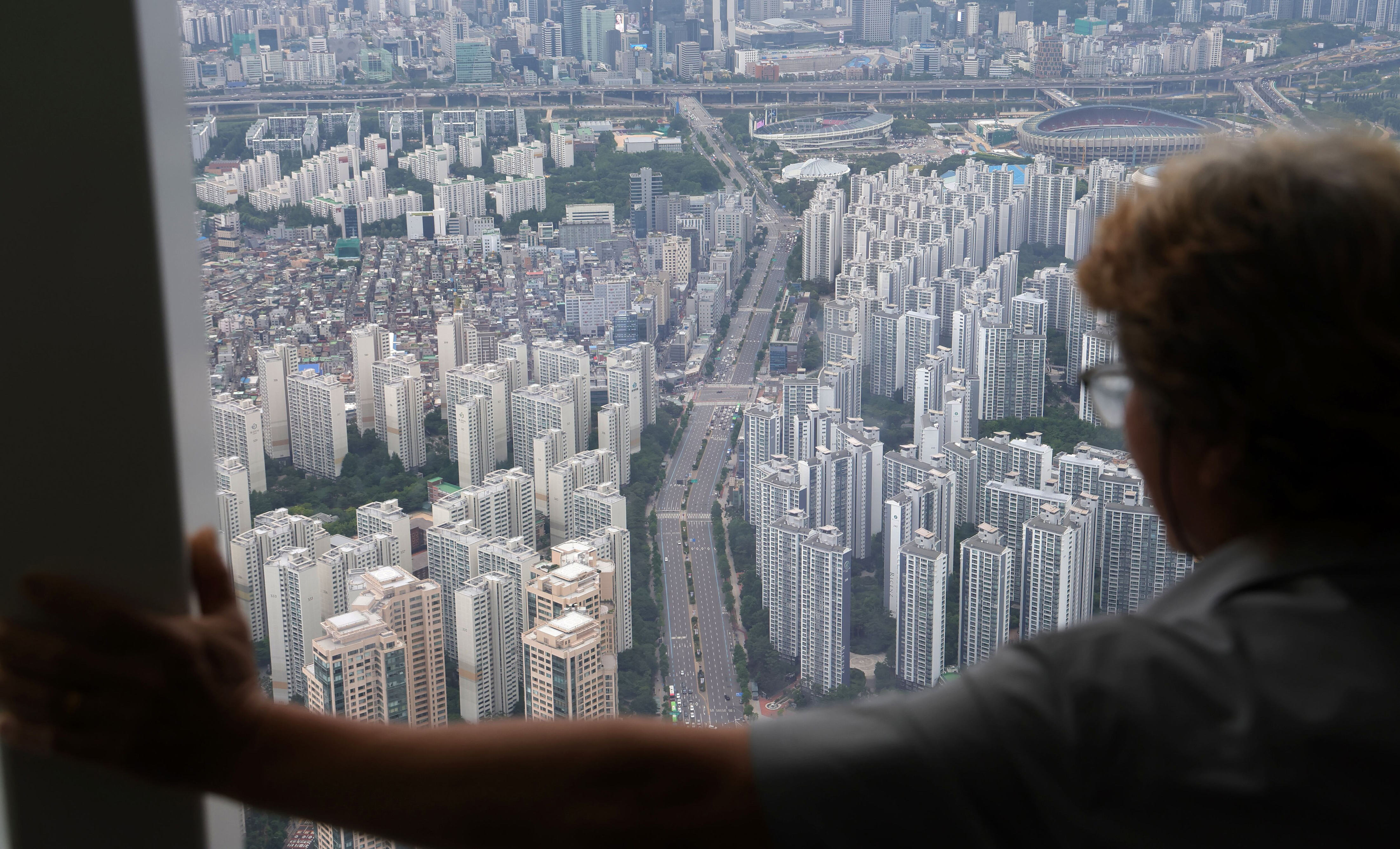
The government’s ongoing focus on “expansion” and “speed” in housing supply arises from the understanding that the “supply cliff” has turned into an actuality, contributing to housing price volatility. In the first half of this year (January–June), Seoul apartment prices increased by 5.07%, marking the highest rise since 2008. The significant reduction in housing availability in the capital region is the most pressing issue. Although Seoul’s annual apartment completion rate averaged 35,000 households between 2023 and 2025, it is expected to fall to 27,000 households this year. Next year, it is anticipated to drop even more sharply to 17,000 households. Without definitive “supply signals” from the government, it will be challenging to prevent a surge in prices in a market with half the usual supply.
Even though two supply measures were introduced this year, market expectations are still weak. Several of the proposed candidate sites had been previously suggested by the Moon administration but did not materialize. Although the current government has no alternative but to reconsider earlier sites because of the limited availability of public land for major supply projects in the capital region, the absence of new approaches compared to past policies continues to be a significant challenge.
◇The Lee Administration Asserts “We Can Do It,” Yet Fears of Recurring Past Mistakes Are Rising
In January, the government unveiled a “supply speed war” as part of its “January 29th supply measures,” with the goal of starting construction on 1.35 million homes in the capital region by 2030, including 60,000 units in urban areas (32,000 in Seoul and 28,000 in Gyeonggi). Major locations involved were the Yongsan Maintenance Depot (International Business District), Gwacheon Racecourse, and Seoul Nowon Taereung Country Club. However, these sites had largely been proposed in the Moon administration’s “August 4th supply measures” from 2020. At that time, the government quickly announced an expansion of housing supply amid increasing prices and public criticism, but later encountered delays, cancellations, or suspensions due to opposition from residents, negotiations with local governments, and issues related to feasibility.
The present administration maintains, “This is not a repetition.” The Ministry of Land, Infrastructure and Transport said, “In contrast to previous instances, we will guarantee real construction begins by offering exemptions from initial feasibility assessments and expediting approvals.” The reasoning was that a comprehensive nationwide government initiative could commence construction within the current leadership’s term.
However, after more than half a year, these initiatives continue to encounter the same challenges as during the previous administration. The Yongsan International Business District is still dealing with conflicts between Seoul City, Yongsan-gu, and local residents regarding the scale of development. Gwacheon City is against increasing the supply, while the Korea Racing Authority is resisting the relocation of the racetrack. Taereung Country Club also experiences persistent opposition from residents and disagreements about the development approach. These were expected problems, but no effective solutions have been developed yet.
The government, facing pressure, is examining greenbelt areas such as the Seoul Seocho-gu Naegok-dong Reserve Forces Training Center and public vacant lots as potential additional housing sources. However, Naegok-dong was previously considered during the Moon administration but was dropped due to local resistance and environmental issues. Kim In-man, director of the Real Estate Economic Research Institute, stated, “The market has already taken lessons from the Moon administration’s supply shortcomings, so it doesn’t anticipate the same areas or approaches to work.”
◇Worsening Real Estate Construction Conditions… Ongoing Supply Delays Continue
The availability of real estate has become more challenging than before. Rising construction expenses and continued high interest rates have not only slowed the introduction of new housing but also caused delays in ongoing projects, such as the third-phase new towns. For instance, Namyangju Wangsuk, Hanam Gyosan, and Goyang Changneung have experienced postponements of 1–3 years from their initial schedules. Developments of urban old public office complexes and school site projects are also facing delays because of legislative issues. In Seoul, housing permits, which serve as a key indicator, dropped by 9.8% in the first half of this year, reaching 20,655 households.
Collaboration with Seoul City, crucial for increasing housing supply, continues to face difficulties. On the 5th, Kim Yong-beom, the presidential chief of staff for policy, met with Seoul Mayor Oh Se-hoon to talk about housing expansion but noted conflicting views. Mayor Oh reportedly said, “The plan to build 10,000 homes in Yongsan cannot move forward without the residents’ approval,” and mentioned that the government’s idea to boost housing in semi-industrial areas “is already a policy that Seoul City is working on.” He also suggested further relaxation of regulations, such as lowering the required proportion of industrial facilities in semi-industrial zones.
In contrast to the Moon administration, which only acknowledged the significance of expanding supply in its last year, the Lee Jae Myung government has focused on it from the beginning. Lee Eun-hyeong, a researcher at the Korea Research Institute for Construction Policy, stated, “To establish lasting confidence in supply, it is more crucial to implement announced policies promptly rather than constantly introduce new initiatives.”





Leave a Reply