
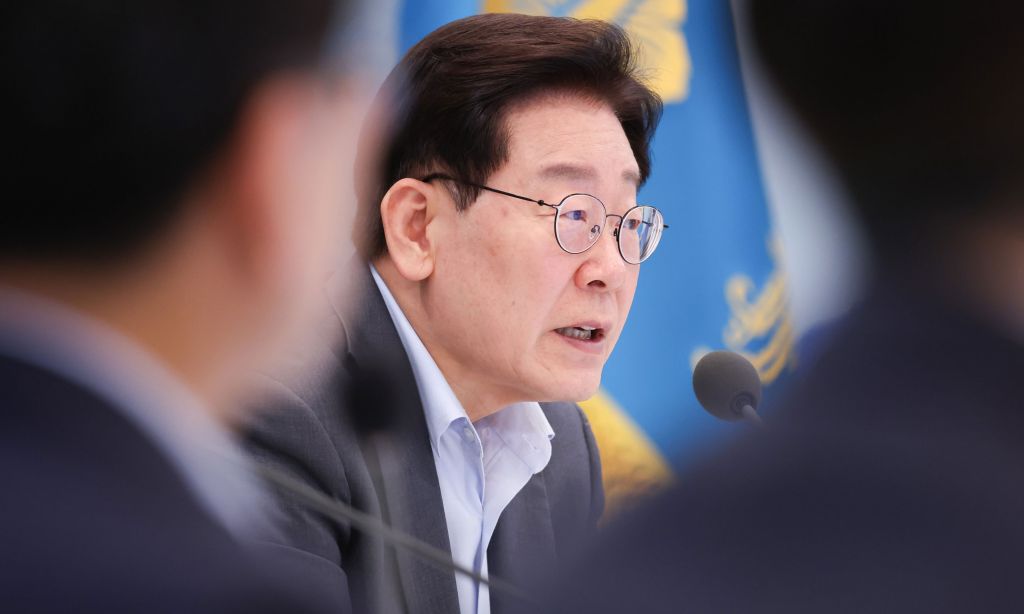
President Lee Jae Myung, on August 5, during the receipt of work reports from the Ministry of Justice and the Ministry of the Interior and Safety, inquired about the amended Criminal Procedure Act (Criminal Procedure Act), which entirely removes the prosecution’s direct investigative powers, asking, “I haven’t reviewed the amended Criminal Procedure Act, but does it specify that prosecutors are not allowed to carry out investigations?”
The updated Criminal Procedure Act has raised concerns among legal professionals and civil society organizations, with a public opinion poll revealing that 61% of citizens are against it. Despite this, the Democratic Party of Korea pushed it through the National Assembly on July 31, and it was approved during a Cabinet meeting led by President Lee at Cheong Wa Dae on August 4. During the Cabinet meeting, President Lee claimed that the prosecution had “effectively practiced dictatorship by misusing investigative powers” and that removing the investigative authority was “a logical outcome.” However, just one day later, President Lee, who asserted he “had not reviewed the revised bill,” questioned whether prosecutors are barred from conducting investigations, a crucial matter. The People Power Party criticized, “Disrupting a criminal justice system that has been in place for 72 years and the president boldly stating, ‘I haven’t read it,’ is the height of negligence.”
President Lee’s comments were made during a conversation about the future operations of the “Joint Investigation Headquarters (JIH) between the prosecution and police.” Justice Minister Jung Sung-ho mentioned that the legal foundation for the nine existing JIHs, covering areas like drug offenses, financial securities, and virtual currencies, is “very weak because of the revised law” and noted, “in my opinion, there is no legal basis.” He further stated that if prosecutors, who can no longer carry out investigations, continue to be involved in the JIH, it would amount to an illegal situation.
When President Lee stated, “If it is not forbidden, it can be done,” Minister Jung countered, “That is not accurate,” noting that if prosecutors without investigative powers take part in investigations, problems could emerge concerning the credibility of evidence and the proper conduct of public prosecution. In reply, President Lee, who asserted he had not reviewed the updated bill, inquired whether the law mandates that prosecutors cannot carry out investigations. Minister Jung answered, “The legal foundation for any investigation has been removed.”
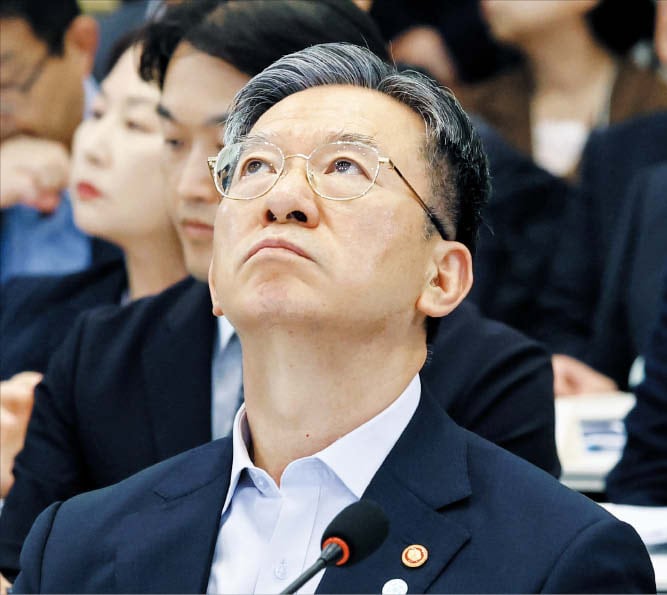
When President Lee once more inquired if prosecutors’ investigations are “forbidden,” Vice Minister of Justice Lee Jin-soo stated, “The updated bill is structured in a way that prevents prosecutors from fully exercising their investigative powers,” and “If prosecutors directly get involved in investigations, it could lead to issues regarding illegal probing, making it challenging to sustain the current JIH system.” This suggests that all existing JIHs must essentially be shut down.
As the Ministry of Justice declared that current JIHs are unlawful, Minister of the Interior and Safety Yun Ho-jung commented, “In the future, won’t there be JIHs involving the public prosecution office, the serious crimes agency, and the police?” and “Although prosecutors from the public prosecution office do not have direct investigative powers, they can offer opinions on investigations.” This implies that similar structures to the JIH could still exist. However, Minister Jung Sung-ho strongly asserted, “There is no foundation for joint investigations including public prosecution office prosecutors.” President Lee questioned, “What will happen to the JIH?” and added, “We need to think about this in advance before the law comes into effect on October 2.”
Concerning President Lee’s statement that he “had not reviewed the updated bill,” a representative from Cheong Wa Dae mentioned, “The content of the updated bill underwent multiple changes during the National Assembly discussions,” and “It appears he is aware of the key aspects but did not go through each specific clause.” Some people believed that President Lee deliberately acted unaware. A member of the ruling party stated, “While pretending not to know, the president strongly advocated for reducing side effects.” Nevertheless, a legal expert noted, “As the president is a legal professional, he should be well aware of how risky and full of gaps this revised bill is,” and “It seems he pretended not to know in order to avoid responsibility for enacting the bill.”
The opposition party called the conversation between President Lee and his ministers “shocking.” Park Hyung-soo, the floor leader of the People Power Party on the National Assembly’s Legislation and Judiciary Committee, commented, “It was absurd and ridiculous to see them discussing matters that should have been considered before pushing the bill through,” and “Doesn’t this imply that the president didn’t even hear the desperate appeals from crime victims against the legal changes?” Park Choong-kwon, the chief spokesperson of the People Power Party, noted, “The president chaired the Cabinet meeting without even reviewing the content of the revised bill,” and “This reflects careless governance that values improvisation over legal procedures.” Professor Cha Jin-a from Korea University stated, “How can prosecutors from the public prosecution office, who don’t have investigative powers, offer advice on investigations?” and “This system is not sustainable for long.”



Leave a Reply