
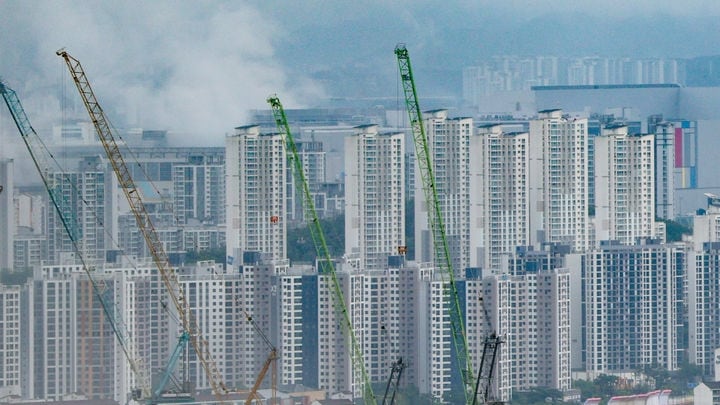
The authorities are seeking to prolong a specific clause that provides a grace period for the “actual residency requirement” for properties within land transaction permit areas, which is scheduled to end by the end of this year. This initiative intends to maintain the ability to conduct rentals after next year, thus boosting the number of available apartments in Seoul and Gyeonggi provinces.
A senior representative from the Ministry of Land, Infrastructure and Transport shared with this newspaper on the 9th, “We will make sure that individuals cannot be prevented from selling their properties because of the permit system, even if they want to sell them due to changes in tax regulations,” and mentioned, “We are considering extending the grace period for the actual residency requirement.” Although the specific length of the extension has not been finalized, it is said that it may continue until 2028, when the temporary reduction in the heavy transfer tax for multiple homeowners is scheduled to expire. The official statement is anticipated to be released after September.
At present, buyers across all of Seoul and 15 cities and districts in Gyeonggi Province, under the land transaction permit system, are required to move into the purchased property within four months of transaction approval. Properties that do not have immediate lease expirations are essentially not for sale. To address a significant drop in available listings, the government introduced a special measure in May that allows non-homeowners to buy such properties, with the residency requirement postponed until the end of the lease term. This measure was initially set to expire at the end of this year.
Amidst this, the government unveiled a tax reform initiative that puts pressure on non-resident single homeowners and those with multiple properties to sell their homes starting next year. Although the policy urges them with the message, “Sell your home if you don’t want to pay higher taxes,” the land transaction permit system prohibits the sale of rented homes, resulting in a “policy contradiction.” This has prompted the choice to prolong the special provision. Opponents claim that the government’s regular application of rules and exceptions is weakening the consistency of its policies. Lee Eun-hyung, a researcher at the Korea Research Institute for Construction Policy, remarked, “The government’s tax reform plan has turned into a ridiculous scenario where it is effectively canceled without exceptions to the land transaction permit system,” and added, “This is the government itself acknowledging that the broad permit system was overly restrictive regulation.”




Leave a Reply