
A lengthy history exists involving oil companies and their promotional deals, especially during the time before service stations evolved into convenience stores.
At a particular moment in relatively recent history, the selling of fuel appeared to take a backseat to promoting ready meals, toiletries, and nearly any other item you can imagine to drivers.
That approach began in the 1980s as drivers grew increasingly disconnected from the inner mechanics of their family sedans and hatchbacks, which were becoming more generic – yet also more dependable.
Now, that shift of the automobile into purely ‘white goods’ is fully realized; however, compare this to the late ’60s and early ’70s, when drivers opened the hoods of their cars at least once a week (sometimes even before the oil warning light appeared), and when even my non-driving, fully registered pedestrian grandfather could distinguish between the sound of one neighbor’s exhaust.Ford Anglia and another’s Volkswagen Beetle.
My recollection takes me back to the time when two-, three-, four-, and even full-fat five-star gasoline was common: no one had ever heard of lead-free fuel.
A period in which the self-service pumps we currently use are nearly everywhere, but the smelly DERV pump was still relegated to a solitary, dirty part of the forecourt. That’s if it could be seen at all.
Prior to the mid-1980s, very few people—except for black-cab drivers—operated oil-burning vehicles, particularly outside the realm of heavy freight transport.
A gas station was neither a shopping experience nor a chance.
Only a Twix, a Mars Bar, and a Kit Kat were available in the forecourt ‘shop’ (each somewhat more filling than today’s versions), along with maybe a road map, some cans of polish, and a few interior air fresheners.
Sometimes, there was an opportunity to use one of the modern automatic car washes that removed your windshield wipers and side mirrors, but most people in the 1970s still washed the family vehicle themselves.Ford Cortina or Austin 1100by hand on a Sunday morning, before getting comfortable with a copy of the News of the Worldor observing Brian Walden conduct an interview with a Member of Parliament onWeekend World.
Today, you might find it difficult to find the small range of overpriced engine oil, fuel containers, and coolant, but in the 1970s, gas stations occasionally sold high-cost items like fan belts, batteries, and even tires for widely used car models.
The ‘offers,’ however, in Britain, typically consisted of Green Shield Stamps and a collection of glasses.
It comes as no surprise that the Americans envisioned grander plans – the same was true for the Canadians, especially during the country’s 100th anniversary year in 1967.
As the modern road system became fully accessible, an increasing number of Canadians aimed to explore the country by car, especially during the year when Canada hosted the World’s Fair – Expo 67, which commenced in Montreal in April of that year.
The different oil companies – Fina, Supertest, Texaco and others – recognized a promising marketing chance: more driving led to higher fuel sales, and everyone involved aimed to capture a larger portion of this more substantial market.
Therefore, they were not particularly delayed in devising thrilling contests.
From these, the successful participants might end up with a newFord Mustang or Mercury Cougaron their driveways, perhaps a color television in the living room (a significant item in 1967, as color programming was only beginning to emerge), or simply a cash reward.
Imperial Oil, which had begun employing the Esso brand, aimed to take it a step further.
The initiative aimed to support the development of four custom-designed dream vehicles that would be distributed through a promotional prize draw as part of the Esso Road Show, which was closely linked to the company’s sponsorship of the hockey league.
The public relations team hoped that the successful participants would drive the vehicles for a minimum of one year before considering selling them, with the intention that they would act as moving advertisements for Esso.
The company pledged free gasoline, insurance, and maintenance for a year on vehicles that would meet all Canadian traffic regulations (and keep the original manufacturer’s warranty), and, most importantly, be ‘family-friendly’ for what was to be charged as ‘the most creative travel prize ever created’.
The vehicles were set to play a major role in television commercials and would even include a unique folk-like tune composed for them.
There were ‘instant’ rewards such as cameras and television sets, but to win one of the cars, participants needed to gather five road safety tip tickets from the 2400 Canadian Esso gas stations in order to be eligible for the draw.
The victors would subsequently be revealed on the radio and in newspaper ads during May, June, July, and August of 1967, with the prize vehicles showcased at the World’s Fair, different shopping centers, and Esso gas stations to generate excitement.
Clearly, the promotional vehicle would need to be derived from a current model – but which one?
The choice was entrusted to a particular George Barris, known in Hollywood as the ‘King of kustomizers’.
In addition to designing custom glamour vehicles for stars like Elvis, Bing Crosby, Frank Sinatra, and Dean Martin, Barris, who was already a renowned figure, gained even more recognition for creating TV’s Munster Koach and, most notably, the Batmobile.
He quickly sided withOldsmobilethen still relatively newToronado.
It appeared advanced when first seen, but importantly, as a front-wheel-drive vehicle, it lacked a driveshaft, allowing Barris to modify the wheelbase freely without impacting the powertrain.
Four brand-new, $6373 7-liter Toronados were transported from Lansing, Michigan, to the Barris Kustom Industries workshop in Hollywood, where, around the same time, George was likely working on the Toronado-inspired roadster for theMannix television series.
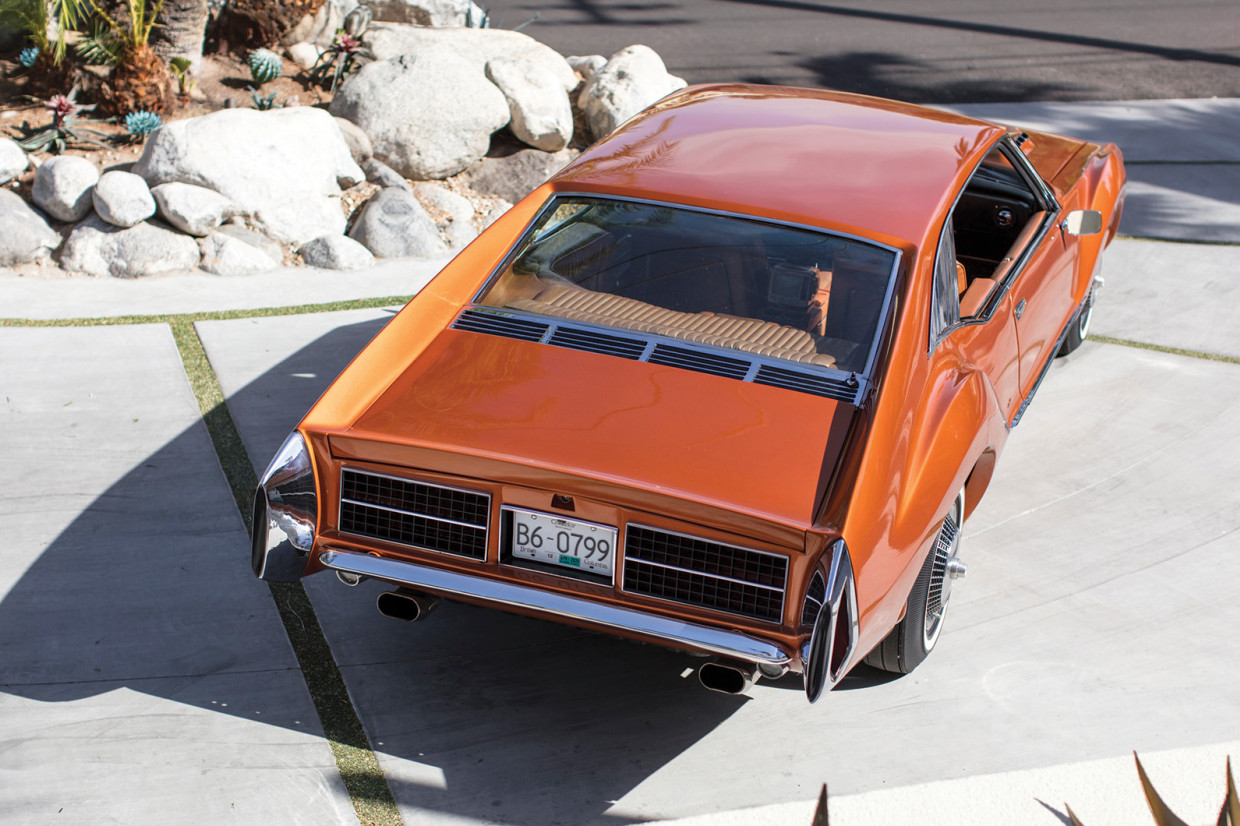
While the MannixThe Toronado had its roof removed, while the Esso-backed vehicles, reportedly costing $52,000 apiece to construct, were split in two and their wheelbases lengthened from 119 to 134 inches, resulting in an impressive total length of over 20 feet.
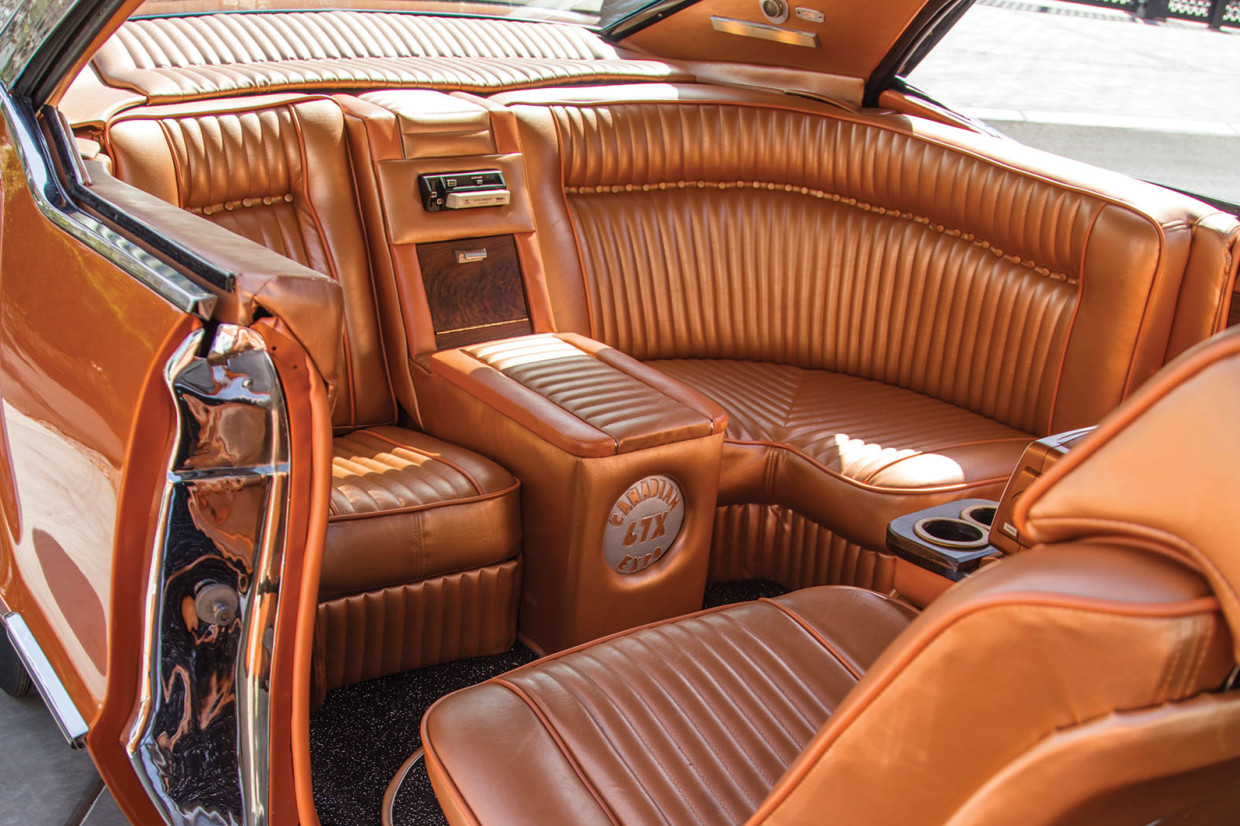
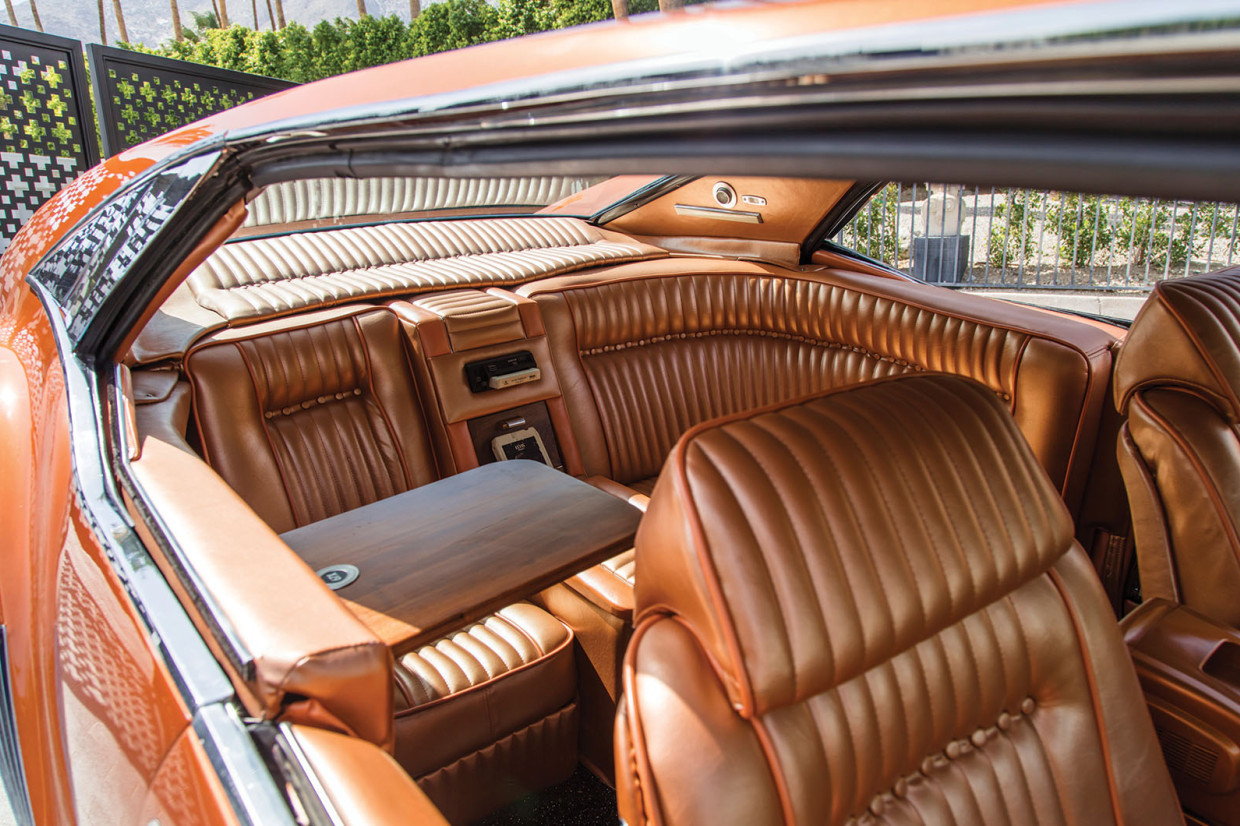
The standard five- or six-seat Toronado did not have a particularly small interior, but the 67-X featured an exceptionally large cabin with space for a wraparound, sofa-style rear seat.
In addition to full air conditioning, tinted glass, and the standard Toronado features, Barris equipped his Esso 67-Xs with dual FM/AM radios in both the front and rear (with headphones for backseat passengers), along with two stereo tape players in the ‘hand-rubbed’ Brazilian walnut center console.
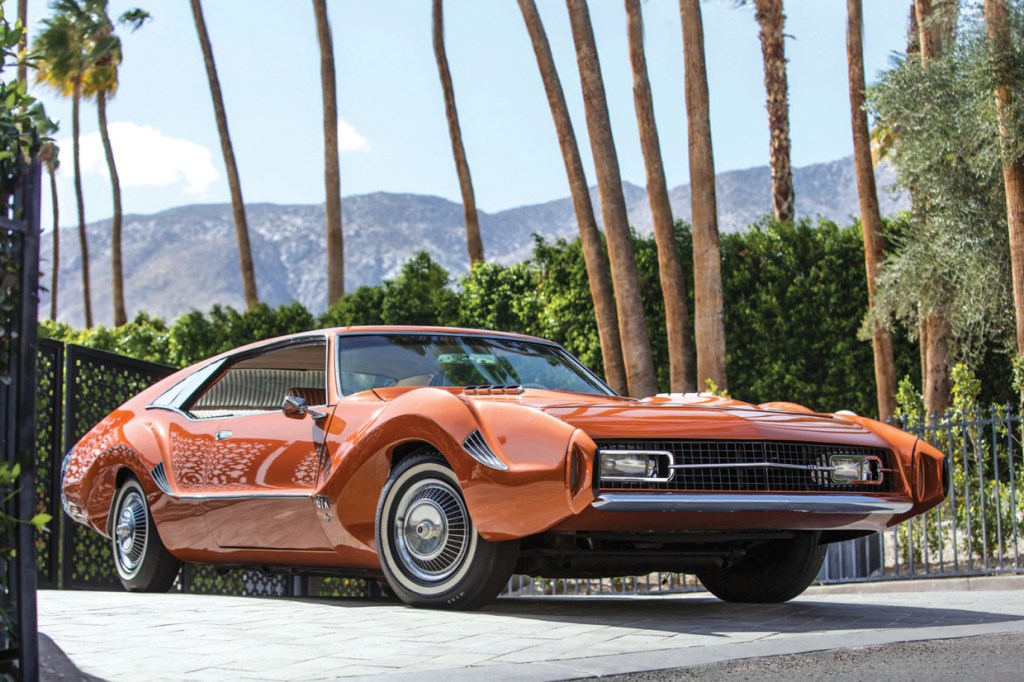
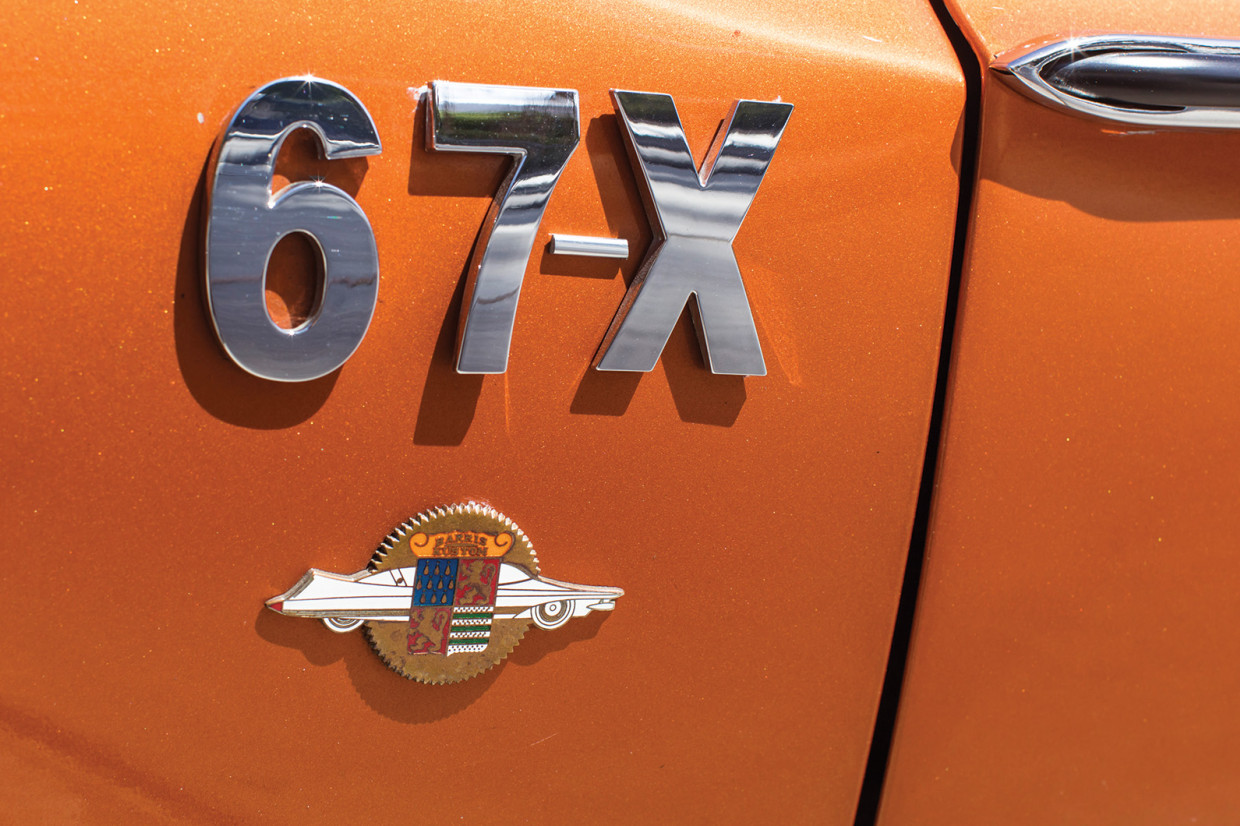
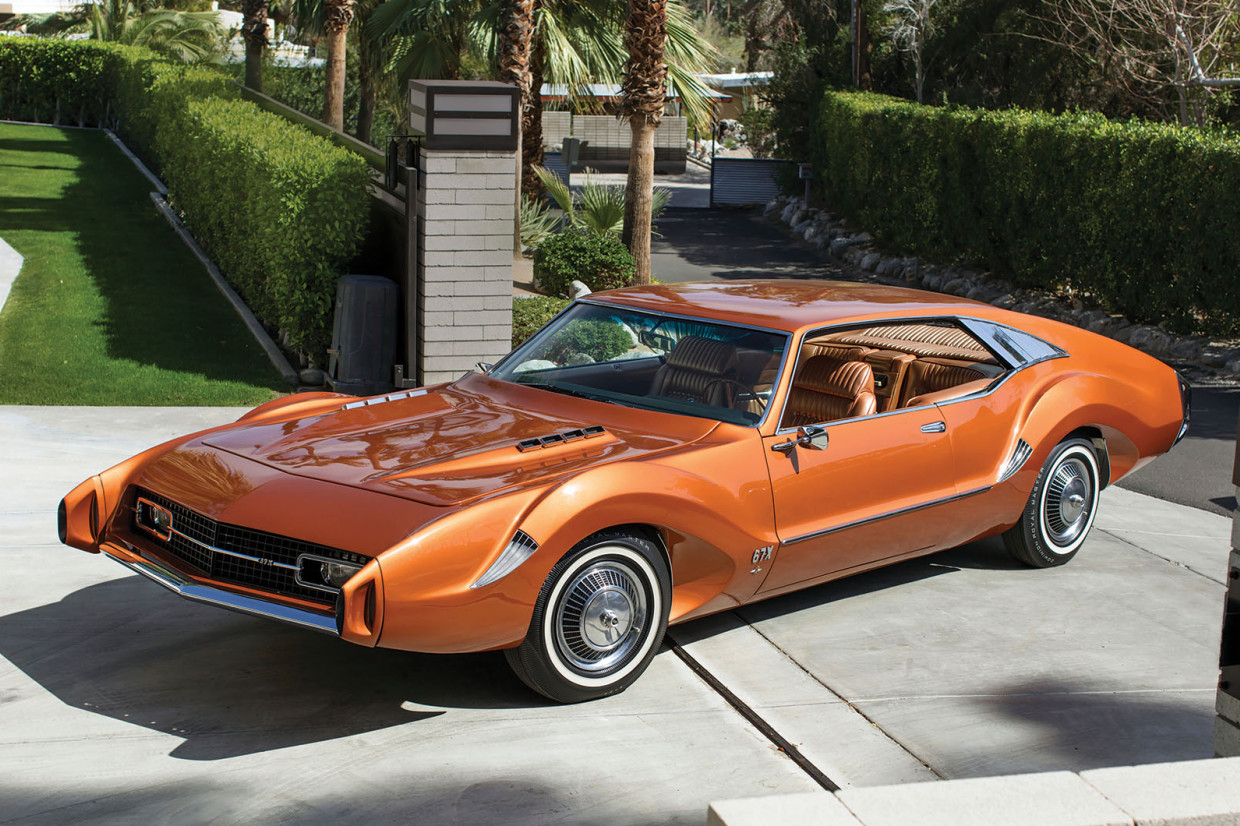
Two vehicles were coated in gold, while one was completed in burgundy red and another in avocado green.
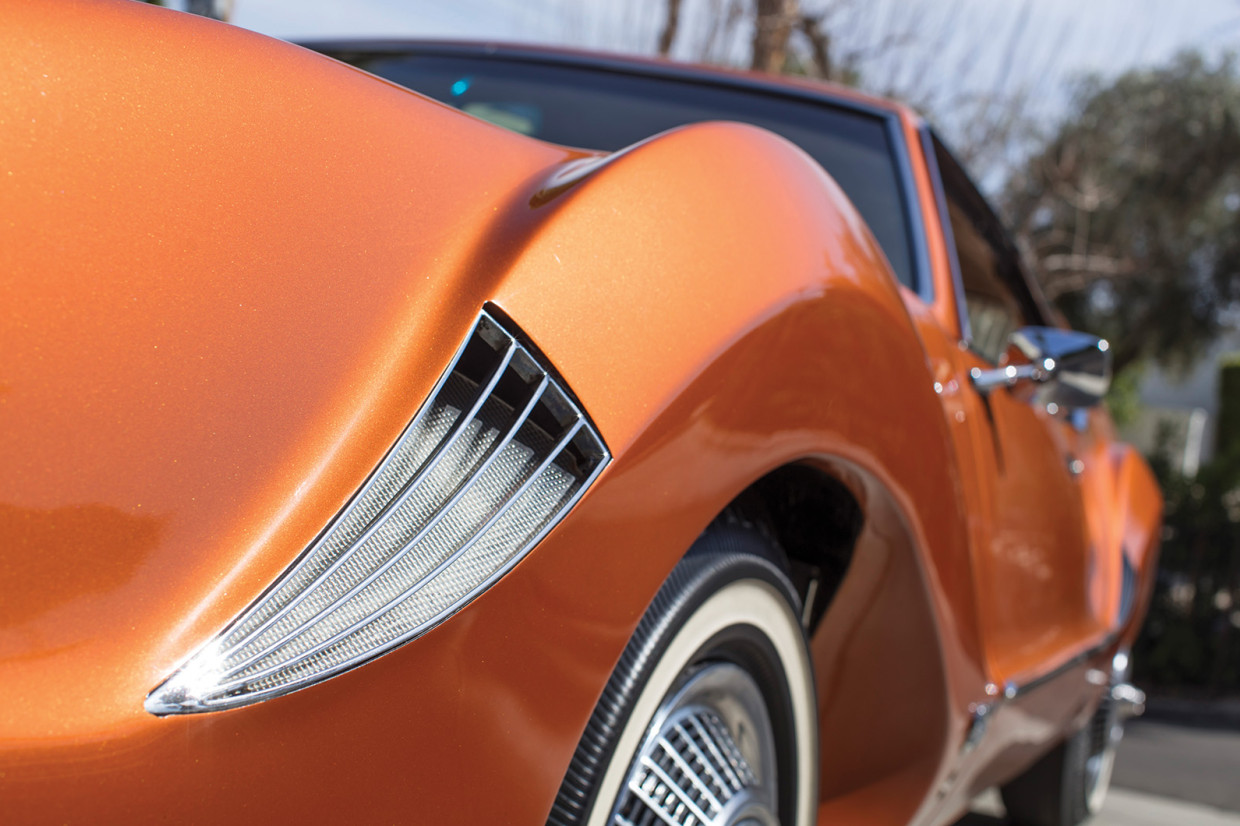
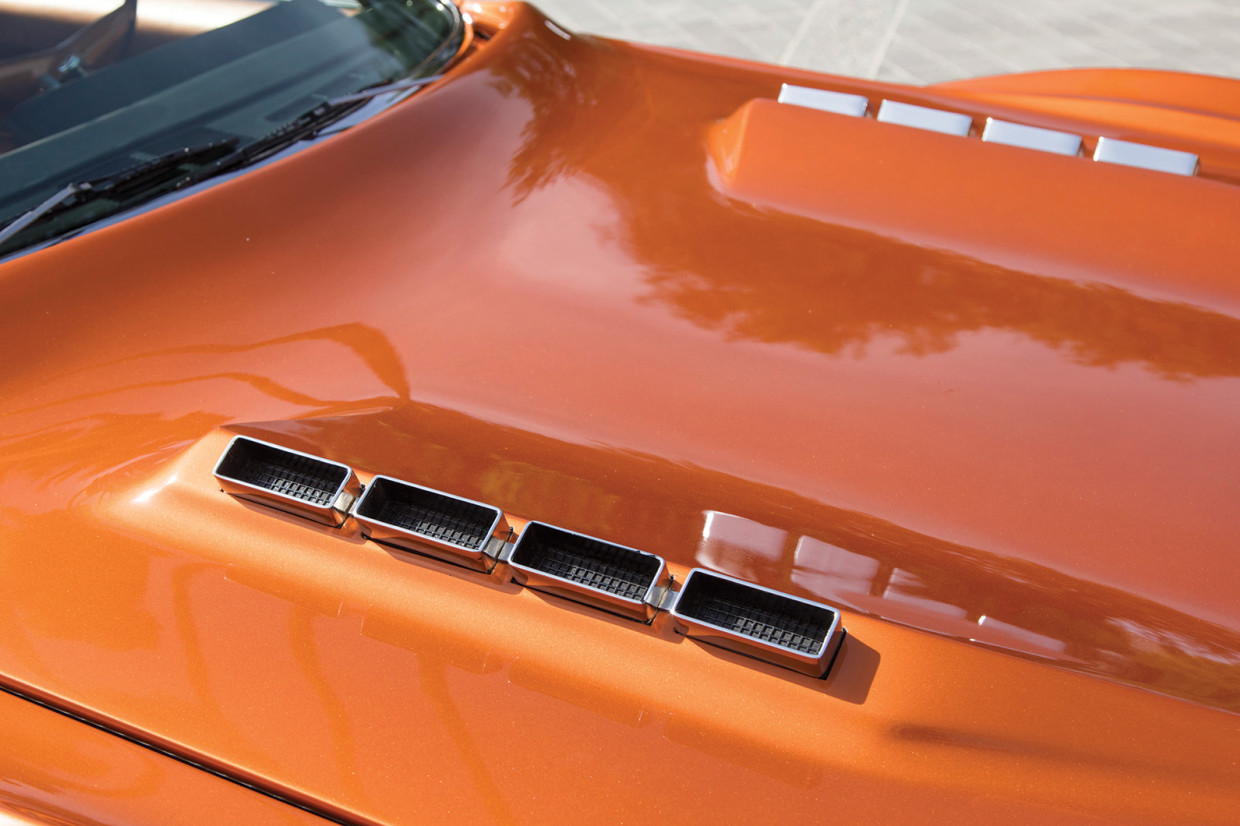
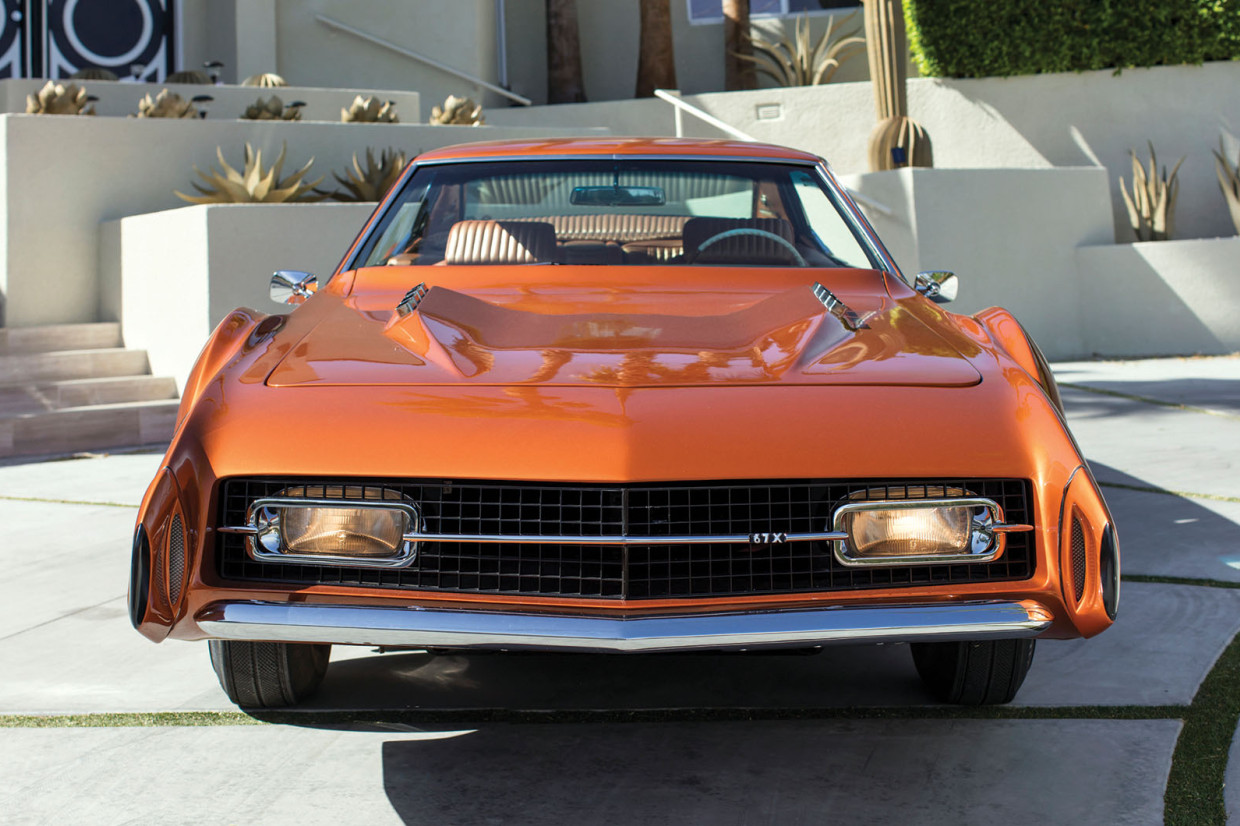
In addition to the front ‘screen and standard door frames, all external features were visually modified: the hood developed two large bulges, each featuring four portholes, while the smooth front end was replaced by an eggcrate grille with four circular fixed headlights (which have since been changed to twin oval units on this vehicle).
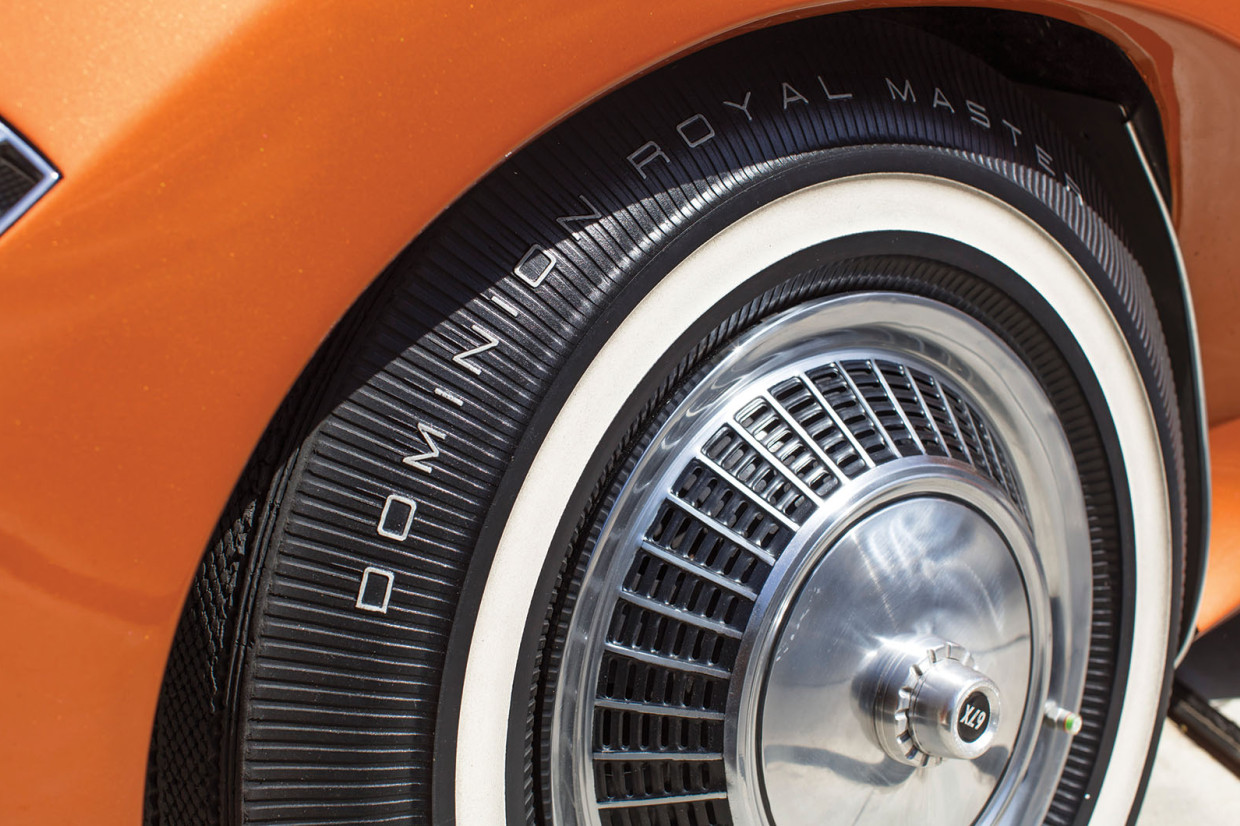
The prominent front and rear wings were crafted from glassfibre, while numerous decorative elements – such as wheel covers, door handles, and bumpers – were custom-made, offering no indication of their Oldsmobile heritage.
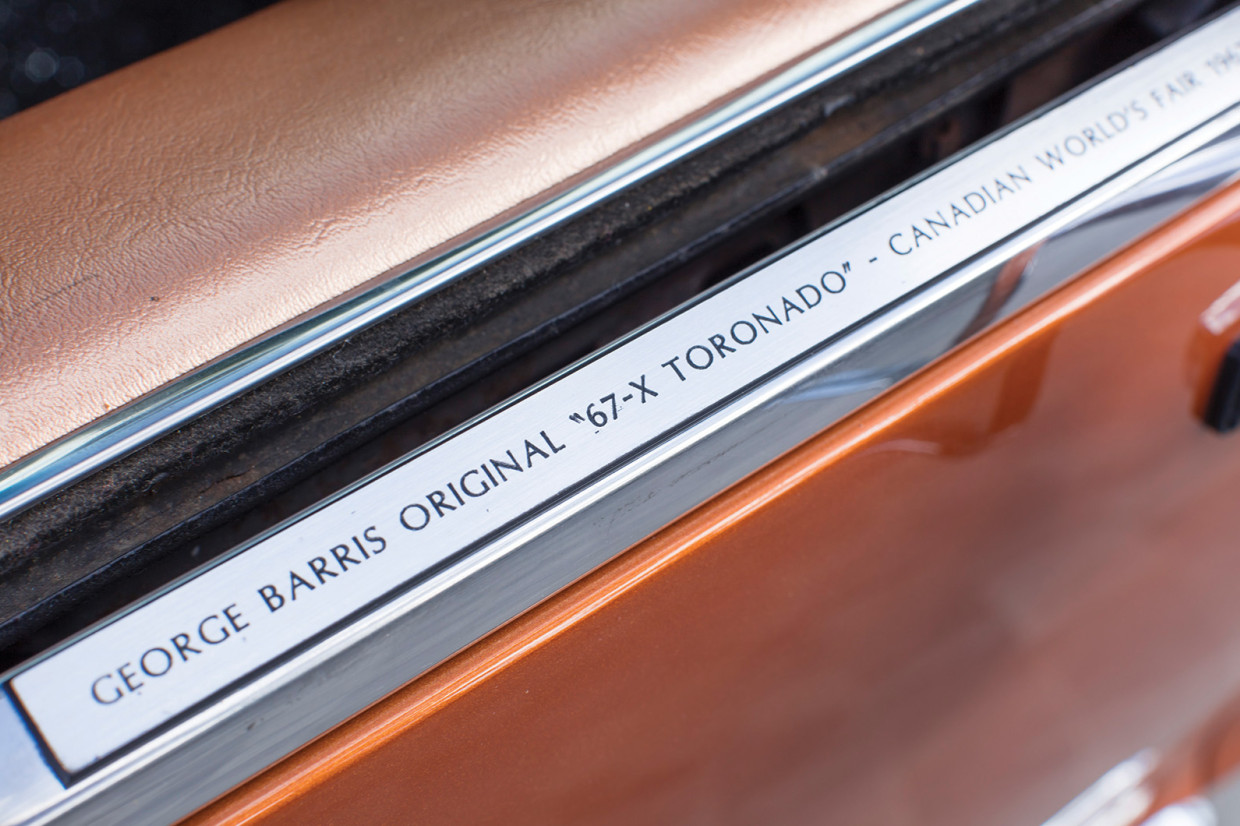
A Mr. W.C. Hackett from Edmonton was the initial winner of the Esso 67-X in May.
After taking the 52-year-old Hackett to Hollywood for promotional filming, Esso handed him one of the gold vehicles.
He held onto it for a year and 24,000 miles until he couldn’t resist an offer from a dealer in Toronto.
Number two car, the one shown in the example, was given to 53-year-old Walter Scales from British Columbia; he also sold it when the free fuel, insurance, and maintenance stopped, and returned to driving his own vehicle.Volkswagen Beetle.
The third instance involved a French Canadian named Michel Bussière.
He sold it in 1969 for $10,000, which was sufficient to purchase him a newChrysler and a campervan.
This later vehicle has since vanished, along with a fifth 67-X George Barris constructed for his own use as a tow car (it was also featured in a photo session promoting crooner Dean Martin’s Golddiggers, his all-girl Las Vegas performance group).
The fourth example, the red vehicle, has remained within the family since the 1980s.
It was introduced in August 1967 to 26-year-old Paul Sparrow, aVauxhall Viva-a laboratory technician from Fort William, Ontario, who sold it after half a year to support the purchase of their first home for their young family.
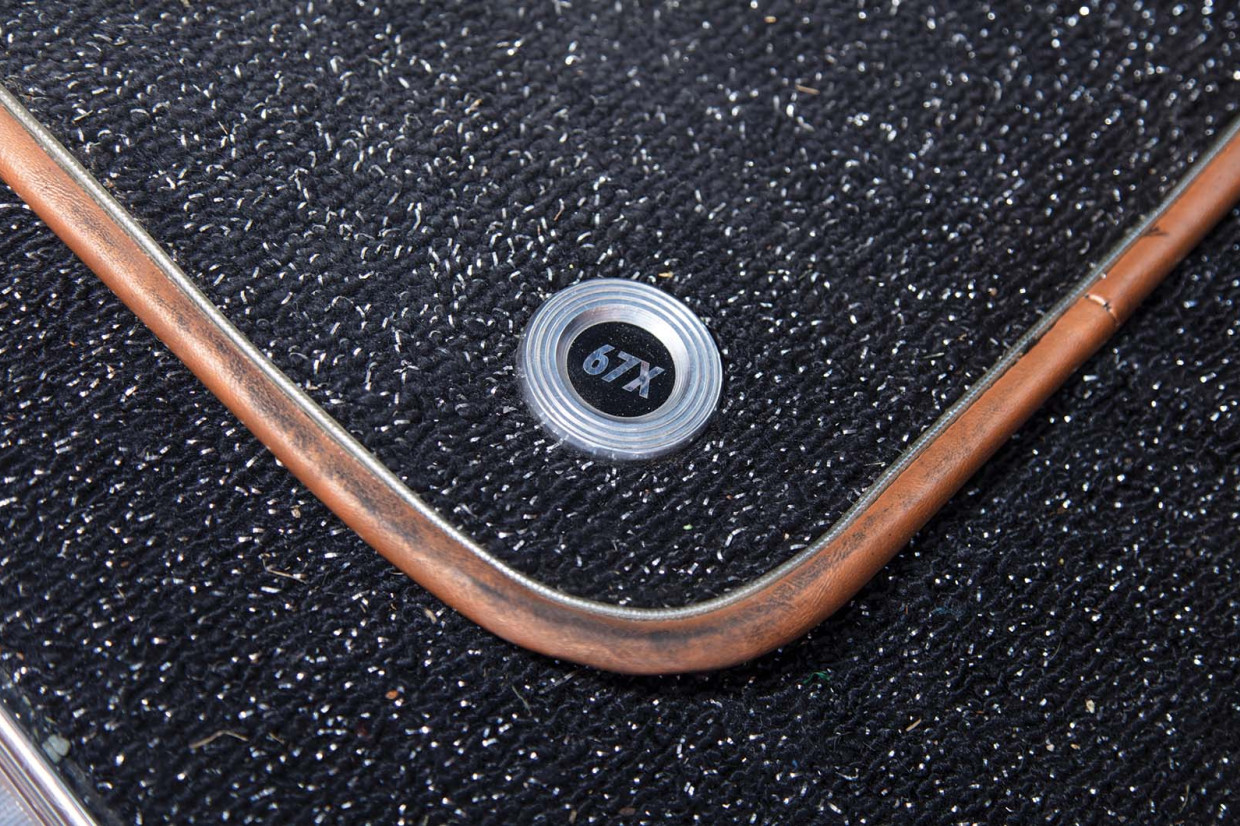
In addition to its massive dimensions, all the winners discovered that the level of attention the 67-X received in public was often unwelcome.
They frequently came back to groups of amazed onlookers standing five deep, or were constantly stopped by the police, usually just to ask about the vehicle.
Among the three recognized survivors of 67-X, car number two likely has the most vibrant background.
The second owner, starting in 1970, was a rancher who quickly transferred it to the showy, trumpet-playing Vancouver restaurateur Frank Baker, who utilized it to advance his enterprise.
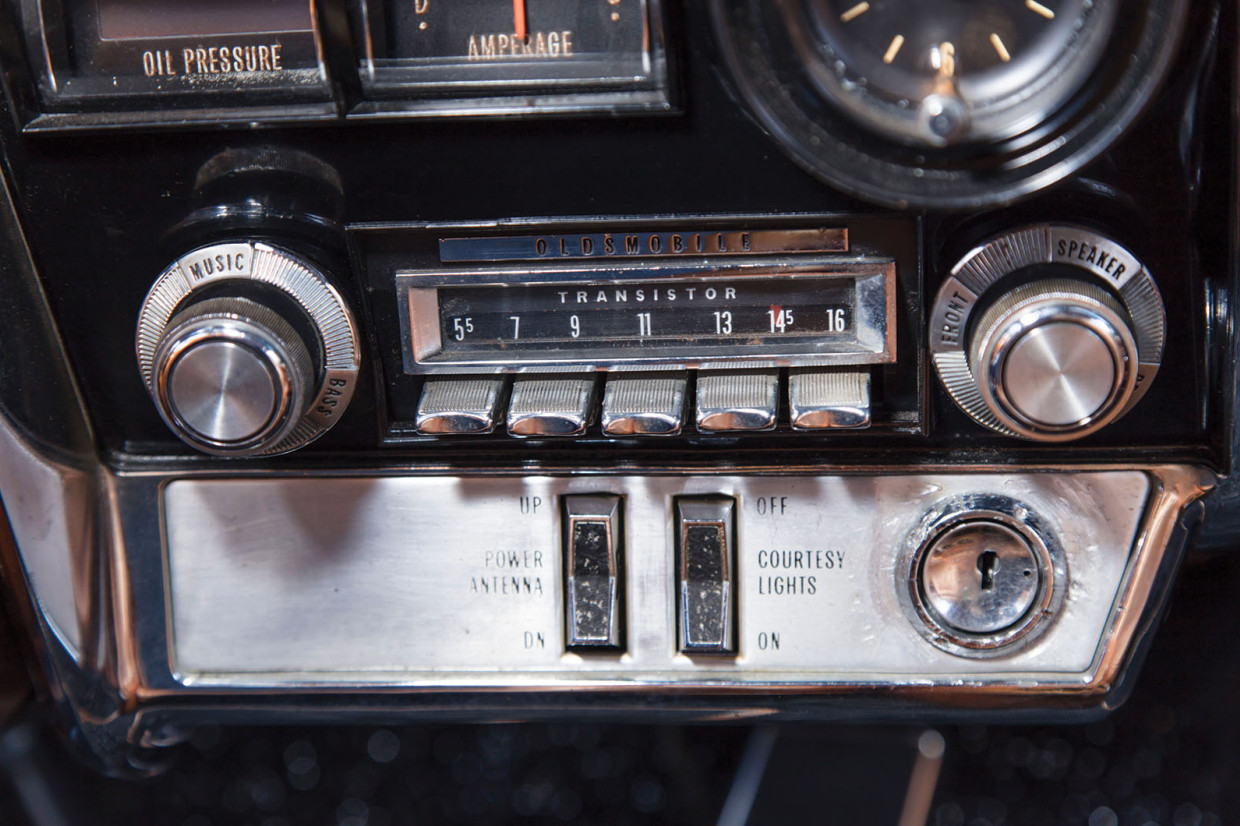
Baker also possessed one of theGoldfinger Aston Martin DB5sbut he had to sell both vehicles when his restaurant closed in the 1980s.
From that location, the 67-X moved to the United States and appeared on eBay in 2011, which is where Trevor Weflen, a collector based in Palm Springs, first encountered it, initially noticing it in the background of an ad for a different vehicle.
Originating from Saskatchewan, Trevor recalled the 67-X from the initial contest.
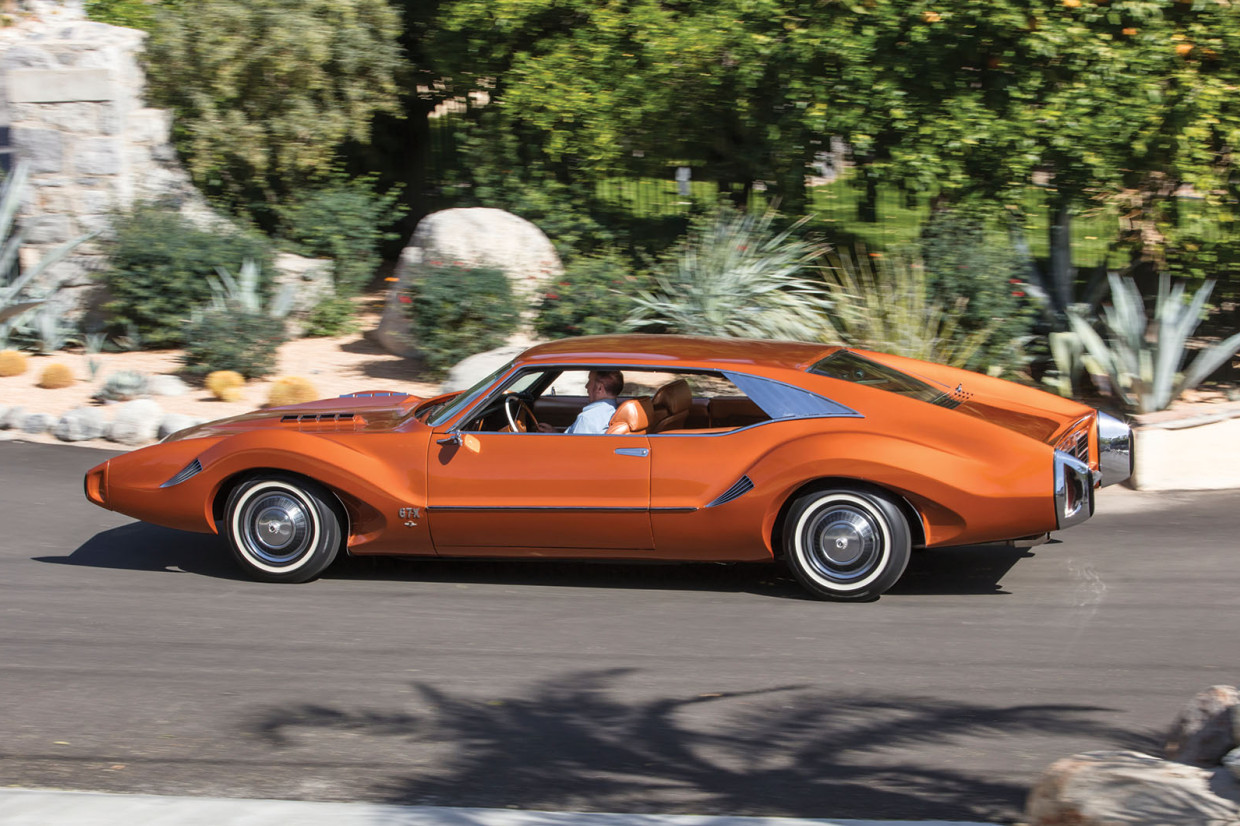
The large coupe was said to have undergone a recent $99,000 restoration, so Trevor purchased it without seeing it in person, only to discover it had numerous electrical issues – “only the speedometer was functioning” – and an engine that was somewhat worn, although the body and paint were in decent condition.
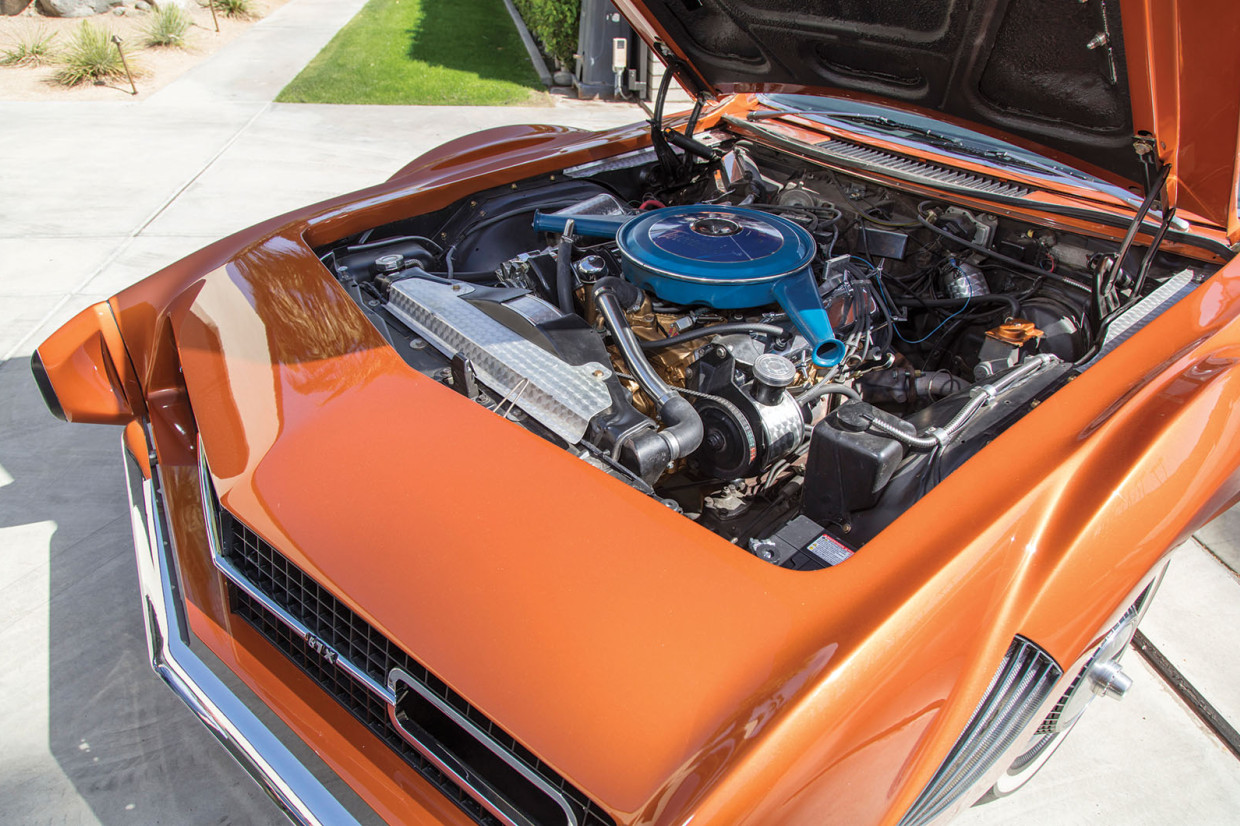
The engine issues were resolved by installing a newly overhauled engine block from a later model, 7.4-liter vehicle.
After training in the Royal Canadian Air Force as a metal technician, and running a thriving custom upholstery business, Trevor has always been and remains quite skilled with tools.
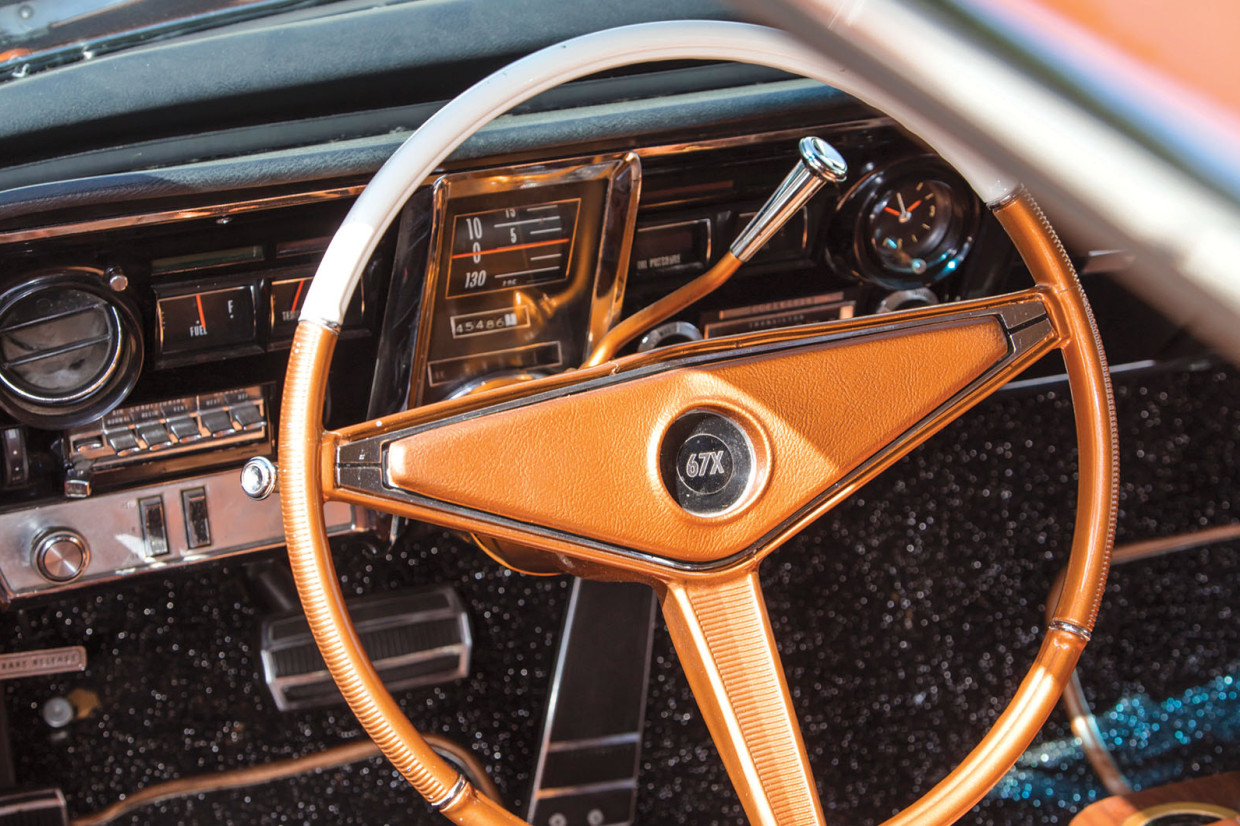
He managed to restore the front suspension on his own and reupholster the interior with his favorite color of copper vinyl, instead of the original grey.
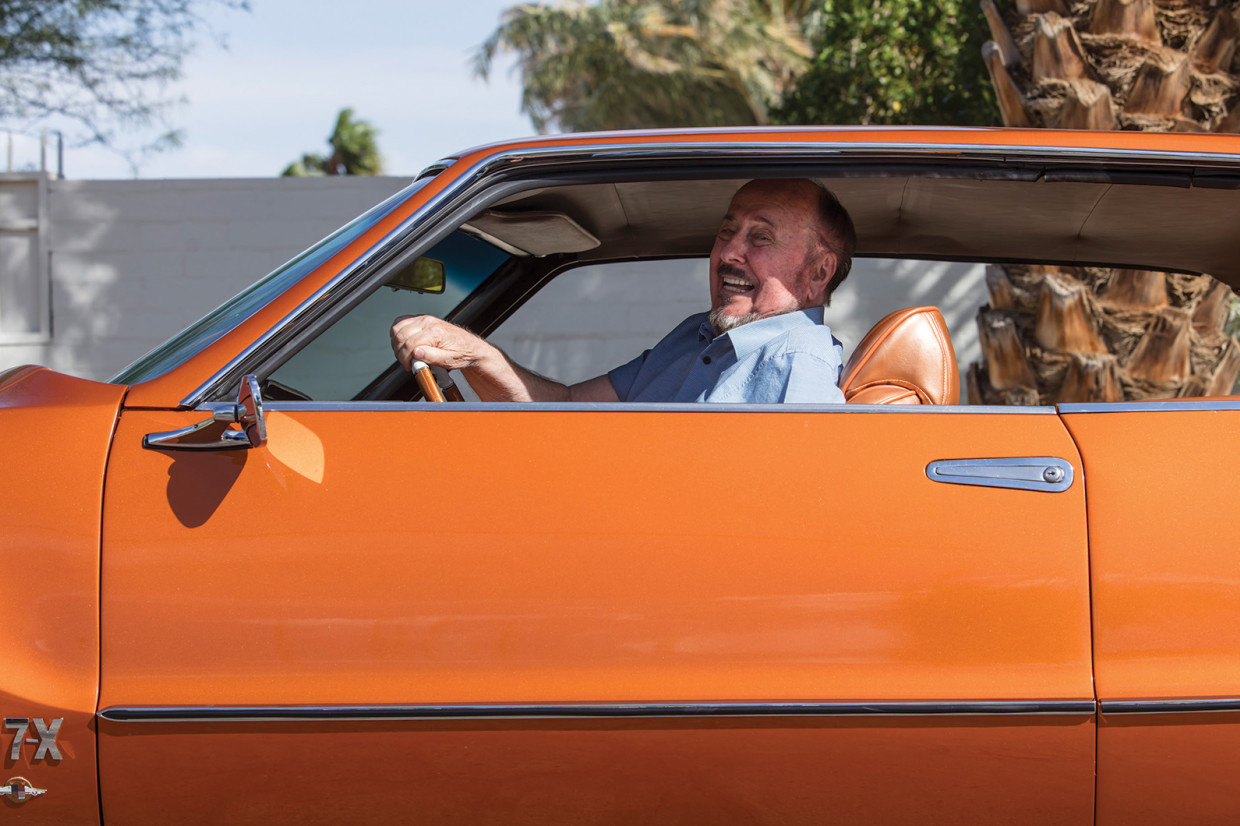
As standard (on the original Toronado), the large, frameless doors are still likely the longest components ever installed on a production vehicle.
The Esso 67-X’s Barris-enhanced extended wheelbase is most evident in the longer rear side windows, although rear visibility over the shoulder is limited due to the large C-pillar.
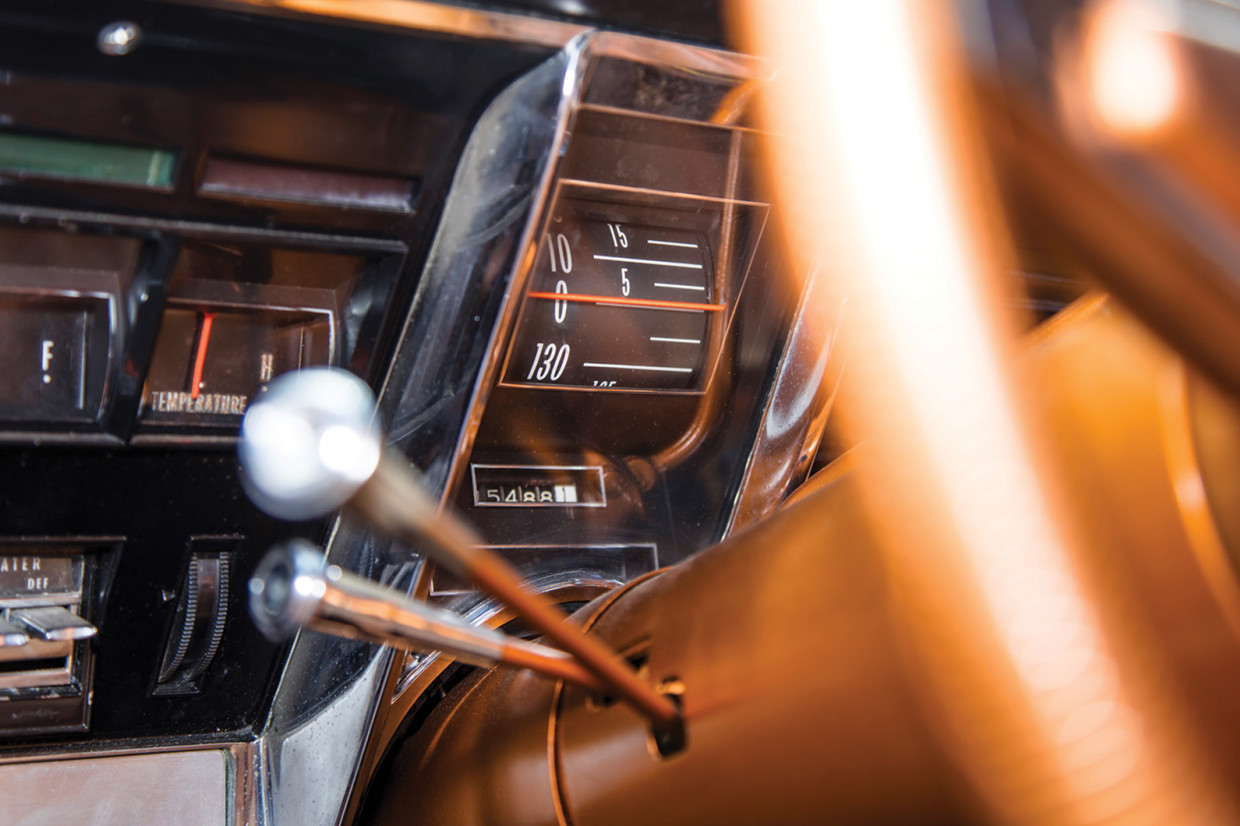
The dash is standard on the Toronado, but the front seats are individual buckets: the driver’s seat is power-adjustable, while the passenger seat can rotate to face the rear seats, which offer legroom comparable to a limousine, along with built-in trash bins, reading lights, and even a compartment for storing toys.
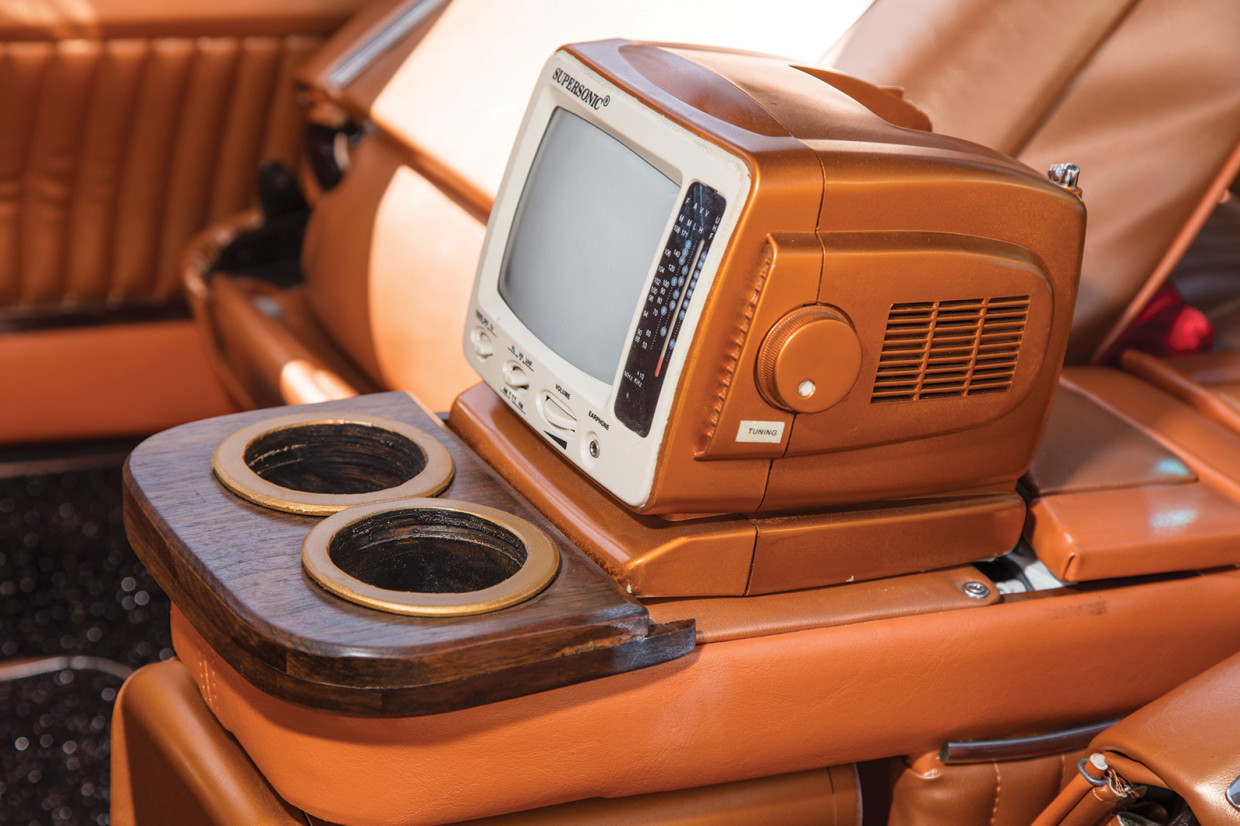
The picnic cooler was included in the initial design, but, as far as I can tell, the small black-and-white television on the center console appears to be a later addition, yet it fits well with the concept of a car designed as a long-distance traveling living room.
Beneath the hood – spacious enough to accommodate a jump-jet landing – it appears largely similar to other Toronados, featuring a side-mounted GM400 transmission powered by a strong and quiet chain, with power directed to the front wheels.
At best, the 67-X offers a smoother ride than the regular car due to its extended wheelbase, potentially enhanced by the fact that Trevor, who drives approximately 200 miles annually in it to attend local events, discovered a unique pair of TFD (Toronado Front Drive) tires designed exclusively for the standard model.
The strongly supported steering and brakes lack sensitivity, yet the 67-X moves eagerly where directed, with an unexpected absence of fuss.
It is not at all sluggish, offers powerful low and mid-range torque, and operates with minimal noise.
You are barely aware of the transmission and only a faint sound of distant movement as it speeds off. It is exactly what you would anticipate from a large, swift American coupe from the 1960s.
The 67-X might just be the largest reward ever offered in a gas station contest, and it’s definitely the most creative.
It may not be a significant visual upgrade compared to the standard Oldsmobile Toronado, but it’s better than collecting 1500 books of Green Shield Stamps to obtain a Mk1 Ford Escort.
Images: Pawel Litwinski
Acknowledgments: Trevor Weflen, Donald Osborne, Jeff Stork and Scott King
Factfile
Esso 67-X
- Sold/number built 1967/five
- Constructionsteel outer frame, steel structure
- Engineall-iron, OHV 6967cc V8, four-barrel Rochester carburetor
- Max power 386bhp @ 4800rpm
- Max torque 475lb ft @ 3200rpm
- Transmission four-speed HydraMatic auto, FWD
- Suspension: frontindependent, by wishbones, torsion bars, anti-roll barrearbeam axle, single-leaf suspension; telescopic shocks front and rear
- Steering power-assisted recirculating ball
- Brakes drums
- Length 20ft 1in (6121mm)
- Width 6ft 6½in (1994mm)
- Height 4ft 5in (1346mm)
- Wheelbase 9ft 11in (3023mm)
- Weight 4570lb (2073kg)
- 0-60mph 8.7 secs
- Top speed 126mph
- Mpg 11.8
- Price new $52,000
- Price now $250,000*
*Price accurate as of the original publication date
We hope you had a great time reading. Click the ‘Follow’ button to discover more amazing stories fromClassic & Sports Car.





Leave a Reply