

A fascination with stargazing took hold of the country on Wednesday evening as millions were amazed by the rare solar eclipse.
As Britain endured the fifth heatwave of the year, an unusual and pleasant coolness arrived as the Moon obscured the relentless 30C sunlight.
Throughout the course of human history, eclipses have inspired awe, fear, and admiration. The mysterious feeling—when daylight momentarily transformed into an unusual dusk—led to a decrease in temperature, shadows appearing in strange directions, and animals acting strangely.
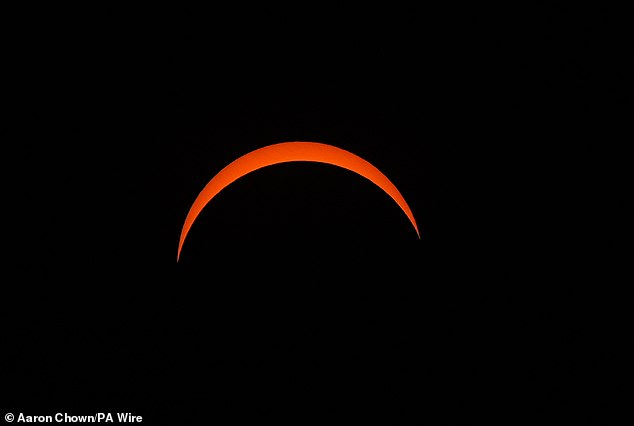
The sight of our Moon surrounded by a glowing ring caused excitement worldwide. Millions observed the celestial display with amazement, beginning when the Moon first covered the Sun’s right side just after 6pm in the UK.
It started at 6:08 pm inEdinburgh, 6.17pm in Londonand 6:18pm in Cornwall. The Moon slowly moved over the Sun’s face until it almost completely darkened the surroundings about an hour later. The ideal location to observe this event was the Spanish city of Burgos, where the total eclipse lasted almost two minutes with 100% coverage.
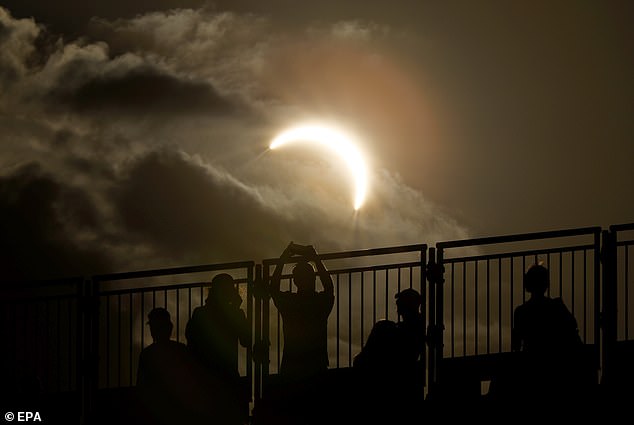
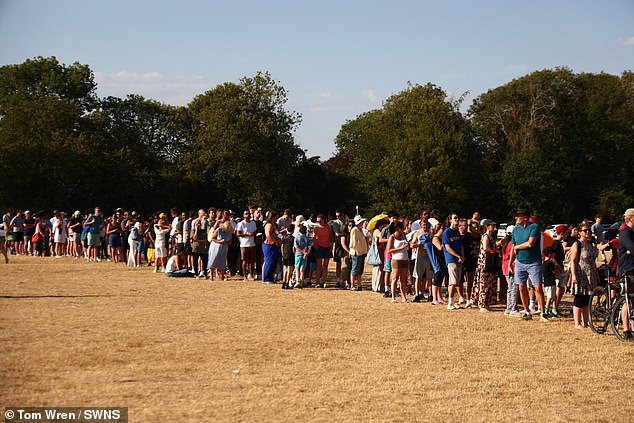
Laura Stewart, a 35-year-old attorney, was one of 500 people assembled on London’s Primrose Hill. She shared with the Daily Mail, “It feels completely magical.” Aja Lilit, 24, from Uxbridge in west London, remarked, “I can see the Moon and the Sun. I feel insignificant – yet also a part of it. This is just incredible.”
Exclamations of “wow,” “oh my god,” and “this is so cool” echoed through Greenwich Park in south-east London.
This was the first genuine solar eclipse in Britain since August 1999. That event was hampered by clouds, which spoiled the experience for many, but on Wednesday night, most of England experienced beautifully clear skies. The excitement spread across the UK, from Inverness to Penzance and further. The ideal location to witness it was Bishop Rock in the Isles of Scilly, where 96.5 per cent of the Sun was covered.
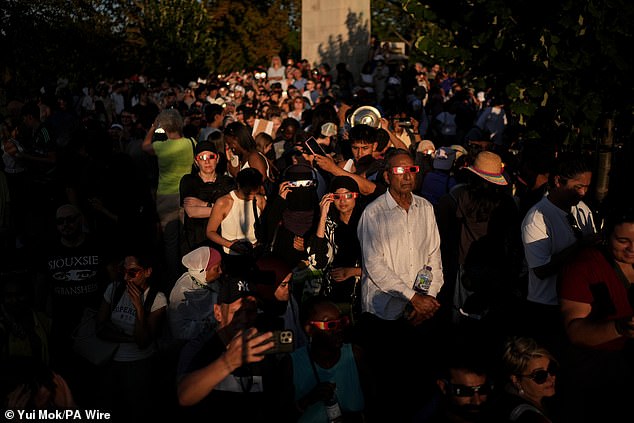
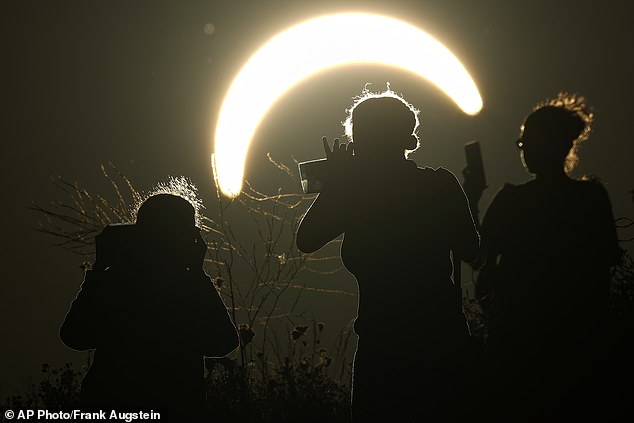
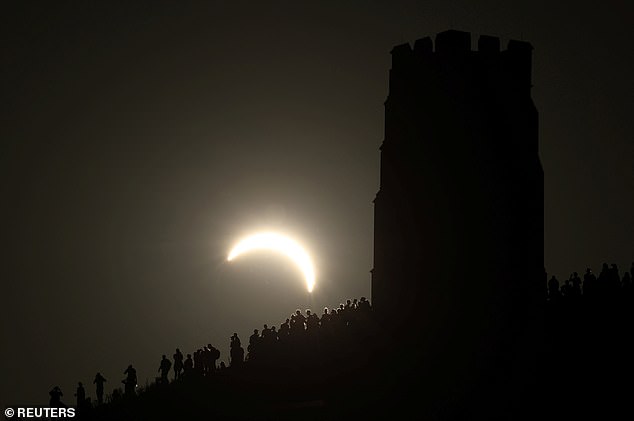
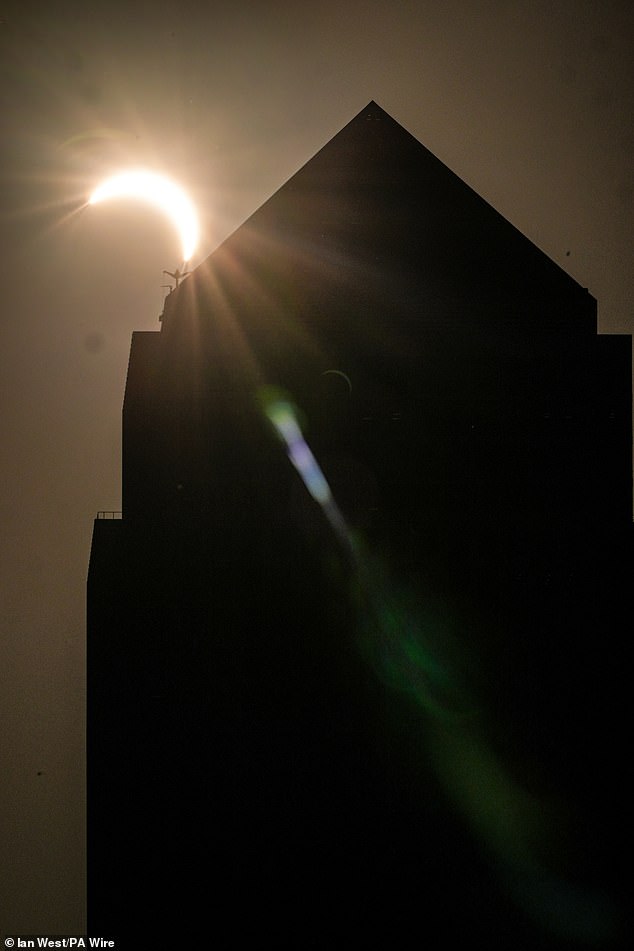
Devon, Cornwall, and the westernmost areas of Pembrokeshire in Wales also experienced excellent views. For those in Scotland and Northern Ireland, where clouds obstructed the view, the Royal Observatory Greenwich provided a live stream of the event online. A group at the National Space Centre in Leicester cheered loudly after counting down from ten. Benjamin Firmager-Lee, 12, who aspires to work for NASA, remarked: ‘It’s quite rare, so it’s really cool to witness.’
At Crosby Beach in Merseyside, a DJ performed “Here Comes The Sun” by The Beatles.
The subsequent solar eclipse observable in the UK will occur on November 14, 2050, with the next complete eclipse scheduled for September 23, 2090, at which point a child born today will be 64 years old.
On Wednesday evening, for a short period, the temperature dropped slightly, offering a temporary break from the UK’s heatwave, which is expected to result in 2026 being the warmest summer since the notable heat of 1976.
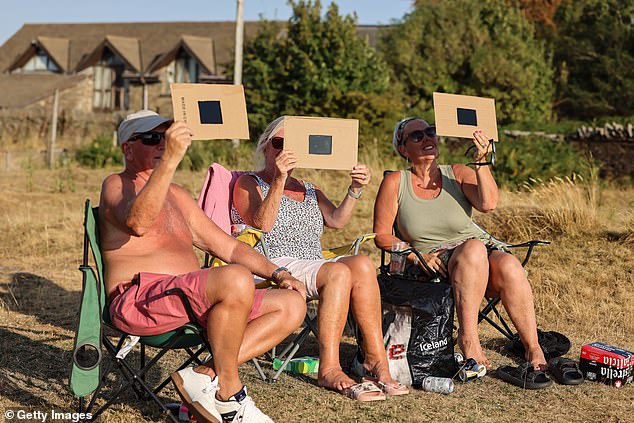
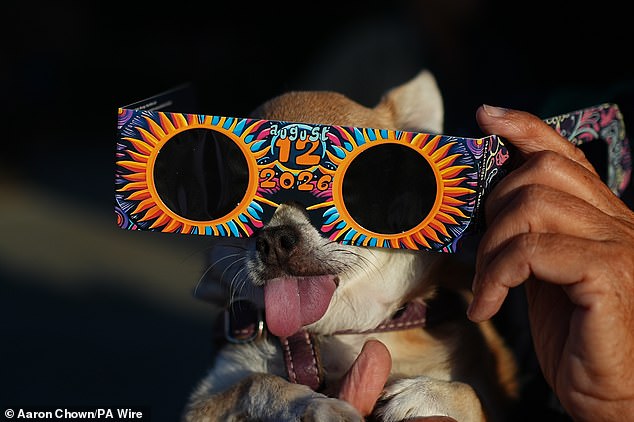
Eager members of the public waited for many hours on Tuesday night and Wednesday in an attempt to obtain solar eclipse viewers – the sole safe method for observing the Sun directly. Staring at the Sun even briefly can lead to irreversible harm to the retina, which does not sense pain.
Police in Bristol were contacted when a line for free glasses became ‘disorderly’, described as “a scene from the movie Independence Day”. A shrewd vendor was spotted selling them in London’s West End for £50 each.
In Rayleigh, Essex, Steven Hickey, 51, from Hickey’s DIY, stated: “It’s been non-stop. It’s complete chaos. I’ve never experienced anything like this since the [Covid] lockdown.” Cambrian Photography, located in Colwyn Bay, Conwy, saw customers lining up along the street as they rushed to buy 500 pairs within a few hours.
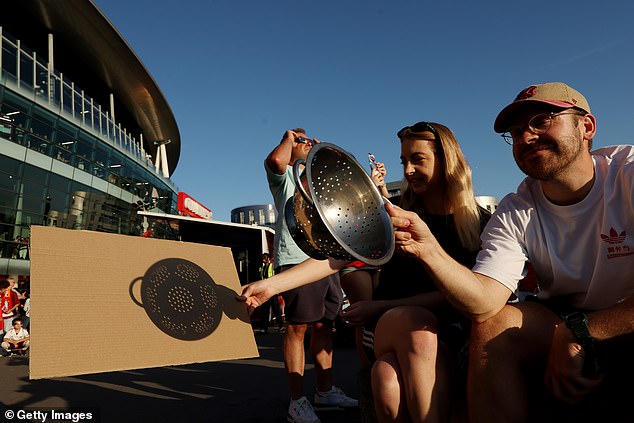
John Lewis reported that sales of colanders had increased by 40 percent following NASA’s suggestion to use the kitchen tool as a method to observe the shadows of circular holes transforming into crescents, instead of directly looking at the sun.
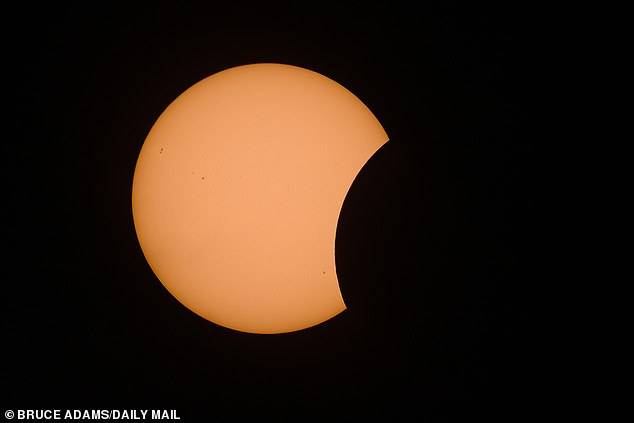
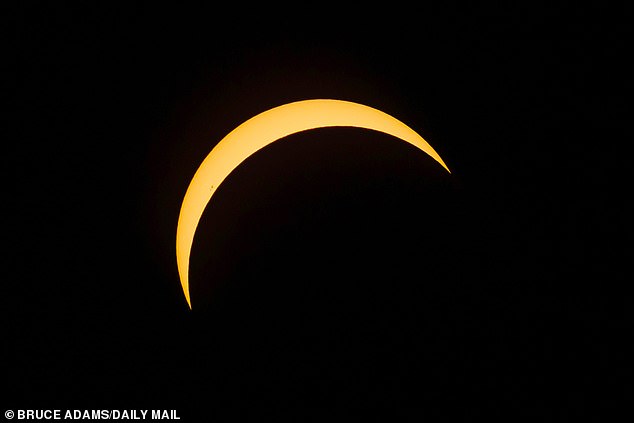
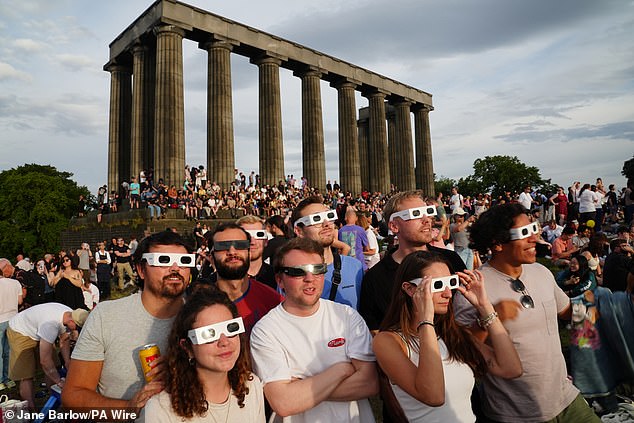
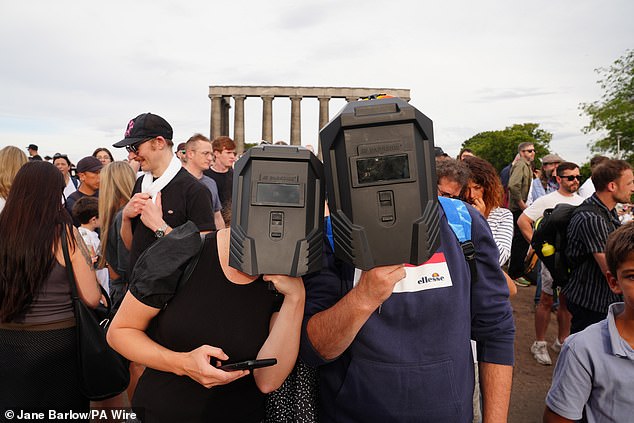

After the 1999 eclipse, hundreds contacted hospital hotlines due to blurred vision. The Royal College of Ophthalmologists reported approximately 70 instances where individuals experienced visual issues after observing the two-hour event for under a minute.
The occurrence of perfect solar eclipses on Earth is solely the result of an extraordinary cosmic coincidence. Although the Moon is roughly 400 times smaller than the Sun, it is also approximately 400 times nearer to Earth, which enables it to completely block the massive star.
As an astronomical finale, a few hours after the eclipse, the sky was filled with shooting stars as the Perseid meteor shower reached its annual peak, as the Earth moved through dust remnants from the Swift-Tuttle comet.
NASA researchers utilized Wednesday night’s eclipse to reveal mysteries of the Sun, deploying a high-altitude WB-57 plane from Iceland to track the Moon’s shadow, and releasing balloons to examine the impact of the unexpected darkness and temperature drop on the lower atmosphere.






Leave a Reply