
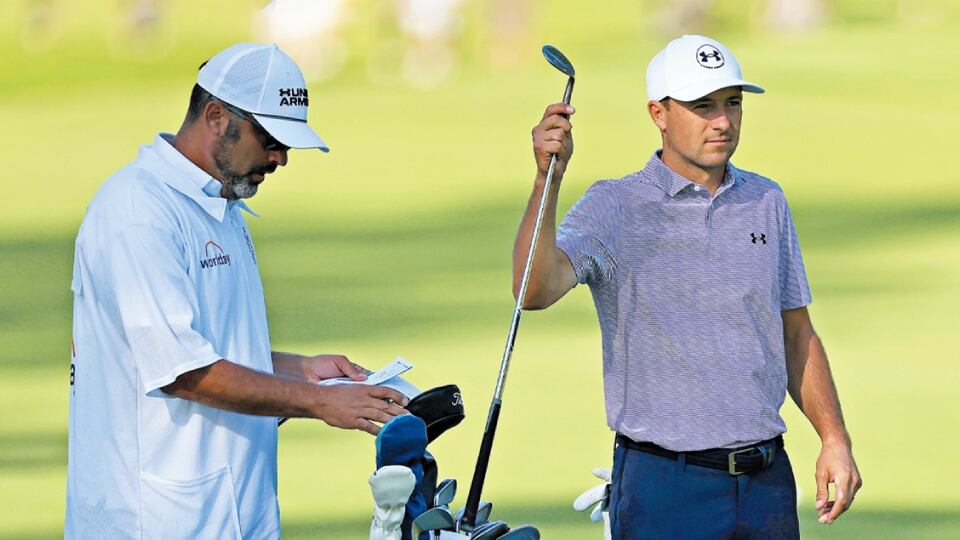
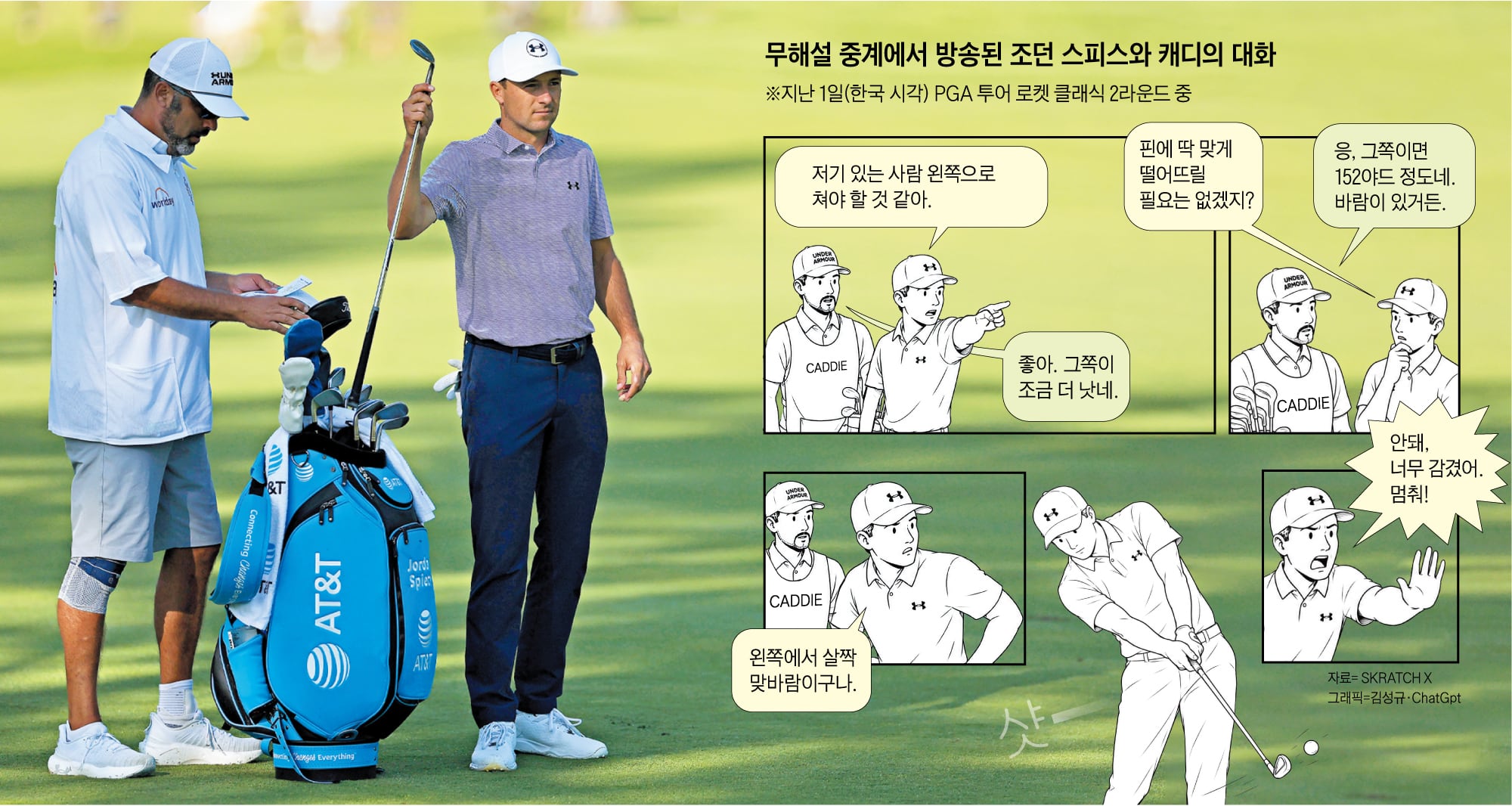
“I should target the left side of the person in front. I don’t have to hit it directly on the pin, do I?” (Jordan Spieth)
“Yes. Approximately 152 yards. There is also a left-to-right headwind.” (caddie Michael Greller)
The clear sound of contact and the gallery’s applause resonate. Commentators describe the scenario in a composed manner. Nevertheless, spectators tuning into the golf telecast question: What are the players and caddies talking about during the game?
The PGA Tour’s new broadcast platform, *Quiet Please* (조용히 해주세요), was recently introduced, substituting the voices of casters and commentators with the live audio of the players. Viewers experience the authentic sounds of the course, as though they were walking the 18 holes with the players. Strategic conversations between players and their caddies, players’ expressions of satisfaction or frustration after shots, and even profanities are all transmitted. The PGA Tour tested the “no-commentary broadcast” during the Rocket Classic in late July and later extended it to the Wyndham Championship, which ended on August 10, following favorable fan responses. This is a subscription-based service accessible through the ESPN app.
This groundbreaking golf coverage tracks top athletes across all 18 holes. Although there have been broadcasts that focus on a particular player’s every move, this approach stands out by omitting the voices of commentators and analysts. Audiences discover the elements players take into account when selecting clubs, how they consult with their caddies, and how they adjust to conditions such as wind or turf grain.
Jordan Spieth, a 13-time PGA Tour champion from the United States, stood out during the *Quiet Please* broadcast. Recognized for his talkative nature—regular chats with his caddie and verbal commentary—he successfully filled the commentators’ role. During the second round of the Rocket Classic at the par-4 18th hole (463 yards), his second shot went over the green, leading to reactions such as “Oh my goodness,” “Stop, stop,” and “I told you not to hit it there.” He kept talking continuously until his third shot reached the green. Scratch, a U.S. golf media company, noted, “Spieth was made for the *Quiet Please* service.” Wyndham Clark, this year’s U.S. Open winner, was seen discussing iron choices with his caddie, while Keegan Bradley, the previous year’s Ryder Cup captain, engaged in conversation after a near-hole-in-one shot, both attracting attention.
Experts believe the PGA Tour implemented the no-commentary broadcast to keep current golf fans engaged and stop the loss of dedicated followers. By working with YouTube and creating Netflix documentaries, the Tour seeks to bring in new fans while providing serious golf enthusiasts with a new perspective by showcasing players’ “inner thoughts.” A PGA Tour representative said, “The no-commentary broadcast provides a more detailed sense of the golf course atmosphere, delivering unconventional storytelling.”
The golf broadcast without commentary is likened to Formula One (F1) for offering a glimpse into competitors’ tactics. Since the 2010s, F1 has focused on “true fans” by providing features such as “team radio,” where drivers speak to their team via wireless during races. Discussions regarding car performance, emotional changes, and competition deeply connect with F1 enthusiasts.
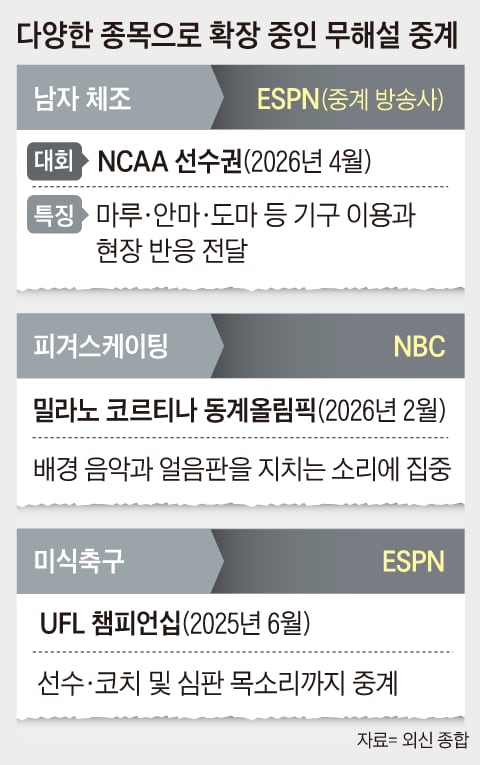
Broadcasts without commentary are increasingly being extended to less prominent sports, including gymnastics, ice skating, and the disc-oriented team game Ultimate. Broadcasters are not removing commentators because of financial limitations but are instead presenting this format as a “premium choice” for dedicated fans.





Leave a Reply