
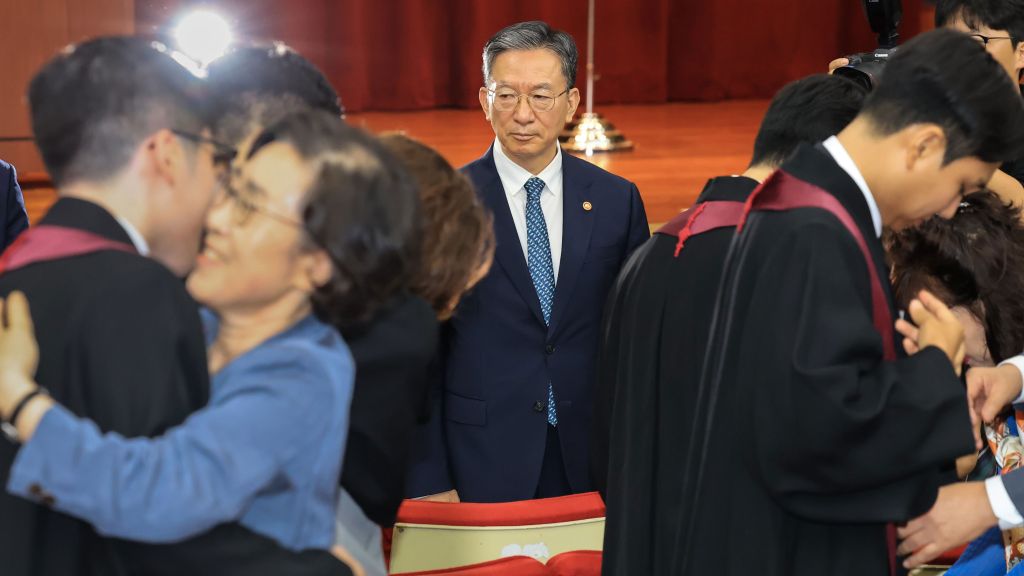
Here is a paraphrased version of the text: This image captures the official ceremony for the appointment of new prosecutors, which took place at the Government Complex Sejong in Gwacheon on August 3. Justice Minister Jung Sung-ho attended the event, and the newly appointed prosecutors received well-wishes from their families. The 19 judicial officers who became prosecutors on that day are the final group to be appointed under the existing system before the Prosecutors’ Office is abolished in October.
The image showed different expressions: the cheerful faces of new prosecutors starting their journey and the serious look of Justice Minister Jung Sung-ho as the Prosecutors’ Office was set to be dissolved. Interpreting these expressions can differ among viewers, but the contrast in the photo was evident.
Photojournalism employs various ‘grammars’ when it comes to how images are expressed. Notable examples are freezing a moment, using silhouettes that highlight shape through backlit lighting, and drone photography that presents spatial order in a fresh way by viewing from above. Techniques such as overlapping elements in the foreground and background, repetition and patterns, as well as contrasts in size and brightness, are also utilized by photojournalists to depict the scene.
If one were to choose among these, it would be ‘juxtaposition (병치)’. Contrast and juxtaposition are alike yet distinct. When a person dressed in black and another in white, or a tall and a short individual stand next to each other, a natural contrast occurs. If contrast is a basic visual difference shown on screen, juxtaposition is a technique that arranges subjects with differing meanings within the same frame to establish a connection.
Choosing what to display with a subject at the scene is up to the journalist. While reporting on the ceremony for the new prosecutor’s appointment, the journalist observed Justice Minister Jung Sung-ho watching the new prosecutors as their families assisted them in wearing their judicial robes. To include both scenes in a single shot, the journalist moved to the opposite side of the minister and utilized a telephoto lens. At the moment when Justice Minister Jung Sung-ho became visible among the prosecutors, the expression of a prosecutor hugging their family coincided with that of the minister observing them. The photograph was finished through planning, anticipation, and an unexpected element introduced by movement.
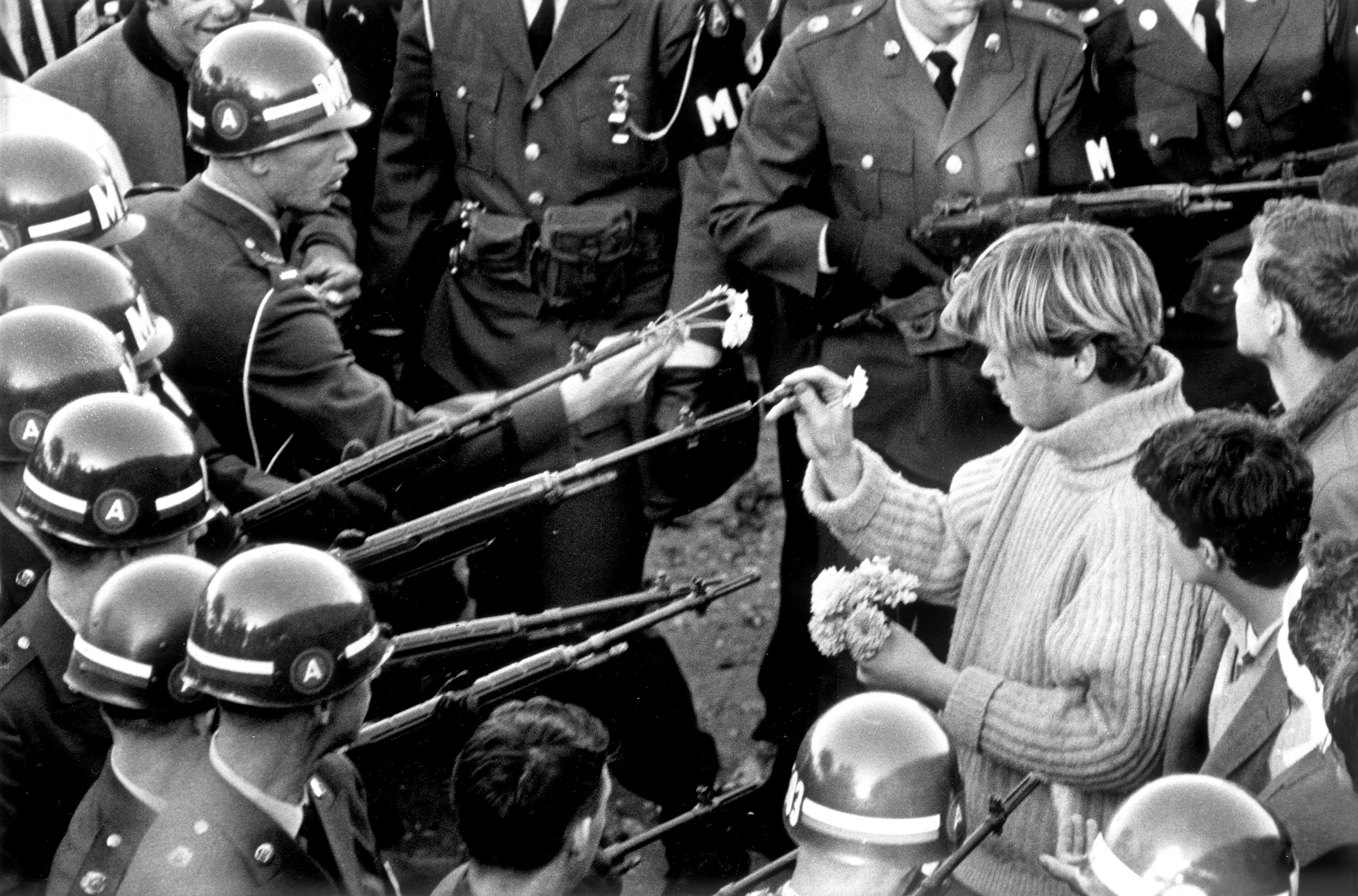
A well-known instance in international journalism highlights the impact of contrast. On October 21, 1967, during the ‘Pentagon March’ where individuals opposed to the Vietnam War walked towards the U.S. Department of Defense, Bernie Boston photographed a protester inserting a flower into the barrel of a soldier’s gun. Soldiers with weapons were preventing the protesters from moving forward, and in front of them, the protester offered the bloom toward the rifle’s end.
This image features a rifle that represents war, strength, and the authority of the government that supports it, while the carnation stands for the peaceful resistance promoted by the anti-war movement during that period. By positioning two elements with opposing meanings side by side within the same picture, the photograph encapsulates the tension present in American society at that time in one single frame.
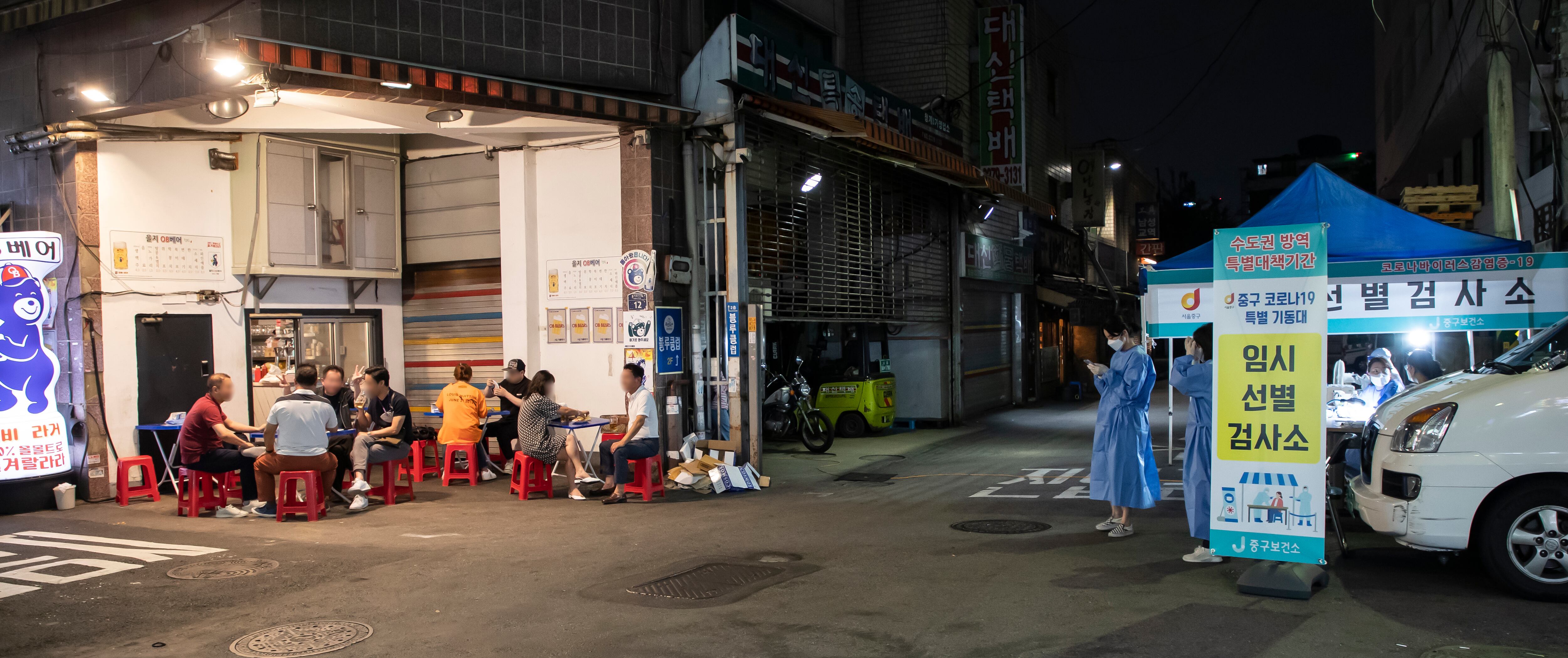
Juxtaposition also highlights its effectiveness in news stories that lack conflict. The photograph titled “Fourth Wave, Seoul Night,” taken in Euljiro, Seoul in July 2021, shows people toasting with glasses at a roadside table, while medical personnel and workers at a nearby temporary screening clinic awaited individuals getting tested just a short distance away. These two scenes together captured a moment from the COVID-19 period. Some were enjoying their evening as usual, while nearby, quarantine efforts to curb the spread of the virus were ongoing.
The variation in colors also separated the two areas. The red illumination inside the bar and the blue light from the screening clinic, both captured within the same frame, enhanced the distinct moods. The night in Seoul, during which regular life and quarantine were happening simultaneously, was condensed into a single picture.
In today’s time, where photojournalists from different media outlets vie for the same location, ‘how it was captured’ is growing equally significant as ‘what was captured.’ By incorporating subjects with varied interpretations within one frame through contrast, a fresh narrative is introduced to the image.


Leave a Reply