
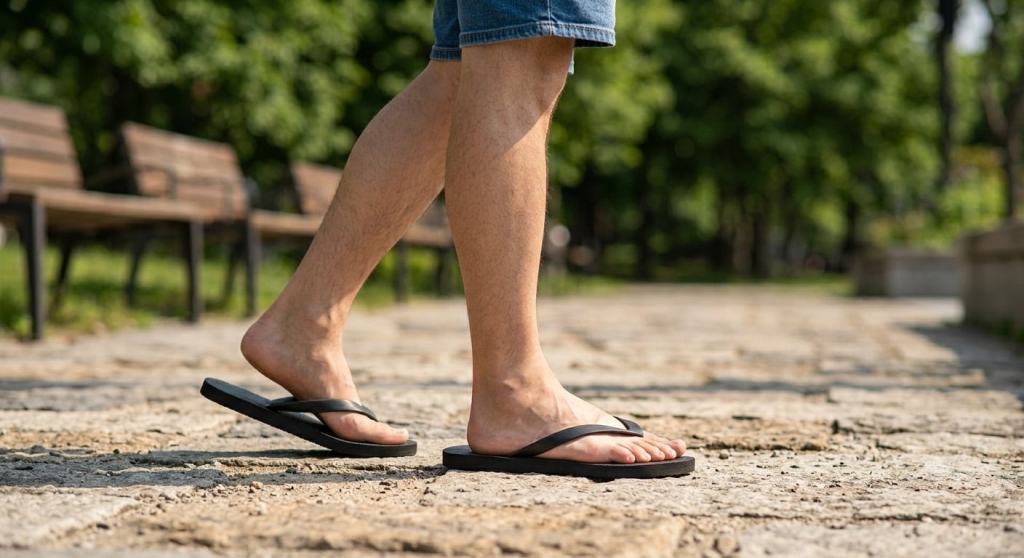
In the summer, it’s common for people to wear flip-flops (flip-flops) and sandals. These types of footwear are light and provide a cooling effect, making them popular throughout the day. Nevertheless, using shoes that lack proper heel or arch support for long durations can result in an unsteady walk and greater pressure on the lower back, so care should be taken.
Summer is a time when cooled spaces, less exercise, and different types of shoes can all affect the health of your lower back. Specifically, footwear such as flip-flops and sandals that do not provide adequate foot support can reduce walking balance.
While walking normally, the feet take in the first impact from the ground. The arch of the foot helps spread out this force, lessening the stress that moves up to the knees, hips, and back. Yet, wearing flip-flops and open-toed shoes with very thin soles and inadequate arch support over a long period can affect the ability to absorb shocks and maintain steady movement.
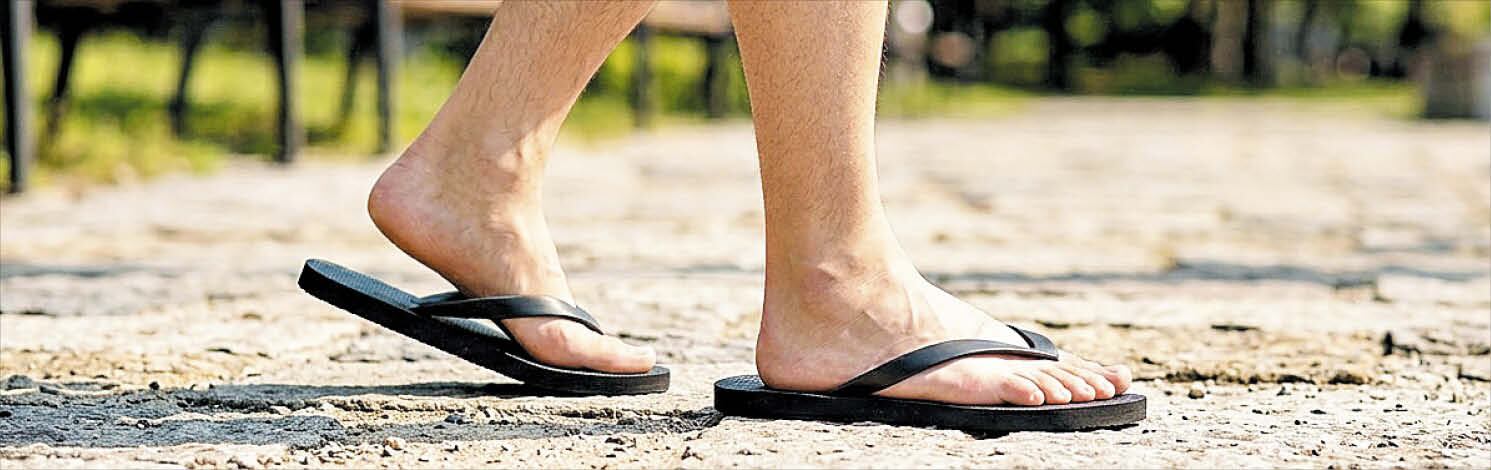
Professor Park Hong-beom, affiliated with the Department of Rehabilitation Medicine at Korea University Hospital, mentioned, “With flip-flops, a specific gait pattern can emerge where the toes are used to pull the strap.” He further explained, “This action might result in tightness in the calf muscles, shorter steps, and alterations in walking stability. If these modifications occur repeatedly, stress can build up not just in the ankles and knees but also in the pelvis and lower back.”
If suitable actions are not implemented upon the onset of lower back pain, it may result in a harmful cycle where improper posture consistently leads to discomfort,” said Professor Park Hong-beom. “For individuals experiencing lower back pain, shoes are not just a style choice but an essential element of their treatment setting.
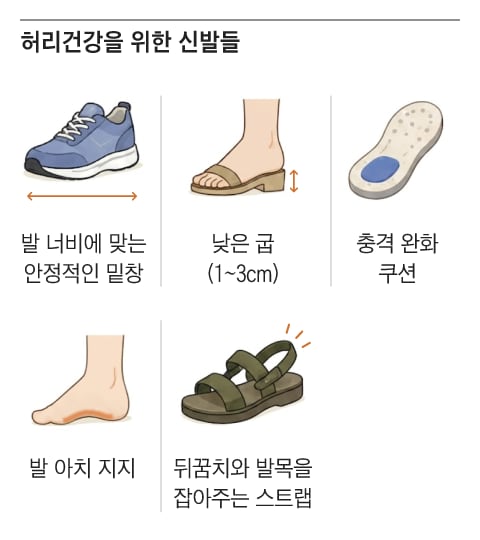
If extended walking is expected during the summer, it’s best to avoid shoes with very thin soles or those that do not adequately hold the feet in place. It is recommended to select shoes with sturdy soles that fit the width of the feet, low heels, padding to reduce shock, arch support, and straps that keep the heel and ankle secure. Professor Park mentioned, “If lower back pain lasts more than two weeks or is associated with numbness in the legs, it is important to see a specialist for proper diagnosis and treatment to regain function.”






Leave a Reply