
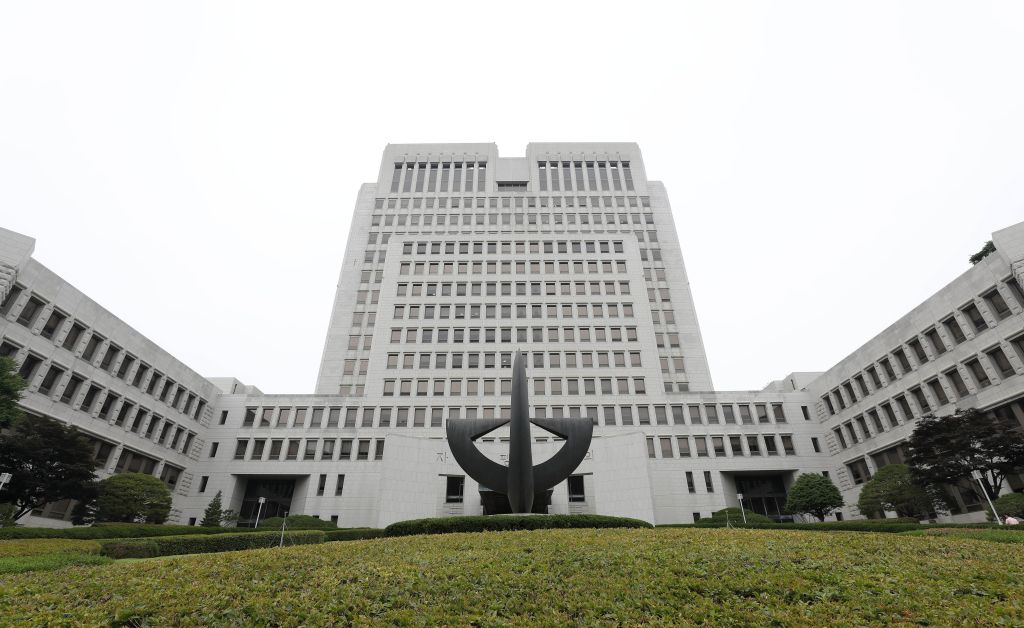
Individuals who were brought to trial on allegations of buying and using drugs from the president of the metropolitan-area university club alliance ‘Kkanbu’ had their indictment dismissed by the Supreme Court on the 13th. The decision was made due to the unlawful nature of the prosecution’s investigation initiation.
The Supreme Court’s First Division (Presiding Justice Chun Dae-yup) upheld the lower court’s ruling to drop the charges in the appeal case of A, a young member of Kkanbu, and physician B, who faced allegations under the Narcotics Control Act related to psychotropic substances and cannabis.
A rejection of the charges is a judicial ruling that terminates the legal process without examination if there is a major flaw in the indictment.
A was sent for trial on allegations of buying and using drugs, such as ecstasy (MDMA) and marijuana, from Kkanbu president Yeom Mo between February and December 2023. B, a specialist at a university hospital, is also charged with purchasing and using MDMA from Yeom in October 2023. The prosecution first became aware of these criminal charges while examining Yeom and directly launched the investigation.
The initial court declared both individuals guilty in December 2023, imposing a sentence of two years and six months in prison, with a three-year suspension, and one year in prison, with a two-year suspension, respectively.
Nevertheless, the appellate court rejected the charges, arguing that the prosecution’s start of the investigation was unlawful. The appellate court noted, “The defendants were not recognized as suspects or witnesses during the investigation into Yeom,” and “It is challenging to establish a clear link between this case, which the prosecutor investigated, and Yeom’s offense.”
Article 4, Section 1 of the existing Prosecutors’ Office Act states that the offenses which prosecutors can examine on their own include corruption and economic violations. Nevertheless, they may exceptionally conduct their own investigation if the offense is directly connected to a case reported by a judicial police officer.
The appeals court stated, “Even if the investigating prosecutor became aware of the defendants’ criminal charges, there is no unique situation that warrants starting the investigation directly without referring it to the police.”
The Supreme Court commented on the appellate court’s decision, “There is no mistake in misinterpreting the legal principles concerning the range of offenses that prosecutors may examine under the Prosecutors’ Office Act.”






Leave a Reply