
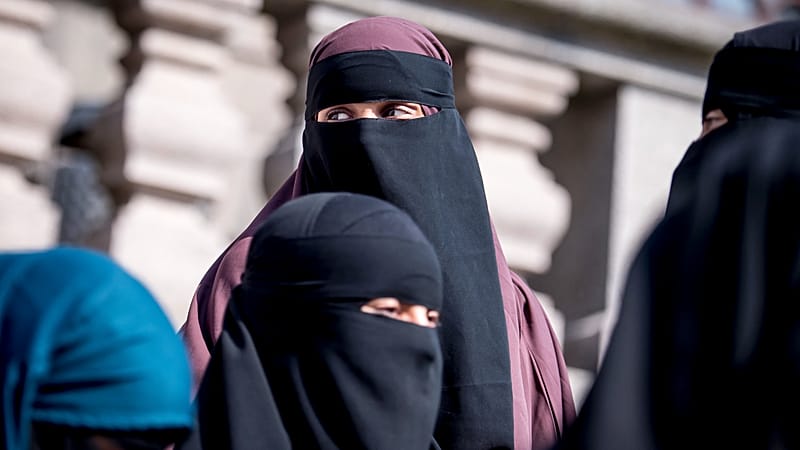
On Thursday, Portugal became part of an increasing number of European nations that have prohibited or limited the use of burqas and other full-face coverings in public areas.
However, regulations differ significantly throughout the continent. it explains how various European nations govern the use of face coverings.
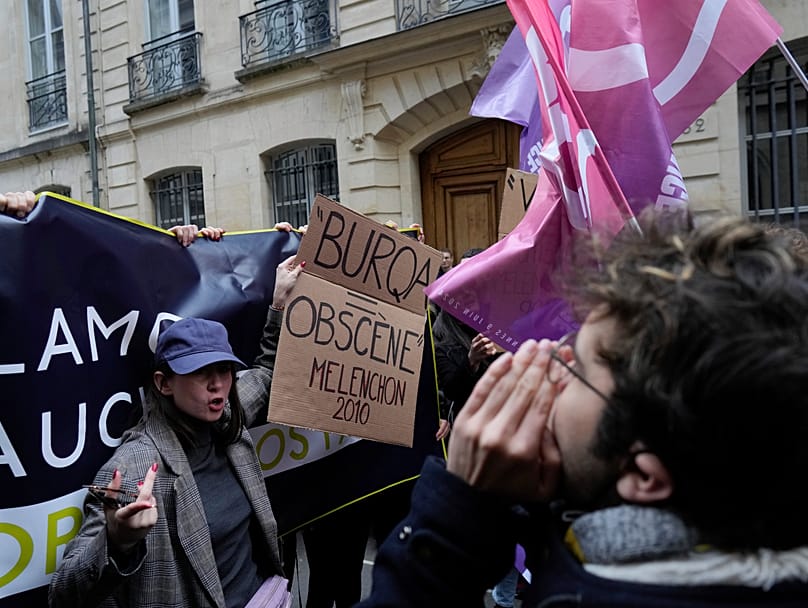
France was the first in Europe to implement a ban on face coverings.
France was the first nation in Europe to prohibit the use of full-face veils in public areas in 2011. Offenders may face a penalty or be required to attend civic training.
The French administration claimed that veils make it difficult to recognize individuals, creating possible security issues and impeding social interaction in a culture where facial recognition and expressions are crucial for communication.
Throughout the COVID-19 pandemic, concerns emerged about whether protective face masks conflicted with the ban. Officials later explained that masks were allowed under current health and safety exceptions.
Belgium: Penalties and incarceration for breaches
In Belgium, the restriction originated in 2011, with those who violate it being subject to penalties or a maximum of seven days in jail.
In addition to France, Belgium was among the initial European nations to implement these measures, referencing public safety and societal inclusion.
The legislation seeks to promote interaction and stop individuals from hiding their identities in public areas, actions that Belgian officials have argued are crucial for enabling every citizen to fully engage in society.
Bulgaria: Full-face veils are limited to private areas
The use of burqas and other full-face coverings is prohibited in public areas in Bulgaria starting from September 2016, with the exception of private residences and religious sites. Muslims constitute approximately 12% of Bulgaria’s population.
Austria: Prohibition of full-face veils expanded to educational institutions
In 2017, Austria implemented a prohibition on full-face veils, such as the burqa and niqab, through a law referred to as the “Anti-Face-Veiling Act.” The policy was introduced based on security and integration concerns, with officials stating that covering the face impedes interaction and community unity.
Furthermore, in 2025, the Austrian parliament passed a law that prohibits girls under 14 from wearing Islamic headscarves in schools. The restriction specifically mentions “the headscarf that covers the head as per Islamic tradition.”
Denmark: An outright prohibition on facial coverings
Denmark implemented a complete prohibition on face coverings in all public areas in 2018. The legislation, which bans any attire that hides the face — such as burqas and niqabs — has mainly been defended based on reasons of public identification and social openness.
The Netherlands: Limited restrictions in major institutions
In the Netherlands, a 2019 regulation limits the use of face coverings in certain public areas — including schools, hospitals, and transportation systems — where unobstructed communication and identification are considered important.
Although not an outright prohibition, it indicates an increasing tendency to control religious activities in public areas.
Germany: A disjointed strategy regarding prohibitions on face coverings
Germany has adopted a varied strategy, with some states implementing limited prohibitions in schools and public areas due to security and communication concerns. Particular restrictions are also enforced for certain occupations and common scenarios.
Some areas view these restrictions as essential for encouraging unity and community harmony, while others worry they might lead to the separation of specific groups and weaken social integration.
Luxembourg: Full-face coverings prohibited in public organizations
In Luxembourg, a regulation prohibiting the use of full-face veils was implemented in the spring of 2018.
The use of face coverings is not allowed on public transportation, in educational institutions and school premises, in facilities catering to children below the age of 16, in hospitals, shared spaces within elderly care homes such as hallways and elevators, as well as in court buildings and government offices accessible to the general public.
Spain: Official Silence, Local Autonomy
Spain does not have a national law regarding this matter, allowing schools and organizations to make their own decisions.
In 2013, the Supreme Court supported a high school in Madrid in its choice to not allow a student wearing a hijab, establishing a precedent without creating a universal rule.
Although Islamic organizations have emphasized that the Spanish Constitution and a 1992 cooperation agreement collectively safeguard the right to wear religious clothing, the Ministry of Education has not focused on national guidelines, claiming that these situations are infrequent and can be handled locally.
Portugal: Legal impartiality, discriminatory enforcement
Portugal does not directly prohibit religious symbols, but allows organizations—whether public or private—to implement neutral clothing policies, provided they are consistently enforced.
The goal is to safeguard employees from religious influence while maintaining that work environments stay politically and ideologically impartial.
Italy: A Law from a Bygone Era
Italy does not enforce a particular restriction on religious attire, although a 1975 law aimed at preventing terrorism forbids the use of face coverings in public spaces.
Although not initially connected to religious clothing, this law has sometimes been used to limit the niqab and burqa in specific public or security-related areas.
Sweden: Prioritizing Freedom, Local Resistance
Sweden does not enforce a nationwide prohibition on religious clothing, and the use of the veil is allowed throughout public life. The country’s stance emphasizes personal freedoms, although certain local governments have tried to implement school-based limitations, arguing about integration and gender fairness. These efforts have generated discussion but have not altered the national guidelines.
Greece: Legal safeguards with real-world constraints
Greek legislation provides strong anti-discrimination measures concerning religion in both employment and public services. However, real-world situations have occasionally revealed a more complex reality. In a 2022 instance, a hospital prevented a nursing student from wearing a headscarf while on her internship, referencing uniform policies.
The Greek Ombudsman determined that the policy did not breach anti-discrimination regulations, characterizing it as a matter of dress code rather than religion.
Laws restricting the use of face- or body-covering veils, which differ in their range and severity, are implemented in nations spread across multiple continents, such as China, Australia, Russia, Canada, Sri Lanka, Gabon, Chad, Senegal, the Republic of the Congo, Cameroon, Morocco, Algeria, and more.




Leave a Reply