
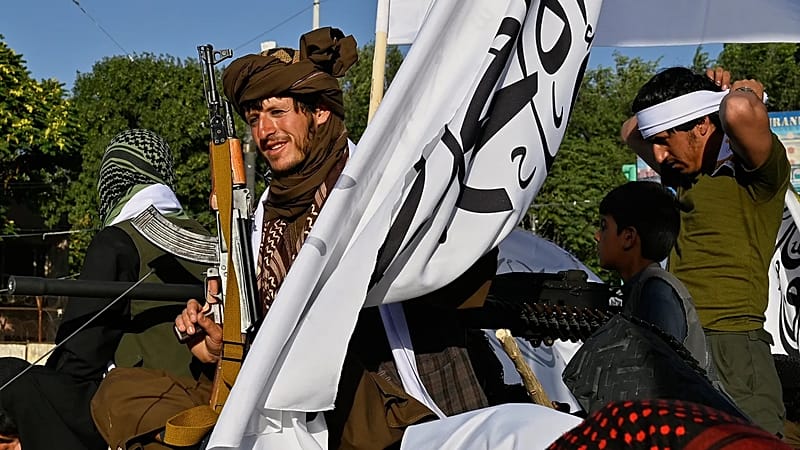
Five years following the Taliban’s takeover of Kabul, the International Criminal Court is reportedly separating its examination of Taliban-related offenses from the larger Afghanistan inquiry, a decision that may reduce pressure from Washington on the court.
As reported by Middle East Eye, judges from the ICC’s Pre-Trial Chamber II have directed prosecutors to initiate an independent inquiry into the alleged mistreatment of women by the Taliban, isolating it from the court’s ongoing Afghanistan investigation, which also included allegations against US personnel.
The Chamber reportedly concluded that the Taliban’s actions since 2021 are “significantly different” from those the initial investigation was meant to look into, and instructed prosecutors to initiate a separate inquiry.
The ICC’s Prosecutor’s Office did not verify or reject the statement made to Euronews, but it did mention that the Taliban are the main focus of its investigation.
“The inquiry is centered on the Taliban’s leadership and their claimed offenses of oppressing women and political dissidents, such as the denial of basic rights, organized detentions, and abuse,” a representative stated.
“The Prosecution Office cannot offer additional remarks regarding the investigation, or about the presence or absence of any claimed Court document that is not publicly available,” the representative added.
‘Deeply troubling’
Shaharzad Akbar, former leader of the Afghanistan Independent Human Rights Commission and currently a fellow at Oxford’s Wolfson College, spoke plainly about the division.
Any form of selective justice is highly concerning,” Akbar said to Euronews. “It is also worrying to learn that the US’s pressure, threats, and assaults on the court are affecting decisions regarding investigations.
Akbar mentioned that Afghan civil society organizations have “consistently requested the ICC to conduct thorough investigations into all claims within its jurisdiction,” such as those involving U.S. forces, and characterized Washington’s behavior towards the court during the inquiry as “disgraceful and embarrassing.”
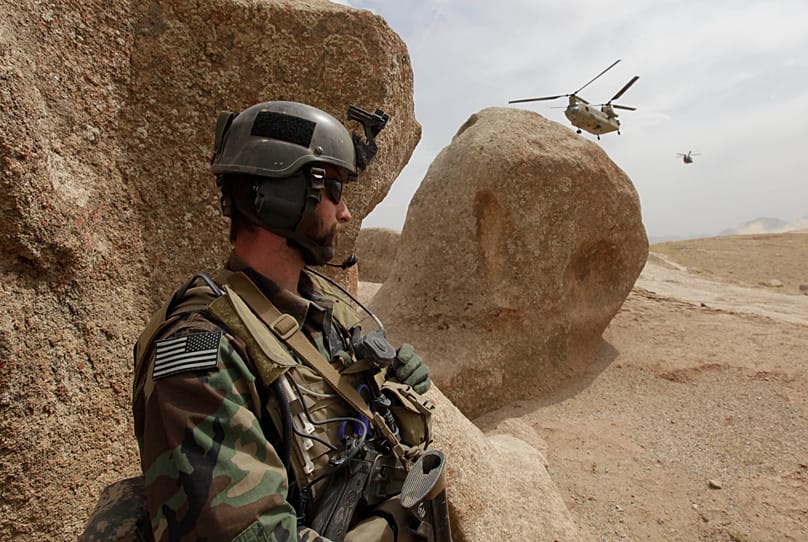
Claims regarding U.S. personnel in Afghanistan mainly focus on the verified mistreatment of prisoners at CIA detention centers in the region, such as the Salt Pit secret facility located north of Kabul, as well as the actions of U.S. military interrogators.
The 2014 report by the US Senate Intelligence Committee regarding the CIA’s detention and questioning procedures revealed that individuals in custody were exposed to waterboarding, lack of sleep, and additional techniques that qualify as degrading and torturous treatment.
The following day, the US Department of Justice revealed that it would not initiate any new criminal probes based on its conclusions. It also mentioned that if a foreign government issued an arrest warrant for a US official related to the program, it would not comply with it.
No American administration has ever admitted fault by U.S. military or CIA staff in Afghanistan.
During President Donald Trump’s initial term in the United States, the White House celebrated an early International Criminal Court judgment that chose not to initiate a formal inquiry into the conduct of American personnel in Afghanistan, referring to it as “a significant global triumph” for “patriots.” This determination was eventually reversed.
Why had the two been combined in the first place?
In contrast to other global courts, the ICC does not categorize its inquiries based on opposing sides in a conflict. Instead, it examines what it refers to as a “situation,” which is outlined by location and a specific time frame.
Afghanistan became a party to the Rome Statute in 2003, granting the court authority over offenses that occurred within Afghan territory from that point onward, irrespective of the perpetrator.
After the Appeals Chamber approved a formal inquiry in 2020, it encompassed the Taliban and its affiliated Haqqani network, the so-called Islamic State-Khorasan Province group (ISIS-K), Afghan government troops, and U.S. military and CIA personnel, all falling under one investigative framework.
In 2021, Karim Khan, who was the prosecutor at the time, reduced the emphasis on the segment of the investigation related to US activities, deciding to concentrate the court’s efforts on the Taliban and ISIS-K.
However, since the overall Afghanistan “situation” remained officially unresolved, persistent political pressure from Washington directed at the investigation as a whole could influence the case against the Taliban, as both were part of the same file.
The pressure intensified significantly after Trump took office in January 2025, as his government quickly imposed additional sanctions against ICC officials involved in the Afghanistan and Palestine investigations.
In December, diplomats informed Middle East Eye that during the court’s supervisory meeting, Washington advocated for the complete abandonment of both investigations as a prerequisite for removing sanctions against ICC officials.
The July 2025 arrest warrants for Taliban leader Haibatullah Akhundzada and judicial head Abdul Hakim Haqqani, related to the crime of humanity involving the persecution of women and individuals seen as supporters of women due to political reasons, were issued under these pressures.
Will Washington bring down the court?
Last month, the U.S. Department of State revealed intentions for an initiative aimed at “dismantling” the court and “systematically disabling” its “capacity to function (and to) focus on American military personnel or officials, or otherwise endanger American sovereignty.”
It mentioned that actions might involve stricter limitations and the cancellation of visas, along with travel prohibitions for ICC staff.
On Tuesday, Washington imposed additional sanctions against ICC President Tomoko Akane and senior trial attorney Abdoulaye Seye, alleging that they “directly” participated in efforts by the ICC to investigate, arrest, detain, or prosecute officials from a government that has not accepted ICC jurisdiction.
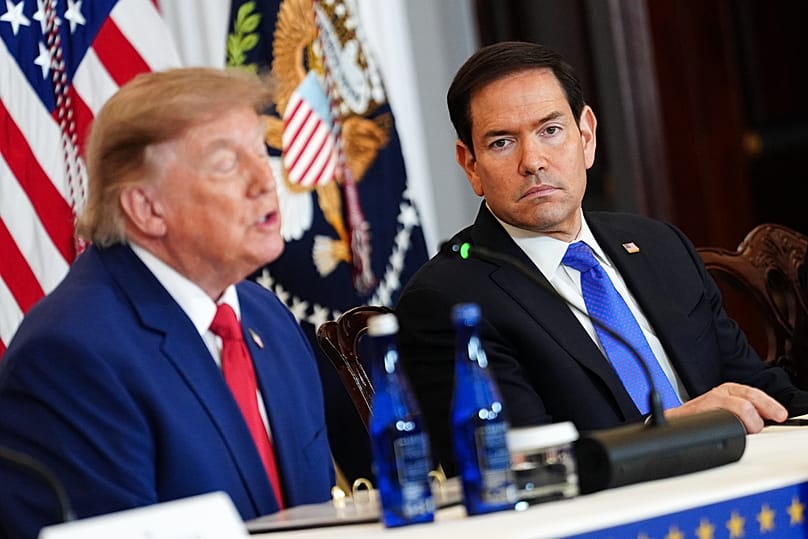
U.S. Secretary of State Marco Rubio, who described the ICC as a “corrupt and fundamentally politicized international court,” stated that it had “wrongfully exploited its power and gone beyond its jurisdiction.”
The court “consistently tried to exercise control over citizens of the United States and other nations that have not agreed to its authority or signed the Rome Statute,” as stated by Rubio.
The United States has never approved the Rome Statute. President Bill Clinton signed it during his last days in office in December 2000, but the George W. Bush administration officially rescinded the signature in May 2002 and informed the UN that the US had no intention of becoming a member.
In the same year, the US Congress enacted the American Service Members’ Protection Act, granting the president the authority to employ military force in order to liberate any American citizen or allied national detained by the ICC, a piece of legislation commonly referred to informally as the “Hague Invasion Act.”
A present for the Taliban
Meanwhile, Akbar states that Washington’s actions following its withdrawal from Afghanistan have surpassed the level of abandonment.
This environment has encouraged criminal activities and widespread breaches around the globe,” she stated. “This presents an advantage to regimes such as the Taliban, enabling them to act without consequences in a setting of deteriorating global order and the absence of the rule of law.
The United States’ lack of concern for international law and its assaults on the court encourage groups such as the Taliban and support their claims regarding the Western bias of international tribunals.
In March 2024, a UN report stated that Afghanistan under the Taliban has become the most oppressive nation globally for women.
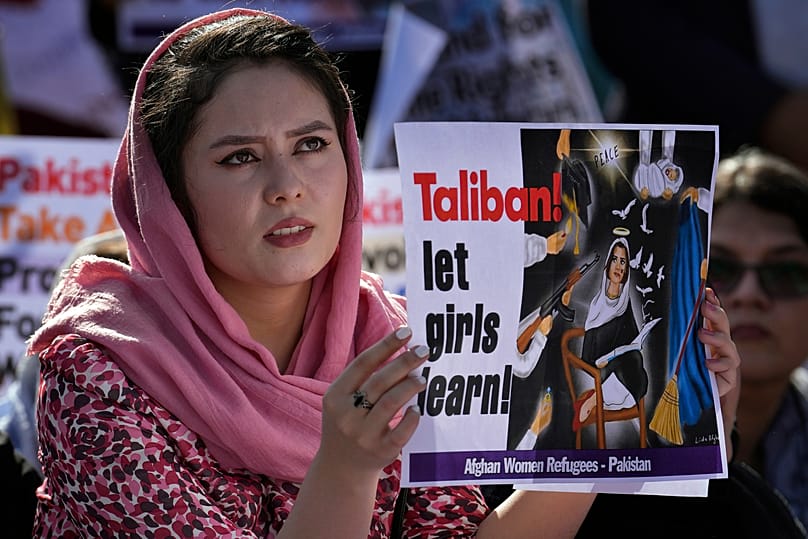
Starting from August 2021, the Taliban have enacted over 50 regulations aimed at progressively excluding women from public life in Afghanistan.
Female students are prohibited from continuing their education past the sixth grade, which makes Afghanistan the sole nation on Earth where women are excluded from secondary schooling due to their gender.
Women are not allowed to engage in most occupations, such as employment with non-governmental organizations and United Nations agencies. Areas like parks, fitness centers, and other public venues are also restricted.
Additional decrees were issued aimed at targeting LGBTQ+ individuals in Afghanistan, granting “morality police” the authority to penalize “moral offenses” and clearly making same-sex relationships illegal.
Akbar stated that Afghan women’s rights organizations, human rights monitors, and survivors “have backed the ICC inquiry at every stage and have played a role in the process,” while also urging the court to expand its focus.
What happens now?
No Taliban officials listed on the warrant are expected to be arrested: the group maintains full control over Afghan territory since the US left in 2021 and has labeled the warrants as “hostility toward Islam.”
Akhundzada has been the leader of the Taliban since 2016, following the death of Mullah Akhtar Mansour in a US drone attack in Pakistan. Since assuming his position, Akhundzada has remained out of the public eye and is thought to be based exclusively in Kandahar, located in southern Afghanistan.
He bears the ultimate responsibility for the strictest regulations imposed on women.
Chief Justice Haqqani has played a key role in developing the legal mechanisms used to implement those rulings, such as the reintroduction of public floggings and executions.
When asked about the outcomes of the warrants, Akbar stated that while they are significant, their influence has been restricted.
We received the news about the arrest warrants as a moment of justice and responsibility following years of impunity in Afghanistan,” she stated. “We hoped the warrants would also slow down the trend of the Taliban’s normalization.
“To improve the conditions in Afghanistan, we require greater political commitment from the region and Western nations to interact with the Taliban on equal terms and push for the lifting of restrictions and bans that affect the rights and freedoms of women and girls,” Akbar concluded.


Leave a Reply