
Many cases of adults going missing are typically closed without comprehensive police investigations. This happens because, in most instances, the police who receive reports from families verify the location of the missing individual through phone calls, or the person returns on their own after some time. According to the National Police Agency, out of 70,814 reports of adult disappearances received in 2025, 70,591 cases (99.7%) were resolved without extensive police efforts.
Because such situations happen repeatedly, some police officers consider adult disappearances as simply “runaway” cases. The existing “Act on the Protection and Support of Missing Children, etc.” also categorizes regular adult disappearances as “runaway persons.”
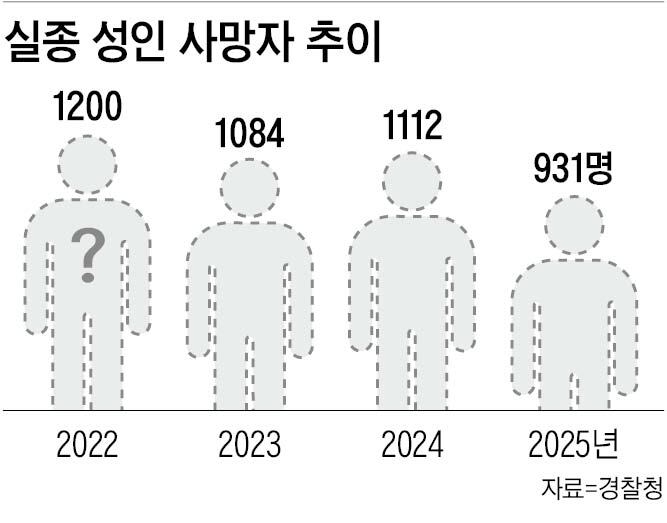
The issue is that this mindset could result in overlooking missing individuals who are genuine accident victims. Those who have disappeared due to accidents frequently remain unlocated for many years. Presently, around 7,000 adults are still missing. When they are eventually found, many are already deceased. Indeed, between 2016 and 2025, 13,639 adults were discovered dead, which averages to about 1,363.9 cases annually. This encompasses situations where people who had gone missing years earlier were later found to have passed away.
To effectively handle and use information about missing persons in search operations, the police implemented the “Missing Person Profiling System” in 2011. The system keeps track of previous reports, findings, and case management details related to missing individuals, enabling other officers to access this data during searches. Nevertheless, some critics argue that this system has led to a more relaxed approach by the police when dealing with cases involving adults. This is due to the fact that the system permits the officers in charge to close cases without needing approval from higher authorities such as search team supervisors or heads of the criminal investigation department.
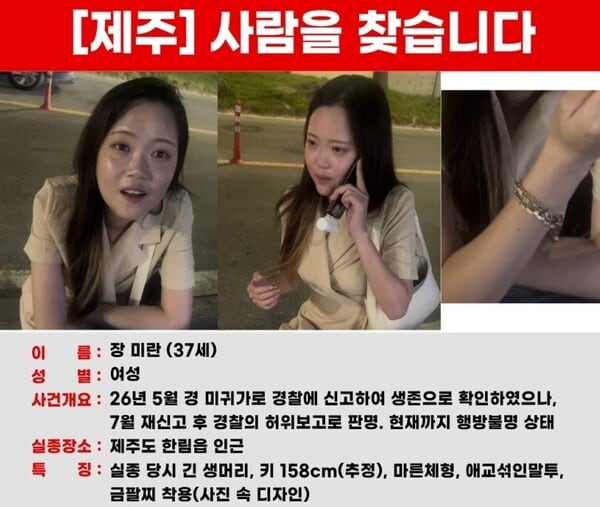
A notable case involving a woman in her 30s, Jang Mi-ran, who disappeared in Jeju, serves as a clear example. Senior Police Officer A, the lead investigator from the Jeju West Police Station, is accused of falsely claiming that contact had been established with Jang without verifying her location. Additionally, he marked her case as resolved in the profiling system. This flaw, where an individual officer’s actions go undetected by others, caused the problem. It was only after the case became public that the police decided to implement a manager verification process—requiring approval from heads of the criminal investigation division—into the 15-year-old system.





Leave a Reply