
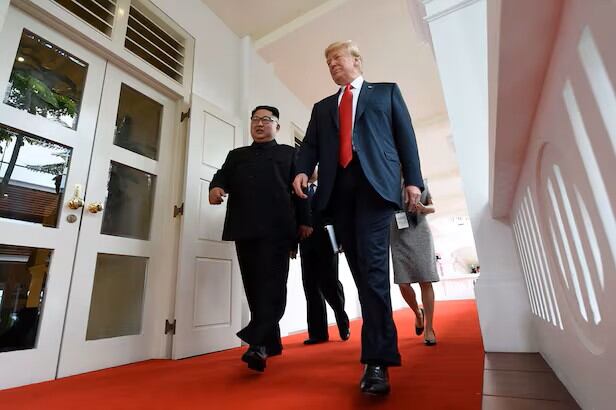
U.S. President Donald Trump is quickly changing the situation on the Korean Peninsula by working to restart a meeting with North Korean leader Kim Jong-un. According to The Wall Street Journal, the two leaders might meet during the Asia-Pacific Economic Cooperation (APEC) summit in Shenzhen, China, in November, but I have a different view. I think more focus should be placed on the chance of Trump traveling to Pyongyang between September and October, before the November 3 U.S. midterm elections, which will influence Congress and state governor positions.
Trump’s desire for media attention
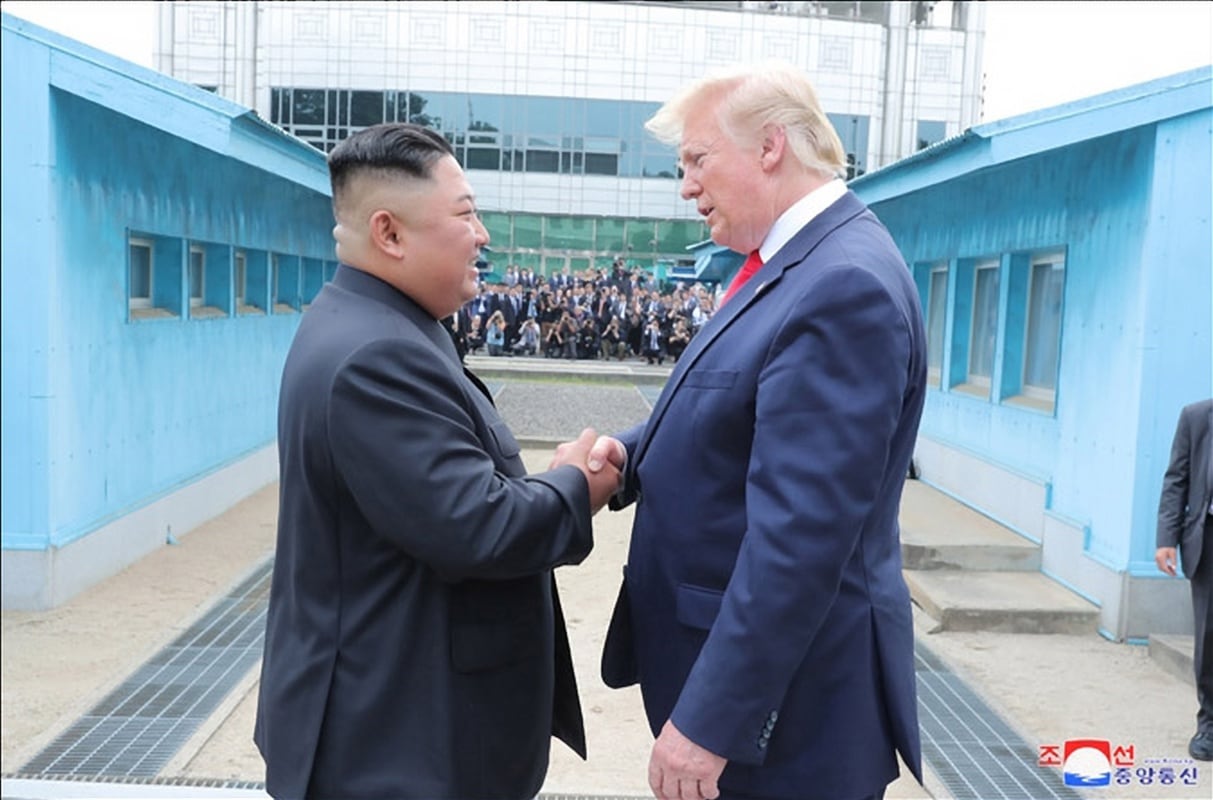
Trump excels at making bold moves to draw media focus. He has already organized U.S.-North Korea summits in third countries such as Singapore and Hanoi. With domestic and global challenges approaching the midterms, he might plan a summit that exceeds previous ones. If Trump travels to Pyongyang within the next one to two months, it would be one of the most striking moments in international diplomacy this year. No current U.S. president has ever visited Pyongyang. Former presidents Jimmy Carter and Bill Clinton went there in 1994 and 2009, respectively, but both were not in office at the time. Trump was the first sitting U.S. president to set foot on North Korean territory in June 2019 at the inter-Korean truce village of Panmunjom, although he did not go to Pyongyang.
A scene of Trump exiting a plane at Sunan Airport in Pyongyang, welcomed by Kim Jong-un, would exceed the historic first U.S.-North Korea summit held in Singapore in 2018. For Trump, seeking a political victory before the November 3 midterms, this could serve as a powerful move to draw worldwide attention. It is important to consider the chance that Trump might announce in Pyongyang, “North Korea will no longer create additional nuclear weapons,” and present it as one of his accomplishments.
For Kim Jong-un, this would not be a disadvantageous situation. He could earn acknowledgment as a nuclear state and present to North Koreans that the leader of the world’s most powerful country visited him. He also needs to take into account the implications of consistently dismissing Trump’s repeated summit invitations.
A 26-year-old first: Clinton’s intended trip to Pyongyang
Rumors of a U.S. president traveling to Pyongyang are not recent. In 2000, former President Bill Clinton seriously thought about visiting North Korea towards the end of his presidency. The first meeting between President Kim Dae-jung and Kim Jong-il in June of that year led to a quick improvement on the Korean peninsula. Kim Dae-jung’s administration aimed to connect advancements in inter-Korean relations with better U.S.-North Korea relations, and the Clinton administration actively looked into establishing normal diplomatic ties.
Indications appeared that summer. In July 2000, U.S. Secretary of State Madeleine Albright and North Korean Foreign Minister Paek Nam-sun conducted the first-ever U.S.-North Korea foreign ministers’ meeting in Bangkok at the ASEAN Regional Forum (ARF). I reported on this gathering in Bangkok. The two exchanged views on enhancing bilateral relations for one hour and fifteen minutes. Albright later called the meeting historic, marking a shift from previous tensions.
The momentum increased during September. Paek wrote a letter to Albright, conveying optimism about the swift enhancement of U.S.-North Korea relations. U.S. officials considered the prospect of Wendy Sherman, a State Department advisor, traveling to Pyongyang, and both parties initiated in-depth discussions regarding removing North Korea’s status as a state sponsor of terrorism, along with tackling missile development, exports, nuclear matters, and executing the Geneva Agreed Framework.
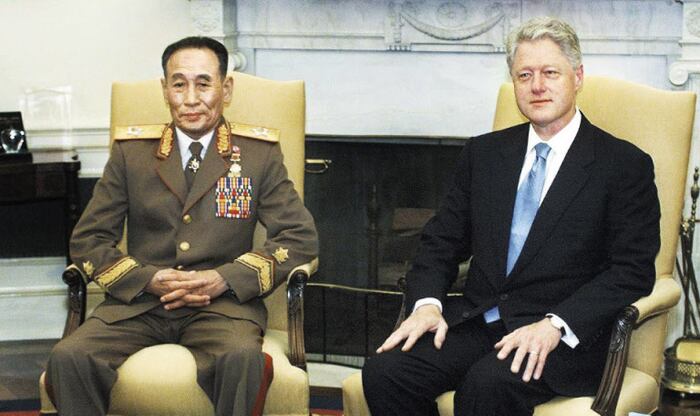
A senior advisor of Kim Jong-il pays a visit to the White House
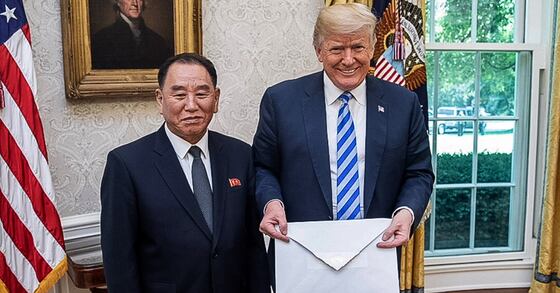
A critical event occurred in October. Jo Myong-rok, the first vice chairman of North Korea’s National Defense Commission and a trusted advisor to Kim Jong-il, traveled to Washington as a special envoy. Never before had a senior North Korean military official met with a U.S. president.
At that time, Jo held the third position in North Korea’s power structure, following Kim Jong-il and Kim Yong-nam. Having previously been a pilot who attended a Soviet air force academy, he was in charge of the Korean People’s Army General Political Bureau. He was highly trusted by Kim Jong-il, frequently joining him during provincial visits and meetings with foreign officials. Jo’s visit initiated extensive discussions between the U.S. and North Korea regarding removing the terrorism label, missile development and exports, nuclear matters, and executing the Geneva Agreed Framework.
President Kim Dae-jung voiced strong hopes, noting that Jo’s visit marked a new stage in U.S.-North Korea relations and indicated substantial advancements were probable. He felt that enhanced U.S.-North Korea connections could result in improved North Korea-Japan relations and additional developments in inter-Korean ties—a positive feedback loop. The active backing of the Kim Dae-jung administration for U.S.-North Korea reconciliation shows an intriguing similarity to the current Lee Jae Myung government’s approach.
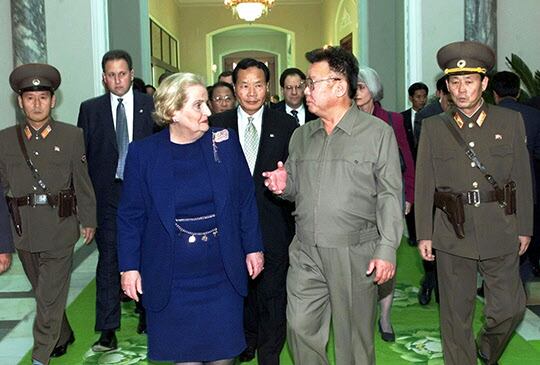
Albright’s visit to Pyongyang
The last stage in getting ready for Clinton’s visit involved Albright’s journey to Pyongyang in October 2000. She was the first current U.S. secretary of state to go to North Korea. American media reported that one of her main objectives was to evaluate firsthand if Clinton’s visit could take place.
Inside the U.S. administration, there was significant sentiment that North Korea needed to demonstrate willingness to compromise on key matters, especially regarding missiles, prior to Clinton’s trip to Pyongyang.
In 2000, the primary conflict between the U.S. and North Korea revolved around long-range missiles rather than nuclear arms. The U.S. aimed to stop North Korea from developing and testing long-range ballistic missiles and to prevent the export of missiles and associated technology to the Middle East and other areas. North Korea had imposed a pause on long-range missile tests following the launch of the Taepodong-1 over Japan in 1998, but the U.S. wanted permanent restrictions on missile development, testing, and deployment, not just a short-term break. In return, North Korea requested payment for ceasing missile exports and foreign support for launching its satellites.
Top-level U.S.-North Korea communications advanced significantly, with Clinton’s visit appearing likely at one stage. A New York Times article from mid-October indicated that Clinton was considering a trip to Pyongyang before his term concluded, leading Korean media such as KBS to report it as urgent news.
Nevertheless, U.S. media and Congress expressed disapproval of the visit, viewing it as offering North Korea an excessive benefit without assured outcomes. Meanwhile, peace talks in the Middle East diverted Clinton’s attention. In his 2004 book *My Life*, Clinton mentioned that although he didn’t wish to overlook the opportunity to halt North Korea’s missile development, he couldn’t afford to be on the other side of the world when Middle East peace was attainable. He ultimately decided to prioritize the peace discussions in Israel and Palestine instead of Pyongyang, stating on December 28, 2000, that “there wasn’t enough time to prepare for a visit.”
Trump brings back the Pyongyang card 26 years later
The 2026 scenario shows interesting similarities to the year 2000. Trump has clearly stated his wish to meet Kim Jong-un once more. Recently, he even asserted that Kim has responded positively to his proposal for dialogue. He has also directed a major decrease in the size of current U.S.-South Korea joint military exercises, indicating an effort to restart discussions. Trump consistently highlights that he and Kim have a mutual understanding and maintain a positive relationship. President Lee Jae Myung is also strongly advocating for the resumption of U.S.-North Korea talks—similar to how President Kim Dae-jung supported Clinton and Kim Jong-il’s summit in 2000.
Nevertheless, a significant distinction remains. In 2000, North Korea was engaging in discussions with the U.S. regarding long-range missile development and exports, not nuclear weapons. Currently, North Korea is believed to have at least 57 nuclear warheads, as stated by Trump, and has nearly perfected ICBM technology that can reach the U.S. mainland. Following Russian President Vladimir Putin’s visit to Pyongyang in 2024, relations between North Korea and Russia have transformed into an unofficial military alliance, with North Korean forces even being sent to Russia. Chinese President Xi Jinping’s state visit to North Korea in June—the first in seven years—strengthened these connections. Kim Jong-un’s leverage is far greater than that of his father in 2000.
Vance or Rubio might be the first to travel to Pyongyang
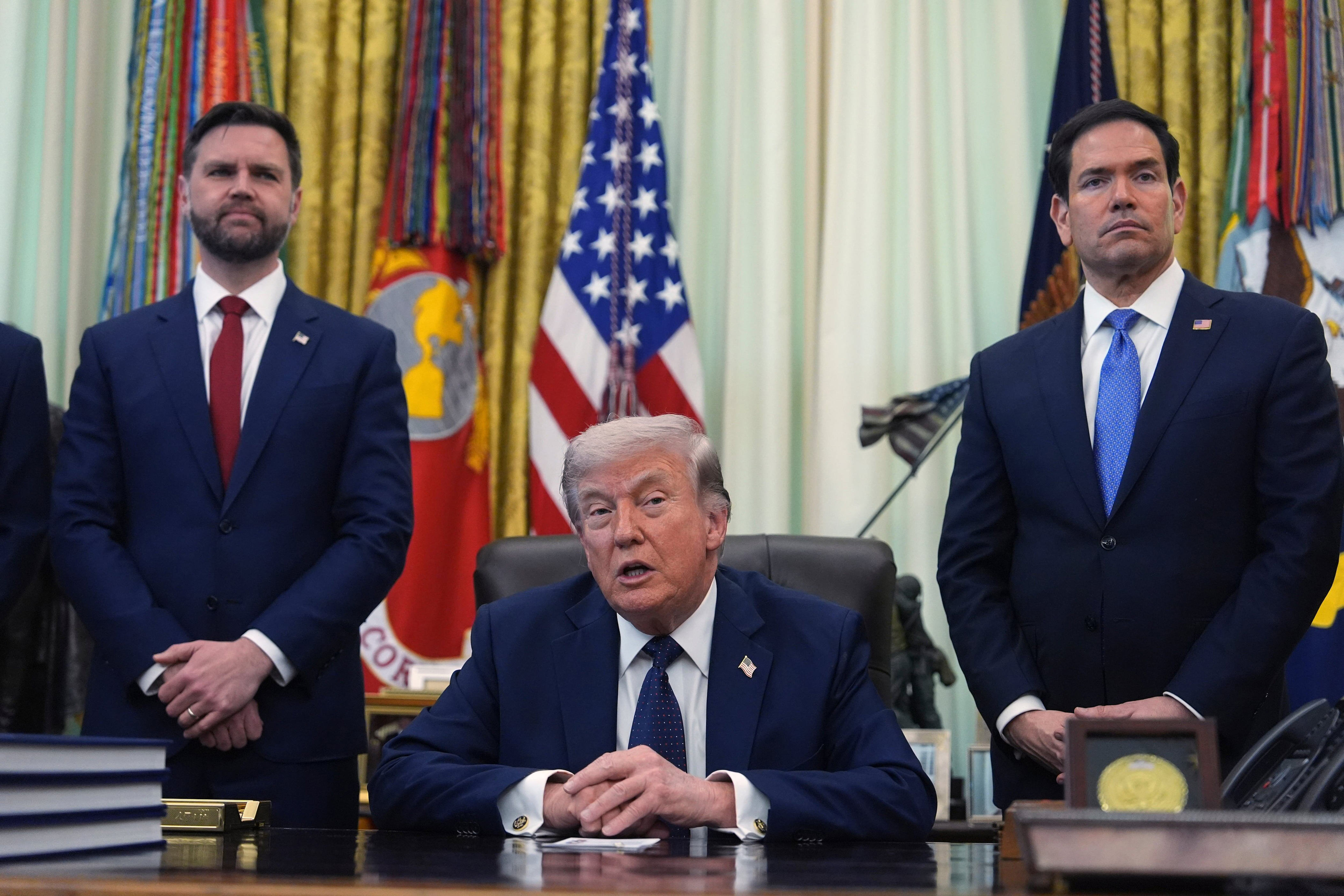
If Trump genuinely intends to visit Pyongyang, he might initially dispatch a senior representative to assess Kim Jong-un’s readiness to negotiate. In 2000, Jo Myong-rok traveled to Washington, while Albright went to Pyongyang ahead of Clinton’s visit. A comparable situation might arise today, with Vice President JD Vance or Secretary of State Marco Rubio making an initial trip to Pyongyang.
Although there are considerable challenges to Trump’s visit, it is worth noting that he once suggested a meeting with Kim Jong-un through Twitter during the Osaka G20 summit in June 2019, and they met at Panmunjom just one day later, indicating that such an opportunity should not be dismissed. A fourth Trump-Kim summit in Pyongyang would mark a crucial turning point, not only for the North Korean nuclear issue but also for U.S.-North Korea relations, the U.S.-South Korea alliance, and regional stability. It could influence key matters such as the presence of U.S. troops in South Korea, wartime operational control, and the armistice system—while South Korea remains on the sidelines. This situation might develop more quickly than anticipated, particularly before the November 3 mid-term elections.






Leave a Reply